 ABBREVIATED LOOKS AT THE VARIOUS LITERARY DEVICES AVAILABLE TO THE WRITER/POET
Much of modern fiction writers have embraced characterization as an essential component in developing good stories. Characterization is the process by which the writer exposes the personality and quirks of the character, by direct or explicit portrayal, or by indirect or implicit portrayal. This article will briefly touch on direct characterization.
In works of literary fiction, authors employ a wide variety of strategies to create and present their characters. Works of literature with poor characterization are often criticized as having, ‘banal characters’, ‘bland characters’, ‘poorly drawn characters’ or ‘characters with no dimensions.’ Saying that a book’s characters are unbelievable is probably one of the worst criticisms an author can hear. Given this, it benefits a writer to ‘flesh out’ and develop his/her characters as meticulously and honestly as possible.
.
Dialogue plays a crucial role as well in developing characters because it gives the reader an opportunity to closely examine each of the characters speaking on a deeper level. As a storyteller, take a lineal approach in establishing what the personality of the character is. Often, this can be done by using another character, narrator, or the protagonist, to inform the readers or audience about the subject.
.
Good portrayal chooses details that make real or fictional characters seem lifelike and individual. Tell the reader directly what a character’s personality is like. Describe a character’s appearance and manner. Describe a character’s behavior and nature. Portray a character’s thoughts and motivations. Use dialogue to let a character’s words reveal something meaningful about his or her nature. Use a character’s activities and actions to reveal his or her personality. Show other character’s reactions to the character or person you are portraying to establish depth. Give fictional character’s unique and meaningful names that reinforce their traits and qualities.
.
EXAMPLES OF DIRECT CHARACTERIZATION
.
“Lennie is big and dumb. His childlike innocence allows him to take an active role in George’s dream of owning farm. Lennie loves soft things and animals, which he accidentally kills because of his strength. His size combined with his mental handicap frequently put him and George in difficult situations.”
“George is a small, quick-witted, migrant worker who travels with his friend Lennie. He speaks of how much better his life would be without Lennie, but only does so in anger. George represents the working man and his struggle to rise above his harsh circumstances.”
John Steinbeck
‘OF MICE AND MEN’
.
“Everybody knew Bagheera, and nobody cared to cross his path, for he was as cunning as Tabaqui, as bold as the wild buffalo, and as reckless as the wounded elephant.”
Rudyard Kipling
‘THE JUNGLE BOOK’
.
“Everything about him was old except his eyes and they were the same color as the sea and were cheerful and undefeated.”
Ernest Hemingway
‘THE OLD MAN AND THE SEA’
.
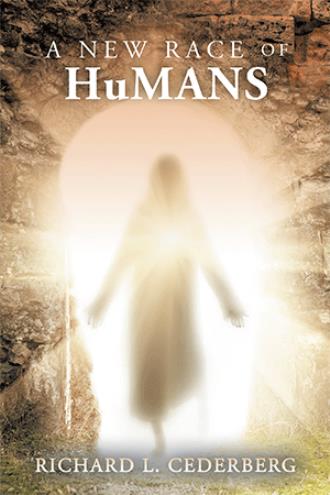
‘Haddon Hathaway was a Humanist; a chesty narcissist who believed in continuous emergent evolution, and who harvested regularly from world and local affairs. He was also an occasional chum with Peter Pegarian, a fellow student. Haddon was given solely to the transitory theories of self-realization; that a life of distinction and merit is based on the actualization of human potential. His ‘dominant theme pattern’ had become concentrating on one major interest, and then building most of his other interests around it. And though he went to seminars, and at times engaged in intellectual conversation, his only real on-going interest had sadly become watching TV for hours each day; this, in order to feed the creative-fires with all the dramas, peccadilloes, and abhorrence's of humanities crude imperfections. As he was settling in, another of his endless dubious ideas took root in him. Smugly he gazed at himself in the mirror and asserted: ‘I am an intelligent man, and I am fully capable of finishing this without God’s help, or any of nature’s influences. I’ve been given a practical brain, I am uniquely creative, and I don’t need anyone’s help for self-realization. My successes evolve through scientific method, reason, and freeing myself from all burdens. I will declare myself me, from what I think and create.’
Richard Lloyd Cederberg
‘A NEW RACE OF HuMANS’
.
‘He was not at all what senior staff had expected. The new General Manager’s appearance – a narrow tie, ‘Beatlesque’ hair, horn-rimmed glasses, and a tailored sharkskin suit – seemed inapposite for a modern executive. Upon entering the room, he put down his briefcase, and as he looked about, his inner-feelings began to chase over his face like wind-driven undulations across the surface of a lake. With his hands on his hips, elbows outward, a snotty expression, and totally self-absorbed; he remained stationary in one spot staring (and by all appearances offended) at everything around him. After some moments he shook himself from the spell and assumed a more dignified deportment. Opening his briefcase, and then squaring it to the corner of the table; he cleared his throat, adjusted his tie, brushed his bangs aside, and then, with notes in hand, his eyes finally met everyone’s around the table. Quietly aghast; the staff stared back.’
Richard Lloyd Cederberg
‘MOVING FORWARD (Mr. Monture’s Solution)’
.
rlc
|













Sandie
Your examples were very good, especially the ones that you wrote, where you use your immense vocabulary to describe individuals in a way that fully fleshes out their character.
You did state at one point that the worst thing that can happen is having your characters be labeled "unrealistic." I have found that modern TV shows and movies have created characters that are fantasies to the point of being inhuman or superhuman. The Samoan wrestler, Dwayne Johnson, has made millions playing those parts.
In most of my writing, my characters are not outrageous, or superhuman, but ordinary people who may have been drawn into extraordinary circumstances. It is the circumstances that are important and not the character of these characters. But most readers are looking for something new and sequels as rewrites of famous themes and characters abound. Growing more outrageous with each rewrite. I guess it is the nature of people to want to find something familiar, yet different, and more interesting or exciting each time.
To me, Charles Dickens created characters that I could visualize as real when I read him.
Ron