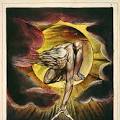
Framed on my notebooks.
Last History lesson
It was our last lesson with the teacher of History until September, when the course started again. We had been examined of Elemmental Baccalaureate at an official institute since our college was private. Manuel Rivera the teacher told us he wasn’t going to give us an usual lesson. Not on the last day of the course, he said. He was smiling openly. We were expecting something new or something to remember forever.
He started saying the world was divided in two blocks, Capitalist and Communist. In fact Europe was divided physically in East and West and it had been so since the end of World War Two. In a few words he opened our eyes and let us see clear about what the situation was in the opposite blocks. In capitalist countries the working class has to endure minimum salary laws contrary to their needs and it conditions their eternal struggle against oppression and even their humour too, of course. (We laughed when he had added of course.) In communist countries the working class is organized by the Communist Party and everybody has an equal salary. So in capitalist countries everybody is enslaved by money and in communist countries the working class labours in benefit of their countries’ populations. Capitalist governments and business men and women run as though it dealt of a career in seek of money and properties and in communist countries governments and functionaires exchange products and articles with other fraternal countries on a basis of covering their needs, this is the Sublime Ideal of a world. This thought, this system, has been largely exposed and it is well visible in Communist texts. Manuel Rivera told us that Capital has a mask that hides cruelty, meanness and mediocrity represented by new liberalism and social democracy or false socialism. Communism conveys the advantage to favour more these that suffered most the abuse of their goverments without a soul that forget people poor and working class. Here I am going to declare myself now a bolchevist or red, because someone could hear me or get to know (laughs), and to leave clear that my soul is with these who lost Spanish Civil War and with the common spirit of working class; in the end one must be with theirs always, and always together with these that enjoy the world’s common soul longing there is Peace and Justice, Equality and Fraternity. (He did a short pause, smiling always) Of course, as you well know, in most of the world’s countries they have liberties we don’t have here in Spain. In European Western countries, which I put as example because of their proximity, chiefs of state are queens or kings or a president of a Republic and they are ruled by political parties with majority in general elections. Even so, these democracies Western style aren’t true democracies, because working class doesn’t have the power, and democracy means Power of the People. Power (in the hands) of the People, and the People, the working class is submitted to Capital and it must not be so. Working class makes the world awake with an established order and deeds all days long are developed and there is a labour, social and idle life. Without their dedication for the common good and their performance of everyone’s duties an organized life wouldn’t be possible.
In Spain, instead, like we all well know only one rules the country, one who says he is the toughest, the bravest and the handsomest (laughs from everyone in the classroom). Yes, yes, yes, said many of us: Franco, Franco, Franco. (Then all of us burst out laughing).
As you know, he continued, in 1931 the Popular Front won the elections and the king was obligated to go to exile. After the Advent of II Republic there were crimes, attacks, sabotages, clashes between communists and fascists, but even so, social life in Spain would have become agreeable in the end, if it was not because by fascists there was an insane intention to take the power violently, like actually happened since the beginning of Civil War in 1936.
During lessons in the ending course we have studied Spain’s and Universal History, so it is easy to understand my insistance in telling periods in History which are supposed you know already. I have focused on the national and international actual political situation, trying to shorten it from an objective point of view, since it takes in the main concerns of a large percentage of world’s population. With respect to Spain in particular, we hope the dwarf bastard dies at last (general laughter) and a III Republic is procclaimed, for I don’t think that that prince Juan Carlos will succeed as king, so probably it will mean the Advent of III Republic and a new exile for the Borbón family. If this new III Republic is like Western's style, there will possibly be a political and social instability due to governments changes. Anyhow, what will happen for sure will be a collision between popular masses and slavers and opressors governments, because as we well know (or suspect), there is not remedy, it’s unavoidable.
Capital’s intentions are to ravenously hoard riches, but working class forces’ level in the struggle against Capital has spread together with its spirit all around the world stirring the great common soul of us struggling for Peace, Justice, Equality and Fraternity. (We all kept silence for a while) Well, as for History I have finished already, next course there will be more.
Now, he said, we are going to speak about drama. I don’t know if you know which is the tragedy more times performed ever throughout history. (He didn’t want us to respond yet). Some of classic Greek authors’ tragedies and comedies are the origin of many others written since the Greeks even nowadays, for they derive from same arguments, something applicable to poetry in particular and to many other narrations in general. It clearly means the trunk of the making comes from a same origin. Well…, ¿Does someone know which is the more performed tragedy ever? Yes…, I see…, some of you know. You are right, Hamlet, prince of Denmark. William Shakespeare is the very well known English plays author. In the play the king, Hamlet’s father, dies. In a very short time Hamlet’s mother marries Claudius, dead king’s brother, therefore Hamlet’s uncle, and a spectre image of Hamlet’s father, which soldiers watch as if in a vision, tells Hamlet his uncle, the new king, has murdered him. This tragedy is based on a Ist Century Danish legend which appears on the Gesta Danorum by Saxo Grammaticus, written about 1200.
Well, let’s hope you will enjoy a long life. The advances in investigation have been enormous and very possibly your generation will reach an age of more than a hundred years. There are some places in the world where people are more than a hundred years old and they preserve a great lucidity yet. (In Russia there are people a hundred fifty years old, I said because I had read it a few days ago). Yes, Manuel Rivera said, very probable. I have read it on the newspaper, I said insisting. Of course, I do believe it, he said. Yes indeed, and I will tell you more, he continued. It’s possible even that your generation reaches immortality. Then don Manuel made a pause, remained with an interrogative air, looking at us attentively and asked raising his eyebrows and opening his eyes: Surprises you? (It would be a good business, I said to myself).
Throughout History there have been already many characters about who we have been reported and it is widely known they must have lived for centuries, like Bible’s legendary Methuselah. Another long-lived Bible’s character that involves Spanish people too is Hércules, since he came to the peninsula and settled with the Greeks, ordered to built up new cities and imposed Fair Trade. Strait of Gibraltar’s origin is due to Hércules, for he made sunk down the ground between Gibraltar in the peninsula and Ceuta in Africa, and the waters in the Mediterranean Sea and those of the Atlantic Ocean met. The legend says that there were two pillars on Gibraltar and Ceuta known as the Pillars of Hércules. It is not known for sure how long Hércules lived, but some legends place him at periods in History far away from each other. His ten or twelve works are famous, and also his fightings with dangerous giants to whom he defeated. (Don Manuel took his ruler on his desk and raised it up at the height of his head). After that, he asked: Do you know what especially infuriated Hércules? (Murmurs). Do you or do you not? Giants…, of course, yes indeed…, and besides? No, we don’t know, admitted some of us at last. Well, said don Manuel, he couldn’t stand mellow music and less if sounding of a lyre… (We laughed) Don Manuel continued: It was during a lyre lesson that Lino, Hércules teacher, got angry and slapped Hércules. Hércules took a lyre instrument and broke the lyre up on Lino’s head. (We all laughed). Let’s see, Leopoldo, you have written down a sign or something on your hand. What did you do that for? I said: Just to remember the whole lesson and a commitment not to forget how it was. OK, Manuel Rivera said, so if I am within your reach and I deserve an approval by you all, would you take my ruler to congratulate me? Who wants to try? But tenderly, it has to be tenderly. I haven’t bored you and besides I don’t want to finish like Lino. Let’s see, you, Leopoldo, sit down here on the first bench. (I stood up and went to the first bench, they made me room and I sat down facing the teacher). Don Manuel handed me the ruler and said while tilting his head a little: You are witness.
And I touched him suavely on the top of his head with the ruler.
|




I believe you are right about living a long life because archaeology and anthropology are very quickly confirming the truth of many ancient legends and myths.
But the human lifespan is well known at about 125 years. A few people have approached that life, but the stories of those older are probably fiction.
Ron