Mark Barenboim was born a Jew in the U.S.S.R. He wanted to be a composer. Rather, he was a born composer, and his destiny had put him in the hands of Russian composers at an early age, one of them being, I think, Aram Khachaturian. Despite the anti-Semitic discrimination he suffered, or because of it, Mark's early compositions were masterful. He was widely regarded as the genius destined to follow in the footsteps of the Russian masters. Then he decided to use all the money he could raise to buy his way out of the U.S.S.R. and immigrate to New York. He received a Charles Ives Prize in 1987. Although he considered an American education to be quite inferior to a Soviet Union education, he committed himself to obtaining a doctorate at Julliard because he believed success in America was more a matter of credentials than of genius and skill. While there, his advice was occasionally sought by the most famous composer in America, or so he said.
At first Mark supported himself playing for Bar Mitzvahs and accompanying ballet classes. But he was too creative to fall into the class routine. For one thing, he would get up from the piano and give students corrections. He was not a dancer himself but he had been an accompanist for two of the top ballet schools in the Soviet Union, therefore he knew what was going on, and he just could not just bear to stand by in America and watch students get a bad education.
That is how a met him. He came over to me at the barre one day, and said, “Why do you want to do it that way?” He demonstrated a ronde de jambe en l’ air, circling his leg around in the air “This is the way it is done.” To which the teacher responded, “Mark, I am the teacher here! Go sit down and mind your own business!”
He also greatly annoyed teachers with his musical improvisations during the routines. Musically inclined students were inspired, but it was all too distracting to others, especially when he went into one of his frightfully surprising variations on 'The Rites of Spring' during the petite allegro segment of the class.
I liked to chat with Mark before and after classes in Manhattan. He was a creative or “Crazy Russian.” What was not to like? I was reading Gogol, Pushkin, Dostoyevsky, and Solzhenitsyn at the time, and my favorite composers were Russian. And he had a heart of gold. He knew that I was living in a crummy but still expensive hotel room, which was actually the bathroom of a formerly large apartment, while eating meagerly and spending a small fortune on dance classes.
“Why do you want to live there when you can live in Queens at my place until you can save up a deposit to rent a studio?” he asked, in his characteristic “why do you” way of making recommendations with a question, so I took the couch in his living room, and rode the Flushing train every day.
The living arrangement was not intolerable. The living room was spacious, with a few pieces of furniture. There was a painting of Jesus Christ suffering on the cross, placed on the wall near the piano so the pianist could see it. Mark was a frustrated painter, with Jesus as his only subject, which I thought was rather odd for a Jew. The one bedroom was also large, with a comfortable bed, chair, and an electronic piano—I had the bedroom when he was away.
He was a chain smoker while composing. That was a drag because I was trying to quit. He worked on his symphony in the wee hours of the morning the kitchen, and kindly kept the door closed to save my lungs, but then the kitchen reeked of tobacco for breakfast. I was not without sin: he had to advise me to rinse out my sweats before storing them for the weakly wash. “Why don’t you want to rinse these smelly things before putting them in the laundry basket?”
Mark had what I called an immigrant inferiority complex that moved him to frequently brag about his native artistic superiority over Americans as well as the superiority of a Russian education. I thought he would be closer to the mark if he attributed his talent to the Jewish intellectual tradition. However that may be, he gave rather amazing piano lessons to virtuoso students in the living room.
He emphasized "Feeling." He wanted his students to know about the lives of the composers, and to imagine how they felt during the time of composition. He "saw" what he heard. He did not need sheet music to play a large segment of a composition his student had just played without feeling. He would stop the student, sit down at the piano, and say, "This is how Scriabin felt about this," and play a moving rendition, although he had not played it before.
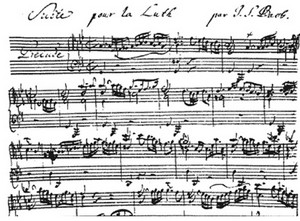
Embarrassingly, he liked to play Bach on the electric organ while making love with his girlfriend, a Korean pianist. Indeed, he had a thing for Bach: he saw colors and had mystical experiences with Bach’s music. He tried to explain the architecture and mechanics of Bach to me, how and why the structure of his compositions had a profound psychological effect. He would also explain why certain popular tunes had their appeal.
It seemed that Mark was bound for success. A Russian dance company had commissioned him to compose a symphony. And then, two weeks before he would have surely won his doctorate, Mark drove his car head on into a telephone pole. There was no explanation for the accident, except that he had "lost control," which aroused my suspicion that he may have had an accident on purpose to avoid success. Fortunately he was not killed, but he was disabled for many months. After a long rehabilitative period he took up cab driving; the last I heard it was his permanent career. No doubt Mark is serving the public well if still alive. Nonetheless, the loss of his genius is regretted by me at least.
It was as if he wanted to fail. He did not drink or use other drugs except tobacco. He was an attentive driver. I do not want to misjudge him—maybe the long hours put him to sleep at the wheel. Still, I speculated that he was fated to fail because the Soviet Union taught him that Jews cannot be great Russian composers. Yet Jews have risen to the top of every field despite being told they are inferior, or in spite of it. I have not been able to reach him. I did save enough money to make a deposit on a tiny, illegal sublet in Manhattan, so I had moved away before I heard about the accident. Now I Google his name ever so often.
# #


 Share
Share Save
Save