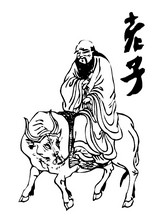
“Decoding of the Lao-Zi (Dao-De Jing)” by Alexander Goldstein is a scholarly, in depth, and detailed examination of the classical Chinese philosophical text called the “Dao-De Jing” or the “Laozi”. The “Dao De Jing” was written sometime in the 6th Century BC by philosopher sage, LaoZhi. The ideas and principles of the “Tao”in this text were so profound and important that they became the foundation for the Chinese religion/philosophy called Taoism. Lao Zhi, is widely, considered the founder of Taoism (Daoism).
While there have been many commentaries written about the “Dao-De Jing””, author Goldstein, reflects on its deeper meaning, disclosing the “mystery of the laozi” by studying its mathematical and inner canonical structure:
“This work object is not to restore the original "Lao-zi," but on the basis of the logical rules and numerological analysis disclose its canonical structure. In the intrinsic line with current philosophical perspective and the theory of cognition, this is an attempt to comprehend Lao-zi’s epistemological model revealed through two correlative aspects of the”heavenly Dao and earthly De.”
Alexander Goldstein’s book is great reading for the seriously studious, taiji aficionado who is searching for new insight into the philosophical and mathematical relationships expressed in Chinese Taoist philosophy. Note, of special interest to Taiji practitioners: Check out Chapter 1: “A Journey from “Wuji” to “Taiji” and Back Again.”


 Share
Share Save
Save