Prayer is a form of communication between God and man and man and God. The person who prays to God does two things at the same time: he becomes transparent to himself, more than at any other time, and secondly, he may quicken his spirit to a sudden upsurging of the hunger for God, with the result that he is in the way of support from the vast creative energies of God. It enables a person to know that being in the way is assurance that help is on the way.
Texts: "Pray to your Father" (Matt. 6.6)" "The prayer of a righteous person is powerful and effective. (James 5:16)
Prayer is a tremendous weapon to have in one's spiritual arsenal and an instrument of compassion that can be use to affect healing and increase meaning and joy in living.
We pray to God. Therefore, our prayers should be addressed to God. Recently, I read a prayer in the "Washington Post Parade" written by Rabbi Harold S. Kushner, author of "Why Bad Things Happen to Good People." In that prayer, supposingly written for the peoples of the world, particularly for those of religious faiths, that include Christianity, Judaism and Islam, he did not use the name God, Jesus, Allah or any other name, perhaps with the intention of not offending anyone. Kushner did not address his prayer to anyone in general or in particular. Upon reading it I was immediately reminded of James Baldwin's book, "Nobody Knows My Name." But this was not the approach taken by St. Francis of Assisi who began his twelfth century prayer with "Lord make me an instrument of your peace," Martin Luther who began his fifteenth century prayer (that later became a song) with "A Mighty Fortress is Our God" and the Psalmist's who began his prayer that begins the last Psalm with "Praise you the Lord. Praise God in his sanctuary." In his prayer Kushner says, "Let the rain...sun...earth...and mountains" perform extraordinary feats without acknowledging the Creator of the rain, sun, earth and mountains. How can we acknowledge the created without acknowledging the Creator of the created? The Creator is infinitely more significant than what He has created. How can we pray to a nameless something or somebody or to a nameless nothingness or nobodiness? What disrespect we show when we make any attempt to ignore, disregard, deny or fail to acknowledge, God? Wiseman Solomon writes: "In all your ways acknowledge him and he will direct your paths. (Proverbs 3:6).
Howard Thurman, a mystic and premier theologian of the twentieth century, sheds some light on the import of "namelessness" when he talks about "a strange freedom it is to go nameless." He writes: "The name marks the claim a man stakes against the world....
The name is a man's watermark
above which the tides can never rise:
It is a strange freedom to be adrift in the world of men...
to go nameless."
And, of course, it is unthinkable, by any stretch of the imagination, for the only One who has a name above all other names, who is God above gods, to go nameless. More than unthinkable, it is anathema, blasphemy, atheistic couched and skewed demoralized intentionality. The person who does not acknowledge God in his prayer will not find a comrade among the saints or people who know God and love Him. No, not among those who do not only know God but know Whose they are. The very first verse in the Bible begins with "In the beginning God..." (Genesis: 1:1). God speaking of Himself said, "I am the Lord your God, who brought you out of the land of Egypt, out of the house of bondage." (Exodus 20:2). In the Gospel of John it is recorded, "In the beginning was the Word, and the Word was with God, and the Word was God." (1 John 1:1). The Word John speaks about is Jesus. The Bible declares, "Wherefore God also has highly exalted him, and given him a name which is above every name; that at the name of Jesus every knee should bow...and every tongue should confess that Jesus Christ is Lord, to the glory of God the Father." (Philippians 9:11). Jesus said to Philip, "He that hath seen me hath seen the Father." (John 14:9). In the Lord's Prayer, more correctly, the Model Prayer of Jesus, he said "When you pray, say, Our Father who are in heaven, Hallowed be your name... . " (Luke 11:2).
We are to acknowledge God when we pray. We are to call him by his name just as he calls each of us by our name. "He calls his own sheep by name." (John 10:3).
I have addressed Rabbi Kushner's refusal to use the name of God in his prayer at length and with considerable emphasis because there is a growing tendency on the part of many people, including some professing Chrstians, to refuse to use the name Jesus Christ or God because they do not want to offend some people who are not Christians. They say that they want to be religiously and politically correct. But they could never be more religiously and politically incorrect than when they refuse to acknowledge God. "Let God be God!" "...let God be true , but every man a liar." (Rom. 3:4). Jesus said, "...whosoever shall deny me before men, him will I also deny before my father which is in heaven." (Matt. 10:33).
Having said these things I will now focus on "the power of prayer." We should pray for ourselves and for others. When we pray for others that is called an intercessory prayer. We are admonished to "Pray for one another." ( James 5:16). Jesus prayed for others: He said, "Simon, Simon, Satan has claimed the right to sift you all like wheat, but I have prayed that your own faith may not fail." (Luke 22:31-32). And He said, "Neither pray I for these alone, but for them also who shall believe on me through their word; That they all may be one; as you, Father, are in me, and I in thee, that they also may be one in us." (John 17:20-21).
Prayer may be an overflowing of utter praise, adoration, and celebration. It can also be an overflowing of thanksgiving. Thanksgiving not necessarily for blessings that God has granted but thanksgiving that God is God and the soul is privileged and blessed with the overwhelming consciousness of this fact. Rufus Jones observes that, "Prayer at its best is when the soul enjoys God and prays out of sheer love of Him."
The prayer witnesses are numerous. "Abraham prayed unto God: and God healed Abimelich, and his wife, and his maid-servants; and they bare children." (Gen. 20:17). Shortly thereafter, Abraham's wife Sarah, whose wombs had been shut up and who had reached old age, conceived and bare a son. Daniel prayed while in the lion's den as did Shadrack, Meshack and Abednego while they were in the fiery furnace and they were delivered. (Daniel 6:23 and Daniel 3:21 & 26). It is said of Peter and John: "And when they had prayed, the place was shaken where they were assembled together; and they were all filled with the Holy Ghost, and they spoke the word of God with boldness." (Acts 4:31). "And at midnight Paul and Silas prayed, and sang praises unto God: and the prisoners heard them. And suddenly there was a great earthquake, so that the foundations of the prison were shaken: and immediately all the doors were opened, and every one's bands were loosed." (Acts: 16:25-26). I have met many people who testified that their prayers have been answered. My own prayers have been answered time and time again. I cannot prove how prayer works, but it works. It happens again and again in the religious experience is a part of the data of the prayer experience itself. Abraham Lincoln spoke a truth when he said, "More things have been wrought by prayer than men every dreamt."
The experience of prayer can be nurturing and culltivated. It can create a climate in which a person's life moves and functions. Indeed, it may become a way of living for the individual. His life may become a prayer. This was the remarkable impact of the life of Jesus upon people he encountered. It was this that brought a madman to his senses, that called little children to Him, that made sinners know that their sins were forgiven. His whole countenance flowed with the presence and glory of God. And the secret? "A great while before day, he withdrew to a solitary place and prayed, as was his custom."
Learn to pray powerfully. We do that when we pray in the spirit. The Apostle Paul declares, "I will pray in the spirit." (1 Cor. 14:15). Jesus was led by the Spirit," In Revelation, the last book of the Bible, John exclaims, I was in the Spirit on the Lord's day." (Revelations 1:10). Every day is the Lord's day. "This is the day which the Lord has made; we will rejoice and be glad in it." (Psalm 118:24)
What posture should I be in when I pray? Any posture will do if the heart is positioned in the right direction, upward. And remember the Bible teaches us to pray verbally, not silently. Think silently, if you want to, but pray aloud. Jesus said to his disciples "When you pray SAY our Father." Silence is not always golden. Silence can be use as an effective prelude to prayer, but not as prayer itself. Say to God, "I love you."
When do I pray? As the African American spiritual says: "Everytime I feel the spirit moving in my heart I will pray."
Prayer change things, but more importantly, it changes us and those we pray for. Amen.
(You have just read a sermon that I was privileged to deliver to a congregation in Charlottesville, VA.)
Your comments welcomed. Write to:
Uriah J. Fields
P. O. Box 4770
Charlottesville, VA 22905
Copyright 2003 by Uriah J. Fields
Want to review or comment on this poem?
Need a FREE Reader Membership?
Reviews of "The Power of Prayer"
Reviewed by Nicole Davis Vergara (Reader)
Reviewed on May 27, 2003
A lovely inspirational piece of prose!
~Nikki~
Reviewed by na na (Reader)
Reviewed on May 26, 2003
Pray for the night is coming. Pray for the new dawn. The power of prayer is stronger than anything in the universe. Bill
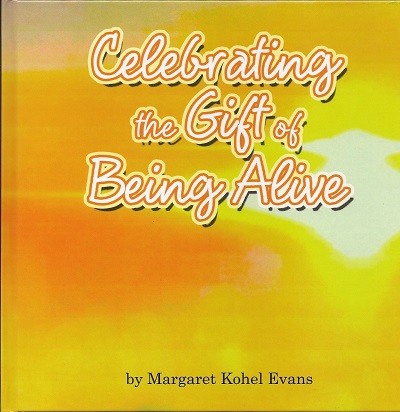
This exceptional book, Celebrating the Gift of Being Alive, has the perfect thoughts and words for birthdays, graduations, engagements, marriages, and any life celebration or family tradition.





 Share
Share Print
Print Save
Save Follow



~Nikki~
Warm Love
*-Brittany-*
PS GREAT prose!
Nancy
peggy
Sandie Angel :o) a.k.a. May Lu $*_*$