Encounters in our Pool Garden with a Mockingbird and our Blueberry Bushes
My better-half, Maria, recently suspected that birds may be sneaking away with some of the delicious blueberries that we have growing on a few bushes in our Pool-converted Garden.
Sure 'nough, as I later went outside to do some chin-ups, I saw a Mockingbird flutter out of one of the blueberry bushes with a small round blue thing in its beak.
... I first got angry, but then I looked at our St. Francis of Assisi garden statue nearby and had a change of heart ... and it made me think of a great book and movie I'll always treasure: "To Kill A Mockingbird" ... and I love one of those great quotes from Atticus Finch:
“You never really understand a person (Mockingbird) until you consider things from his point of view … until you climb into his skin and walk (fly) around in it.”
Mockingbirds seem to be the only native, natural city species here in Houston. They are everywhere, mocking other birds in spring and guarding their nests and territories with bravado that belies their small size. Lately, we have found that if we let our cherry tomatoes reach the red stage, our mockingbirds like to poke a hole in them (for the seeds?). They don't like the seeds we put out for other birds, but seem to prefer insects and worms.
I have planted asparagus fern around the house. White flowers turn into white berries that turn into red berries in midwinter. I have seen a mockingbird come by every once in a while and eat those red berries, seemingly making sure that they would last all winter long. Crape myrtle provides another food for them.


 Share
Share Print
Print Save
Save Follow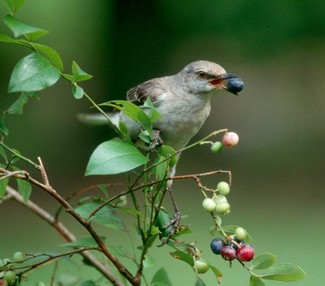









I have planted asparagus fern around the house. White flowers turn into white berries that turn into red berries in midwinter. I have seen a mockingbird come by every once in a while and eat those red berries, seemingly making sure that they would last all winter long. Crape myrtle provides another food for them.
Ron