A quiet painter who links love with pain gives the Big Man’s daughter only half her story. Years after the painter’s death, the daughter finally learns the rest and understands that patience is sometimes the only way to know what a person really means.
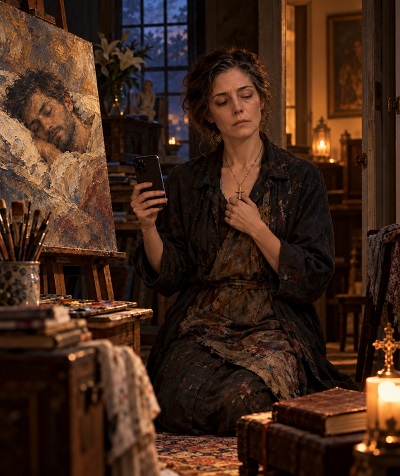
Once upon a time, there was a painter. The left side of her face had been paralyzed since she was ten years old. She had few words and even fewer smiles, as if the half of her face that had stopped moving had taken half her words with it.
She worked for an old man everyone called the Big Man.
She painted in silence. When she finished a painting, she did not stand in front of it for long or wait for praise. She took out her phone, took one photograph of the painting, then put the phone aside and knelt. She held the cross hanging from her neck in both hands and prayed.
The Big Man’s daughter saw the painter many times over the years.
But in truth, she only really met her once.
During that first meeting, the painter suddenly grabbed her arm with both hands and twisted the skin in opposite directions, giving her what children sometimes call a Chinese burn.
The daughter flinched and stared at her in surprise.
The painter gave one of those small, rare smiles that only half her face could make.
And it was not the last time she hurt her.
Whenever the Big Man’s daughter sincerely complimented one of her paintings, or said something kind about the painter herself, the painter responded in the strangest way. A punch to the arm. A quick hit on the shoulder. Something painful enough to make the daughter step back and wonder why this woman could not simply accept a kind word like everyone else.
During the one time they truly spoke, the daughter asked about her face.
She wanted to know what had happened when the painter was ten.
The painter gave her half the story.
And the daughter took that half and moved on.
Years later, the painter died of cancer. Years of working with paints and materials had left their mark on her, especially the work that went into her final painting.
After her death, the Big Man’s daughter met someone who had known the painter well.
Very well.
She knew the whole story.
And she also knew something the daughter had never understood.
The punches.
The little pain from that first meeting.
The strange way the painter reacted whenever someone praised her.
She had not hated the daughter.
Quite the opposite.
That was how she showed love.
She hurt the people she cared about.
She answered appreciation with pain.
She answered gratitude with something that looked like agony.
Some people go through their whole lives connecting things that should never have been connected. They learn love through hurt, so hurt becomes the language they use when they love. They learn appreciation beside pain, so they do not know how to receive a kind word without returning something painful. They learn gratitude through agony, until agony becomes part of the way they say thank you.
The Big Man’s daughter had not known any of that while the painter was alive.
Because she had heard half the story.
Then jumped to the ending.
The other woman knew the whole story for a much simpler reason.
She waited.
She waited long enough for the painter to speak in her own way.
Long enough to understand that silence could be part of the story too.
And long enough to hear the whole story, not half of it, before deciding what the ending meant.
The world is a little like a school. It has different rooms, different teachers, someone in charge, and others who are expected to follow the rules.
Between need and desire, there are invisible lines. Sometimes desire disguises itself as need, and sometimes what appears to be desire is actually a need trying to take another form.
A single pin is easy to overlook. So is a single ruble or euro. One coin can pass unnoticed, just as one pin can disappear into a corner.
But a box full of pins is much harder to ignore.
A single pin takes up almost no space, and its prick touches only a tiny part of the body. But if an entire room were filled with pins, they would no longer seem insignificant. They would become a noticeable part of the school itself.
Money can work the same way.
One ruble may mean almost nothing. One euro may go unnoticed. But when enough of those small pieces gather in one place, they stop being small. They begin to occupy a significant part of a life, a system, or perhaps even the world itself.
If there were students in one classroom who cared deeply about animals, and in the classroom next door there was a box full of pins, the box would mean very little to them.
But if that same box somehow turned into a cow, they would rush to bring it in.
The irony is that compassion did not appear because the value changed.
It appeared because the form changed.
Sometimes we do not rescue what needs rescuing. We rescue what resembles the image we have already learned to pity.
You have a very deep and thoughtful approach to story telling. It makes a person look around at people one knows and at one's self and ask, "Are any of my family or friends like this? Am I like this?" I've been thinking of people I know who are animal rights activists and wondering why do they feel so driven to rescue animals when so many of them are in dire need of help themselves. Are some of them trying to rescue their inner child? People are complicated and there are no snap answers. What do you think. I'll bet you have a different way of looking at that issue.
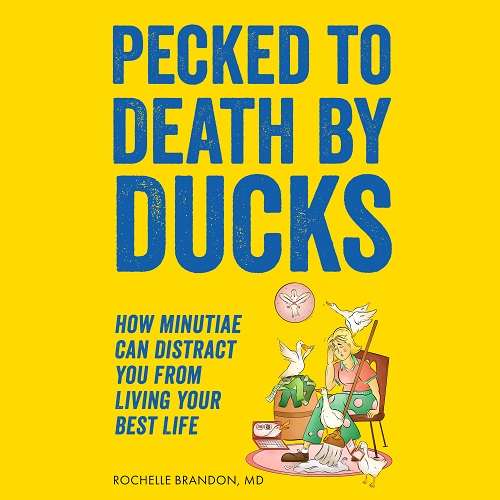
Pecked to Death offers a refreshing perspective on managing the chaos of everyday life, encouraging you to take control and prioritize what truly matters.





 Once upon a time, there was a painter. The left side of her face had been paralyzed since she was ten years old. She had few words and even fewer smiles, as if the half of her face that had stopped moving had taken half her words with it.