Health Care in America: CATCH-22
Many Americans have been sleep-walking for the past several years, in terms of real understanding of their health care insurance coverage status. Let me explain.
One of the most popular forms of health care coverage in the US today, under the terms and stipulations of MEDICARE seems to be the “Medicare Senior Advantage” option.
The Medicare Senior Advantage program provides (in theory, at least) coverage for the three most basic forms of health care need, namely clinical (doctor) visits, hospitalizations, and pharmaceutical meds. I whimsically call it the ‘Good-Luck-with-that, System’ or perhaps ‘Medicare Disadvantage,’ but more on this shortly.
With the rise of the HMO (Healthcare Maintenance Organization, AKA ‘Managed Health Care’) system in America, which occurred in the last 50 or so years, private physician practices were increasingly forced out of business. The same dystopic is at work in America today with regard to small animal veterinary care, as smaller, private vet practices have been similarly forced to either sell out to large corporate veterinary care organisations (“doggie HMOs”, if you will), a move that has resulted in today’s recent escalation of veterinary fees for domestic small animal (pet) services, or cease practicing privately.
Like all forms of insurance, risk management and profitability are the chief attractions for these corporations, so all human resources horse exhaust emanations aside, the more parsimonious the HMO (or vet care corporation), the more profitability potential for investors and stock and share-holders.
Acting as a moderate (but potentially formidable counterbalance to this state of affairs is the massive American legal establishment, which may be unleashed on malpracticing HMOs like so many hungry hounds baying in their pens). Usually all it takes to deal with even the slightest hint of a serious malpractice situation involving an HMO is the threat of a costly law suit, although corporate legal help is also logarithmically expensive, so there is at least some sort of theoretical ‘policeman’ working to keep extreme excesses of malpractice carelessness from going unchecked.
It’s a common joke that a great many of today’s JDs (Juris Doctors, AKA “Lawyers”) are and have long been ‘ambulance chasers’, since personal injury law (especially in its corporate HMO form) is a very, very lucrative branch of law (for lawyers, not so much for corporate HMOs, although they usually have powerful corporate attorneys on retainer to handle any baying hounds that may be sniffing around…)
Naturally, it’s all a lot more complicated than this and therein lies the core problem: health care in America has become a complex, enormously complicated business in this country…especially as it is subject to the unfathomably convoluted rules, regulations and adjudications imposed upon US healthcare providers by the Federal Government’s equally convoluted and labyrinthine bureaucratic oversights. To a large degree it is this burgeoning Federal healthcare regulatory quagmire that makes dealing with the treatment of human medical care and treatment so incredibly frustrating (for both patient/clients and for their health care insurers). And costly, as well.
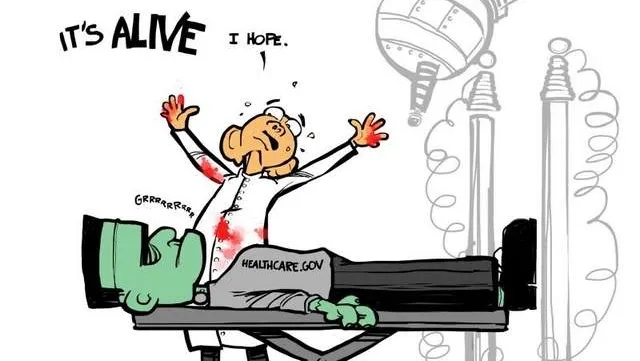
Other nations around the world certainly suffer from excessive governmental bureaucracy to minor or lessor extents, but in a nation the size of the USA with its estimated 330 million+ population, healthcare provision and administration has turned into a virtual Frankensteinian monster.
But returning to the “HMOs”, the archetypal HMO model that inspired this sea-change in health care provision in America was that of the Kaiser Corporation. Kaiser Permanente, begun originally as a healthcare component of Kaiser Industries to care for its WW2 workers, grew during but especially after the war had ended into what it is today: one of the largest managed health care insurance corporations in the world.
As I mentioned earlier, HMOs, as private “for-profit” corporations, must always strive to maximize profits for shareholders (this is a ‘capitalist nation’, right?), so the elicited balancing act that Kaiser (and all HMOs) face involves ‘triaging’ health care expenditures (costs) against profitability (pure free and clear profit) on the balance books, and it is this algorithm that determines what everyone’s share of the managed medical care pie shall be.
As a retired health care professional with some 40+ years of work in clinical and hospital-based cardiopulmonary medical settings (and a one-time former undergraduate student of health services administration studies), I have witnessed all the vast changes that have resulted in today’s constipated rationing of health care to patient-clients with not a little disbelief and much disapprobation. In so many words, I have witnessed Dr. Frankenstein’s HMO monster come to life and leap off the exam table where it was created, to wreak havoc on America’s medical scene in the form of today’s frustrating and totally unsatisfactory health insurance corporation bureaucracy we all suffer from.
And what is wrong with the HMO system, one might ask? Plenty. For starters, modern HMO medicine has been formularized so as to more effectively deal with the massive basic problem it confronts: Too many people needing health assurance (sic) and a paucity of functional resources and treatment infrastructure to handle it all, timely.
Typically, the HMO compels its physicians to process patients in much the same way a cook at a Denny’s Restaurant makes pancakes: pour in the batter, flip ‘em over a few times and quickly flip ‘em out onto a plate. Patients are ideally each allocated about 15-20 minutes of actual physician interaction on any one visit. They are also confined to (as in the Kaiser model) a total of only three ‘complaints’ that they wish to bring to their doctor’s attention.
Put yourself in the patient’s place and try to 1) first assure yourself that you have the doctor’s full attention (not focused on his computer terminal), then 2) try to explain in a meaningful and expedient manner exactly what symptoms and discomforts led you to make your appointment; 3) answer his questions as expeditiously as possible, and finally 4) DEMAND meaningful action, and if you feel your problem goes far beyond so-called ‘Band-Aid’ and NSAIDS resolution'' (i.e. symptomatic relief), state clearly what you think is needed to adequately assess your complaints!
Far too often, most people are not necessarily skilled rhetorical whizzes and for many expressing themselves clearly and coherently is a challenge somewhat like Kamala Harris whipping up a word salad trying to express herself: garbled and unclear at best.
Then, try to get all that squeezed into your scant ‘15 minutes of medical fame’ allocated to you by your doctor’s HMO. Believe me, even for a skilled and experienced medical professional, that’s a TALL order! For the average patient in pain or discomfort, it’s near impossible. If you leave the clinic with a pharmacy order for NSAIDS pain relief, minor cold relief meds and a request to return for a follow-up visit in a few weeks (“…if things aren’t any better by then”), consider yourself ''adequately treated.’ Doctors are, of course, under tremendous pressure to conform to their HMO’s office protocols and this simply compounds the problem for both patients and staff, so it''s not that they don''t care!
The whole HMO clinical appointment process (i.e. ‘office visit’) begins when you are registered at reception and then taken into a small antechamber where a bottom of the medical food chain worker (usually a Nurse’s Aide…sometimes an LVN) records your height, weight, pulse and blood pressure. These people, recent studies have shown (and I can personally affirm) are seldom adequately trained to take a patient’s blood pressure measurement properly and the results of these ‘on-the-fly’ preliminary measurements are notoriously inaccurate and often far off the mark. Simple as it may seem, blood pressure measurement MUST be taken precisely and carefully to assure its accuracy. This is a problem that most HMOs in their haste to run patients in and run them out again would strongly deny. If these ‘gate guards’ were more adequately paid (meaning more highly educated), even simple BPs would be far more accurate than most are at present.
But the above is merely a hypothetical glance at a typical HMO office visit and unless you are lucky enough to have an extremely compassionate, experienced and knowledgeable physician (with excellent people skills, as well), who may give you a bit more time and understanding than many do, you have just experienced modern clinical medicine at its (corporate) worst! Welcome to the shabby American managed clinical healthcare world!
Speaking from a personal level, I have long been a subscriber to the Kaiser Foundation’s HMO insurance and I can assure you all that it has progressively changed from a system that formerly provided an adequate and reasonably good standard of care to its patient-clients…to one that presently succeeds in frustrating practically everyone who has Kaiser coverage. Unintended perhaps, but impactful on consumers nonetheless.
Keep in mind, as I say this, that people vary one from the other in all respects of their perceived awarenesses as much as nuts physically vary from fruits and vegetables. In terms of both their education, their basic alacrity, intelligence and in fact in just about any manner you can think of, no two people are alike. The result of this is that the massive human resources ‘massaging’ and ‘mission promotion’ propaganda that HMOs engage in today are often quite able to convince patient-clients that they are in the best possible (medical services) hands, when in fact they may well be sorely short-sheeted by the bottom-line bean-counters who call all the shots in the HMOs. Marketing costs incurred by HMOs selling this glib message are reportedly somewhere up in the billions of dollars annually. Believe it!
It’s no fluke that even HMO corporate names (like ‘Dignity Care’…”We CARE for you” or "Human Kindness”) are all carefully chosen allusions to persuade you that “they” (your healthcare provider) are your most loyal, true-blue partners in sickness and health, when in fact your healthcare is actually being carefully measured out and administered in complex conditional terms and quantities that assure an HMO corporation the highest possible profitability potential. Anything short of a complainant presenting inarguable grounds for a negligent malpractice accusation (against which any sort of reasoned defense would be near-unachievable) has already been carefully factored-out by bean-counters!
It never hurts to remember that any ‘for-profit’ corporation is like an octopus that has a sticky, sucker-studed tentacle firmly anchored in your wallet (or purse), no matter how well said institutional octopod blends in with the surroundings! That’s what public corporations do best, after all, and it should also never be overlooked that due to corporate regulatory law in this country, a ‘for-profit’ corporation has been “gifted” with the same basic protections of the solitary citizen (which is why an immense corporation such as Chrysler Corporation can declare bankruptcy and not have to repay billions owed to its creditors…or Goldman-Sachs, which actually was given a governmentally subsidised bail-out after having engaged in scandalous fiscal mismanagement that resulted in hugely avoidable, almost incalculable losses to many parties within the US Banking System, etc., etc.).
In other words, the present day scenario is quite a change from the days of yore in which each family had a friendly neighborhood doc who saw them through their health crises, regardless of what they were suffering from, or to what extent!
In the past several weeks we all witnessed the shocking, deliberate ‘execution’ by a fairly well-off but mentally stressed-out young man, of United Healthcare CEO Brian Thompson, setting the whole nation into a tizzy, trying to understand not just what had happened but more importantly WHY?
At the time it occurred the widespread shock and disbelief was palpable…even in a country that has seen more and more of these impulsive mental decompensations with each passing year. Eventually, however, the point was raised that as shocking and disturbing as this may have been (inarguably a patently and egregiously wrong act by any definition), it prompted certain questions concerning the overall unsatisfactory state of healthcare in America. Something seemed clearly wrong with the American healthcare system and like so many other elephants in the room, the collective awareness of his dysfunctions had somehow escaped the comprehension of the average individual, other than possibly a vague feeling of frustration with the experiences one may have had personally with one’s HMO provider (the sort of dissatisfaction that HMO human resources departments everywhere labor overtime to ameliorate, obfuscate and otherwise disclaim and disavow in their efforts to promote their employer’s rectitude, integrity, and absolute purity of purpose and conscientiousness)!
Predictably, almost immediately after the unfortunate CEO, who by all accounts was a very well-liked, generous and good-natured individual, was murdered, there began to rise a plethora of analyses, opinion pieces and articles in the media focused on the increasingly apparent short-comings and inadequacies of our current healthcare in America.
It might help here to think of the famous Hans Christian Anderson fable of the Emperor’s New Clothes. Suddenly, instead of fawning courtiers stumbling all over themselves declaiming their admiration for the Emperor’s excellent taste in Royal Raiment, we found ourselves taking a stone-cold, sober look at all the collective disgruntlement Americans have with the quality of their healthcare coverage, which is reportedly the most expensive in the entire world and which corporate HR minions are constantly reassuring us is the very best available anywhere (yet the most poorly managed and administered), and exclaiming “Why...the Emperor is NAKED!”
Could it possibly be that corporate HMOs have been stringing us poor consumers along with a line of fulminous horse exhaust that would drop a range-toughened cowboy off his horse at a mere 50 yards distance?
Let me give you an example from my own recent experiences that serves to somewhat illustrate my point. I have had a number of less-than-satisfactory encounters with the Kaiser Permanente organization of Northern California, fruitlessly trying to get a timely appointment with my designated primary care provider, most of which have been protracted exercises in sheer frustration, misconnections, “no appointments available at this time”, etc., etc. Typical waiting times to see a doctor by scheduling a ‘non-emergency’ clinical visit have ranged up to several weeks, depending upon a wide number of disparate factors.
Kaiser has a profound problem that it has never openly discussed, and that is a shortage of primary care/family practice physicians. For years, Kaiser made up for this shortage of US trained and board certified doctors by hiring foreign trained physicians. Typically, such a physician would work for Kaiser for an unspecified period of time (presumably at lower salaries than certified, experienced staff) until they were what we call ‘board certification eligible’: that is, graduates from an accredited FOREIGN medical school who became eligible per American Medical Association criteria to sit for certification exams in their specialty in an HMO’s employ. Once board-certified, they would typically migrate elsewhere in search of better salaries, having established their bona-fides and street-creds with their new board-certification.
Thus, the physician turnover at Kaiser has been quite substantial. In 15 years, for example, I have been given as many as 8 “new” primary care providers at Kaiser. This does not make for excellent patient/physician relationships, in my opinion, despite the fact that a patient’s complete medical history is available to any physician via the Kaiser patient history system computer (that’s typically a lot of data to sift through, if one needs to learn quickly what a patient has been in past and is currently being treated for).
Of course Kaiser is not alone in having to deal with this shortage of qualified physicians; other HMOs suffer the same difficulties and one way of “managing the demand” is to farm patients out to RN Nurse Practitioners and Physician Assistants. While this is a partially effective alternative, Doctors of Medicine are by training and experience typically far more qualified to diagnose and treat ailments than a nurse or a PA.
Then there’s also the ‘triage’ process, whereby patients are advised to first contact a so-called “Medical Advice Nurse”, who then decides if and when a patient really needs to see a physician or not, and dispenses advice on how a patient should proceed to be seen, accordingly. Unnecessary office visits are thus gently deflected, sparing precious physician time and attention.
Patients used to be able to message their personal physicians directly, via email, but apparently Kaiser (in its infinite bean-counter wisdom) decided that this was also a largely wasteful imposition on valuable physician time and recently ended this venue of patient/physician contact, preferring initial contact be made through an advice nurse. To an old military medical person, this is classic ‘triaging.’
Another recent ‘cute’ little finger-in-the-dam tactic is the virtual patient/physician video visit, in which the whole complex process of trying to communicate meaningfully with one’s doctor is even further obfuscated and diffused.
This, plus other changes in the Kaiser patient/HMO interaction interface, have increasingly put further roadblocks in place between patients and their primary care physicians, although I am sure Kaiser HMO HR representatives would strongly deny that this is at all deliberate (merely expedient). For someone such as myself, who is what we whimsically call a “trained patient” (i.e. a member of the ‘medical establishment fraternity’), such fulsome denials verge on the brazenly laughable.
A further problem (specific to Kaiser) is that Kaiser Permanente is grossly oversubscribed in terms of its paid-client base. Translated, that means “too many care receivers versus too few available providers”. This is sort of akin to the airline custom of overbooking passenger flights on a commercial aircraft (selling, say, 200 tickets on a specific flight when the aircraft’s rated maximum capacity is only 175, the idea being that it has been statistically calculated that of that 200, 25 people will either cancel or not show up).
In summary, the Kaiser Permanente out-patient clinical treatment component (meaning doctor/patient clinical interfacing) is woefully inadequate to the demands being made upon it. To its credit, Kaiser Permanente’s hospital in-patient services (hospitalisations, acute care and surgeries) are excellent…some of the best in the entire nation, as are, generally speaking, the Kaiser ERs. Another feather in Kaiser’s cap is the superior competence of their pharmaceutical services. In my opinion, Kaiser clinical pharmacies are among the best anywhere today!
However, given that most of the demand for care comes from paid-insureds who need treatment for general mild and/or non-critical problems, with far fewer in-patient requirements arising therein than from out-patient types, the typical health care subscriber at Kaiser has found routine treatments and doctor visits to be far more frustrating ssssnd problematic than they were, say, 25 years ago.
If one admixes into this the traditional Hill-Burton Act obligation levied upon facilities receiving Federal health care subsidies/grants/etc. (an arrangement that stipulates that any such federal subsidy-receiving facility provide a certain percentage of ‘free care’ to those in need…meaning those w/o health insurance, such as immigrants, non-citizens, et al…the burden upon paying, care-receiving subscribers is further compounded.
All of these things are part of that ‘dark underbelly’ of healthcare provision, American style, that the general public is carefully shielded from and kept in the dark about, by commercial propagandists. All John Q. Patient consciously understands is that it’s getting a lot tougher to see a doctor, no matter what HMO he belongs to.
After all my years dealing with health care services, both in America and abroad (Taiwan, Saudi Arabia, etc.), I can truthfully say that the average American truly has a legitimate beef with the system that has been set in motion to help care for him and assist him with medical matters…whether he is consciously aware of it or not.
The young Mr. Luigi Mangione, “suspected” of having murdered the United Healthcare CEO, encountered (apparently) a number of similar frustrations with his (and his family’s) United Heathcare insurance. Of course, United Healthcare is one of the largest health insurance providers in the nation and while it certainly wasn’t the CEO’s direct culpability in creating Mangione’s problems, this young man’s frustrations are the direct result of the same sort of complexities encountered at Kaiser or at any other provider’s doorstep, elsewhere! America’s overall healthcare infrastructure has fully become that unconstrained Frankensteinian monster I alluded to, earlier on.
I’ll close this with an experience I had with United Healthcare myself (that I’m sure others can relate to who have joined that organization as paid subscribers). Despite having had Kaiser insurance for a number of years in the past, I was getting progressively frustrated (NOT homicidally frustrated however, I should like to quickly point out here) with Kaiser and decided to switch coverage (along with wifie) to United Healthcare and give it a try. After all, their promotional advertisements all seemed so attractive and so genuinely promising! The United Healthcare HR people must have worked long and hard making their corporate care services seem positively idyllic to prospective new clients, in their television advertisements!
Surprise, surprise! After the switch was completed, we ran full-on into United Healthcare’s Byzantine “select your personal physician from a wide range of available doctors” enticement, a real-life approximation of the famous Joseph Heller ‘CATCH-22’ paradox. [Note the use of the word “available”, here!]
“Available doctors” turned out to be NO DOCTORS. There were none that were available from which to choose. Those who were listed as being ‘on staff’ (many of whom appeared to be quite well educated and trained, with excellent professional credentials), all seemed to be “Not currently accepting new patients at this time.”
Oof! What to do? Thus we remained paying United Healthcare subscribers for almost a full month without having a designated personal physician to turn to! Talk about feeling betrayed and hung out to float, high and dry, in the breeze! Fortunately, we are both in excellent health for our age.
With all our many frustrations with the Kaiser system, this United Healthcare brobdingnagian dilemma was WAY over the top in terms of anything comparable encountered at Kaiser, where at least we had available primary care provider physicians!
That upsetting incident resulted in our promptly reversing course, engines hard-astern, and going back to ‘Mother Kaiser’ as quickly as we could, which fortunately we were able to do without additional complications; but it served as a real eye-opener and also evidence that as bad as things might seem at Kaiser, unless you have one of the costly premium health insurance policies, all HMOs subscribers suffer the same dysfunctional frustrations.
As to what to do about this pathetic state of affairs, no, the answer is not along the lines of the suspect Luigi Mangione''s approach, but rather to address this unacceptable status quo through legitimate courts of legal and political redress…that is, through political representatives for the most part. Mangione, in his delusions of indignant personal justness and legitimacy, attempted to solve this problem as a sheltered, somewhat naïve adolescent might…by use of direct and immediate violence. Those of us who are much further along on the often sad and discouraging path of human life experience have come to understand that rarely does violence (of any kind) solve the immediate problem at hand, but that’s what growth and maturity is all about, isn’t it? In short, experience in the real world, and that usually only comes with age.
One final situation to be aware of is the Democratic, left-of-center progressive effort to provide free medical/health care to all illegal immigrants, now estimated at being on the order of several millions! With our present medical HMO treatment infrastructure already at its bursting point, with its continuing paucity of adequate wherewithal to treat medically insured, paying patient/clients, they want us (the paying insureds) to shoulder the enormous additional burden of paying for the medical care for all those non-citizen free-loaders who have flooded into our state! Californica (sic) is, naturally, front and center in this grossly fantastic distortion of realistic expectations…and it’s just another one of many reasons that Californica tax-payers are relocating out-of-state by the car-loads.
In closing, I wish you all the best of luck in your own encounters with our miserably inadequate American health care system. God knows you’ll need it (but He/She is sitting this one out, not taking any sides on the issue, so I’ve ascertained)!
------------------------------------------------------
Picture credit: USA TODAY







 The recent murder of United Healthcare CEO Brian Thompson has suddenly elevated America's long-simmering problem with national healthcare concerns to the forefront of our collective awareness. What follows here is a casual exploration of our shambles of a healthcare treatment infrastructure that we know as 'managed healthcare', which is not, sadly, corporate excellence at its best.
Certainly the attempt at leveling the playing field by progressive advocates has caused healthcare cost to increase. For example, my recent radiology experience in an ultra modern X-ray laboratory where seven young ladies appeared to help me get on the table, they had a very expensive Hoyer-type electric lift now mandated for people in wheelchairs with Medicare. Where before, one or two individuals would physically lift me on the table or doctors’ chair for examination or procedures. Fortunately, my dentist has so far been able to do all procedures from my wheelchair.
Your history of HM0s reminds me of my cousin’s wife, a top CPA who with others started an HMO back in those days from a small Northwestern Wisconsin town. Apparently it failed. But I don’t know why. From what my sister tells me about our hometown with a renowned hospital and clinic, rivaling even the Mayo clinic in Central Wisconsin where I was paralyzed in surgery, she had a devil of a time getting insurance before reaching 65 and trying to get a reasonable advantage program after 65. Her husband has VA benefits.
Throughout my 30 years of employment at a state university in Texas, I have the best Insurance with 20% co-pay that the State could offer. But occasional re-bidding of the services took me away from the locally based Kelsey Seybold clinic in Houston affiliated with a top level Presbyterian hospital since purchased by Arab interests. Before I turned 65, Kelsey Seabold no longer took Medicare, probably because of the difficulty in getting reimbursed and the delay.
However, before I turned 65, Kelsey Seybold formed their own five star Medicare advantage program and I continued to get top care until three years ago when the state rebid end United Healthcare got the contract. I had to change primary care physicians. Fortunately, unlike you stated, I have been able to send messages to my primary care physician through their website, similar to email. However, low paid nursing and physician assistants often carry out my request… Sometimes badly that requires the doctor to correct.
As always, the wealthy and the government connected like me, always get the best care while everyone else gets cut off just when they need it.
The thrust towards privatizing healthcare which has always been a personal thing between a patient and their doctor without profit involved, now focused on high paid executives and stockholders (I own some healthcare stock) rather than patient’s benefit is the sad result. The Hippocratic oath has been misused when I find that cheers to paid executives insist on hiding their medical histories to keep their jobs. When we all have medical histories and it shouldn’t affect our employment unless it actually affects our ability to do the job.
I’m curious to find what the efficiency experts will do during the next administration. Will they make the healthcare system run more smoothly or will they take away healthcare that is sorely needed by the lower 1/3 of society that goes to pain relievers like opiates for their many healthcare problems rather than having good counselors and physicians available to keep them away from addictions.
Ron