The Torquestra
By Diana J. Legun
October 23, 2022
The concert begins its performance around 7:00p.m. Rehearsals occur during the day, but they strum, toot and plink their scales independently and half-noticed among the doings of the stage crew, curators and custodians.
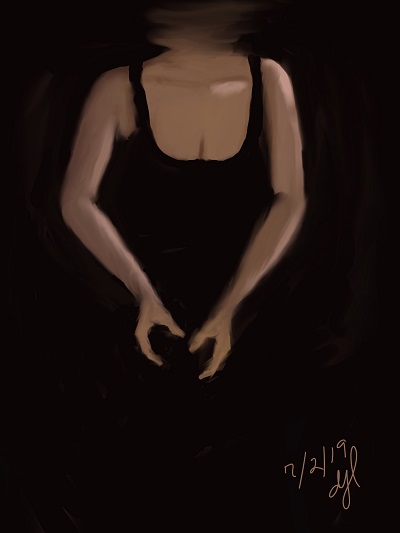
But, ahhh, come 7:00p.m. all musicians are in their sections and seats, wearing classic black and ready to stun the audience, who happens to be me, the host, the single important individual absorbing the sound, the acoustics of the human body.
The curtain goes up, the lights go down. One solitary movement begins. The brain. The brain, the conductor, the focal point of the whole ensemble. Baton raises……and lowers……tympani, the kettle drum, the headache sets the tone, joined by the snappy snare drums. Then, slowly, deep booms, the bass drum, the heart. A resonating rhythm for all other instruments to follow. Haunting cadence, it never stops.
High above the floorboards of sound, the piccolo, in stereo, more pronounced in the right ear than the left, but there in all its dentist-drill piercing piccalodian nose-bleed section of the orchestra, often so shrill it resembles a mosquito lodged in the inner ear, never finding its way out.
Joining that, and distracting from the tremolo are the violins, the oboes, the cellos — oh the strings!! I love them because they outnumber the piccolos — those cellos, the foundation of fizz in both hands and both feet, their vibrations almost reassuring in their perpetuity…violins always there, playing the notes all together, a swirl of sound, not painful, but aching and sad………
Bells chime in with crisp brilliance, little sparks of pain….like forth of July sparklers that land here and there all over the body, arms, legs, shoulders, chest. Pin-pricks so random, so surprising, I’m standing near the bonfire without clothes.
Trumpets, cornets, french horns, and tubas seem to me to belong in a band, not a symphony. They have their place in the wind instruments, opposite the reeds. Headache plays multiple instruments, one is the trumpet. Versatile in its ability to wear the ‘mute’ attachment (Tylenol), that softens the sound, but doesn’t take it away. Brass section is loud, but it blends with the rest…so many instruments in the philharmonic unwellness.
In the percussions can be found a rare little sound, wooden blocks, who would have thought. That is the annoyance of the ultimate itch, the pecking, persistence, the madness. All on my back, every single pointed peck, peck, peck, peck, I can’t even scratch enough to make it stop. Because it doesn’t play on each orchestral page, I forget it is part of the arrangement. But when it comes in, I wish I could take off my skin, and that’s the story of the wretched little knock, knock, knock, knocks!
Most obnoxious in the whole ensemble, is in the woodwinds family, the loudmouth. The saxophone. Shooting down both legs, that devil rips forth its irritating, electrocutionary assault, raking the central nervous system into one lightning-bolt shooting down to the feet and toes, the saxophone. It follows me every step I take, standing or sitting, night and day I jolt from the taser. And in uncanny precision, those electric volts also follow their rhythm. Like waterboarding waves of wrongness, they are inhumane in their anticipatory torture.
Reeds are more subtle. Some almost sooth, like the bassoon who creates a brain fog-like grogginess with notes from the basement of tones, large and swollen. Some are slightly gritty, like the clarinet. This performance features the lead clarinet, the scorched tongue. She has the longest-standing position in the orchestra. Been there so long, it feels lonely when she’s not playing her part. Strange, the absence of this fire-tongue sensation; I’m so used to its burning presence. But the hush of the diminuendo doesn’t last long before….oh! there it is, the one to count on. The scalded tongue’s faithful presence, resonance, resonance.
Then there is the delicate harp. Like wings, those feathers in the lungs. Strumming, stroking, sweeping, even plucking dry little coughs punctuating the strum, little chokes in the otherwise feathery down, breathing in, breathing out. Featherbed, fluffy, barely there sometimes, harping — harping.
Far from least. The breath of the beast, the crest of the best, the guest conductor, the seasonal meister of the concert, the skin. It flushes with heat, the baton marks the beat, then it chills with the slowest of motion. Next it whips upward, unleashing the symbols, crashing shocks that rock me awake. And the furnace of the flashing conductor’s baton brings heat from each and every player in the band. For the skin is the largest organ of the body. All eyes are on that baton.
The night ends its Opus 3, the curtain falls down, I sit up in the earliest morning hours. I’m spent and stunned by another unforgettable night in the theatre of the extreme, knowing I have a front-row seat and in only sixteen quiet hours from now, I’ll be there again, an every-night regular at this concert hall for nearly three years. They don’t even charge me anymore.
The End