Zurbarán
No doubt my father showed me the book with the print of the naked woman with a rose covering her sex for reasons I understood just the moment it happened, for it was next day or very close in time after my father had put two pistols in my two hands and we had shot dead a man standing up at the other side of the kitchen’s table, my mother started to shout histerically What have you done, Luis! What have you done! I took for granted what had happened was like a secret among my parents and I, because I knew a few minutes later by my mother’s smile my mother’s reaction in the kitchen had been pure comedy, so the naked woman with the rose was an image to have me spellbound by a woman, to whom I would adore I dreamed of when I imagined my woman, and I knew this was going to be essential in my life, and for me too to dealing as they expected me to with the kitchen’s event.
I don’t clearly remember my grandfather’s and my father’s libraries in our house in Xinzo de Limia. I remember other prints from the book where the naked woman with the rose appeared, a Coronation of a Bride, Venus punishing Love and a Portrait of Olimpia Mancini. What I do more clearly remember is the illustration in another book my father showed me too, William Blake’s print The Ancient of Days, on which Urizen can be seen in a difficult pose inside a circle similar to the Sun, and this image made me be captivated for life by the image’s sublime message. There is still another illustration my father showed me from that book which I have kept in mind since then too, a drawing by Goya of a dishevelled and bearded naked Colossus seated on his back on a mountain and looking back at the village with assurance, a very powerful presence, I thought the Colossus was alert to defend the villagers from their enemies. Other printed images have impressed me throughout my life of course, but these three I have mentioned were for me absolutely something so special I would say they have moulded my thoughts, conveying with it my love for books and being sparks always lit to guide me.
As I have told in my writings already we came to live in Madrid when I was six. We brought from the village an Espasa-Calpe Encyclopedia of 120 volumes with its furniture, an Universal History by César Cantú, a History of Spain in 24 volumes by Modesto Lafuente, Marcelino Menéndez Pelayo Complete Works in at least 60 volumes, all volumes of a Nobel Prize Winners for Literature collection of selected works, from 1901 until 1964, the Complete Works by Benito Pérez Galdós, therefore National Episodes entire, and other books from the Spanish Century of Gold: Cervantes, Lope de Vega, Calderón de la Barca and Quevedo, and Shakespeare and Molière, and Ruiz de Alarcón and Lorca’s Complete Works, and others memorable like an edition of Homer’s The Iliad and The Odyssey marvellously illustrated. We brought too the two books my father had showed me in the village. The book of the naked woman covering her sex with a rose was an Illustrated Encyclopedia of Women and William Blake’s and Goya’s drawings were printed on a book entitled The interpretetion of dreams by Ernst Aeppli.
Our house in Madrid, in Almendrales, in the quarter of Usera, has two storeys and on the wall curve of the stairs there used to be a tapestry of two children browsing in a parterred garden. The two children have sickles in their hands and are just cutting off small trees’ tops. This image has had too a great influence on me throughout the years, because to me it represented a beautiful deed. Another image in mind I have always had. It was like a dark brown shadow taking the shape of a man’s face as if it was outlined on the old console we had in the tiny hall, where we used to listen to the radio and to play records and listen to the music. When my brother Luis made me at last see the man’s face on the console clearly, I thought of it as a portrait of a wiseman capable of transmitting his will and his word to all human beings. From this portrait I realised I had to emulate what the man had done with no other but his presence only and I knew the man was transmitting to me his mind’s powers.
Although I was fond of drawing and keen on it, reached excellent punctuations in the college, even my parents had bought for me easel, canvases, paints and brushes, I gave up drawing at fourteen because I began to work and I had to go on studying the baccalaureate at the same time. Anyway, I was good at drawing but I hadn’t the faintest idea about painting and I couldn’t get finished no canvas. So it was a different way of appreciating drawings and paintings, I took the visitor’s side, the multitude’s side, to admire them and to witness the impression they made on me. I had not visited many museums and art exhibitions, I only had a clear view of the images retained in my memory since childhood, beside which can be placed other images I had been discovering.
I went for the first time to my friend Manuel’s house at 2 Almagro Street knowing he was antiquarian and paintings expert, apart from doctor in History and in Law. I found old paintings that were very impressive, with motives very important in History and all them from very well known painters. I told Manuel some time later I had a view of the images of the Naked Woman with the Rose, of the Ancient of Days and of the Colossus. He knew the last two, William Blake’s and Goya’s, but he didn’t know the book where the naked woman with the rose appeared. Blake’s print was the frontispice of his illustrated book Europe a Prophecy. I told him also about the tapestry with the two children browsing in the parterred garden. He then spoke to me about the movement in painting and showed me an Angel doing a bold turn in Verrocchio’s and Leonardo da Vinci’s Baptism of Christ, the Angel’s movement due to Leonardo’s hand. He said to me he had four Francisco de Zurbarán’s paintings, I doubt now if he said to me he had four or he said to me he was going to have four, last wasn’t too long ago anyway, I suppose.
When Manuel moved to 9 Jorge Juan Street he had the antiques shop hidden at street level in the courtyard out from the view of passers-by, received a very few people and sometimes showed his house to sell the paintings he had on the walls. In the big lounge with six balconies facing Claudio Coello Street there were paintings too of course, but I haven’t got this very moment no idea about which they were. I remember the library in the room, from where I took many books I read. Next to this room there was the dinning-room, where there was a Magnasco’s painting with mannerist landscape and figures and a big vertical Snyder’s painting of the interior of a kitchen well supplied on which you can see a hunged big wild pig open in the middle. I don’t clearly remember either Manuel’s and Antonio’s rooms paintings. In the corridor to the main lounge there were some paintings, Zurbarán’s Agnus Dei or Lamb of God just beside the entrance door to the main lounge. In my room, which was very small, there was no painting, there was room only for the piece of furniture who served me as console and library. In the main lounge, which was divided in two, one TV room and library with stairs to an upper floor, the other contained a bureau, a library, and always three very important paintings, one being Zurbarán’s The House of Nazareth on the main wall, where Jesus Christ and Mary his mother can be seen seated in a room, Mary sewing some clothes and Jesus Christ trying to pull out a splinter from one of his fingers. Some cherubins in a luminous cloud can be seen also, they are watching what happens in the house all the time, taking care and being glorious witnesses. Another painting in this side was a Vision of Jesus Christ from Seville’s School, Jesus appearing in the heavens before his disciples when they are in the act of hearing the prophecy that announces his coming. The third painting, beside the bureau, was of an aged woman wearing a necklace of very impressive pearls. I told Manuel the pearls were too impressive and too bold, but he was lucky and sold it out before I could be going on with mockery. In the TV side of the main lounge there was a painting of Venus and Apolo, very well adorned both, walking together and looking at each other, leaving behind a wood where a little boy and a little girl are burning wooden sticks. On the wall top of the chimney there was first a big portrait of a French nobleman very arrogant and pedantic indeed. I told Manuel he should remove the portrait and hung up some inspiring painting. He did and chose exceptionally. He hang up the big portrait of a poor philosopher with an old book in his hands. The philosopher is on the side and his mantle consists of patches. He’s showing the book and has a nail between the pages at the low corner of the book.
I know he had preferences and wished to have some paintings for himself. He doubted if selling Zurbarán’s Santa Face, known too as Veronica Cloth, for 900 million pesetas to a Japanese Museum. He had asked for authorization to the Ministry of Culture to sell the painting. The Ministry of Culture responded to him saying the painting could not be taken out from Spain to be sold, that Prado’s Museum was interested in the painting and the Ministry had approved 4 million pesetas (24.000 dollars) to buy the painting to be permanently exhibited in the Museum. Of course they said too that it would be a very great contribution to the Museum and were sure he (Manuel) would be very grateful himself to have contributed to the cultural richness of Spain. Manuel asked me what I would do if the painting was mine. I told him I would sell the painting to the Japanese Museum and take the 900 million. He told me it was a matter of 4 million pesetas, not a donation in fact, but he liked the painting and wasn’t too sure of releasing it for such a small amount of money. But money is not important. Isn’t it?, he asked me. You had asked me what I would do, I said to him then for him to laugh at my occurrence. I continued saying it was a big dilemma.
Very soon in time Manuel came into the lounge where I was reading and told me he had brought the Santa Face, or Veronica Cloth, and had hung it up in the corridor’s wall just beside Agnus Dei, or Lamb of God. We stood up together in the corridor in front of the painting and Manuel asked me if I could make out someone I knew. I was more similar to this face when I had long hair, I responded to him. I have decided to sell it out to Prado’s Museum, he said to me. Did you tell me you had four Zurbarán’s paintings? Yes, I did, they were four, he said. I haven’t seen the fourth until now. Which one is it? Christ on the Cross, he replied. I’ve had several paintings of Christ Crucifixtion but I am very fond of Zurbarán’s. Where have you got it? Downstairs in the shop, but it is there not for exhibition, rather for safety in a room only Antonio and I can have access to. We have scarcely ever gone downstairs to the shop, I said. I remember only the little Roman urn from Ist Century. I don’t go much either myself, he said. No way to repent, I have signed up. Probably tomorrow they will come to take it away with them to Prado’s Museum.
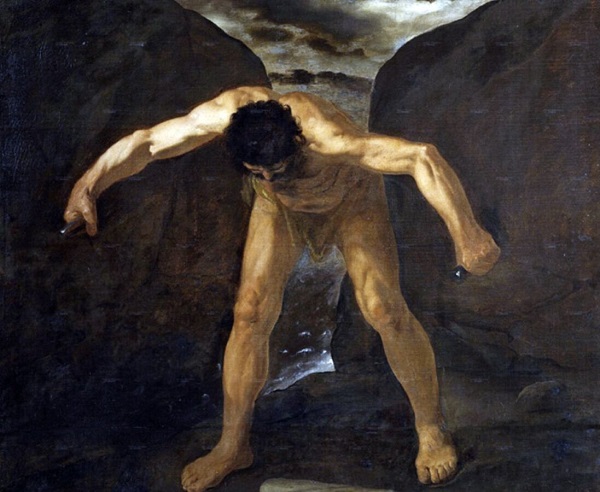
We went into the lounge. I hadn’t done it until then, I told him plainly what had happened in our village's kitchen. My mother's scream: What have you done, Luis! What have you done, Luis!, she said. I explained to him what it did mean my mother's subtle smile that day at night. You always have something to keep me alert about your past life, Manuel said. Don’t you believe it?, I asked him. I do, I do, he replied. Nobody would say such a thing about his parents and less not being true . Intriguing?, I asked. A powerful reason your father must’ve had, for your parents are really agreeable and sensible. I kept silence thinking of his response. What you told me about the Coelho de Portugal your aunt and you push off down a cliff must be something really a good time, at least you will not forget for life, he said smiling accomplice. His words had assured me in my position of armed president. Imagine when I see again my friend Alfonso. He was witness of how my mother and I killed a man in the village. Yes, you have told me already, Leopoldo. What you hadn’t was about your father. I stared at him kind of taking for granted it was something he would not keep for himself. What more can I say you don’t know?, he asked. They were signals for you. Well, I know what, he went on saying, I recommend to you to have a look at the interesting paintings of Heracles Zurbarán has painted too. I’m sure you will like them.