On the first Saturday in May, Sally and Marie’s mother Betty join Judd Willoughby and his family in Louisville for the ninety-eighth running of the Kentucky Derby.
“Sally,” says Judd. “I thought you might get lost in that outrageous hat, but you‘re as lovely as ever.”
“Your mother helped me pick it out. I love it.”
Judd kisses her. “You do honor to an old Derby tradition.”
“What about me?” says Betty. “Doesn’t my hat rate a kiss?”
“You bet, m’lady!” says Judd’s father Foster, as he kisses Betty on the cheek. “I christen you Ms Kentucky Derby of 1972.”
“Thank you, sir. That makes the visit worthwhile. I can’t wait to tell Marie that I was kissed by a genuine Kentucky colonel.”
"My dear," says Foster's wife Dorothy, "he's made a career of that."
“I never knew that horseracing could be so festive,” says Sally. “And so exhilarating. Just look at that parade of thoroughbreds!”
Judd says, “Do you see one you like?”
“Yes, I like number seven.”
“Why?” says Foster.
“I like the blue and white checkerboard colors.”
“Well, you’ve got good taste. Number seven is Riva Ridge, a Kentucky horse who was trained at Meadow Stable, the historic thoroughbred farm in Virginia.”
“Where do I place my bet?”
“Come with me,” says Judd. “I’ll show you.”
Later, when the race is run, Sally’s horse, under jockey Ron Turcotte, leads the field from start to finish to win the Derby by four lengths in near record time.
“It seems I picked the winning colors,” says Sally.
Judd laughs and says, “Yes, but it also takes a winning jockey.”
Betty’s horse, Hold Your Peace, came in third. “Win or lose, I had fun,” she says.
“We’ll make it up to you later,” says Foster, “when you join Judd and Sally and me at the Blue Grass Club for cocktails and music.”
“Sounds great,” says Betty.
“What about Dorothy?” says Sally.
“I’m sure she’ll be tired from all the Derby activity. She’d prefer to stay home and watch television. Wouldn’t you, dear?”
“Yes,” says Dorothy.
The Bluegrass Club is a plush, mahogany affair whose walls are lined with framed pictures of thoroughbred horses.
“Reminds me of a gentleman’s club in London,” says Betty, “except the horses would be replaced by English lords.”
“But we’re not as stuffy,” says Foster.
“You’re right, now that I hear the music. Isn’t that a Cole Porter tune?”
“Yes, would you like to dance?”
“I’d love to.”
Foster leads Betty to the club’s small dance floor, pulls her close and says, “I like the way you feel in my arms.”
“I’d feel better if I could breathe,” says Betty.
“Oh, I’m sorry. I sometimes forget myself when I’m near a beautiful woman.”
“I’m not accustomed to such flattery.”
“Too bad,” says Foster as he pulls her close again.
As the band plays Gershwin’s Embraceable You,Foster says, “I spend a lot time in New York on business. On my next trip, would you join me one night for dinner?”
“Will Dorothy be with you?”
“No, she hates New York.”
“Doesn’t she mind if you entertain other women when you’re away?”
“Not at all. She knows I’ll always come home to her.”
“That’s quite an arrangement. Still, I don’t feel comfortable about it.”
“Betty, what’s wrong with sharing dinner with a lonely man?”
“It sounds safe enough. Let me think about it?”
“Of course, but I do hope you will say Yes.”
They complete the dance in silence and return to the table, where Judd has just ordered a round of drinks.
“You two looked like a couple of kids out there,” says Sally.
“Why aren’t you and Judd dancing?” says Betty.
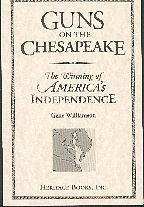
“We’ve been discussing Judd’s book, which should arrive in a couple of days.”
“Well, I expect an autographed copy. I’ve never known an actual author.”
“An actual coauthor,” says Judd.
“Right,” says Sally. “You’ll have to get Dad’s autograph too. He and Judd collaborated on the book.”
“How nice to keep it in the family,” says Betty.
“I agree,” says Judd as he winks at Sally.
In Watertown, Cliff decides to take a morning walk to the center of town, which borders on a small river. “The old town could use a coat of paint,“ he says. Beyond the river he can see the large harbor where Captain Jack ran his taxi service. Off to the right he sees the muddy bank where the head of Blackbeard the pirate was displayed on a spike following his capture somewhere in the Carolina waters. He walks up the main street to a book store and inquires of the manager if the book he authored with Judd is there.
“You mean the one that deals with the early history of the Virginia Peninsula?”
“Yes, the title is The Human Side of Virginia’s Early History.”
“Well, it’s on order,” says the manager, a tailored woman in her late thirties. “Would you agree to do a book signing after it arrives?”
“Yes,” says Cliff, “if you think it will help your sales.”
“Indeed it will. Local Boy Makes Good.”
“I hate to think that the sum total of my life is linked to a book, but what you say would have made my mother happy.”
“What about your father?”
“He also died some years ago, but my three older brothers live here. My younger brother, Lew, recently starred in a play on Broadway.”
“Wonderful! Do you think he would come down for the signing? It would help us get some good press coverage.”
“I’ll ask him but he’s planning to go to Hollywood.”
“Oh, I do hope he can be here.”
“You should also invite my coauthor Judd Willoughby. He’s an historian at the University of Kentucky.”
“I think we’ve got the makings of a fantastic event. We should sell a lot of books.”
“That would make my daughter happy.”
“Me too. We’ll put old Watertown on the map.”
"I thought that happened in the sixteen hundreds."
“Oh, you know what I mean, Mr. Walker.”
“Yes, and I appreciate your enthusiasm for the book.”
“Give me your card and I’ll call you when the book arrives.”
Cliff leaves the store and returns to the hotel, where he calls his brother Frank to set up a meeting to discuss his plan for promoting the farm market. With some skepticism and suspicion, Frank agrees to hear what Cliff has in mind, although he has to add: “What’s in it for you?” All Cliff can say is, “Call it brother’s concern for brother.”
Following Frank’s directions, Cliff drives south from the hotel until he reaches the old back river road. It is easy to locate Frank’s farm market because it seems to cover at least an acre, all under one roof. A Super Barn. Sunlight filters in through the roof’s narrow slats. He notes that the produce bins are kept at a controlled temperature to maintain freshness, the same kind of refrigeration system that he wants to install in the truck he is recommending. As Cliff inhales the smell of produce, soil, and fertilizer, he is reminded of his years growing up across from the sandy lot that represented Captain Jack’s meager farm. It is not a happy recollection and he wonders what in the world motivated him to offer to help Frank save his struggling business. He told Marie it had to do with family--the same family that had ridiculed and disowned him and Lew, drove Steve out of town, and brought about the early death of his mother. Hell, he hardly even knows his half-brothers. Frank, who stands about six feet three inches, is like a lot of tall men who slouch when they walk, as though they are pushing a plow. Standing well under six feet, Matt seems to compensate for his lack of height with a harsh voice that borders on belligerence and braggadocio, traits he passed on to his son Jack. Both Frank and Matt bear a resemblance to the father. Art, oldest of the three half brothers, is a large muscular man with an overweight, often clumsy, look all his own. Neither Cliff nor Lew look like they belong to the old man’s family. Cliff resembles his bookish mother, in both appearance and personality, though he was denied her red hair, which is Lew’s most striking feature. Again he asks himself, “Why the hell am I here trying to help a guy with whom I have only one thing in common: mutual dislike?” Again, the same damn answer: “God help me, it’s a family thing.” In other words, he has something to prove.
Frank approaches Cliff and says, “I’m glad you were able to find the place.”
“It was hard to miss,” say Cliff. “This barn is so big it inspired a sign you might want to hang out front: An Acre of Farm Under One Roof.”
“Hey, that’s pretty good. Got any more ideas?”
“Yes, a really big truck that can be used to transport your farm into town where the customers are. I call it the Captain Jack truck, a refrigerated vehicle with speakers that broadcast some good old country music and a voice that says something like, “Howdy, folks, we’re here to help you save money on the freshest produce in town. We bring the farm direct to you.”
“That kind of truck sounds expensive,” says Frank.
“I’m sure it is, but if it helps save your business, it’s worth it.”
“Maybe Art and Matt will chip in a few dollars. What about you?”
“I’m donating the marketing plan, for which I usually get a sizeable fee.”
“Well, let’s hear the rest of it.”
Cliff highlights the plan as he had described it to Art. “Radio and tv commercials are essential, as are the posters, flyers, and newspaper ads, all banging away at the idea that Captain Jack’s produce is farm fresh and lower in price than even the so-called bargain prices at the supermarket. Of course, we’ll romance it with a lot of farm atmosphere and perhaps a pretty girl, a kind of farmer’s daughter who appears with the truck on large posters, again hitting the Farm Fresh theme.”
“Hey, I like the pretty girl idea. Do you have someone in mind?”
“Yes.”
“I’m looking forward to meeting her.”
“There’s one more thing. I’d like to use young Jack, if we can get him out of jail. He can be charming when he wants to be, and he’d be good at the theatrics. I see him as a young Captain Jack. Since he’s somewhat familiar with broadcasting, we could feature him in the radio and tv spots.”
“But how do we get him out of jail?”
“With a top-flight attorney.”
“Again you’re talking big expense.”
“In this case, I think Matt would be willing to put up the money.”
“I would hope so. Jack’s his son.”
“I’ve given you only the big picture, Frank. Now, I’ll go back home and work out the complete marketing plan, in detail, including the budget. As soon as it’s ready, I’ll bring it down so that you and I can sit down with Art and Matt and discuss it. In the meantime, look into getting a large refrigerated truck.”
“Ok, Cliff, you’ve actually gotten me excited about the idea. I hope it works.”
“Oh, it’ll work if we do it right. Remember, Frank, you either go first class or we forget it.”
“I agree,” says Frank as he shakes Cliff’s hand. “I ain’t good at saying this, Cliff, but thanks. If Captain Jack were here, he’d thank you too.”
Cliff’s only response is to flash an amused smile, walk to his car, slide behind the wheel, and drive away.