Adventures with Elsa
Author © Scott D. Zachary
Before we leave South Africa, I wish to share with you a story about my best friend there, Elsa. One expression describes her: positively exuberant. Elsa’s coal-black hair gleamed in the sunshine. Her beaming smile sparkled at all times. We had a blast together exploring the diverse facets of South Africa, from Johannesburg through the Drakensberg Mountains to Durban on the Indian Ocean to the Orange River snaking along the Namibian border to Cape Town at the southernmost tip of Africa.
I met Elsa Margaretha Semmelink at an art exhibition in Johannesburg. How I ended up at that art exhibit, I have no clue. As I’ve said, I was a functional drunk. However drunk, I rarely slurred my words or staggered my walk. Such must’ve been the case on that occasion. Elsa and I hit it off superbly and began chumming around together. Elsa would’ve used a different word than “chumming” as she had high hopes of our becoming more than just pals.
One of the privileges that knowing Elsa gave me was the opportunity to have lunch with her and her father, Dr. Andries Treurnicht, a few times. Andries had been a minister for fourteen years and a journalist before he entered politics. He became the Conservative Party Leader during South Africa’s transition into democracy. He was the equivalent of the United States Senate Minority Leader and an eloquent voice against “power-sharing.” Although Elsa didn’t agree with many of her father’s views, he did have some valid points, such as the resulting exodus of professional skills upon black-majority rule. Andries also expressed concern for the Zulu minority as he anticipated that the end of white reign would culminate in the return of the centuries-old tribal conflict between the Cosa and Zulu tribes.
As I listened to Andries expand on his political philosophy over lunch, I was fascinated by his dining manners. He never touched his food with his hands. Watching him eat an apple was a treat. Andries artfully peeled the apple with a fork and his razor-sharp pocket knife, diced the apple, and ate it without ever touching the apple with his fingers. Although Afrikaans was his first language, his delivery of English was as precise as his eating habits. I followed the political events each day in the Johannesburg Times. To hear Andries summarize his words as he had delivered them that morning in Parliament, and then read quotes of those same words in the next edition of the Times, made me feel central to the historical events that were evolving around me. I chose my words with care when Andries asked for my opinion as an “astute American.”
Andries Treurnicht died on April 22, 1993, during a heart operation, so he missed the first democratic elections held on April 27, 1994. Although I lived in South Africa at the time, I, too, missed the debut of South African democracy because I was trekking to Mount Everest.
* * * * * * * * * * * * * * * * * * * * * *
Elsa was an excellent travel companion. Like a well-versed tour guide, she highlighted the pertinent cultural and political history that led to the current state of affairs throughout our journeys. Whether we were exploring Swaziland (a small land-locked kingdom between Mozambique and South Africa), the game reserves in the Eastern Transvaal, Cape Town, or canoeing for a week down the Orange River where it defines the border between Namibia and South Africa, her insights enriched my experience.
The highlight of our trip to Swaziland was the impoverished children along the mountainous roads leading to the capital city of Mbabane. They didn’t beg for handouts like in many other parts of the world, they danced along the roadside for a well-earned tip. They flickered their tribal Zulu warrior dances zestfully, hoping for enough to feed their family that day. I gave away all of my money to the groups of children along our drive who were dancing their hearts out. Fortunately, the casino in Mbabane had an ATM.
A resplendent canopy of stars accented mine and Elsa’s one-week canoe trip down the Orange River. The river snakes through the Kalahari Desert separating Namibia and South Africa. I don’t recall any populated areas with their artificial lights along our route, and there were few clouds in the sky to interfere with the bright star-spangled sky. We enjoyed watching the baboons playing along the riverbank during the day. Our Afrikaner guides prepared a feast for every meal, morning, noon, and night. The rack of lamb they cooked was as good as food gets. Every second day, land rovers met our group of canoes at a designated spot and restocked our canoes with refreshments, and for me, a couple more cases of Castle beer. It’s a wonder that I remember anything from that journey. After our canoe trip, we took a bus to Cape Town where I stayed drunk, and I don’t recall anything.
One of my favorite trips with Elsa was to see Elton John in concert at the Lost City. We stayed in a suite at the Palace. I’ve traveled to dozens of countries, often staying in first-class accommodations. None compare with the Palace. None! The English language needs a whole new set of superlatives to describe the Palace. Merely wandering throughout the grand hallways is an extraordinary visual delight. Everything is either sculptured, hand-carved, artistically painted, or mosaics. Except, of course, the magnificent bouquets of flowers featuring otherworldly proteas (the South African national flower).
Upon entering the Palace, you know you’ve reached the top of the world, the height of regal opulence. The artists created the painting on the ceiling of the royal entrance chamber the way Michelangelo painted the Sistine Chapel in Rome. Imagine that in your hotel lobby! The intricate mosaic floor in the lobby is made up of 38 different shades of marble. The builders spent 1.6 billion Rand creating this fairytale palace. That’s more than half a billion U.S. dollars. For a hotel!
I sat at one of the hand-carved wooden cocktail bars in one of the hallway junctures for hours enjoying the expert craftsmanship while drinking many Castle beers. Strolling down the royal stairway into the Crystal Court dining room will validate your most grandiose fantasies. The enchanting Palace was the backdrop for Elton John’s concert. My eyes remained focused as much on the spectacular Palace as they did on the stage.
Two memories from our excursions to the game reserves in the Eastern Transvaal are as clear in my mind today as then. I still hear the echo of that lion’s rumble declaring to all his lordship. Listening to that ominous sound while trying to sleep in a flimsy thatched hut is unforgettable. The other mental souvenir is equally stamped in my mind. On one of our many game safaris, Elsa and I were sitting in the back of an open-air land rover as we typically did on a safari. The guide stopped the vehicle. I looked to my right and saw a full-grown lion laying not more than spitting-distance away. Mind you, there was only air between him and us. From my previous safaris, I knew that lions ignored people in vehicles because they couldn’t distinguish the difference between the humans and the land rover. Except perhaps, WHEN ONE OF THE HUMANS SCREAMS!!! That is the only time that I have ever struck a woman. I slapped my hand over Elsa’s mouth with finality. I whispered ferociously between my gritted teeth, “SHUT UP!!!”
Christmas with Elsa’s family in Durban is a special memory. They counted me as part of the family, which included several of Elsa’s brothers and sisters and their spouses, as well as numerous nieces and nephews. I gifted Elsa and her mother two extravagant bottles of perfume. I wanted to crawl into a hole when I realized that they were far more expensive than all the other presents combined. I felt uncomfortable, but nobody said anything. I learned a lesson that Christmas morning: It’s not the value of what you give that matters; it’s the love that accompanies the gift. Good luck teaching that to Americans. Corruption of ideals can never be put back in the bag.
A favorite recollection of this excursion is sitting for hours with Elsa on the balcony of her mother’s house there in Durban watching the freighters scatter across the Indian Ocean.
* * * * * * * * * * * * * * * * * * * * * *
During mine and Elsa’s travels to the ends of South Africa, she had made it clear that she detested her job working in telesales. Elsa had told me about her dream of becoming a freelance journalist. One morning, over poached eggs on toast, I asked, “What would it take for you to achieve your dream?”
“What, freelancing?”
I nodded.
“Time. Lots of free time to interview subjects, write their stories, submit them to the newspapers and magazines, be rejected, and repeat the process until the door opens. The editors may not even look at my first several feature stories.”
“Would six months without any financial obligations do it?”
Elsa crinkled her forehead. “Probably.”
“If I cover all of your living costs for six months, would that be enough time to establish yourself as a freelance journalist?”
Elsa’s crinkles vanished. “You’d do that, Scott?!”
“Sure.”
I’ve never been bear-hugged more exuberantly. Elsa resigned her job that morning and never looked back.
I traveled twice with Elsa on her freelance interviews. The first was an international ransom broker who prohibited her from using his name in her article, and he strictly forbade her from taking his picture. The broker’s story about his securing the release of an oil tanker’s crew from their Somali abductors literally put me on the edge of my seat. His tales reminded me of Travis McGee in John D. MacDonald’s best-selling novels in which Travis recovered a priceless stamp collection and another where he recovered the gold statues. The most memorable part of that trip was when Elsa was exasperatedly looking through her purse for the combination to the gated community where the broker lived.
“Try ‘27835’,” I said.
Elsa threw me a sideways glance of annoyance.
“Do it,” I said.
She huffed and punched in the numbers. The gate opened, and Elsa looked at me as she might look at a genie popping out of a bottle. I never did tell her that I recognized it as the same complex where I picked up my laundry from the maid of our company’s secretary shortly after arriving in South Africa two years earlier. My memory association still rings true: “Two sevens ate three fives.” I think Elsa attributed magical powers to me after that.
I also accompanied Elsa when she interviewed a wildlife conservationist in Gaborone, Botswana, who tagged and monitored the migration of elephants in the Okavango Delta. Due to poaching and human encroachment, she predicted their extinction before the year 2100. She further predicted the end of humanity by the year 2250 due to human disruption of interrelated species within ecosystems worldwide. The primary causal factor: GREED.
* * * * * * * * * * * * * * * * * * * * * *
Elsa couldn’t quite come to terms with the foxy Kiwi Hilary moving into my apartment and being my shadow, so our paths diverged for those months. On my way to the Johannesburg Airport to leave South Africa, I stopped by Elsa’s apartment. While we were saying our goodbyes, Elsa played Kenny G’s “Going Home” on her turntable, and I proposed, “One last dance?”
* * * * * * * * * * * * * * * * * * * * * *
Elsa called me after I returned to Arkansas and asked if she could borrow a copy of the pictures from my Everest trek. I sent her my negatives. A couple of months later, she sent me the Johannesburg Times edition that featured my seventeen-day trek from Lukla, Nepal, to the Base Camp of Mount Everest and back. My story completely covered the first two pages of the Sunday travel section. The picture of me with Everest as the backdrop, its banner cloud wisping above my shoulder, splashed front and center.
During my research before writing this memoir, I queried the internet and found Elsa. She passed away on May 8, 2014. As bitter as that news was, it warmed my heart to read her listed occupation: Freelance Journalist / Writer.

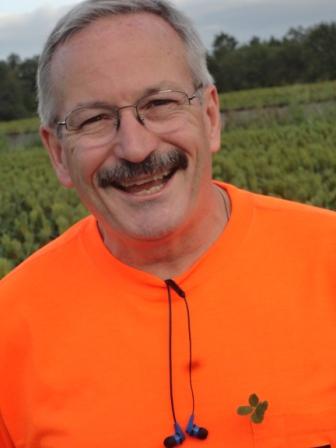


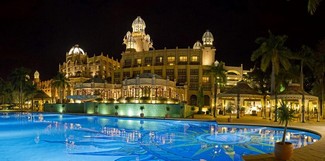 My adventures with Elsa in Africa.
You wrote that Dr. Andries Treurnicht died during a heart operation in 1993. With his political stature, I wondered if perhaps the surgeon was Christiaan Barnard, the famous heart transplant specialist. Wikipedia tells me that Barnard died in Cyprus at 78 in 2001 of an asthma attack. Barnard couldn't have operated because rheumatoid arthritis in 1985 ended his surgical career.
I gather that your time with Elsa was more like Days of Wine and Roses, why your memory of some of it was dim. I'm so glad you were able to describe quite well the opulence you experienced from the heady time of the Afrikaners colonial rule in South Africa.
Ron