I don't recall how long we waited at the airport in Frankfurt for them to get the aerialon repaired or replaced but it must've been a long time because it was late, well after dark when we descended to a darkened Cairo under the threat of bombing.
The plane parked some distance from the terminal and we were allowed to leave the plane, probably about 300 passengers, about 50 at a time to buses. As we walked from the stairs to the tarmac, from the plane to the bus, our path was guarded by military armed with automatic rifles, either M-16 or AK-47. I knew we were now in a different world than the United States, much different.
Upon entering the terminal we were required to change our money because it was illegal to use any currency other than Egyptian pounds for any transactions. As we approached the changing booths a well-dressed Italian woman was irate at her booth, literally screaming, because they would not change her Italian lira. I'm not sure what happened to her and her money. But she seemed influential enough to get it done. In Egypt, probably at an exorbitant price.
We had no trouble getting our money changed, but I had neglected to take a leak on the plane and had to. There were large restrooms with open doors near where we entered the terminal so I went to the one labeled for men. Standing by the door was a man holding out a single square of toilet paper. I was glad I didn't have to do that because I had no Egyptian coinage.
Inside, I was greeted with a quarter inch of water on the floor, none of it looking too sanitary with paper occasionally floating in it. Why the place was vacant. I went in a stall with no door and got out of there as soon as possible with my shoes just a little bit wet.
Passing through immigration resulted in a problem. While they easily accepted my red white and blue Bicentennial passport and I was given a two-week tourist visa, Vitoon was faced a problem: the Thai Embassy in DC had given him many visas. Among them, one for Israel, but not for Egypt. The officials mulled over it for some time and then finally realized that he was not an Israeli conspirator or spy, but just a tourist traveling with me. But it started Vitoon off with a bad taste for this strange, rather hostile, country.
We went on to baggage claim. On the way to where our bags were in a large warehouse like area in the terminal, we passed close to a conveyor coming in from outside where luggage had jammed up and some of the luggage was getting torn up nicely. After some searching we found ours undamaged. Upon leaving, on the right were long tables filled with goods that were going through customs. The last table as we left there was filled about 4 feet high, 100 feet long, with women's lingerie. I wondered what kind of custom fee that business person had to pay? Or was it black-market and confiscated?
When we reached the exit we saw a lot of commotion up ahead. Most of the passengers from our plane were jamming the exit. When we got closer we knew why. The booths on either side from major hotels and tourist agencies were closed for the night. In their place were hijackers with cardboard signs hawking their services like carnival people.
Outside, there were hundreds of even worse looking characters all yelling, "Carry your bag?” "Cab to hotel?” and other entreaties, with no security in sight. At a booth to our left with a makeshift sign announcing the "Hotel Viennese" a black patch eyed woman assured us a good room. She motioned to a young boy who jumped the counter and grabbed my bags.
It was hard to keep up with him through the mob inside and then, outside to a waiting cab among many, but we made it without losing sight of our bags. We then bounced for fifteen miles or more through a blacked out, air raid weary, group of neighborhoods on bad roads through bombed-out ruins, past a few cars with badly aimed headlights, to the central city.
The closer we got, we began to see coffee shops on street corners were the only lighted place in a desert gray brown. They were filled with men smoking and those windows were smeared with dust as old as the and fingerprints marking the occupants' activity rarely if ever washed off.
The hotel was 19th century stone and the desert dust of the Sahara had seeped in everywhere. We were too tired to sleep, so left our luggage in the room and walked the deserted streets until 2 am to get oriented from a tourist map we got at the airport. We found some bodies, some sleeping, some perhaps dead, before returning to our room. Bare of anything but a very high ceiling, two heavy ancient wood beds, and an antique wardrobe, there was a window to a narrow, dusty alley and a ceiling fan overhead.
All night long, the ancient toilet down the hall, one with an oak seat and a large, high porcelain tank, would noisily fill up with water, and then, dump it with a "whoosh!" so loud that it made it nearly impossible to sleep. By morning, Vitoon was ready to leave the country. He spent the morning checking with airline offices and even wanted at one point to take a JAL freighter to Singapore. He couldn't speak to anyone because his accent and the Arabic accent of the Egyptians were so different that I had to act as an interpreter, even though we were all speaking English.
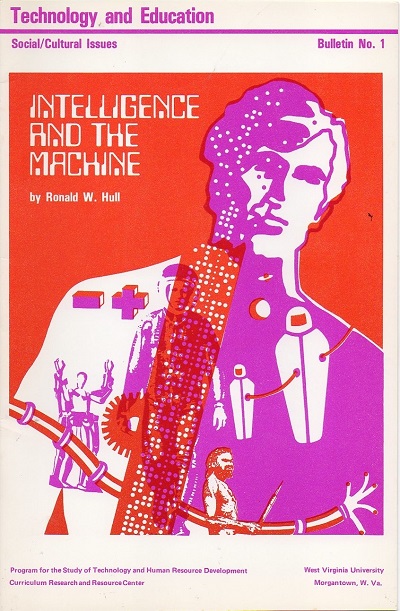
We discovered a Russian bookstore where we could buy good books in English for 15 or 20 cents each. He liked that. Bought a lot of books. I bought only one for the equivalent of 15 cents. It was a book on cybernetic systems. Well written in English with great illustrations and diagrams in red for some of the lines. The Russians were smart. Practically giving away these books to Egyptians who read in English rather than try to sell books in Russian, Coptic or Arabic.
Vitoon soon discovered that he could bargain with Egyptian shopkeepers with illegal dollars. Their eyes lit up when he brought his out. With my help bargaining, he stuffed his suitcases with books and brass ashtray souvenirs, finally deciding that he could wait until our scheduled flight out in three days to leave this despicable place. I was relieved.
Back in the hotel there was a semblance of a tourist office like the semblance of a bar and other normal hotel amenities. We signed up for a day trip to Memphis, the Stepped Pyramid, Great Pyramid, and Sphinx. The next morning a Peugeot station wagon with a guide and driver were waiting to take us. I soon learned that a “tip” and a “bribe" were one in the same and were expected as a normal part of doing business.
Contrasts were everywhere. We were early enough to be ahead of the crowd, but commerce among the local people walking, with donkey carts, and camels, as well as trucks and cars of all sizes and ages impeded our way getting out of town west across the Nile to Giza.
To get ahead of the tourist buses we passed the pyramids by to return later. a huge pile of tomatoes by a building. Before I could ask what they were doing there, a brand new fire truck roared through with dust roiling up, scattering villagers, its sirens and lights blaring. I doubt if there was a fire and the fire engine, like the pile of tomatoes, seemed brightly out of place.
We stopped at an outdoor restaurant for lunch. I invited our driver and guide to join us. I bought a bottle of wine while the others enjoyed beer. The wine was red, heavy, and sweet. It went well with the "Italian" food. Our guide asked for the bottle, mentioning his many children. When we went to leave, one of the shiny new tourist buses had parked us in. The guide and driver exchanged expletives until the bus driver moved the bus.
We were on our way again with the Nile on our left often and very rich farmland with rows of palms that was the breadbasket of Egypt for the last 5000 years. The Egyptians developed some of the best crops in the world like their cotton, the very best there is.
Memphis was a mess. The huge statue of Ramses II lay prone where it fell amid a pile of columns and statues that hadn't been cared for since the British left in 1945. The restroom there had an ancient wooden door stuck in a sand drift half open. Probably good because closing the door might make it unbearable inside both from the heat and the stench of the ages.
At the Stepped Pyramid, the oldest, our white-haired "guide" waiting when a donkey made a serious attempt to extract his pay, but we opted for giving the old man a cigarette. At least I got to see a tomb after walking down a long ramp deeply under the pyramid. Its cover, a huge slab of stone, was broken off at an angle where grave robbers had taken out the contents thousands of years before.
And then, we saw the Sphinx as it really was, crowded by vendor stalls and excavations, not sitting alone in the desert as it is often pictured. We declined a camel ride past the Great Pyramid. Anwar Sadat's home could be seen on a hill behind overlooking the pyramids of Giza.
That night in the hotel room, I finished the bottle of wine, remembering that I'd promised to give it to our guide. The bottom of the bottle was lined with dead fruit flies for a half inch. At least I didn't have to worry about catching a strange disease from the wine; it was strong enough to kill flies. I asked at the main desk where he was and I was directed upstairs to a large room. Inside what may have been a ballroom floor dining room, were about 100 women sewing.
Our guide was there. He had been trying to get us to take another tour with him out into the Sahara desert to an oasis. I was tempted, but Vitoon didn't want to see anything anymore… Just shop. We ate breakfast every morning in a very large dining room. The white tablecloth and the boiled eggs were dirty on the outside but the thought was still high cuisine.
I spent two days in the Egyptian Museum. It was amazing to see the face of Seti II, five thousand years old, uncovered from his mummification and still recognizable. Ramses II, for all his vanity and wealth, could not duplicate the feat of his ancestor, his legacy was a pile of dust and cloth.
The riches in art and in hieroglyphics are immense. I wanted to read all the translations, but there were too many. The glyphs, faithfully recreated by scribes for thousands of years, were as precise as if done by computer rather than stone carvers and scribes. Whatever happens to Egypt, I hope that the remnants of its ancient culture remain. A large Nubian exhibit was closed, but I could see its splendor beyond the cordons. A stuffed zebra. Lots of colorful shields and headdresses, pottery.
Our guide told us of perfume made from the famous lotus blossom. In front of the museum was a small concrete pond with a pitiful example of one flower. Near the museum, he led us into a building that became a labyrinth of passages, until we came to a room like those in movies, filled with boxes, hanging rugs and all kinds of wares. We were directed to cushions.
Our host, an older man, served us tea and revealed the secret of Egyptian perfume. "Unlike the French, who use alcohol for their perfume," he explained, "Egyptians use lotus blossoms and water." To prove its worth, he had us sample the perfume, and then asked us how many cases we'd like to buy. The sample smelled like a weak version of the cologne I'd bought earlier in Cologne, and was probably watered-down French perfume. We declined as politely as we could, and left. Cairo was filled with tourist traps like this, contrived over thousands of years to catch unwary travelers.
The streets both denied and reaffirmed the legacy of the pharaohs. The dogs that roamed the streets matched images from the glyphs, as did the carts and animals of the city's commerce. Unwashed since its last rain, the city was covered with dust of the ages, obscuring its windows, and softening its crumbling streets.
Millions roamed the streets, refugees from the last clash with Israel in 1973. Young men raced with and caught the rear open windows of arriving buses, cheating death under the wheels for the pleasure of catching a hot, dusty, long ride with many others, crammed to the ceiling. At the hint of a traffic jam, dozens of police on foot, ticket books in hand, would rush to the scene to mete out justice to the culprits.
I found a dirty little French restaurant with a priced menu in the window that I liked but Vitoon didn't. Besides an all-inclusive dinner each evening, it provided the interesting image of a waiter shooing a rat out of the dining room while trying not to get the attention of the guests.
That dining room also gave me an opportunity to meet a tall, handsome well-dressed black man we had seen in the Russian bookstore. Since he and I were eating alone, I introduced myself and asked if he'd join me for dessert. He was the manager in Cairo for Somalia Airlines and pleasant company. Since the long war in Somalia, I wonder what has happened to him and his family. He told me at the table that he was going to be transferred to Mecca soon. Perhaps he is still there.
The view from the Cairo Tower was remarkable, giving us an unobstructed view of the Nile with its blue-green water and white-sailed boats as it cut through this sprawling city of exotic architecture. In the distance, near the ancient flood banks that rose to the high desert, several fires burned, I assume from garbage dumps. Up in the tower, the dust and noise of the streets were muted and clear, and the blue sky and river gave contrast to the sun-bleached white of the desert landscape.
As a relief from the old dirty city, we stopped into the Hilton on the Nile. It was ultramodern and beautiful. Expensive. So we opted for an afternoon dessert, mango ice cream. I had never eaten mango before. It was delicious. A nice oasis, if one needed it.
As we were leaving in the morning, a cab pulled up and a well-dressed couple got out, looking askance at the hotel, expecting something like the Hilton. The woman asked, "Is it okay?"
I had to answer with a smile, "It is." Served our purpose well, even against Vitoon's initial objections. By the second night, the wasteful loss of precious water in the bathroom had been stopped. To our relief. I'm not sure if I took a shower in that ancient scarred bathtub. Probably did.
I wrote a long letter to my mother, detailing our adventures in Egypt, but I didn't have a stamp to mail it. When we got to the airport about noon for our 4 pm flight, I looked for a place to mail it before I changed my money. Finally, a guy at one of the airline booths said that he'd mail it. I gave him an Egyptian pound to do it for me. He pocketed the money and never mailed the letter.
Again, PIA was experiencing problems. We heard that the flight from Frankfort had returned to England to fix a flap. Anyway, we waited on hard plastic chairs far into the night as the cold desert January wind blew in through doors left open. I was chilled to the bone by the time we finally boarded the plane.
By noon the next day, we landed in the shimmering white sand of Dubai. I got off the plane just to experience the warmth of the sun while walking to the ultra modern white visitor center. While there, I tried to call Mahfooz Haque's brother in Abu Dhabi, but couldn't figure out how to use the phone and there wasn't time to ask anyone.
Mahfooz was another doctoral student friend of mine who had offered a place for us to stay in Karachi with his family. I had already wired ahead from Egypt that we were coming.
Copyright 2020 © Ronald W. Hull
11/16/20