What happens when your child fails first grade? Two mothers connect to share their stories of children and their educational journeys.
Title: Two Mothers, Two Stories,
Raja and Lois
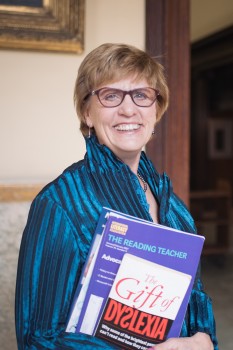
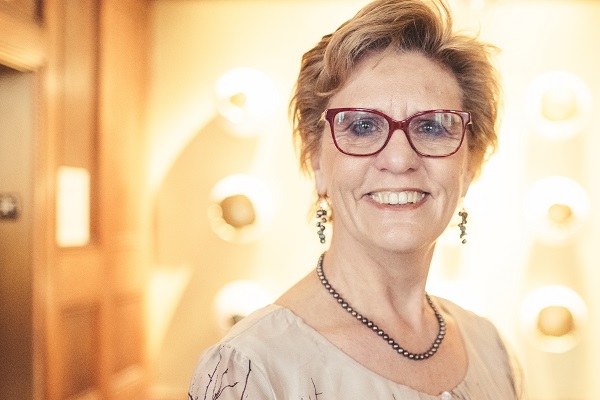
We met online, as many people do. As mothers, we shared a history of children who struggled with learning to read, battles with school bureaucracies, and the consequent lasting impact. We didn't choose the emotional roller coaster ride or wish to see it repeated… but here we are, bonding through traumatic experiences.
Mt. Everest sits at the top of the world, the pinnacle for any mountaineer. Rarely do non- climbers attempt to climb this peak without considerable training and high-altitude experience.
Yet, as parents of children who struggle with learning to read, we are thrown into such journeys, starting at base camp in a blizzard, unaware of the perilous steps ahead and unprepared for the hazardous journey.
In 1994, my six-year-old son Nicholas failed first grade. An evaluation on the Weschler IQ test resulted in a stark assessment.
"Your son can read ten words," the diagnostician stated, "has no strengths, and a below-average IQ." I felt the oxygen sucked out of me, just as the Everest-ian climb began. Under-resourced, blinded, and with no obvious trail ahead, this judgment was an enormous blow.
Nicholas's infancy was plagued by ear infections. I was unaware of their life-long impact. I noted his slowness with speech and language, and I needed his full attention for him to follow directions. But he was an expert in doing puzzles.
Trouble began on day six of first grade. Nicholas was reticent to go to school, bit his fingernails to the quick, and daily wet his pants.
"Oh, Lois," Nicholas' teacher began, "Nicholas is so far behind; I don't know how I will teach him! He struggles to follow the simplest instructions and stares into space most of the day. I don't know what I can do for him."
Throughout the year, I noticed his lack of progress and thus my concern increased, but what can a mother do? Nicholas was exhausted after a full day of surviving school.
Panic consumed me. My journey was transformed by a change in the weather on my 'Everest.' For six short months, I home-schooled Nicholas. This fortuitous time changed his life trajectory and indeed my own. Beginning with books titled "Success for All." Which turned out to be abject failures as Nicholas appeared to have no recall of sounds, letters, or words.
Facing a white-out of opportunities, I opted for writing poems. The transformation was dramatic. I read and Nicholas listened. We laughed, found rhyming words, and illustrated the poem. I wrote another, then another. Nicholas' changed as I saw him start to scale the beginning slopes of reading, millimeter by millimeter. My mind was consumed by writing, refining, and re-writing each poem. A pen and paper were always on hand, so I could capture every thought, every idea to aid Nicholas' learning.
I became a reading specialist, teaching children who had failed to read through standardized reading programs.
The pain, the constant panic, and an overwhelming sense of "What else do I have to do?" never really left me.
Raja faced a different experience. She, too, felt as if she were at base camp, searching for answers for her sons whose behaviors were described as extreme—disruptive, withdrawn, or non-compliant. Their non-compliance, unacceptable actions, and compensatory literacy performances hid their true struggles.
During Jonathan's kindergarten years, his behavior caused concern. Raja received daily phone calls from the private school he attended, describing her son's terrible behavior. Concern mounted. Initially, Raja felt she was to blame as she had failed to discipline her son appropriately. Jonathan was just a "bad" kid.
By the age of five, his behavior rapidly deteriorated. He refused to go into the classroom. Once inside, he hid under the teacher's desk.
At Jonathan's kindergarten, the classroom teacher approached Raja.
"Raja," she began. "Jonathan's behavior is limiting his learning. He needs to be tested for special education. I suggest enrolling him in the public school."
"Look at all the things he can do," Raja thought. "His comprehension appeared years ahead of his peers, his conversation intelligent. He was more mature and understood grown-ups better than his friends."
The teacher continued, "You are your son's best advocate. You know him better than anyone."
Her words stuck. They were the best advice Raja ever received and put her on her "Everest" journey.
Raja's second son Omar Jr. survived as 'average' in elementary school until the fourth grade. Then her journey became one of scaling K2 doubling in magnitude.
Testing revealed a twice-exceptional, highly-gifted, yet learning-disabled child.
Transferring schools. Engaging Attorneys, implementing 504 plans, attending, recording, and transcribing IEP meetings were followed by more attorneys, bullying, and lack of due process that ended in a Ninth Circuit Federal Court lawsuit.
Visits to the School Psychologists, testing, tutoring, and advocacy costing hundreds of thousands of dollars led to constant panic culminating in a ruined marriage and financially and emotionally stressed. By now Raja’s documentation was as high as Mt Everest, but instead of reaching for heaven, she went through a 'personal hell.'
Finally, Raja set up The Jonathan Foundation for Children With Learning Disabilities. Her goal was to help other parents who faced similar complex journeys navigating the education mountain with glacial-like responses and numerous crevice-like traps for novices, one after another.
Although Raja and I have faced different routes on our separate Everest journeys. We share the constant pain, the continuous problem-solving, and the all-consuming passion for changing the world. No other person in the world should have to repeat these journeys.
There are human and financial costs for every family member. Often marriages are under strain or fall apart. Businesses still have to be run or work completed as the family attempts to deal with children who simply do not fit "normal."
Yet, we are two moms working to show that we can and must teach children to read. These are our stories.
View this Story
The last time I heard of a child failing first grade was when I entered second grade at a new school and our neighbor across the alley, the son of a dentist, told us that he failed the first grade and was in our class as a result. We stayed in touch with him after we moved away until he was in high school, and my brother even connected with him when he was married and living in Maryland. I think he turned out all right. He certainly had a fairly good inheritance from his father.
It's sad to see the struggle that you went through. But I think sometimes parents, meaning well, try to make their child travel a path that they never would travel. From what I've heard of special education, I don't think that it's a bad route to take. I don't think the key is trying to force a child into "normal" education, but finding out through aptitude tests what that child is good at, in your case, puzzles, and then finding out how to educate and enhance that aptitude, perhaps leading to financial well-being in later life. But I wouldn't tolerate abuse and bullying because a child is "different."
Ron (I have a doctorate in education but it doesn't make me an expert on childhood education)
I was moved by both of these stories and as Mother’s the true commitment to help their children...All kids are individuals, and learn in vastly different ways for many reasons...Our kids deserve the best...these two gave their absolute best..
Total admiration!!
Let this coming of age story of a boy named Bean take you back to a simple time. Set in a small southern town in the 1960's, encircled by a river and gleaming white cotton fields.
The familiar lament of dual-career parents raising children is, "I just can't do it all." The Libra Solution provides an alternative - a more satisfying and sustainable work and life approach - to the overwrought modern day norm.


 Title: Two Mothers, Two Stories,