On Langston Hughes
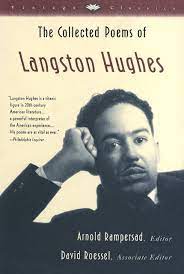
There is a circumstance in the life of Langston Hughes (1902-1967), Harlem’s poet considered a guide of Harlem’s Renaissance, in which people differ about whether or not it was a cowardice to renounce to some of his poems when he was told by senator McCarthy during the Witchhunt.
His poems expresses the deep negroes common soul and liberation spirit:
So long?
Do you not hear my inner cry?
Do you not know I die?
Although he was not a Communist militant he was very close to Communists all his life, involved in the Struggle some way. He traveled to Mexico, Cuba, Russia, Paris and was correspondent in Spain during Spanish Civil War. He made friends with very well known writers, poets, painters and musicians, worked as a waiter, loved Jazz and made translations and collaborated in reviews and other publications. Like many others had to face the contradictions of the different attitudes when negritude’s theme arose, convinced the true negroes common soul must be catch up amongst people of low social status.
Langston was forced to appear before senator McCarthy in 1953. He refused to give names but had to abdicate with his poems. Some people thought it was a cowardice act, that he was too kind with senator McCarthy. In following editions he renounced to militant poems. Some critics say that even when he did he must be considered a pillar of his culture.
An idea crosses my mind: Langston might have said to McCarthy, to try not to be purged, he was never going to publish poems similar to ones subject to McCarthy’s decision about him. He could have had published the poems mentioned such as they were made by him signed with another name or with no name, of course for having not problems with Justice. At least the fact would not have made him defeated and the poems he’s more proud of, he more celebrates, coming from his deep negroes common soul, would not have to be suppressed and forbidden. It is something praiseworthy. It may even change your humour for life.