Postscript: 26 Dec 2024
Well, it’s the day the Brits call ‘Boxing Day’. When I was a good, proper (half-Irish) kid, I had been allowed to think that ‘Boxing Day’ was supposed to be a day when all the Irish got together to box the ears of the local equivalent of the hated ‘Black & Tans’ constabulary, but nope, turns out it’s a Brit custom to ‘gift’ the servants and family ‘maintainers’ on the day after Christmas with small tokens of thanks for their continued support, upholding the traditions of the British Empire’s ‘class system’ (and also a day for spending time with peers and family, schmoozing around the Christmas tree and hearth).
I’m sorry to say that on Christmas Eve night, there were no visions of sugar plums dancing through me haid. Instead, I had some nightmarish dreams about a flock of sugar plum fairies who were parading about with Gay Pride flags…ugh! I also had a few even more bizarre dreams, one of them about a tram-ride in the skies high above a surreal, Salvador Dali type Earth with a load of primates…but I won’t belabor your concerns with any interpretations as to what THAT was all about. No need to monkey around needlessly with your imagination, of course.
I think my last thoughts before I slipped into unconscious consciousness (i.e. ‘dreamland’) was of the prize-winner of all commercial marketing ‘holiday greetings’ that I deleted from my email box yesterday…the one that announced in bold brown ink “Best Christmas Greetings from your Friendly Roto-Rooter man!” CRAP!
And speaking of the Brits, for most of my Christmas day I found myself reading that fascinating 1983 published book by John Lennon’s OTHER main squeeze, May (Fung Yee) Pang about her Yoko Ono-engineered affair with that former Beatle. The title of her book is ‘Loving John’ and although it is a most engaging (if not especially Pulitzer Prize quality material) read (the book was written with the aid of a ghost writer) and incisive look into John Lennon’s dark-side, it contains much in the way of cautionary lessons about the effects of traditional Confucian Chinese male chauvinism (on women and children), AND the antecedent toxic narcissisms of 60s/70s era pop-entertainer celebrities (such as John Lennon, who emerges from that period as a little boy who never grew up and needed a strong ‘mommy’ presence to order and control his affairs. Naturally enough, this was Yoko Ono, who is a singular piece of work that has to be read about to be believed!).
Back when the Beatles were at the height of their popularity, and immediately afterwards, when John first fell under Yoko’s witchy-woman spells, I had other concerns in my life that didn’t include an obsessive fixation on R&R pop-stars. As a result, I never took much interest in all this “pre-Kardashian” reality-TV type kirplust of the 70s/80s that so many younger people are so hung-up on today (like the current OCD fixation on Taylor Swift (who would lose fully half of her followers if she ditched the crotch-enhancing, breast-displaying scanty costume that leaves nothing to the male imagination).
Poor May (Fung Yee) was the female offspring of a typically Chinese (note: NOT Chinese-American) male chauvinist father and a traditionally subservient mother. Both May and her mother were regularly abused by her father (and in the case of her mother, soundly beaten now and then). She emerged from that terribly unhappy formative early part of her life as someone who had been conditioned from birth to expect a certain degree of callous disregard and abusive behavior from men and yet she managed to retain her basic inner nature of a kind, gentle, thoughtful and loving daughter, despite this. In a sad sort of way, her''s is an example of the human ability to rise above insufferably personal indignities and emotional trauma, despite the enormity of them. It is also a compelling lesson on the hormonal nature of so many youthful ‘love affairs’ that are only much later tempered by the harsh realities encountered in mature adult life.
When she met John Lennon, working for the recording business in NYC, these qualities in her regrettably prepared her to co-dependently accept and tolerate John’s darker side and his markedly childish insecurities, that coexisted alongside his admittedly spectacular creative genius for writing musical pop-hits. Both John and May were fans of ‘rock and roll’ music and therein lies the story of how John, May and Yoko came to be ''an item.'' [Yoko, for the record, was totally disinterested in R&R, thinking it gauche and superficial.]
Yoko is revealed in May’s book and also in Ray Connolly’s 2018 book, Being John Lennon (supposedly the most recent and generally acknowledged definitive biography of Lennon’s life) as an extremely self-focused, striving and highly eclectic and esoteric creative artist who was also typically Japanese (if I may make that rather assumptive assessment) in that she could be merciless, manipulative to a fault, overbearingly demanding, cunning, charming, exploitive, gracious, and completely uncaring about the emotions and feelings of others as she pursued her personal ambition to be a ‘recognized’ celebrity artist. She has been characterized by some others who have analysed her as ‘witchy’ and in fact she remarked once, flippantly, that “Yes, I’m also a witch.”
A follower of (Western) astrology, given to use of ‘potions’, primal therapy and hypnotism to induce and promote her aims, and more essentially ‘artistically Bohemian’ than any of her contemporaries by a mile, it seems to be the collective opinion of those who have studied her that others existed for her only as potentially ‘useful’ influences to use and manipulate to enhance her self-perceived status as a supremely gifted, if unconventional artist of high merit.
As has been demonstrated in the numerous books written about ‘John & Yoko’ to date, she was very intelligent (more so than John, a fact he readily acknowledged) and was also a ‘master strategist’ who was particularly adept at bending the will of others to her own whims. She was furthermore quite an attractive woman with several prior marriages under her belt and a highly knowledgeable and skilled understanding of the bizarre range of Japanese sexual techniques and proclivities (Yoko was 10 years older than John). All of which she used (so we are told) masterfully to subjugate John, who despite being a creative genius in his own musical way, was at his most intimate core a very insecure, dependent and childish personality who functioned best when under the influence of an all-supreme ‘mother-figure’. In the case of Yoko, he had (in her) a powerfully formidable psychological equivalent of the Oedipal surrogate of his mother, yet one who was erotically alluring to him as well as maternally dominating.
Yoko is today in her mid-80s and is surprisingly well-preserved in that context. A couple of photos of her taken when she was 79, reveal her innate sexuality quite astoundingly, having the body of someone who could be decades younger. The totality of Yoko Ono amounts to a singularity of nature that has no real peer, either back then or today. In other words, Yoko was a real ''handful.''
May Pang, for her part and also a comely young woman back then, suffered unspeakable torments in that ‘Devil’s Triangle’ of emotions and raging ambitions that characterized the Lennon/Yoko saga that would have likely driven someone of less formidable (or less resilient) stuff into suicide. Today, in her mid-70s, she shows the difficult-to-hide ravages of that part of her life quite vividly in her physical affect, but despite it all, she managed to survive and flourishes today. Were she less ‘traditional’, less forgiving and more insistent on the priority and preservation of her own personal integrity and substance, she would never have yielded so completely to her admitted attraction to John Lennon, a relationship that Yoko herself “engineered” and literally forced upon her.
Both books (May’s and Ray’s) are helpful literary Rosetta Stones that help us understand this whole epoch story of love and intrigue that so many even today remain unmindful of. I have to admit myself, as a tyro student of human nature, that I was largely unaware of all the deeper Machiavellian aspects of the John/Yoko/May narrative and I have found it fascinating. I have even found in it keys to my own personality and gained enhanced awareness of the role that early life experiences play in either making us compliant willows in the harsh gusts of human fate, or broken oak trees, capable of resisting immense forces...until even that strength is compromised by events beyond our control.
I would heartily and unreservedly recommend both of these books to all of you.


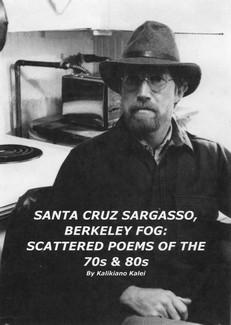
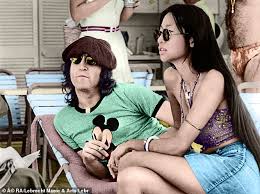 More thoughtful reflections on life, posted for 'Boxing day' 2024...mostly about a couple of books on the life and affairs of ex-Beatle, John Lennon.