Category: Memoir Publisher: Bascom Hill Publishing Group
ISBN-10: 1935098152
Type: Non-Fiction
Pages: 164
Copyright: February 10, 2009
ISBN-13: 9781935098157
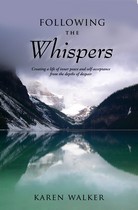
In her poignant memoir, Karen Walker traces the effects of a cold, loveless home environment and an early sexual molestation on her growth, marriage, motherhood, and career.
...Creating a life of inner peace and self-acceptance from the depths of despair.
After freeing herself from a desert of a marriage, Walker loses custody of her child and then journeys to discover who she is and to find some sense of wholeness.
That journey takes her from her old life to new friendships, new lovers, and new professions. From New York to Portland, Oregon and eventually to Albuquerque, New Mexico, Walker seeks someone to love her as she is. She finds that and more--a loving connection with her son. This fifty-year emotional odyssey ultimately leads Walker to a self who can look back over her life with a contentment and satisfaction that allow her to follow the whispers that the future may bring.
Excerpt
Introduction
John Lennon was right when he said, “Living is easy with eyes closed, misunderstanding all you see.” Like ostriches, we plunk our heads down and pretend everything is okay—because if we lift our heads up and take a peek around, we might have to make difficult, painful choices that could hurt, disappoint, or anger someone else as well as ourselves. Or we might deny or ignore what we feel because we don’t have a solution to the dilemma we are facing. In order to remain silent in a situation we know is wrong, however, we have to silence the parts of us that know better.
I don’t know when I stopped paying attention. It could have been after the sexual abuse occurred at six years old. Or maybe even before that, when I cowered in my room trying to block out the screaming matches between my parents. My home life, along with events for which I had neither the knowledge nor the skills to handle well, created a self-hatred so unbearable, I shut down. We cannot possibly hear guidance of any kind when we are numb, so the first 28 years of my life were lived unconsciously, with devastating consequences. At that point, at 28 years old, I lost custody of my only child. Until then I’d been sleepwalking through my life but didn’t know it.
In the 1970’s women rarely lost custody, unless they were prostitutes or drug addicts or something of that nature. I was none of the above. I am a nice Jewish girl from a white, middle class neighborhood in Queens, NY. My father was a clerk in the United States Post Office, and my mother sold real estate. My parents weren’t alcoholic. I didn’t drop out of school. I had friends.
Underneath the depression/despair cycle that permeated my existence burned a question I couldn’t answer: what was wrong with me that I ended up losing my child?
Paradoxically, that same tragedy put me on the path towards healing. Seeping out from the blanket of depression which cloaked me were long-buried memories, thoughts, and feelings from childhood. I began to keep a journal. I didn’t know it then, but journaling gave me a way to unscramble the pieces of my life so that I could begin to make sense of it. That, along with private therapy, self-help groups, women’s consciousness raising groups, self-help books, and talking with friends, provided tools I needed to answer my soul-searing question.
Following the Whispers is a chronicle of that journey. It illustrates the consequences of not listening to the voice of wisdom and shows how I learned to tune in to and trust that inner voice. Now, at 59, I am aware of messages trying to get through. It might be a sensation in my body—sometimes in my gut, sometimes in my chest—or a thought such as this doesn’t feel right or something’s wrong here. The thought can be so fleeting I question whether it was really there.
I’ve learned to distinguish the thoughts or sensations that were confusing as a child. There is a parent voice—don’t have sex before you’re married. Other times, the voice of my conscience speaks up—that’s wrong, don’t do it. My child voice clamors for attention as well—I want that piece of chocolate now, please don’t hurt me, I can’t or won’t do that. Then there is my intuition, a guidance that helps me know what I am feeling—what that person said was derogatory and hurtful, no wonder I am upset. And more and more frequently, there is a wise, logical adult voice to help me make informed decisions—if you purchase that item, your budget for next month will be shot. There is yet another voice—one I’ve come to call Spirit—that whispers in a language of non-words—a gentle nudge that makes me stop, pause, and breathe before taking an action.
Today I am content, although I still work on changing the things I can and accepting the things I cannot. My search for answers taught me that inner peace is not something we achieve and then remain feeling that way forever. It comes in moments. My spiritual journey towards healing has been and continues to be eclectic and varied and no doubt differs from yours, but it is my deepest hope that whatever might be keeping you from feeling inner peace and contentment, you will find pieces of my story to relate to and inspiration to move forward in your own journey towards healing.
Karen Walker, summer, 2008
The more faithfully you listen to the voices within you, the better you will hear what is sounding outside.
Dag Hammarskjold
Professional Reviews
Review by Sharon Lippincott for Story Circle Network 3/28/09
There is no such thing as an average memoir, but if there were, Karen Walker's story, Following the Whispers: Creating a life of inner peace and self-acceptance from the depths of despair, would not be among them. From the title of her first chapter, "In the Beginning ... There Was Self-Hatred" to the guidelines for weight management at the end, this book is unusually rich with personal insight. Walker mentions late in the book that as she began mining her extensive collection of journals for writing material, she used them to write a self-help book. An editor informed her that she had a book in her, "but it wasn't on those pages." The editor urged her to "tell her story." Following the Whispers is the result of that advice.
Walker has taken a three-pronged approach to telling her story. She documents the events of her life, explains the psychological dynamics of her emotions and reactions, and shares the spiritual journey that ultimately led to happiness, joy and healing. These elements are smoothly interwoven to form a cohesive tale that held my interest throughout.
The story itself has all the elements of a classic good read: plot, well-developed characters, and plenty of tension created by obstacles that often seem overwhelming. Walker's life was a challenge from a very young age. Her parents fought constantly. Her father destroyed her love of dancing with a careless remark, and constantly assured her that she was ugly and "no good." She was molested by a stranger at the tender age of seven. When she grew up, she married the wrong man for the wrong reasons and ended up losing custody of their son. Her self-loathing for her part in that loss continued for nearly twenty years, but about the time it occurred, she began began a decades-long process of healing the wounds she had suffered. Ultimately she was reunited with her son and developed a strong and loving relationship with him. She forgave her parents and moved beyond forgiveness to develop love and affection for her father in his last years.
On the psychological level, the memoir reads like an autobiographical case study or psychological profile. Throughout the book Walker explains the psychological dynamics of her relationships and perceptions, frequently citing explanations provided by a long string of therapists. These clinical insights are shared in a frank, yet intimately person way that precludes any hint of self-pity. Because she explains her emotions and feelings of guilt, shame and similar things so directly, the reader is bound to learn something of personal value and gain useful insights.
The spiritual element of the story runs through like a thin thread of gold sparkling through the thicker threads of narrative and explanation. Born Jewish by heredity but not practice, she discovered a sense of peace in lighting Chanukah candles given to her by a friend's mother when she was young, though her parents refused to support her in this. Twenty years passed before she became more serious about things of the spirit, and her journey to spiritual freedom and light led her to explore the Episcopal church, piles of self-help books, EST, Al Anon, and study various religions and metaphysical/inspirational teachers. Ultimately she found her own path and learned to trust the "whispers" of Spirit as it speaks to her.
As I closed the book, I was struck by wonder—reading intimate details of her life, seeing the world through her eyes as the years passed, gave me a powerful sense of respect and admiration for all the work she put into freeing her true self from the shackles of self-doubt, shame and guilt that bound her from such a tender age. In the space of a few short hours, I have come to know her more deeply than most people I've known for decades. This is the more remarkable for the fact that she writes sparely, using precisely targeted words to cover approximately sixty years in 163 pages. I admire both the heart and the craft of this book.
________________________________________
Jamie was a healthy, active 12-year old who loved to skate and played hockey as well as any boy. Then one afternoon during a game, she suffered a stroke that changed her world. Her memoir takes the reader through her ordeal and her journey out of the
At the young of age of seven, Jill's mother Eve takes her for regular sessions to a child psychologist for treatment of her anxiety, which only makes her behavior worse. When she reaches her teens, she starts drinking and then smoking marijuana with