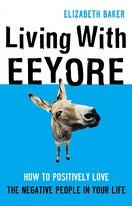
Elizabeth's book on stress control is a no-nonsense primer for the person on the go. The book offers check-off lists to measure your personal stress and fifteen time-proven techniques that keep stress from damaging your mind and body. Choose any two techniques, apply them for seven days and feel your stress melt away.
Is life in the fast lane getting to you? Could you benefit from less stress and more rest? Think that would be impossible without a vacation in Hawaii? Then think again! Read, “How To Hang Loose in an Uptight World” and design your own 21-day solution to finding peace without turning your world upside down. You’ll measure your own personal stress level and learn how to break the stress/illness cycle even without a tropical vacation!
Excerpt
From Chapter One:
A Personal Note
Invariably after I have given a lecture on stress, someone will come up and ask about my personal life-style. Fair enough. I would not give money to a financial agent who had just declared bankruptcy and I can’t expect readers to trust me unless I have successfully dealt with stress in my own life.
Therefore, I offer the following personal glimpse.
About eight years ago I went through a trauma that some call “burn out’ or “hitting the wall.” I was horrified and amazed that someone still in their forties could feel so bad for so long and still be functioning. My family physician said I had “Chronic Fatigue Syndrome.” I had never heard of it. The problem is much more understood now, but in the early ‘90s is was a mystery to most people and hotly debated even by those who believed it existed.
It did not take long for me to give up on the medical establishment, but that did little to relieve my symptoms. Some days were better and some worse, but the evening that it took both hands on the stair rail to pull myself up to my apartment I knew I was in deep trouble. I threw myself on the sofa and had to rest for ten minuets before I had energy enough to take off my coat.
Because this is not an autobiography, I won’t go into detail about my ailments and my journey back to health. It is sufficient to say that the road involved learning about nutrition, rest, and time and learning to invest more of myself in relating to others. It was also the beginning of my journey toward learning about stress and how it impacts the body.
Now, I am in my late 50s and feel better than I have in years. I recently completed my doctor of philosophy degree or Ph.D. Anyone who has been involved in a program like this knows how much pressure and work are involved. This particular degree required professionals to be working in their field before they were admitted to the program.
When the day of graduation came at last, several of us were gathered for the event and a colloquy was conducted to evaluate the experience. We went around the room sharing our personal stories and telling what the past few years had been like. I was surprised to hear what the others had gone through during the dissertation process.
One may got up at four each morning, worked until six thirty then went to his job. Like myself, his profession was that of a counselor. He worked eight hours at the clinic then immediately upon returning home, ate a quick supper and saw clients in private practice until ten each night. Another student said she worked each night until three in the morning then got up at seven to go to work. The rest of the students followed a similar routine. When it came my turn to speak, I felt apologetic. I slept eight to nine hours each night, and until the last few weeks of the program I always took at least a twenty-four hour rest during the week.
But, as I reconsidered the situation, my slight embarrassment faded. I had carried a full time job as a counselor, written one of the books I used in the teaching practicum, completed a dissertation on philosophical anthropology, and finished the program in just over two and a half years. Since the program required a minimum of three years, I had to petition the graduate committee to be allowed early graduation.
I enjoyed several benefits that helped make early graduation possible, but I suspect the primary edge was that I got a full night’s sleep each night and I occasionally took specific time to rest during stretches of peak stress. I had learned the hard way that burning the candle at both ends gives only a short term increase in light. Ultimately, it just produces more ash than anything else.
Today, I don’t perfectly practice what I teach, but I know that unless I am willing to rein in my strong type-A temperament and deal with the physical realities of my limitations, a very real and unmovable wall is waiting around the bend. Pushing myself until I hit that wall is not only unwise, in the end, it is unprofitable.
Realizing our limitations and maximizing our strengths is what stress management is all about. We must leave the rat race to the rats. Instead, we carve out times of rest for our bodies and practice times of peace for our souls. That is what I hope this book can help you accomplish.
How to Use This Book
This book contains eight chapters. You are just finishing up Chapter One where, hopefully, I have convinced you that managing your stress is possible. In Chapter Two you will understand more about stress and be given an opportunity to measure the impact it may be having on your body. In Chapter Three you will be introduced to the most fundamental process of all stress reduction: choice.
Chapters Four, Five, Six, and Seven form a set of specific stress reduction ideas and the information is divided according to how much time it takes to implement each of these stress-busters. There are a total of fifteen ideas ranging from those that require no time commitment at all, to a few that will involve a change in your basic lifestyle. Don’t worry. No one is expected to implement fifteen ideas! The number and variety of these stress-busting ideas is so that you can choose among them and find one or two that fit your lifestyle and personal need. I suggest that you never choose more than two ideas. It is far better to choose one or two, do-able things that you actually implement, then to make a check list of five and wear yourself our trying to relax!
The last chapter is a reality check. Life is hard and reading this book will not change that fact. Some illnesses have no cure. Some problems have no solutions. However, even in those realities there is hope. Faith is the final solution and the ultimate answer to stress. Knowing what we believe and why we believe it will add to our peace and maximize our years on earth.
The last portion of this book contains two appendices. Appendix I, lists all fifteen stress-busting ideas and gives a brief synopsis of each. Page numbers are given so you can quickly cross reference any idea for which you want more detailed description. However, I urge you to resist the temptation to turn to Appendix I now, assume you understand a few concepts and immediately embark on a twenty-one day trial. Such action is possible, but it is not like to be successful. After all, the whole idea of stress reduction is to slow life down. It is not to pack nore into each day and do it more quickly that before. Racing to the appendix would likely undermine the very purpose you are hoping to achieve!
Appendix II, is specifically designed for those of the Christian and Jewish faiths. A list of fifteen passages from both the Old and New Testaments is given and from the Old Testament the Hebrews names of God are listed. These list provide an easy reference for meditation exercises.
I don’t know if there ever has been a time when the life depicted in a Kenkade painting or a peaceful place like Walnut Grove really existed. Somehow, I doubt it. But I do know that Jesus told his disciples that peace would be His parting gift to them . It is a shame when we fill our world with schedules and pressures and the gift slips away.
Lined and Unlined
Fun Tidbits and Trivia about each state.
Journaling can help improve mental health and happiness, provide a creative outlet, and give a perfect place to record life's precious events. Grab your journal today. Pages for you to fi