Category: Drama Publisher: PublishAmerica
ISBN-10: 15921299624
Type: Fiction
Pages: 217
Copyright: Jan 1 2001
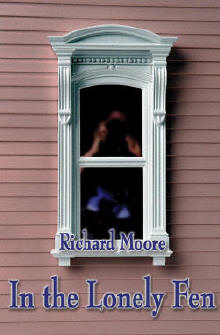
'In The Lonely fen' looks at a side of life that all too often goes unrecognized. Step behind the closed doors of a group home and meet its residents. Keith, is 19 and has been diagnozed with a bi-polar disorder. Henry is 21 but is developmentally disabled and has the mind of a child. Alan is a middle-aged schizophrenic.
A condition of each resident's release from the State Hospital is that they each receives 24 hour supervision 7 days a week. This supervision along with the provision of services such as the teaching of daily living skills, observation of the administration of medications and how to behave properly while out in the community, assists each resident in becoming more independent and betters their chances of re-integration into society.
But when the night-staff at the group home regularly fall asleep, the residents find the night is theirs to do with as they choose.
Keith meets a mixed up girl only to realize his idealized concept of 'being in love' is far from what reality has in store for him.
Henry sneaks out of the house looking for cigarette butts to smoke, and unwittingly invokes the wrath of a local drug dealer.
Alan vomits up his medications. As he becomes increasingly mentally unstable, he sets off one night in search of the mother who years ago abandoned him, convinced only she can cure him of his illness.
This novel will appeal to fans of One Flew Over The Cuckoo's Nest, Girl Interrupted, and The Bell Jar.
Excerpt
Click on preview (above center) and read Chapter One for free.
Professional Reviews
Mohr Reviews Fen
Mental Hospitals have made for some interesting stories; One Flew Over the Cuckoo's Nest, K-Pax, Arkham Asylum, are but a few that have become some of my favorite stories ever. I think it is because there is such a richness of characters in a confined area, and they are forced to interact in such an offbeat way. The problems they have which brought them there, in most cases, are secondary to the characters themselves. When done well, each character comes alive as you experience them, with one outstanding protagonist who leads the bunch. Moreover, if the story is well written, the central character can take you on an adventure that is a joy. I can now add one more to that list with the novel 'In the Lonely Fen' by Richard Moore.
Keith is nineteen years old, and suffers from bipolar disorder (also known as manic depressive). Henry, although he may be twenty, has the mind of a child. Then we have Alan who suffers from schizophrenia, hearing voices telling him his medications are poisoned, so he refuses to take them, causing his behavior to become more erratic and unstable. When the night shift at the home they stay at fall asleep and this motley crew sneak out, their adventures lead to some very surprising results. Keith meets with a girl from the local video store, Henry gets a drug dealer more than a little upset at him (to put it mildly), and Alan decides to go in search of his mother who abandoned him many years ago. I won't go into more details, as you should really read this for yourself; to say too much would be the ruination of some carefully laid out story elements.
Author Richard Moore (I have to admit, what a great name for an author-if you don't know what I'm talking about go to the name of this reviewer) has written a story of which he should be very proud. He has taken what can normally be dreary types of characters in dreary type situations and has made them burst into life in a full three dimensional way. His use of characterization and conversational skills are excellent, and he has put together a story to be enjoyed by any reader, regardless of genre preference, no easy feat for an author to do.
I hope there will be more to come from his pen(or computer, or whatever he writes with). Even though I've said it before, it is time I said it again. I have had the pleasure of reading quite a lot of really good authors since beginning to do this. Don't let the fact that the publishing house might not be one of the big ones, or that the book might be as little hard to find, deter you. Search them out, invest the time and money, and curl up with the work of an author that will surprise you. In that roll call, Richard Moore and his book 'In the Lonely Fen' will be near the top, I can guarantee it.
Rick Mohr Reviews
Dream Forge Webzine/Midwest Book Review
Melanie Beth Cane Reviews In the Lonely Fen
Richard Moore's first published novel, In The Lonely Fen, derives its title from the first line of a poem by William Blake ; 'The little boy lost, in the lonely fen' That the author used a reference to poetry as a launching pad for his novel, speaks of this promising young author's depth, facility with the effective use of metaphors and symbolism, and his originality. Just as poetry informs our intellect, stimulates our emotions, and speaks to us on many different levels, so too does this multi-layed story which focuses primarily on three residents in a group home for cognitively impaired and mentally ill people.
The novel opens at a supervised New Year's Eve Dance attended by the residents of several group homes in the area. Moore cleverly uses this setting to introduce his three protagonists (Keith, Alan and Henry), those in charge of them, as well as the basic structure and politics of the group home. By using this relatively unstructured setting, Moore allows his readers to observe his characters roaming free as opposed to slowly revealing glimpses of their behavior within the rigid confines of the group home itself. Thus, we learn more about his characters in the first few pages of the book than we would in 50 pages of implications, interpretations, and interactions inside the group home per se.
Within the first few paragraphs, we meet Keith, an intelligent, self-absorbed, normal appearing man (wearing jeans and a white shirt) who has an illness which compelled him to slash his wrists, land in a hospital, and feel isolated and misunderstood. We also know that he desperately wants to be understood and connect to another human being. The reader, whether consciously or not, is reminded of the word lonely of the title (alone, or in want of company; forsaken, having a feeling of depression or sadness resulting from the consciousness of being alone), a word which will become indelibly marked on Keith's character.
Similarly, we quickly catch on to Henry, who giggles, sees faces in his head, "dresses up" in yellow sweatpants, a too tight tucked-in purple sweater, and a ratty black fedora. While Keith is expressing his frustration at not being understood, Henry is preoccupied with comparing the merits of rolled-up cigarettes with pack cigarettes. He concludes: they're different, like Pepsi and Coke; different not better. Perhaps, as the plot evolves, the reader will come to understand that this is the author's metaphor for people who are supposedly mentally normal vs. mentally deficient; the former are different, not better. And perhaps, if we were to take a blind taste test, we may be hard pressed to differentiate between "supposedly normal" and the diagnosed ill.
Soon thereafter, we observe Alan, a bespectacled man in his late forties, flabby arms motionless, large belly hanging over his pants, bald except for wild tufts of hair around his ears, breathing hard through his nose, striding deliberately out of the dance hall, motivated by his ongoing obsession; to go home to his mother, who, despite evidence to the contrary, he believes loves him and will save him. He is not deterred by the fact that his parents live fifty miles from the community center. This burst of energetic determination is a rarity in this middle-aged burned out schizophrenic man who could barely perform the most menial of tasks (i.e. brushing his teeth), without constant reminders.
In hot pursuit of Alan, is "Tracy", a 23 year-old pretty petite blonde behavioral health technitian who in the space of two minutes, humiliates Keith with one stern look, launches a verbal tirade at a sleeping security guard, and reveals her sense of superiority (narcisstic personality disorder) through an internal monologue praising herself for her superb skills, instincts, and work ethic. Tracy embodies (represents) part of the human condition, the belief that she is the only person who is doing any work, or at least she's working harder than anybody else. In her mind, if not for her vigilance and self sacrificing, bedlam would surely ensue. (God forbid she opts to have a good time and indulge in one measly dance). If any of her inferior, less competent counterparts were in charge all hell would break loose. At the very least, Alan would be wandering aimlessly down a dark highway in the middle of the night, Keith would be smoking outside of the arbitrary lines of the permissible smoking area, and Henry would smoke all of his alloted cigarettes in no time flat and thus never learn self-restraint or to tolerate delayed gratification.
The rest of the book, which spans a week or two at most, describes the antics of the three protagonists as their respective dramas unfold unbeknown to the sleeping night staff (who should be awake watching over them).
Keith has his first sexual encounter with Jo, the clerk at the local video store. Subsequent to this encounter, Keith ruminates over the meaning of it, and agonizes over the question of whether or not he has found true love, or even if he is worthy of being in a relationship. Henry sneaks out of the group home on nightly forays collecting cigarette butts, and ultimately finds that he's looking for butts in all the wrong places; his harmless pastime culminates in a life-threatening encounter with a local homicidal drug dealer. Alan's drama is played out mostly inside his head as he undergoes a rapid deterioration into psychosis, becoming overwhelmed by auditory hallucinations as a consequence of vomiting up his anti-psychotic medications on a nightly basis. One night, Alan overhears the staff saying that his parents lied to him about going away for the holidays in order to avoid seeing him. Distraught and disbelieving, Alan becomes determined to go home to see for himself.
While the plot is compelling and suspenseful, it is the characters' intenal experiences that make this book worth reading. Moore has an unusual ability to enter the minds of his characters and to elegantly and eloquently describe their experiences. Although they are affected with varying degrees of mental illness, their experiences are universally, albeit exaggerated, human.
As readers, we are rivetted by the story and compelled to read page after page to find out what happens to these characters we've come to care about and in some ways identify with. Towards the end of the book, we are actually on the edge of our seats as the tension crescendos to its all time high.
However, when all is said and done, the value of this book lies in Moore's amazing insights and perceptions into the suffering caused by human isolation, self-doubt, and lack of parental love.
Melanie Beth Caine - Author of the memoir 'Her Love Was Poison'
In the Lonely Fen review by Jay Taylor editor in chief of Psychomania
When it comes to mentioning psychiatric institutions there are many disparaging euphemisms, be it 'madhouse', 'funny farm', 'loony bin', 'nuthouse' and yes, 'cuckoo's nest'. All of them playfully allude to the notion that within these (scary?) corridors, lies a labyrinth of terminated genetic experiments, vile depravity, or psychotic extremities left to slowly degenerate in their own dementia. A place where we the civilized (or normal) people, dare not tread for fear of contamination, or worse still inescapability. This, of course, is poles apart from the truth: that in fact one could learn the true meaning of humanity and humility should one allow themselves the wisdom and the foresight to garner such benficial knowledge. Amaranth House is the facility where Moore sets his debut novel, the poetically titled 'In the Lonely Fen'. It's a home for functional mental patients whose disorders are closely moderated under strict supervision. Yet within the confines of these walls is where we find three lost souls, all struggling to find a reason in a society that seems ever more ignominious to those who deserve its equality.
Keith Green is just another suicidal juvenile, or so the system would have us believe. Stricken with a bi-polar disorder, he's trapped in a world with questions he's too afraid to ask. Having had his parents drown out his fears with a wall of apathy and neglect, Keith is forced to take refuge at Amaranth; with its methodical rituals of medication and restriction only helping to alleviate his anxiety, he channels his intelligence into a self analytical downward spiral. Finding himself increasingly alienated by his displacement, Keith begins to realize the dehumanization process is slowly taking place.
Bravely, he takes solace in Jo, a dispirited local girl slowly sliding into a world of mediocrity and banality: in need herself of an emotional connection, denied to her by a brutal past.
Can their secretive liasons prosper from under a cloud of deceit and vengthfulness long enough to allow Keith the emotional strength to take control and re-engage with society, to search for the love he was always denied, before the walls of Amaranth begin to close for good?
Then there's the ageing Alan Woods, a paranoid schizophrenic who's still locked into the assertion that his parents will one day come and take him home again. When his schizophrenic tendencies begin to advocate aspersions to the contrary, Alan is forced to make a difficult decision within himself that will lead to transgression and impending danger.
For the servile simpleton Henry, a dangerous intemperance for cigarettes is an all powerful compulsion. A need for occupation and direction has to be realized before his affliction equates to a life of desperate solitude.
'In The Lonely Fen' examines how different degrees of mental disability and their differing levels of dependency on medication and supervision (or lack thereof), can lead to a state of psychological warfare, when sufferers are juxtaposed in the confines of a mental institution. By placing the reader at the observational centrepoint of these contraventions and the conflicts that seem to follow in the claustrophobic atmosphere, the reader is left helpless by the protagonists' mounting hopelessness. But it's when outside forces in the shape of drug dealers and bigoted citizens (provoked to primative responses) pervade, that the patients begin to flourish with more purposeful intent and added thought. As the protagonists begin to surreptitiously rebel and fulfill their own desires, so they begin to awake and feel alive: trusting themselves rather than those they have been told to trust.
As the novel progresses and more dangerous confrontations arise, the sense of desperation felt by the patients is carefully supressed, allowing for the suspenseful climax to give more resonance and emotional impact to the unsuspecting reader. A poignant denouement acts as an assuagement, where we find the characters finally coming to terms with their inner struggles; at peace with their place in a fickle and unforgiving world.
Not overly concerned with plot devices or structural techniques, Moore instead offers a careful examination of a difficult subject, with the excellent characterization naturally developed over a realistic time period. It is this thoughtful insight into the minds of the patients where the novel succeeds admirably. Moore shows us that within each of the protagonist's tormented psychosis a soul is waiting to be found, a mind needing to be heard. The empathy created in the book never seems contrived or superficial. Instead, it transfers off the page with subtle pathos, through which one can feel the despair and anguish felt by the characters throughout their plight. As each chapter begins, the prospect of hope and salvation is evoked and then challenged with a degree of objectivity and restraint that's rare in many first time writers.
Where the novel is particularly strong is in its details. No stone is left unturned in showing how the workers in the mental home seem to operate under their own jurisdiction. Any light relief that transpires usually comes from situations that occur naturally, helping to enhance the novel's authenticity and value. The prose flows effortlessly, with the dialogue remaining modern and naturalistic, and with a cultural cross-section of characters brought to life without falling into stereotypical modes (an insight a writer either has, or never will).
Mental disability is always difficult to define and correctly articulate, even when the author is in some way connected to the field. Moore's background in this area certainly gives the novel added weight, and therefor makes it richer in meaning. It's a study which begs many unanswered moral questions, both politically and sociologically. Where to strike the correct balance in the mental health system? Too controlling - and the Government is chastised for taking away our fundamental rights. Too lenient - and it's apathetic humanitarian neglect. What 'In the Lonely Fen' brings to light is how this troubled system seems to have manifested into a bureaucratic state of passive neutrality where management and employees have become so fragmented they seek only to justify their own affirmation, which in turn leads to the severe consequence of the patients becoming directionless and unstable.
Prudently, the author never advocates the moral high ground on any of the issues raised, choosing instead to present the facts as they stand today. It's obvious he cares. But more importantly, and in all honesty, do we?
Jay Taylor
Want to review or comment on this book?
Need a FREE Reader Membership?
Reviews for "In The Lonely Fen"
Reviewed by M O Waring
6/23/2003
After reading Richard Moore's first novel, "In The Lonely Fen" and finding the story very enjoyable and characters so beleivable, even without knowledge of this area of Society. He made the characters come to life I thought and look forward to this writer's next work.
Rovella is a beautiful woman with a cold heart whom blames herself for an unfortunate old family secret that is literally ruining her life. This secret impedes a gorgeous woman from having happiness in her childhood, and throughout her life. Dark sec
Rovella is a beautiful woman with a cold heart whom blames herself for an unfortunate old family secret that is literally ruining her life. This secret impedes a gorgeous woman from having happiness in her childhood, and throughout her life. Dark sec