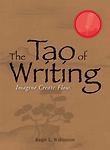
Each of us has the potential to create. The Tao of Writing Taps into twelve principles of Taoist philosophy to help you become a joyful, productive, better writer.
Excerpt
An excerpt from The Tao of Writing by Ralph L. Wahlstrom
Published by Adams Media, Avon MA in 2006.
(From page 13-14)
As with much in life, when we try to force the writing, we often end up with uninteresting, barren, joyless text; when we tap into the flow, we are likely to find ourselves carried along on a joyful, creative, fulfilling stream. Within this stream are tenets of life that apply readily to the act of writing.
Taoism is a philosophy of creativity, utility and joy. From this general impression and after reading extensively, I identified 12 principles of the Tao of writing:
1. Writing is natural
2. Writing is flow
3. Writing is creation
4. Writing is detachment
5. Writing is discovery
6. Writing is change
7. Writing is unity and multiplicity
8. Writing is clarity
9. Writing is simplicity
10. Writing is personal
11. Writing is universal
12. Writing is open-ended
At last, a version of Simple Steps to Sentence Sense for younger students and those whose native language is not English. Students can learn to analyze sentences in 5 easy steps.
This book is for all first responders (law enforcement, fire, or other emergency personnel) who are or want to be supervisors in their agencies. It goes through all facets of good leadership.
The Harlem Renaissance remains exciting, inspiring, and irresistible in the first half of the 21st Century for the same reason that the many people who lived it found it exciting, inspiring, and irresistible in the first half of the 20th Century. De