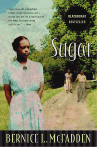
Bernice L. McFadden's first novel begins with the brief, poetic description of a crime so startling that the reader is helplessly drawn in, as if a bright red door stood ajar on a bleak and forbidding house. Pearl Taylor's daughter, Jude, has been found murdered and mutilated near a field at the edge of town. "The murder had white man written all over it," writes McFadden. "But no one would say it above a whisper. It was 1940. It was Bigelow, Arkansas. It was a black child. Need any more be said?" In the years that follow, Pearl catches sight of Jude in so many strangers that when Sugar Lacey comes to town and sets up her unwholesome "business" in the house next door, she doesn't know whether to believe what she sees in Sugar's face: a striking similarity to Jude, dead 15 years. In her sedate but supple prose--rising at times to a light, unforced lyricism in the description of landscape or character--the author perfectly renders the closed and protective society of a small Southern town, the superstitions, gossip, and prying. Although the men of Bigelow are happy enough to have Sugar around, the women do their best to drive her off. Only Pearl is drawn to Sugar, managing to look beyond the rumors surrounding her new neighbor, whose dismal life, she tells Pearl, "had no crossroads." Eventually Pearl shows Sugar the ballerina-topped jewelry box in which she keeps snapshots of her dead daughter.
Sugar lifted the lid and saw herself staring back at her. She jerked as if struck. Her hands were shaking as she lifted the first of many pictures from the box. Jude rolling in the grass, Jude swimming in the lake, Jude sleeping, Jude laughing. Sugar's head was swimming. If someone had brought these pictures to her and said, 'Here you are in the life you can't recall,' she would have believed every word of it and ignored the slight differences that remained between Jude and herself. Jude's smaller nose and thinner lips, her rounder eyes and fuller brow. But the smile was the same; sure and solid. Sugar knew that smile, it was her own.
Slowly, the secret connections between Jude and Sugar unfold against a backdrop of suspense and the return of violence. This is an ambitious and feeling debut from a promising writer. --Regina Marler --
Bernice L. McFadden's first novel begins with the brief, poetic description of a crime so startling that the reader is helplessly drawn in, as if a bright red door stood ajar on a bleak and forbidding house. Pearl Taylor's daughter, Jude, has been found murdered and mutilated near a field at the edge of town. "The murder had white man written all over it," writes McFadden. "But no one would say it above a whisper. It was 1940. It was Bigelow, Arkansas. It was a black child. Need any more be said?" In the years that follow, Pearl catches sight of Jude in so many strangers that when Sugar Lacey comes to town and sets up her unwholesome "business" in the house next door, she doesn't know whether to believe what she sees in Sugar's face: a striking similarity to Jude, dead 15 years. In her sedate but supple prose--rising at times to a light, unforced lyricism in the description of landscape or character--the author perfectly renders the closed and protective society of a small Southern town, the superstitions, gossip, and prying. Although the men of Bigelow are happy enough to have Sugar around, the women do their best to drive her off. Only Pearl is drawn to Sugar, managing to look beyond the rumors surrounding her new neighbor, whose dismal life, she tells Pearl, "had no crossroads." Eventually Pearl shows Sugar the ballerina-topped jewelry box in which she keeps snapshots of her dead daughter.
Sugar lifted the lid and saw herself staring back at her. She jerked as if struck. Her hands were shaking as she lifted the first of many pictures from the box. Jude rolling in the grass, Jude swimming in the lake, Jude sleeping, Jude laughing. Sugar's head was swimming. If someone had brought these pictures to her and said, 'Here you are in the life you can't recall,' she would have believed every word of it and ignored the slight differences that remained between Jude and herself. Jude's smaller nose and thinner lips, her rounder eyes and fuller brow. But the smile was the same; sure and solid. Sugar knew that smile, it was her own.
Slowly, the secret connections between Jude and Sugar unfold against a backdrop of suspense and the return of violence. This is an ambitious and feeling debut from a promising writer. --Regina Marler--
Excerpt
JUDE was dead.
On a day when the air held a promise of summer and people laughed aloud, putting aside for a brief moment their condition, color and where they ranked among humanity, Jude, dangling on the end of childhood and reaching out toward womanhood, should have been giggling with others her age among the sassafras or dipping her bare feet in Hodges Lake and shivering against the winter chill it still clutched. Instead she was dead.
She'd been taken down by the sharp blade of jealousy, and her womanhood-so soft, pink and virginal-was sliced from her and laid to rest on the side of the road near her body. Her pigtails, thick dark ropes of hair, lay splayed out above her head, mixed in with the pine needles and road dust. Her dress, white and yellow, her favorite colors, was pulled up to her neck, revealing the small bosom that had developed over the winter.
The murder had white man written all over it. (That was only a half truth.) But no one would say it above a whisper. It was 1940. It was Bigelow, Arkansas. It was a black child. Need any more be said?
No one cared except the people who carried the same skin color. No one cared except the parents who had nursed her, stayed up all night soothing and rocking her when she was colicky. Applauded her when she took her first steps and cried when the babbling, gurgling sounds that came from her sweet mouth finally formed the words Mamma and then later, Papa.
They cared. The parents of sweet, sweet Jude, who would never hurt a fly, no less a human being. Look at what they did to her!
Word first came via the Edelson boy. He'd run all the way and was breathless when he arrived. Black John, the blacksmith, had found her about a mile down the road and covered her body with a Crocker sack while he put himself in the right frame of mind to start coming. He had to pop the boy upside the head, twice, this just to get him moving instead of gawking.
Black John remained behind, gathering the broken child into his arms and placing her gently in his wagon among the bags and crates of field provisions. He stood looking at the beaten body of this almost woman. In life, she was a tall child, strapping, like her father, but in death, she seemed so small. Perhaps it was because of her broken bones and the way her skin sank in the places between the breaks that made her look so tiny and uneven.
Professional Reviews
Sugar
With her eponymous anti-heroine, debut novelist McFadden breaks the mold of a venerable stereotype. Here, the hooker with a heart of gold is instead a hooker with a past so tarnished no amount of polishing can change her fate. As a baby, Sugar is abandoned by her mother and raised by a trio of prostitutes who run an Arkansas bordello. Turning tricks at age 12, and leaving town four years later to try her luck in St. Louis and then Detroit, brings more degradation, along with an ever-hardening heart. Upon her mother's death in 1955, Sugar is willed a modest home in Bigelow, Ark., but when she moves into town, and supports herself the only way she knows, the female population rises in wrath against her. All except Pearl, Sugar's next-door neighbor, who more than a decade ago lost her beloved daughter, Jude, to a vicious rapist/murderer. Pearl is struck by Sugar's uncanny likeness to Jude, and is determined to become Sugar's friend in spite of vocal disapproval. Although the two women are opposites in nearly every way, they bring out the best in each other: Sugar convinces Pearl to loosen up and accompany her to a Saturday night juke joint, and Sugar promises to go to church for two months of Sundays. Hypocritical gossip spreads among the townsfolk and tension grows when it turns out that nearly every married man in Bigelow pays a visit to Sugar, leaving the apparently frigid wives planning to run Sugar out of town. Pearl gives it her best shot to transform Sugar, but both women's painful pasts come back to haunt them in a crescendo of violent reenactments, betrayals and surprising revelations leading to a poignant, bittersweet ending. While hampered by a forced and compressed backstory, a surfeit of maudlin moments and some overwriting that is inadvertently funny, this ambitious first novel will appeal to readers who can appreciate Sugar's determination to come to terms with her past and fashion a viable future. Agent, James Vines. (Feb.)
Copyright 1999 Reed Business Information, Inc. -
Sugar
McFadden's debut novel is an earthy slice of life in a small Southern town. When Sugar, a prostitute who never had a chance for love or a normal life, moves into the house next door to Pearl, a matron who lost her spirit after the murder of her daughter 15 years before, the two women form a bond strong enough to withstand even the most vicious gossip. But secrets from both of their pasts may prove too much even for these two compelling women, and Sugar must choose between her dreams for something better and the people she has learned to love. McFadden captures the full character of small-town life and the strengths and weaknesses of its people. This novel of friendship and loss is an excellent addition to the growing body of work by young African American writers. Recommended for all libraries.
---Ellen Flexman, Indianapolis-Marion Cty. P.L.
Helios is an award winning novel about a brilliant inventor of new technology, a fallen CEO seeking redemption, and an idealistic youth who comes of age in corporate America.
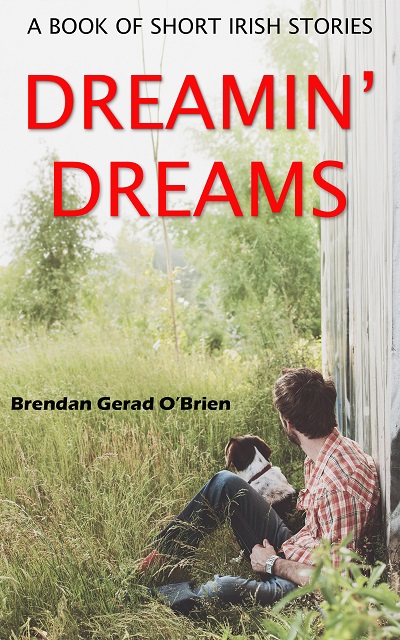
Dreamin’ Dreams is more than a collection of stories; it is a celebration of Irish life, adventure, and the unforgettable characters who make growing up in Ireland a journey worth remembering.
Celts and Kings: The story behind the mystifying disappearance of the Celtic Earls in 1607. The story of a lost love and Celtic Spirituality.
The story of a forbidden love going back 400 years.
The story steeped in Irish history, Ce