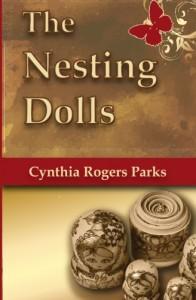
Four generations of mothers lose their daughters to war, political upheaval and family lies
They were trinkets only, but lovely ones, and much admired among the Russian aristocracy. A set of the little wooden dolls had recently taken a bronze medal at the Paris world’s fair—that Exposition Universelle also distinguished by the supremacy of Russian wines, by Gustave Eiffel’s marvelous tower, and a new invention they called the telephone.
Matryoshka dolls were already being copied across Russia to be shipped around the world. But the set given to Valentina Gubinova were originals, painted by the artist Maliutin himself and presented to Valentina on the birth of her first child, a girl they had named Olena.
Valentina would treasure them, allowing her children only rare glimpses of the little dolls, and when the time came to flee the Rose Palace, they were among the few of its treasures not left behind. When the time came for Olena herself to flee her homeland, they would accompany her. And, as impossible as it seems, when her own daughter, Maria, was forced to repeat the cruel pattern, she would carry them with her to a new continent.
This story, of the astonishing chain of events that brought them to my hand, was mine to flesh, but its bones were not mine, and much of the telling was beyond my control. I was bound by certain bald truths and by details of recorded history. I was guided by the memories of the living. I acknowledged the authority of the dead.
This is my story, but it has happened before. All of us, whether we know it or not, live our lives within, encased, and surrounded by the lives of others. We are born, we grow, we live and die within the chrysalis of those who came before. We are all of us nesting dolls. Nesting dolls all.
Professional Reviews
Parks confronts racism and immigration issues in the World War II era without mincing words
For the successive generations of Russian women in Cynthia Rogers Parks’s poignant novel, The Nesting Dolls, repercussions of their actions reverberate in powerful ways. This book touches on themes of mother-daughter relationships, love, loss, immigration, and emigration.
The bulk of the book centers around the Petrovs, a Russian family struggling to survive the upheaval they experience following World War II. The matriarch, Olena, worries for the futures of her daughters, Katya and Maria, and, to a lesser degree, her husband, Sergei.
Skillfully using third-person limited narration to invest the audience in her characters, Parks has Maria sagely observe, “Shanghai, like Mama, never really slept.” And there is much to cause insomnia in the bustling Chinese city the family inhabits; the spot-on descriptions plunge readers into the chaos along with Olena: “It was as if someone had only just tumbled a busy hive and its inhabitants, half human, half mechanical, were emerging shocked and stupefied, angry and lethargic, purposeful and aimless, unified in nothing but the strange buzzing din of voices.” Whether describing the inside of an American military mess hall or summing up a character’s personality, Parks adroitly uses language to her advantage.
The author repeatedly addresses the harsher side of motherhood as Olena loses her daughters to marriage, and Maria’s daughter Ana becomes a pawn in a troubled union. When the setting shifts from postwar Shanghai to postwar America, where Maria struggles to adjust to life on her mother-in-law’s Georgia estate, issues of emigration and loss continue to pop up. Branded a foreigner, Maria finds that her habit of acquiring new words in other languages is disdained by her husband’s family. The story also confronts the era’s racism without mincing words. Parks offers the mother-in-law’s indignant rants: “Didn’t she [Maria] know that Negroes raped and murdered white women? Was she not aware of their filth and diseases?” Lonely Maria becomes confused, and the audience is firmly on her side during this verbal assault.
Like her mother, Ana feels disconnected from her family due to circumstances beyond her control. Ana’s own daughter, Emily, also experiences emptiness until voices from the past reveal the truth, bringing things full circle for all the women.
In comparison to the stories of Olena, Katya, and Maria, the tales of adult Ana and Emily feel rushed. The sections about Ana and Emily contain copious summary paragraphs, which is a shame, given the effort Parks makes to develop Olena, Katya, and Maria. Olena’s section comprises the most pages, with Emily’s being the smallest. While this narrative structure nestles the stories within one another to brilliantly mimic the Russian nesting dolls referenced in the book’s title, the literary device would have been more successful if it hadn’t deprived the audience of the opportunity to know Ana and Emily as intimately as Olena, Maria, and Katya. But this pacing hiccup ultimately does little to diminish the novel, which is sure to resonate with mothers and those who love intergenerational sagas.
May I offer you a Round the World Cruise of a lifetime for the price of a novel?
Not only do the seas roll on but two romances,a death at sea, uncovered past lives, history uncovered in Brazil, caves in Australia, poetry in Senegal, the Lux Mundi
Part Three in the Mu Series - Sarah Thompson reluctantly abandons her desperate search for her soul mate on Maui and returns to her Montana hometown. Her brother has had a terrible accident...
May I offer you a Round the World Cruise of a lifetime for the price of a novel?
Not only do the seas roll on but two romances,a death at sea, uncovered past lives, history uncovered in Brazil, caves in Australia, poetry in Senegal, the Lux Mundi