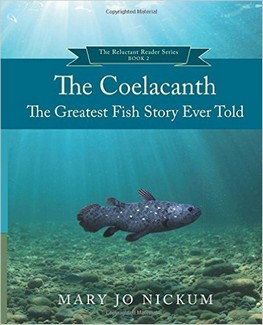
The primitive-looking coelacanth (pronounced SEEL-uh-kanth) was thought to have gone extinct with the dinosaurs 65 million years ago. But its discovery in 1938 by a South African museum curator on a local fishing trawler fascinated the world and ignited a debate about how this bizarre lobe-finned fish fits into the evolution of land animals.
There are only two known species of coelacanths: one that lives near the Comoros Islands off the east coast of Africa, and one found in the waters off Sulawesi, Indonesia. Many scientists believe that the unique characteristics of the coelacanth represent an early step in the evolution of fish to terrestrial four-legged animals like amphibi
Excerpt
The primitive-looking coelacanth (pronounced SEEL-uh-kanth) was thought to have gone extinct with the dinosaurs 65 million years ago. But its discovery in 1938 by a South African museum curator on a local fishing trawler fascinated the world and ignited a debate about how this bizarre lobe-finned fish fits into the evolution of land animals.
There are only two known species of coelacanths: one that lives near the Comoros Islands off the east coast of Africa, and one found in the waters off Sulawesi, Indonesia. Many scientists believe that the unique characteristics of the coelacanth represent an early step in the evolution of fish to terrestrial four-legged animals like amphibi
Where do viruses, such as Ebola and HIV, come from and why they are so aggressive? This book changed tenets of evolutionary virology, developing the concepts of aggressive symbiosis and plague culling, which explain much of the horror of plague virus
The symbiotic pattern of evolution is everywhere and allows us a very different and fascinating window into the way symbiotic viruses work, since all viruses are symbiotic, including those involved in our human reproduction.