AuthorsDen.com   Join | Login    
Where Authors and Readers come together!

SIGNED BOOKS    AUTHORS    BOOKS    SAMPLE CHAPTERS    AUDIOBOOKS    eBOOKS    STORIES    ARTICLES    POETRY    BLOGS    NEWS    VIDEOS    SUCCESS    TESTIMONIALS

Featured Authors:  Patricia Sims, iD.E.Z. Butler, iJill Eisnaugle, iAnn Marie Hannon, iPamela Ackerson, iMargot Dillard, iBob Boze, iDavid Schwinghammer, iGibbs Williams, iJudy Joy Jones, i

  Home > Mainstream > Books Popular: Books, Stories, Articles, Poetry      Authors: A B C D E F G H I J K L M N O P Q R S T U V W X Y Z     

Praveen Kumar

 Follow Me  

· Contact Me
· Books
· Poetry
· News
· Stories
· 20 Titles
· 17 Reviews
· Add to My Library
· Share with Friends!
·
Member Since: Feb, 2010

Praveen Kumar, click here to update your pages on AuthorsDen.


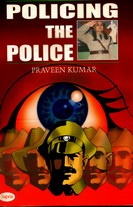
Policing The Police
by Praveen Kumar   
Books by Praveen Kumar
· Divya Belaku
· Bhavana
· Unknown Horizons    >> View all

See larger image

Kindle Edition
PUBLISHED ARTICLES
ENGLISH LOVE POEMS
KANNADA LOVE POEMS

Category:  Mainstream
Pages: 271

Price: $9.00 (eBook)


Authored by one and only Praveen Kumar

 BOOK REVIEW BY THE HINDU, NATIONAL DAILY

------------------------------------------------------------------------

 POLICING THE POLICE: Praveen Kumar; Sapna Book House, Thunga Complex, Opposite Tribhuvan Theatre, Gandhinagar, Bangalore- 560009. Rs 175.

A POLICE officer and a prolific writer, Praveen Kumar, has published another anthology of his articles which have already appeared in many newspapers, in the form of this book. Being a topical subject any time, "Policing the police' acquires more relevance today in the context of the criminalisation of not just politics, but of the services as well.

In addition to the canker of criminalisation comes the gangrene of corruption. And together, they have eroded much of the confidence and credibility that the services enjoyed in the eyes of the public a few decades ago.

In this compendium, the author has put together a host of articles touching all these aspects - from a more general issue on challenges and approaches, to the problems of corruption in the police, the quota system, the threats to internal security from terrorist groups, social justice and the need for humanising the force.Given the continuing deterioration in standards, it will be right to say at any point of time that the police or the civil service is at a crossroads - a vital juncture when it can make or break civil society.

The author also takes this line and shares many of his experiences in the force and in bureaucracy.

Coming as a sequel to his earlier book Policing for the New Age, the author chooses to describe policemen as "social doctors' and policing as a "surgical operation to systematically remove cancerous growths from the body of society'. The basic question remains - If they are themselves (police) infested, what happens to the society?

He knows as well as we do, that the Indian police is not what it was earlier on - the pride, toughness and commitment to duty are missing; perhaps a wrong kind of toughness has crept in! It has become an "abused organisation' by submitting to the wishes of its master, under false notions of discipline.

But it remains to be seen if the force will further slip into a "tragedy' or take the right step forward to make it a "turning point'.

Clearly, the police system should become more professional and less political. From the time of recruitment, the standards must be set and met. Their salaries must be attractive enough for them to say a firm "no' to bribes.

Crime, politics and police have now become the three sides of vicious triangle, posing a serious challenge to democratic India.

The author does come up with some suggestions, but one does not know if they are practical. For instance, he recommends an All- India Police Authority that is accountable to the President of India. A Supreme Court judge could head the national board, with the Cabinet Secretary and Home Secretary as its members; there could be a Regional Board at the States, with a High Court judge at the helm.

Unfortunately, all these decisions rest with the politicians who come to power. And they want to use and abuse the police force as well as the civil service for their own agenda. So how will they take the hard decisions to set things right and put the country or State first?

After all, there have been any numbers of Police Commissions and reports on revamping, modernising and streamlining the force. Perhaps, the push must come from the police themselves, if they want to redeem their image.

V. JAYANTH

 ABOUT THE AUTHOR

1. For online Links to his published articles in National Dailies  and Periodicals, please go to following Link:

https://www.facebook.com/pryveen/posts/537031279767893    

2. For online Links to his Love Poems, go to following Links:

IN ENGLISH 

https://www.facebook.com/pryveen/posts/538121672992187:1

IN KANNADA

https://www.facebook.com/pryveen/posts/538121672992187:0 


Want to review or comment on this book?


Need a FREE Reader Membership?

Reviews for "Policing The Police"

Reviewed by Praveen Kumar 7/27/2014
BOOK REVIEW BY THE HINDU

POLICING THE POLICE: Praveen Kumar; Sapna Book House, Thunga Complex, Opposite Tribhuvan Theatre, Gandhinagar, Bangalore- 560009.

Rs. 175.A POLICE officer and a prolific writer, Praveen Kumar, has published another anthology of his articles which have already appeared in many newspapers, in the form of this book. Being a topical subject any time, "Policing the police' acquires more relevance today in the context of the criminalisation of not just politics, but of the services as well.

In addition to the canker of criminalisation comes the gangrene of corruption. And together, they have eroded much of the confidence and credibility that the services enjoyed in the eyes of the public a few decades ago.

In this compendium, the author has put together a host of articles touching all these aspects - from a more general issue on challenges and approaches, to the problems of corruption in the police, the quota system, the threats to internal security from terrorist groups, social justice and the need for humanising the force.Given the continuing deterioration in standards, it will be right to say at any point of time that the police or the civil service is at a crossroads - a vital juncture when it can make or break civil society.

The author also takes this line and shares many of his experiences in the force and in bureaucracy.

Coming as a sequel to his earlier book Policing for the New Age, the author chooses to describe policemen as "social doctors' and policing as a "surgical operation to systematically remove cancerous growths from the body of society'. The basic question remains - If they are themselves (police) infested, what happens to the society?

He knows as well as we do, that the Indian police is not what it was earlier on - the pride, toughness and commitment to duty are missing; perhaps a wrong kind of toughness has crept in! It has become an "abused organisation' by submitting to the wishes of its master, under false notions of discipline.

But it remains to be seen if the force will further slip into a "tragedy' or take the right step forward to make it a "turning point'.

Clearly, the police system should become more professional and less political. From the time of recruitment, the standards must be set and met. Their salaries must be attractive enough for them to say a firm "no' to bribes.


Crime, politics and police have now become the three sides of vicious triangle, posing a serious challenge to democratic India.

The author does come up with some suggestions, but one does not know if they are practical. For instance, he recommends an All- India Police Authority that is accountable to the President of India. A Supreme Court judge could head the national board, with the Cabinet Secretary and Home Secretary as its members; there could be a Regional Board at the States, with a High Court judge at the helm.

Unfortunately, all these decisions rest with the politicians who come to power. And they want to use and abuse the police force as well as the civil service for their own agenda. So how will they take the hard decisions to set things right and put the country or State first?

After all, there have been any numbers of Police Commissions and reports on revamping, modernising and streamlining the force. Perhaps, the push must come from the police themselves, if they want to redeem their image.

V. JAYANTH
Popular Mainstream Books
  1. Four for Texas
  2. Soldier's Gap
  3. These Black and Blue Red Zone Days
  4. The Bracelet
  5. Hearts of Gold
  6. Giving Myself 'A' Reason For Going On
  7. Extraterrorestrial Beings v4
  8. Gilded Prisons
  9. Running From Herself
  10. Return to the Chapel of Eternal Love
  11. Middle Class Outing v2
  12. Between Two Eternities
  13. The Chapel of Eternal Love: Wedding St
  14. Sycophants
  15. The American Poet Who Went Home Again
  16. Handmaidens of Rock
  17. Taking Care of Harry
  18. Adolf Hitler: His Part In Our Downfall
  19. Yours in Spirit
  20. David Gideon
  21. Saying Uncle
  22. Undeclared War
  23. Nine New Novellas
  24. Irish King and Hero Tales
  25. Dance of the Misbegotten

Free Book Review Program
Select a book to read and review today!

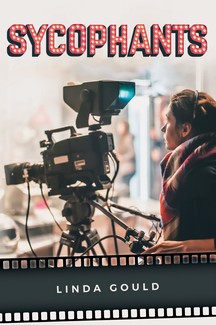
Sycophants by Linda Gould

Imogene, a country-bred girl, longs to make a life for herself in New York City. She joins forces with her former college roommate to start a movie production company in the big city.  
Member BookAds

Soldier's Gap by David Schwinghammer

Deputy Dave Jenkins investigates the murder of local high school principal, Jerry Egge, but this is a multi-faceted novel that deals with spiritualism, romance, friendship, and children who fall through the cracks. "Murder isn't usually this  
Member BookAds

The Chapel of Eternal Love: Wedding Stories from Las Vegas by Stephen Murray

Award-winning uplifting read for people of all ages. Why do couples come and get married in Las Vegas the wedding capital of the world?  
Member BookAds