Category: Native American Publisher: Blue Hand Books
ISBN-10: 1479318280
Type: Non-Fiction
Pages: 375
Copyright: Sept. 30, 2012
ISBN-13: 9781479318285
Price: $6.99 (eBook)
Major contribution to Native American history, new anthology offers narratives of American Indian Adoptees and the effects of adoption on them and their families.
After generations of Native children were forcibly removed from their Tribes and placed in residential boarding schools, children were also being placed in closed adoptions with non-Indian families in North America.
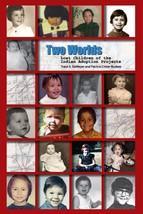
Finding those children became a mission for award-winning Native American journalist-adoptee Trace A. DeMeyer who started research in 2004 which culminated in her memoir “One Small Sacrifice” in 2010. DeMeyer was introduced to Cherokee adoptee Patricia Cotter-Busbee, and the collaborated on their new anthology, “TWO WORLDS: Lost Children of the Indian Adoption Projects.” The book hits Amazon and Kindle in September. (ISBN: 978-1479318285, Price: $19.95 (PAPERBACK), $6.99 (EBOOK).
“Readers will be astonished since these narratives document a page of North American history that few even know happened,” DeMeyer said. “Today tribal families hope to reconnect with adoptees but we know closed adoptions were planned to assimilate children, to erase their culture and end contact with their tribe. I started this project in 2008 after my memoir, then adoptees wrote to me. When I met Patricia in 2010, she shared her own amazing story and I knew she had to be part of this book.”
A recent MFA graduate of Goddard in writing, Patricia Cotter-Busbee welcomed the chance to contribute and help edit. “I could not resist helping with this important book. I felt that this was the project I had been waiting for. I kept thinking where are all these adult adoptees? I am an adoptee and know how badly I wanted to reconnect with my first families. If 1/4 of all Indian children were removed and placed in non-Indian adoptive homes, these adoptees must be looking for help, trying to open records and find clues to their identity. One study even found in sixteen states in 1969, 85 percentof the Indian children were placed in non-Indian homes. This book will help lost adoptees reconnect.”
The Lost Children in Two Worlds share details of their personal lives, their search for identity and their feelings about what happened to them.
“The history of the Indian Adoption Projects is troubling since it was unofficially ethnic cleansing by the US and Canadian governments, and this practice went on for years without public knowledge, but I am happy to report it failed because we are still here and still Indians; and this book explains how we adoptees did it,” DeMeyer said.
DeMeyer and Busbee agreed that “TWO WORLDS: Lost Children of the Indian Adoption Projects” is an important contribution to American Indian history.
“Indigenous identity takes on a whole new meaning in this anthology,” Busbee said, “both for the adoptee and those who adopted them. Adoptees definitely live in two worlds and we show you how.”
The book covers the history of Indian child removals in North America, the adoption projects, their impact on Indian Country and how it impacts the adoptee and their families, Congressional testimony, quotes, news and several narratives from adoptees in the US and Canada in the 375-page anthology.
“Two Worlds is really the first book to debunk the billion dollar adoption industry that operated for years under the guise of caring for destitute Indigenous children,” DeMeyer said. “Readers will be astonished since very little is known or published on this history.”
DeMeyer lives in western Massachusetts and Busbee lives in North Carolina.
Excerpt
PREFACE
It’s a big world. With the invention of a miraculous worldwide web, connecting is fast and free. Humans can interact at the touch of a key. Because of the internet, it connects me to new people every day, new friends who are also adopted.
In this big world, where do adoptees go to find information? How do we reconnect with our tribes after adoption? How do we learn about culture? Do we find other adoptees to get advice? Do we devour and search books, newspapers, or the web for clues? Or do we hear someone, an ancient voice, a soul who lives with us, inside us, who guides us, even inspires us, after adoption?
Reading this book, you’ll know the answers.
In their words, adoptees were destined to live in two worlds, and each has a spirit uniquely their own. We adoptees are like birds who migrate by memory and feed our hunger for culture by instinct and blood memory. Our spirit was not killed by adoption, even if we lived far away from our families and our tribal lands. We knew to be brave. We hoped away loneliness. We felt this was a test. We knew it is not good to be isolated and went to look for other Indian people and relatives when we could. Even as children we were aware we’d need to find answers to find our relatives. More than one adoptee told me they heard the drum pounding inside them, and felt it calling them.
Finding adoptees across the globe was possible with this web. Friends emailed or phoned and I heard about their journeys. I trusted the voice inside me that gently pushed, ask your friends to write their narratives and stories; these experiences would be published in a book, an anthology by Native American adoptees. The vision for this book was born in 2008 and it slowly grew into an amazing collection of voices and history. I knew right away when I met Patricia, an adoptee, that she was to be my co-author. (Now she is my relative.)
Because of adoption secrecy, I knew this history should not and could not remain buried. The truth has to be told and shared.
All of our lives the adoptees in this book have lived under an "adoptee stigma" of assimilation. We are often called transracial adoptees because we were raised outside our culture and by non-Indian parents. With a book, our sense of self-worth would rise, knowing many of us shared this (sometimes difficult) journey. Our success in finding our tribes could make big waves in the adoption world.
Most who read history are aware it is interpretation, told by the same conquerors who declared victory and Manifest Destiny. Indians cannot and do not rely on stories told by non-Indians isolated in their institutions. Some published scholars never visited a reservation or even know an Indian. It is their interpretation of who they think we are and that is very dangerous because we are not dead. We are still here.
Even the Smithsonian Museum, an institution called America’s national treasure, kill us again with vulgar displays of our bones and skulls, our medicine bundles, our sacred pipes, our masks and our drums. This treatment and disregard for what is sacred to our values and us can hardly be called understanding of tribal cultures. We are not relics. We are not the past. We are still here.
What about adoptions? Those who interpret its value to society protect their agenda and myths, spouting benefits for the adoptee. But we are called the Stolen Generations for a reason. Children did not ask to be removed. It is undeniable our assimilation was the government's answer to Manifest Destiny, to make us non-Indian prototypes of American citizens.
Adopting out Indian children would be as destructive as a war but it would last longer: it’d last a lifetime. The adoption program idea was not officially signed like other treaties made in Indian Country. These unique adoption program records were sealed and not made public. (It was acknowledged in an apology I heard in 2001. Read the Ultimate Indignity in this book.) The goal was adoptions would be permanent and closed, therefore adoption was used as the ultimate weapon. Native children adopted by non-Indians would be Americans and unable to open their records; and our tribal parents and grandparents were victims since they would never see us again, or be able to find us.
My close friend Adrian Grey Buffalo, a wise adoptee elder who has returned to his Sisseton Wahpeton Oyate (People) calls us adoptees the lost drums and pipes who were locked away from culture, and stored in Americans homes. We are the people who need to be repatriated back to our nations. Adrian believes now is the time. Our People need us back.
With the creation of Indian Adoption Projects and Programs, this grand scheme didn't make headlines. Their plan was not a war, not a signed treaty, but an idea they hoped would catch on and spread. Selling Americans and others on adopting Indian kids would be quite effortless. Essentially all social workers had to imply to parents was, "you'll save these poor Indians kid’s lives."
Judgments fell on First Nations and Indian Country in a very big way. This heavy-handed treatment and their adoption idea blanketed North America in every direction. In Canada it's called the 60s Scoop. It was the same idea for single women who had an illegitimate baby. Women were told to forget they had the baby. Indians were not told anything. Indian children simply disappeared at the playground or from their backyard or babies were taken from hospitals. Some of our mothers were too poor and were pressured not to keep us. A big black government sedan was reported in many abduction stories and it was not against the law or illegal. Some Native children were removed to residential boarding schools. Others were placed in orphanages and foster homes, and others would be adopted.
But by the grace of Great Spirit, it failed. Indians who were adopted do find their way home. The writers in this book are living proof. We are still here and with these new stories, we make new history.
Many folks living in America and Canada still see Indian Country as a foreign land, alien like some other planet. In some non-Indian families, racism and ignorance about tribes is/was very strong. Opinions about Indians was never great to begin with and gets even more damaged and complicated with Indian reservations ravaged by poverty, alcohol and North America’s neglect.
For the past century, parents living on reservations could not prevent children from being stolen for boarding schools and adoption. Governments made rules and paid agencies and churches to remove and Christianize children, to civilize and train children, and raise them to be non-Indian. This truth is not widely acknowledged in history: the government’s plan was to ethnically cleanse an entire population of Indian children. Removing culture of Native children would not only destroy future generations of Indians but adopted children would not have treaty rights. Adopted children would disappear.
It’s probably a fact that our adoptive parents had no idea as to the motive or why there were so many Indian kids put up for adoption, or why governments ran these programs with public and private adoption agencies who could supply infants and children to non-Indian families.
By the 1970s, Indian leaders took these serious concerns to the U.S. Senate, leading to the passage of the Indian Child Welfare Act of 1978. First Nations in Canada enacted their own law. In this book, we share what one Indian leader said in his congressional testimony.
I know I was stunned to hear it was government policy to run these various adoption programs. Many adoptees claim their adoptive parents never knew anything about this. Mine surely didn't and would have scoffed at the idea.
When an adoptee becomes an adult, some question whether their family or their tribe will accept them back. Some were unsure which tribe or if it’s more than one tribe. Some did not know they had been enrolled in their sovereign tribal nations, filed earlier by relatives. Some learned their parents and tribal relatives were assimilated too, in boarding schools or in relocation programs, severely scarring them. It’s a painful cycle of loss in this past century.
The "adoptee stigma" of assimilation does leave adoptees lodged between two worlds. Can we be Indian enough when raised by non-Indians? Can we return to learn tribal culture and customs? Can we take back our identity? Can we be reverse-assimilated? Can we attend ceremony and get our Indian name? I tell them, "Yes."
But neither adoptee or Indian parent will find government help in reconciliation or repatriation in America. It's up to the adoptee and parents. It's up to tribal communities to spread the truth of the Indian Adoption Projects and begin to look for their lost children.
Victims of these adoption programs have not received a formal apology in the United States. Few politician’s know or acknowledge it happened. With sealed adoption and closed birth records (in 2012), this will prevent full disclosure, which is why this book was planned and written. Politicians and lawmakers need to know our birth certificates were amended and falsified. Judges must abide by the Indian Child Welfare Act and not allow non-Indians to adopt Indian children.
The adoptees I know are some of the strongest-willed humans on the planet. They got around laws and sealed records, and as you will read in Two Worlds, many built their own bridge between the two worlds.
Gathering these stories changed me, enlightened me, haunted me and astonished me. I only ask that you share these stories with your children so these governments never attempt this idea again. The adoptees in this book are my friends and relatives now. They are warriors though they may not call themselves that. Their courage and spirit shines through their words. I knew these stories would make us our own tribe, a unique band of survivors and warriors.
“A nation that does not know its own history has no future,” is a quote I read recently by activist Russell Means, Oglala Lakota.
So how do we write the story of North American Indian and First Nation adoptees when so many people know nothing about this history?
We gather round the adoptees and listen as they share their story, in their own words, in their own voice.
The only way we can change history is to write it ourselves..... and our truth shall finally set us free.
--Trace A. DeMeyer (Shawnee-Cherokee-Euro)
Author of One Small Sacrifice: Lost Children of the Indian Adoption Projects
Professional Reviews
Astonishing Anthology
“…sometimes shocking, often an emotional read...this book is for individuals interested in the culture and history of the Native American Indian, but also on the reading lists of universities offering ethnic/culture/Native studies.”
“Well-researched and obviously a subject close to the heart of the authors/compilers, I found the extent of what can only be described as 'child-snatching' from the Native Americans quite staggering. It's not something I was aware of before…”
“The individual pieces are open and honest and give a good insight into the turmoil of dislocation from family and tribe… I think it does have value and a story to tell. I was affected by the stories I read, and amazed by the facts presented…. because it is saying something new, interesting and often astonishing.”
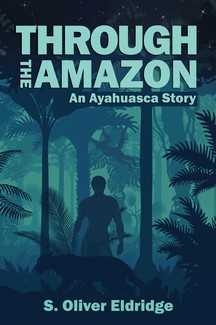
The drug called "The Shari" has been used for vision quests over many years. But, when all the rivers start drying up, the tribe must send a young hunter named Tomás on a much more important trip through the Amazon.
The drug called "The Shari" has been used for vision quests over many years. But, when all the rivers start drying up, the tribe must send a young hunter named Tomás on a much more important trip through the Amazon.
The drug called "The Shari" has been used for vision quests over many years. But, when all the rivers start drying up, the tribe must send a young hunter named Tomás on a much more important trip through the Amazon.