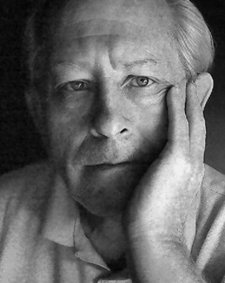
Description: A rare disease tragically shortens the life of a wholesome young man, but fate has something more in mind for Simon: a phenomenal gift and the love of his life.
Kennedy's first and best-loved novel, Simon is a story for people of all ages. Heart-breaking, gut-wrenching, it is also uplifting and inspirational and speaks to the universal love and hope in every man.
Excerpt
Chapter 25
The next several months– Simon’s last, were, without a doubt, the happiest he’d ever known.
Willie May had a long talk with her boys, before they went up the road to Hyattsville to stay with their grandparents, so she could spent as much time as possible with Simon. She went to see them every weekend and sometimes during the week when she could manage it.
She and Simon rarely talked about it. It was a temporary arrangement, and they both knew it.
“...How’s Jimmy Joe doing with his little league?...Is he still batting over three hundred?...Is Billy Bob still dating that what’s-her-name?...Sally, isn’t it?” he would ask.
Other than that, there wasn’t that much to say. But he never failed to ask how they were doing, when she would return from a visit with them.
For their part the boys seemed to understand. So it worked out well for as long as it lasted.
His parents understood, too. “...If you would like to move in, you’re more than welcome,” they told Willie May, after her kids went to Hyattsville.
“...But where would I stay?” she replied, flabbergasted.
“Why, in Simon’s room, of course,” they said.
“...You mean...with him?”
“...Well, that would be up to the two of you.”
“But what would people think?...Don’t you care?” she felt compelled to ask.
“...Let’s just say certain social conventions no longer apply,” his father replied, adding with a wink, “...They haven’t now for some time...Years, in fact!”
What a bombshell that was– one neither he nor Willie hardly expected. The next day she brought some suitcases over and settled in with him.
Still, eyebrows were raised in certain quarters, and tongues did wag. But the Boises paid no attention. Large or small, every town had its own click of pious burghers, and they’d long since grown accustomed to it.
After that, she and Simon were literally inseparable. They almost had to be, because he never fully regained his speech, and she became the only one who could understand his garbled attempts, when he didn’t feel like signing or writing things down.
Eventually she got so good at it that it became their principal means of communicating, especially when they were alone. For them, at least, there was something symbolic about it– something poetic. At last they had a language all their own.
It was a bitter sweet time, one built upon successive, almost interchangeable moments, of sorrow and grief, on the one hand, and indescribable bliss on the other. Somehow, between them, the difference between the two became finer and finer, until it was no longer discernable, for all intents and purposes. Everything equaled one and what that was, was love and unqualified acceptance; not just between the two of them, but of everything– the way things were and the way things came. No questions were asked. None was necessary. Everything was now, and now was right in every way. It was in this way that the ends all seemed to meet, and everything came together.
He called it “contentment” and she called it “joy”, and together they had it. It was almost as if they made a private pact to insist upon being happy. It was theirs to own, and own it they did, because it was what they were. They were there for each other, and that was the why of so many things.
When he faltered she picked him up, and when her spirits sagged he lifted them. It was a balancing act– their union; equilibrium personified. In motion, at rest, and emotionally, it was always the same– always right and flawless. And yet it was one of those things that couldn’t be calibrated. Just sensed. It always seemed to be on the edge of perception, just out of reach, just out of sight– a word away. Always moving, ever flowing, dancing and skirting about; always changing and permutable– forever in flux.
She asked it about it once, their “joy”. She wanted him to put it in words for her– what it was, how it was, and why. But he declined, saying only, “...If I put it in words, my love, I would be making it finite...Putting boundaries on it...Limiting it. Making it seem less than it actually is.”
And then he said, “Tell me what a flower is...No, don’t. Just think about it...The instant you do, it can be nothing more and nothing less...Capture kills, enslaves, confines, stunts growth...It robes things of their potential and brings them down. Narrows them...In fact, the better I might describe something like our joy, the less of it we would know...Because, in truth, its totality can never be known...We may see the red petal or the white stamen, but the honey bee sees something quite different!” And then, grinning, he quipped, “...And you ask me about joy!”
It was enough for him, and it was enough for her– having everything. And it was so much easier and made all the more wholesome, without all the intellectualizing.
He held his own through his twentieth birthday and through that summer, up until Thanksgiving. His mother out did herself in the kitchen, and Ruth came down with armfuls of snacks and delicious-smelling side dishes. Between the two of them there wasn’t a better spread laid out on another table in town.
He spent a lot of time with his sister, reminiscing mostly. After supper, while his mom and Willie May saw to the dishes and Chuck took Mikie into the living room to watch the big game with his dad, they moseyed out onto the back porch. He didn’t ask her out, and she didn’t ask him. They just went. There they plunked themselves down in a couple of lawn chairs and stared out across the yard, enjoying the sights and the sounds and the smells that surrounded them.
There was something soothing about the sound of rattling dishes and pots and pans being clanged in the hollows of the kitchen; something soothing about the muffled crowd noises and the sound of whistles blowing on the television; crickets chirping by the porch and lawns being mowed in the not so far off distance; passing cars in the street and the warm, friendly conversation underpinning it all. There was something comforting about the smell of the fresh-cut grass that wafted through the air– its sweetness intermingling with the pungent aroma of mincemeat pie, left over turkey, fresh homemade cranberry sauce and those good old peanut butter cookies; something reassuring about the wind-borne harvest of brightly-colored leaves that spiraled from the trees in fitful gusts of wind– invisible little kingdoms that came and went, rolling the leaves up ahead of them, like breakers on a beach or spinning them off in whirling dervish eddies; something disarming about the single-minded squirrels that crisscrossed the yard and foraged the rooftops, combing the gutters for pecans and other stores for the winter months ahead. And there was something dulcet about the squabbling, squabbling blue jays; something alluring about the crispness of the air, the blueness of the sky, and the puffy white clouds– headed nowhere in a hurry; something seductive about the afternoon sun and the postcard sheen it sprayed on everything like a laminate.
It was all a mishmash, a jumble of little things that meant almost nothing; yet combined was everything. They were the elements of a feeling, and there wasn’t anything quite like it– the incidental things that made one feel good to be alive. It was an inside-outside thing, and it was unimpeachable.
Before very long Willie May ambled out and, with her as a go-between, Simon and his sister got to talking. Joking and laughing, they had a grand old time, rehashing long and forgotten stories about those “remember when” days, when they used to fuss and fight all the time and drive their parents up the wall. It was a pretty good way to make a living in those days, they both agreed; it was a pretty good time after all.
They also talked a little about the future and what lay ahead. It wasn’t easy for Ruth, but he made it easier. He was perfectly at ease with himself, as if there was absolute nothing the matter; as if he didn’t have a care in the world beyond that moment. And he didn’t. For that moment at least, he was able to relieve her of her worries, and she relaxed and opened up and was able to speak freely about things, until she got to talking about their mother and herself. “...You should know how much it means for me to know that you will be there for here after I’m gone,” he said,
It all started to come apart for her then, and she showed him a tear. But he would have none of her despair. “...Why the long face? You have everything!” he reminded her.
Later, when her mother did need her she would be there– rock solid, and she would vividly recall that moment and its elements and be glad that he was one of them; not just them, either, for she would also come to understand that there was no mileage limit on a memory, and that one well-placed had no need of a closet.
He also took a few moments to spend some time with little Mikie. After they finished talking, his nephew wandered out with a pie crust in his hand, and together they toddled out to explore the yard. It was a big world out there, and he wanted to share with him what he knew of it.
But that was mere a pretense. What he really had in mind was to make another memory, to give him something of himself that he would remember– a piece of his pie, as it were, before it was all gone. So, he guided him along the porch by the side of the house and showed him the periwinkles, and then, by way of the cannas in the corner, the amaryllis along the fence, and the fig trees by the shed in the back of the yard, he led him to the garden where, in words little Mikie couldn’t understand, he told him everything there was to know about gardens and gardening in minute detail. He told him about the cabbage and the carrots, and the tomatoes and the cucumbers that were still bearing fruit; he told him about the okra and the bush beans and the gigantic egg plant that had been growing all summer long and was about to explode. Then he took Mikie over to a big anthill at the end of a row, and, in between all of this, he told him that he loved him and that he hoped he would grow as tall as the giant pecan trees that were towering overhead.
Although distracted by the squirrels, little Mikie seemed impressed. He seemed to understand the in between part, and that was all that really mattered– all he really needed to know. The rest was all wonder and words failed that, which was what Mikie told his uncle in a language that Simon himself couldn’t begin to understand. But that was all right, for he also let Simon know with his eyes that this would be a chat he would long remember.
On the way back to the porch, Mikie suddenly stopped and tugged on his uncle’s hand, smiling up at him as he offered him the remnant of the crust he’d been gnawing on.
Looking down, Simon smiled back and shook his head as if to say, “...No, thanks anyway, tiger. I’m stuffed! I’ve already had much more than my share!”
Understanding him perfectly, little Mikie grinned. “...Me, too!” he seemed to say, and then he drew back and gave the crust an androgynous heave at a nearby squirrel.
Such as it was, that walk with Mikie was the last one he would take of any significance. From that point one the ADC’s became a legacy of unremitting physical dissolution.
Shortly after Thanksgiving– just after the first blue norther, his sight began to fail, and he was fitted with glasses. In December, his prescription was changed to bifocals and strengthened after that on a regular basis every three weeks. By Christmas, he was bedridden again, this time permanently, and he had to be carried or carted about in a wheelchair. Further crippling him, his rheumatoid wrists completely locked up. His hands folded down, and his fingers grew rigid in a grotesque clutching position, with his thumbs pointing out and bent back to the side like spikes. They were all but useless, and Willie had to start spoonfeeding him. Between the two of them, they reinvented ASL.
His eyelashes vanished, and what remained of his hair turned cottony white. Downy-looking, it had the appearance of being so frail that a gust of wind would whisk it away and send it alight like milkweed seed. It stood out in sharp contrast to the dark liver spots that flecked his scalp at the crown of head and other regions of his body, in particular his face and hands.
He had chronic respiratory problems, began to wheeze and cough constantly: had frequent bout of bronchitis and pleurisy, which all but immobilized him. And he was required to spend part of the day on a ventilator, so he would be better able to breathe at night. He was jaundiced, had gout, and suffered from hyperesthesia; had chronic digestive complaints: constipation, diarrhea, ileitis, and occasional incontinence. By the end of March, the last of his teeth had fallen out, and he couldn’t chew, making the semi-soft died food he’d been on since December mandatory.
Beginning below his left ear and swerving down, like a sickle, toward the corner of his mouth, was a line of liver spots that was particularly unsightly. Shaped like little figure eights, they could have been the footprints of a miniature traveler, who perhaps had wandered unsuspecting too near the cavernous gap where his teeth used to be. There, he could have slipped on his glassy purplish lips, or perhaps stumbled over an encrusted scab and disappeared forever into the sunken folds.
Already enfeebled, his limbs continued to atrophy, until they became so weak that they appeared disjunctive and dissimilar. In league with the rest of his body, they were in a general mutiny of his will and commands. Wrinkled and derelict, what flesh there was on them hung in loose folds at the back of the bones, lolling listlessly or swaying and pitching to the pull of gravity as he labored to move. The skin itself, where it still fit snugly on the anterior of his body, or was in other places stretched out tautly like a tight-fitting garment, was almost completely translucent, so that one could almost see the inner workings of his anatomy. This made it especially disconcerting for one to look at him for any length of time, as one could plainly see the vague outline of his internal organs and the blood coursing through his body in subcutaneous rivers of blue and red. It was almost as though he were illuminated from within by an internal light.
Afflicted by a degenerating spine, his back had bowed completely over and his shoulders were cowed, folding him over and giving him one the impression that his neck was longer than it actually was. Pole-thin and encased in ringlets of layered and folded flesh, it seemed to precariously balance, rather support, what appeared to be an oversized head that disproportionately eclipsed his attenuated frame.
With his sunken chest and protruding ribs, his flattened face and upheaved nose, his stalk-like limbs and his distended stomach, his claw-like hands and exaggerated head, his splotched complexion and diaphanous skin, his cavernous mouth with its scab-ridden lips, and with his prominent eyes– dark and wide and searching, he began to assume the appearance of a feckless hatchling. And in a manner of speaking that was what he had become.
During this time he performed no more miracles, wrote no new books; he laid his easel aside, and composed no music. He couldn’t. He wouldn’t have, anyway, even if he could. Content to rest on his laurels, he cheerfully announced, “...It’s time to retire,” putting his condition in the best possible light, when his mother asked him why he appeared to have lost interest in his work.
It seemed an appropriate explanation. But his parents took the news with a sense of foreboding, because they knew he was giving them notice that he was preparing for the inevitable.
He spent his time reading quietly, listening to music, or in quiet meditation. “...What geniuses they are!” he said of Emerson and Elliot and Whitman. He said of Mozart and Beethoven– of Joyce and Hugo and Dickens, and so many others.
It was almost amazing how they continued to amaze him; how he never tired of them; how they continued to inspire and stimulate him; to soothe and sustain him and bring him joy. And yet it wasn’t. In truth, it seemed only natural that he should turn to them and other great minds in the house of his twilight. After all, they weren’t exactly mere acquaintances. They’d been best friends for the better part of his life. As it had always been with the special ones, there was the dynamic of continuing discovery and revelation, of renewal and ongoing reevaluation, of validation and affirmation– those internal things that change the outside, things “ings” that made up his life.
It was a time of summing up, of making himself ready for what he casually described as the next step in the Continuum. In preparation of this, he quietly assembled his favorite greats of the arts and letters and music– his friends, around him for comfort and consultation.
But they weren’t just his friends. They were much more than that. They were his extended family, his brothers and his sisters of like mind. He had never known them personally, and they had never known him; yet they were joined. More properly, he had become a member of their extended family, which in part was what he meant when he spoke of the Continuum. They had been there for him when, just as they were there for him now, and through his respect and admiration– indeed his adoration of them, he had been there for them as well. This was also part of the Continuum.
But now it was time to meet “face to face”, as it were, to go where they had gone before, to close and join ranks. To him, at least, that much was certain. He was just as sure of it, as he was that he had been where they had been and where he now was they had all been before. Aside from the transition, death had almost nothing to do with it– a faint ring perhaps. The transition was undeniable. But equally undeniable was the fact that, then as now, he would be in good company– the best, and he looked upon it, more or less, as being reunited with the corpus magnum. He saw them and himself and everything else as merely temporarily parted and ultimately indivisible. In other words, he was what they were, continued on.
Fond of referring to Emerson in those final days, he explained it to Willie this way, when she asked him about it. “...You cannot be what you not are.” It was his way of telling her that he wasn’t alone, that he never had been and never would be. He had been afraid before, many times. In fact, he had lived much of his life in fear and its attendant torment. But he wasn’t afraid anymore, and this enabled him to focus fully on his “crossing of the bar”.
It was also a time of profound gratitude. He was glad he’d had the time to work it all out, to learn what he’d learned, to know what he’d come to know. More than anything, time had ultimately transformed his hell into a heaven. It was an inside job, but not entirely. He couldn’t repay them directly– his friends, but he knew that wasn’t the way it worked. The wisdom and knowledge they had given him could never be repaid, not even if he could go back in time and thank them all personally. His addition to the equation had made it more– truer somehow, if such a thing was possible, and that was thanks enough.
“...Rarely does one have the opportunity to repay in full one’s parents for all the things they do freely for their children,” he further said to Willie. The reason for that of course, he knew, was that such things are dispensed without stipulation, intended instead to be of service and then again passed on responsibly. Such as it was, the thanks was in the “ings” – the Continuum.
He, of course, had no earth-bound children to be the beneficiaries of his accumulated knowledge. But that wasn’t mitigating. That wasn’t anything more than a circumstance. He had fathered dozens of children in his books, his treatises, his paintings, his music, and everything else he’d done in the time allotted to make the equation plus one– plus anything. And it was passed on just as freely as it had been given. In that sense he had met his obligation, perhaps even surpassed it, because the legacy he’d continued and would be leaving behind was at least as important as the genes he wouldn’t be leaving. Doubtless there would be "grandchildren"– literally hundreds of them.
Even if he hadn’t done a thing with his life in a contributory sense, he still would have satisfied the minimum requirements of the equation. It still would have remained valid, for in drawing his sustenance from a few well-chosen friends, he kept their spirit alive and in effect reincarnated them.
When he wasn’t reading, listening to music, or meditating, he would have Willie wheel him out into the yard where, from time to time, he could "see things". He especially liked to go out early in the morning, when it was cool and quiet and he could watch the day break.
He likened it to a symphony– the way everything melded together, with the various “sections” stirring to life, seemingly unaware of their individual contributions. He questioned that– their unawares, often remarking that the participants knew full well what they were doing and enjoyed giving their performances and generally being the object of his undivided attention, as much as he enjoyed their “harmonies”.
There was, more or less, a sense of order to it all, he noted. Equipped with the loudest and widest range of voices, the birds were the prima donnas, most of the time. Being aerialists didn’t hurt any. They carried the melodies and performed most of the solos. But there were occasionally others, like the frolicking squirrels, who would sometimes steal the show with their clownish antics. More intelligent and deliberate, they seemed to have a sounder sense of theater and were therefore at their best as operatic artists, though he was sure the birds would argue that.
The interesting thing was that no one group seemed to consistently dominate. In fact, every section was subject to being upstaged at any time. There was the Dance Of The Porch Light Moths, which was as frenetic and passion-filled as anything the birds or squirrel had to offer; the thrilling and adventurous Ascent Of The Webworms, the evocative and dramatic March Of The Garden Caterpillars, and the soulful and mysterious Rendezvous Of The Garden Slugs. On one occasion an obviously lovelorn bullfrog appeared from out of nowhere and blew them all away. But that was the attraction. It was always the same and yet somehow never.
He enjoyed the evening performances almost as much as those of the morning. When he was up to it, Willie would take him out late in the day, and he would sit by the garden. He always sat in the same place– just left of center stage, where he would have the best possible view of the setting sun as it sank behind the trees.
The music then was of a different genre. With the birds gone to roost and the squirrels tucked away in their nests, the resultant strains were more pastoral in nature– more conducive to the quiet brand of reflection he particularly enjoyed.
He did some of his best thinking then as he watched things “grow” in front of the garden with his incandescent eyes. In the crush of the cicadas that rhythmically swelled the air, he once told Willie that he could almost feel himself growing in all that green. He said he could almost feel the sun inside himself, washing him clean; that he could almost feel his molecules being rearranged. He told her there were sometimes moments when he could no longer tell where the garden ended and he began. He’d thought as far as he could think, and then he had thought further.
He said there were times when she looked at him that he felt as though he was no longer there; that he no longer seemed to occupy a physical space– was asomatous. He said he felt spread out all over– was more or less everywhere at once and in all sorts of places, in bits and pieces. He said he could see her through the eyes of a bird or a…
This book is about a radical transformational Way of Insight, Awakening and Realization to transcendent Self of Nondual Consciousness. If your're interested in transcendental Enlightenment, in Awakening to Nondual Self of Wisdom and Compassion, then
A unique perspective about the reality of existence, the meaning of life, the true impact of relationships between human beings and all life as well as the spirit world, and the impact that everyone makes on the universe. (Available in Print or as an
This book chronicles an infinite allegoric odyssey of Absolute Awakening in which a learned man, a mute man, and a recluse woman are the principal players. The mute and the recluse are the learned one's Teachers and Guides on his journey of Enlighten