When Chippie Pablo’s poor Mexican father and White middle-class mother married, they defied the conventions of 1950’s rural Appalachian town, stirring up racial and social tensions. Now twenty years later, Chippie struggles to understand the rationale behind the prejudice attitudes directed toward her family. All she ever wanted was to play and pretend away her childhood in the meadows of Walkup Holler, however, her daddy’s dream of having his own land leads the family to settle in a swampy area at the foot of Briar Ridge, a community where a girl of “her kind” should remember her place. But Chippie’s strong will and devotion to her family will not be silenced by bigotry and ignorance.
Just when she thinks she has found the means and the courage to erase the stigma on her family, Chippie’s world is rocked by tragedies so severe and a sorrow so deep that they cause the social issues which once plagued her to seem small and far away.
I Listened, Momma is an authentic and bittersweet tale of a family’s struggle to survive, of its love, its loss, and ultimately, its triumph.
All author royalties from the sales of this novel are being donated to aide in the battle against cancer.
Excerpt
For my extra credit class I took Spanish. That night when Daddy was sitting at the table, having his coffee, I went into my room and took my schedule out of my tablet. I held it for a moment; imagining the day when I would speak Spanish as well as I spoke English, when I could speak the language my family hadn’t used in eighty years. I stepped back through the kitchen door and eased into a chair at the table.
“What are you grinning about, Sis?”
“Daddy,” I laid the paper on the table in front of me, even though I knew he couldn’t read it. “I’m going to learn how to speak Spanish.”
“What’re you talking about?”
“Mexican, Daddy. I’m going to speak Mexican just like Great-Grandpa did.”
Daddy set his coffee down and gritted his teeth. “Sissy…” he shook his head.
I didn’t understand what the problem was. I fumbled with my paper, drawing it closer to myself.
“You don’t understand. We been treated like colored folks my whole life. I want better than that for you kids. That’s why we don’t speak Mexican. I don’t want you speaking Mexican just like Momma’s people didn’t want me speaking it when I was little. My Uncle Henry spanked me for saying words I heard from Grandpa until I learned the difference. I forgot them Mexican words. Forgot every one of them and here you are wanting to go dig them up again.”
Professional Reviews
Sandra Kring
With characters so real they seem to be made of breath and bone, Campbell draws us into the nucleus of this Appalachian family as if we are relatives. We feel their heartaches and yearn for their healing as though our own happiness depends on theirs. This is Southern fiction at its finest.
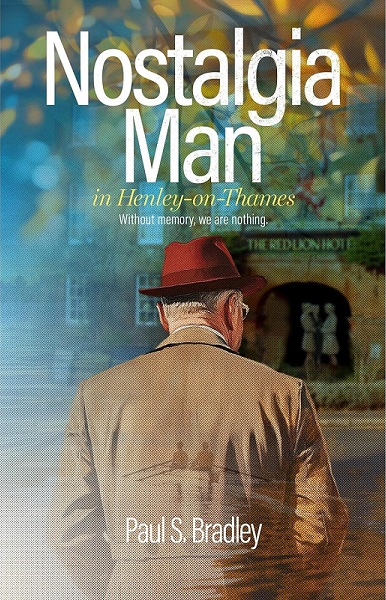
Determined to confront the hazy memories of his troubled youth, Oliver Matthews, a retired detective and confirmed bachelor, returns to the picturesque town of Henley-on-Thames for the first time in years.
The Apple Tree Blossoms in The Fall, is the life journey of Carineh - a child, a teenager, a wife, a mother, but most of all a woman of purpose. From stories of her parents held-up by bandits; the white donkey gifted by Khomeini; her father's death f