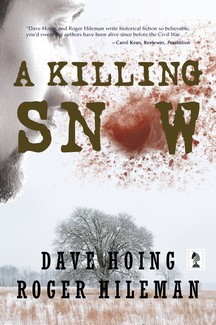
A story of a woman's grit and determination in overcoming both the deliberate misdeeds of people and the unforgiving capriciousness of nature.
When aspiring journalist Mariel Erickson leaves the civilized comforts of Chicago for Goss Valley, a small town on the Dakota prairie, she isn’t prepared for the turmoil she and her husband encounter. As if hostile homesteaders, harsh weather, impoverished Indians, and shady frontier politics aren’t bad enough, Mariel soon finds herself embroiled in Goss Valley’s first murder case.
The facts of the case appear straightforward. In full view of five witnesses, wagon driver Clyde Hartwig beat an Irish immigrant to death with a baseball bat. The victim was known as a decent and hardworking family man. But Mariel hears rumors of his involvement with homemade bombs and Fenian terrorism. Could that have been Hartwig’s motive? On assignment for the town’s fledgling newspaper, Mariel must get the killer’s side of the story before he’s silenced by the hangman’s rope.
Hartwig’s trial, set for early January, promises to be the biggest event to ever happen in the short history of Goss Valley, and the residents eagerly anticipate a fine spectacle. Little does anyone know that a much larger force is about to descend on the town, revealing how capricious life on the prairie can be.
Excerpt
Hartwig steered the horses in that direction and stopped in front of the door. He stretched his muscles and popped his joints before coming around to offer Mariel assistance. Her body ached, too, particularly at the juncture where she and the wagon converged. Were Hartwig not so close by, she might have massaged the affected area.
As Randall climbed down, Bruno woke briefly, sniffed the air, and curled up again. “No, you don’t,” Randall said, unhooking him from the trunk. “Mr. Hartwig will need his rig.”
“Perhaps Bruno would appreciate time in the bushes,” Mariel suggested.
“He ain’t the only one,” Hartwig said, which was more than Mariel desired to know—although in that regard she was in sympathy. “I’ll take him out back,” he said.
“You won’t escape that easy,” the man in the door bellowed. “I told you ten o’clock. Good thing you’re paid by the load, not the hour.”
“No offense, Mr. Hammon, but if I don’t go now, we’re gonna get a load nobody’ll wanna pay for.”
“Ever the poet, Clyde,” Mr. Hammon said. “Go on, git.”
Exigency overcoming distrust, Bruno allowed Hartwig to take the leash. As soon as they disappeared behind the hotel, Mr. Hammon motioned Randall and Mariel toward him. Oil lamps inside burned at his back, leaving his face in shadow. Mariel couldn’t get a clear view of his features, although she could see he had white hair and a long, unruly beard. He was wearing a brown vest over a stiff white shirt. She could smell the starch.
Randall ascended the three steps to the door. His height was no more than average, yet he towered over Mr. Hammon by a head. “Is it no longer customary for enlisted men to salute superior officers?” he said.
“I’d sooner salute my horse’s ass,” Mr. Hammon said, breaking into a grin. “Which, in your case, amounts to the same thing.” He straightened his back and crisply saluted with his left hand.
“Insubordination,” Randall laughed. He returned the sinistral salute.
The two men shook hands.
“You look like hell, Randy. Are you the knucklehead that tossed that bomb in Chicago?”
In May a labor protest in Chicago’s Haymarket Square turned violent when a radical threw dynamite at a police officer. “You know me better than that,” Randall said. “I’d have thrown it at the protesters.”
“So how you been?”
Mariel thought she heard wheezing when Mr. Hammon spoke.
“Same as always, only more so,” Randall said.
“You’re wearing eyeglasses now. When did you get old?”
“A day at a time. You look the same as you did twenty years ago. That’s hardly fair.”
Mr. Hammon yawned, then coughed. “I’ve given it some thought, and decided against dying.”
“Good luck with that. Hartwig says you don’t own the hotel?”
“Nah. Fiona Bohnet and her two sons do, but neither of those boys are worth a shit. I got some hope for the older one, Phinny, but Ned’s so stupid, he probably ain’t gonna live long enough to grow out of it. Fiona hired me and Phoebe to run the place. Speaking of wives….” Randall didn’t take the hint, so Mr. Hammon shouldered past him, hopped down the steps, and approached Mariel. He doffed his Panama hat to her, revealing a cowlick that rose straight up from his head like water from a fountain. “Since your husband’s still an ill-mannered lout, I’ll introduce myself. I’m Mike Hammon. You must be Mariel.”
“I am indeed, sir. Honored to meet you. I’ve heard many a story about your escapades.”
“Nothing true, I hope. You are a handsome woman, Mrs. Erickson. What madness made you settle on the likes of him?”
Mariel blushed. Randall hadn’t told her what a fine liar his old friend could be. She was stout as a barrel of pickles and encrusted in dried perspiration. She probably had bags under her eyes. Still, she lifted her bonnet to primp her hair, trying to stuff the stray strands back into her bun. “Equal parts pity and charity, Mr. Hammon.”
“Everyone calls me Mike, except that knucklehead out back.” He coughed again, pausing to catch his breath. The wheezing was more pronounced. “Long time since I had my eyes open this side of midnight.”
“Are you unwell?” Mariel said.
“Oh, it’s just this damned asthma. That’s why I left Illinois. Doctors said the climate here would help. I don’t know about that, but it’s no worse, I guess.”
“You should rest. You needn’t have waited up for us.”
“And delay meeting you? May I escort you into the hotel?”
Mariel took Mike’s arm and marched up the steps. She gave Randall a so there look. He put his hands on his hips and chuckled.
She heard Bruno barking at some real or imagined nemesis, and then he and Hartwig rounded the corner. Hartwig was still buttoning his trousers. Randall went to take the dog’s leash. “Will you retrieve our luggage?” Randall said.
“That’s what I get paid for.”
Mariel waited while Randall pulled Bruno up the stairs to her. When he handed her the leash, Bruno plopped down on the porch, looked up expectantly, and slobbered. His nostrils were quivering, as if he smelled something appealing inside.
“Somebody hit that dog in the face with a mallet?” Mike said.
“It’s the breed,” Randall said. “He can’t help it.”
“He was our daughter’s,” Mariel said.
“Well, best not let it wander too far. Coyotes are a real nuisance around here.”
Mariel was horrified. “Surely coyotes wouldn’t eat a dog?”
“Why not? Just another sack of meat to them.”
“Why don’t you shoot them?”
“We do, but it don’t make any difference. If we shot fifty a night till kingdom come, they’d still be out there howling in the dark. Come on in, I’ll introduce you to Phoebe.”
“Your wife?”
“She’d better be, or we’re both going to hell.”
Mariel tried to hide her amusement. The same coarse language she found offensive from Hartwig was endearing from Mike’s lips.
Whatever aroma was tickling Bruno’s olfactory fancy got the better of him, and he suddenly bolted through the door, yanking Mariel with him.
The parlor was spacious and pleasingly decorated. Bruno strained at his leash in the direction of what must be the kitchen. He sniffed the air, his slimy tongue protruding halfway to the wooden floor. Mariel noticed the planks were planed and varnished. This far into the wilderness, she’d expected a rough-hewn log cabin like she and her father shared in Ohio.
Hartwig thumped and bumped the trunks up the stairs, while simultaneously trying to balance their suitcase on top. “Lieutenant Erickson fell in a buffalo wallow,” he said, giggling like a mischievous child. The suitcase tumbled to the floor, nearly striking Bruno and eliciting a warning growl. “You should’ve seen it—”
“Clyde,” Mike said, “if you’d ever bothered to have a brain installed, you’d know when to stop talking. Take their things to the south bedroom. There’s a nice breeze through there.”
Moments after the drayman dragged the trunks down a hallway, a woman emerged from the direction of Bruno’s desire. She appeared considerably younger than Mike, perhaps Mariel’s age, but shorter and not as plump. Gray-flecked hair poked out from under a scullery cap. She looked worn out. Apparently she didn’t often see this side of midnight, either.
“We’ve been expecting you,” she said. “I made tea and biscuits.”
“Mother,” Mike said, “this here’s Randy Erickson and his wife Mariel.”
“How-do,” she said with a half-hearted curtsy. “Mike speaks highly of you, Lieutenant Erickson.”
“That’s only because it’s not polite to say what I really think.”
“Seeing you again,” Randall said, “makes me realize how little I’ve missed you.”
Professional Reviews
Lyrical prose--taut, riveting, rich, layered, nuanced, and deep--and a strong heroine!
A strong, smart, visionary heroine is hard to find, but the first place I'd look is in historical fiction by Iowa duo Dave Hoing and Roger Hileman.
"A Killing Snow" is inspired by the tragic blizzard of 1888, "a nice dramatic backdrop for a novel," this writing duo thought. So did the unpublished memoirs Roger had in his possession from his great-great-uncle Michael Hileman Jr., who lived from 1820 to 1915. Hileman and Hoing had always wanted to find a venue to incorporate Michael's story, and when they noticed in his memoirs that he had experienced the blizzard firsthand, they found it.
Uprooted from Chicago, aspiring journalist Mariel Erickson makes the best of her new life in the mostly fictional location Goss Valley, a small town on the Dakota prairie, in the mid-1800s. Her husband Randall has a passion for meteorology and high-tech (for the times) equipment he checks daily in order to give weather reports, and out here, the weather is every kind of harsh. So are the local homesteaders with their shunning of Irish immigrants. Back then, the Irish were a hated minority, but not as hated as the natives, impoverished Indians displaced from their homes. Mariel and a priest seem to be the only people who care about their minority neighbors. Her boss is a chronic drunk, but he teaches Mariel how to run a printing press and put out a newspaper. The story she covets most is that of a Civil War soldier who survived imprisonment in Andersonville, but Mike Hammon won’t talk about it, and who can blame him? Still, Mariel has to extract the details from him, and get permission to publish them. Conflicts and richly developed characters lead to subplots grounded solidly in historical records.
Goss Valley's first murder case, for example, is so unbelievable, the authors may have had no choice but to explain its real-life counterpart in their “Afterward: Fiction and History.” (More on that in a minute.)
With the ring of authenticity emanating from the most unbelievable events (which all too often really happened), Hoing and Hileman write historical fiction so believable, you'd swear the authors have been alive since before the Civil War. The prose is spare, poetic, and vivid. I’m amazed at the research that allows them to casually narrate so many everyday details from a life we no longer live. The printing press alone is a masterpiece. So is the cash register. I’ve blogged about some of this at carolkean at wordpress.com.
In the Afterward, they explain that Herb Goss is loosely based on Herb Gann, who founded Gann Valley in 1883. The tragic blizzard of Thursday, January 12, 1888, is better known as “The Children’s Blizzard” and is the subject of various books. Mike Hammon is based on Michael Hileman, the great-great uncle of co-author Roger Hileman.
Okay: the murder. In Marion, Iowa, in 1847, a farmer named James Carnagy was clubbed by James Reed in view of witnesses. Carnagy dies of these injuries a month later. It took a year for the case to go to trial, and when it did, the killer was acquitted by a jury who dismissed the incident as “an old feud fueled by drink.”
Historical fiction is brutal because it so often springs from outrage over events like that one. One of the consolations of reading this genre is seeing how times have changed for the better. Then again, people do not change all that much from age to age. Some of the scenes ring true today as much as they did a century earlier, before women were “liberated.” While husband Randall is a fine, intelligent man, an accomplished pianist, and more, he resents Mariel’s independent thinking to the point that he’d physically chastise her for it. Mariel puts him in his place, but it isn’t much of a victory.
On a related note, today as well as then, some husbands play the invalid, moping about, expecting to be waited on. Women can be just as guilty of exploiting their husbands, I know, but as a woman reader, I wince and cringe for Mariel.
The same sins and virtues go on, and on, and gifted storytellers bring them to life as if these stories had never been told before.
Page after page, I was grinding my teeth, wincing and shaking my fist at people in 19th Century Nebraska. All long dead. Good riddance! Then again, there were so many good people, like Mariel Erickson, giving everyone a fair chance, even the man who killed a family man and got away with murder. Then again… karma comes round, and Nature delivers a blow to the killer.
It’s so hard for me to discuss the fine points, insights, nuances and developments of a novel without that “SPOILER” risk (yes, I’ve been accused of it, chronically). However, we know from page one that Mariel Erickson is still angry twelve years after Clyde Hartwig, killed an Irishman and hardly anyone cared.
“What’re these people to you, ma’am?” one local asks Mariel. The dead man’s “brood” is “just another family of filthy immigrants.”
The “filthy” family are not just Irish, but Travellers as well, a group as shunned and mistrusted as the Romani “Gypsies.” That murdered man may have some shady secrets, but does that mean his killer did the town a favor? Land of the free, home of the brave—unless the jury just doesn’t like you.
Knowing the town folk, it chills my heart when James, a full-blooded Crow Indian, enters Mariel’s classroom. Ahead of her time, Mariel laments “the lifestyle his people had had to abandon in order to assimilate into white society.” There’s a story she could tell him, e.g., she knows his Crow name is Howling Dog, but Mariel is a woman of discretion and sensitivity.
Deep down, after so many years, so many deaths, Mariel seethes with anger at all the injustice she’s witnessed. This does not make for the most uplifting of endings – fans of the genre, you have been warned—but it does make for great literature.
Historical fiction at its best
In July of 1886, Lt. Randall Erickson of the Army Signal Corps and his wife Mariel along with Bruno, their aging and malodorous but beloved mutt, arrive in the small town of Goss Valley in what is now South Dakota, then the Dakota Territory. Erickson had arranged a transfer from Chicago with the assistance of an old Civil War buddy, the asthmatic, crusty but ever helpful Mike Hammon, a survivor of the notorious Confederate prisoner of war camp in Andersonville, Georgia commanded by the equally notorious Henry Wirz, the only Civil War veteran executed for war crimes. Second Lieutenant Erickson is a weather forecaster, referred to as giving "indications" then, the forerunner of modern meteorology handled by the Signal Corps. Exactly why Erickson, a veteran of thirty years' service - and a West Point graduate at that - holds the lowest commissioned rank in the army is a mystery reserved for later in the narrative.
Goss Valley was founded by Herb Goss, the town's inebriate mayor, postmaster and publisher and editor of the town's newspaper, the Goss Valley Sentinel. At the time Mariel meets Goss, the mayor and town council are preoccupied with a fight to return the county seat to Goss Valley after having lost the distinction a couple years previously to another small prairie town. Goss seems to pursue this as much as a matter of personal pride as for its financial and political advantages. Mariel is a social progressive and bit of a proto-feminist who aspires to a career in journalism. To that effect, she lobbies Goss for opportunities to write for his paper, and writings of more substance than mere women's fluff pieces, to the chagrin of her husband, the more conventional and staid army officer. Mariel eschews prejudice against immigrants and even American Indians whom she yearns to help in their often desperate plight. Here Erickson puts his foot down having a seemingly irrational disdain for the "noble savage" and pegs up his wife's contrary views to misguided romanticism. He staunchly forbids her to visit the Crow Indian reservation some miles away, an edict Mariel is destined to disobey to the detriment of their marital relations.
The first townsman the Ericksons meet is Clyde Hartwig, a drayman (one who drove a horse drawn, buckboard-like vehicle; then regardless of cargo and not just beer as the term was later identified), whom Hammon hires to meet the Ericksons at the nearest railroad station some miles away and transport to Goss Valley along with their luggage. Hartwig also sells a hardy variety of wheat seed better able than other strains to withstand the vicissitudes of the harsh Dakota climate, as well as dabbling in the Chicago grain futures markets. Mariel takes an instant dislike to the young, profane Hartwig, a mutual antipathy that will feature prominently in the novel. He drives them to the hotel managed by Mike Hammon and his wife Phoebe for a local widow until the newcomers' house is ready for them to take up residence. Mike and Phoebe had each been married previously, both having lost their spouses. Phoebe's late husband had been an army surgeon during the war. She had sometimes accompanied him as a civilian aide. Her moving journal account of the death during the Battle of Gettysburg of a Confederate soldier greatly impresses Mariel in light of her journalistic aspirations. She later urges Mike Hammon to share his wartime exploits, especially his ordeal at Andersonville and his daring escape, that she knows Goss had been hankering to print to no avail as Hammon stubbornly refuses to open up about that period of his eventful life.
As the Ericksons acclimate to their new surroundings, Mariel is delighted with an offer by Mayor Goss to become the town's new schoolmarm, a position in which she has experience. As the Hammons are living at the hotel while managing it, they generously offer their own house for the school. Mariel is urged by the town's women folk to join their Fragment Society, a charity that ostensibly sews clothes for the destitute but which Mariel soon learns to her dismay is little more than a gossip society. She has frequent run-ins with the other ladies due to their obvious prejudice against Indians and the Irish, most especially an Irish immigrant couple with a ponderous brood of children. As a result, she has the first of a series of run-ins with Hartwig's wife Louisa which threatens her professional position. Hartwig had taken a violent dislike to Liam and Bridget Blackford and their thirteen kids. The Blackfords are not just Irish Catholics, but also Travelers, indigenous Irish who lead Gypsy-like existences in the old sod. Like Gypsies, they have an unsavory reputation for thefts and scams. However, after having lost a child (of which Mariel learns of in a manner which she finds both macabre and traumatic considering her own family's past), the Blackfords decided to break with the old ways and now seek to homestead in the new land. Liam Blackford is somewhat mysterious as to how he manages to support his prodigious family, a question that eventually might be answered by the appearance in town of another newcomer of a seemingly sinister bent named Cowan whom Liam Blackford introduces as his cousin notwithstanding the former being Scottish, a claim regarded dubiously by others. The friction engendered between the interactions of Hartwig and Blackford ultimately boils over into a sensational crime (for the era and place) and a trial that threatens to turn scandalous in the hands of a respected defense attorney.
The novel unfolds as an intriguing slice of period Americana on the plains. The reader is treated to historically accurate descriptions of an Indian reservation, a Jesuit mission and missionaries; the trials and tribulations of small town people trying to survive in often adverse circumstances in an unforgiving climatic environment long before central heating and indoor plumbing. The characterizations are rich with heroism and foibles and contain often amusing incidents juxtaposed against tragedies of almost Biblical proportions. The title is derived from the historically accurate blizzard of January 12, 1888, often referred to as "The Children's Blizzard," which appeared suddenly (defying Erickson's prediction to the contrary) and dropped a ponderous amount of blinding, fluffy snow that resulted in the deaths of many children trying to make their way home from school on the Great Plains and costs Mariel part of a leg after an attempted rescue of students.
Authors David Hoing and Roger Hileman are coauthors of Hammon Falls, a novel set somewhat later in Iowa and which title is taken from the name of the nephew of Mike Hammon of this novel, a town's real estate baron and local potentate; so perhaps this portends a series of loosely connected historical novels. The narrative unfolds between 1886 and 1900 with the innovation (which some might find gimmicky) of presenting the final chapter first, rendering the balance of the novel as a flashback by Mariel Erickson, its principal protagonist, from whose point of view the entire novel is presented; also somewhat unusual (and effective here). The authors meticulously draw from period source materials such as diaries, and the town of Goss Valley is patterned after Gann Valley, South Dakota, which with a population of fourteen renders it the smallest county seat in the United States. A Killing Snow is a superlative literary effort of historical fiction, related in a compelling style of prose, well worth the time of readers interested in such historically riveting fare. The reader does indeed appreciate the feeling of "being there" in an age not all that long ago, yet seemingly strangely exotic to people of contemporary values and marvels of material and technological innovations so alien to those who lived then.
A Great Pioneer Story
It's hard to beat a good pioneer story. You have people who are somewhat—or maybe completely—isolated by choice, facing a climate more harsh than any they had seen before, and still dealing with the challenges of being human in the development of family and community. The Killing Snow is a wonderful addition to pioneer literature. The characters are flawed—like other humans. In the very small community of Goss Valley, Dakota Territory, people are often thrown together with others they wouldn't have associated with back East, and either have to make the best of it, or not. Both courses have consequences.
The descriptions are lovely, and place the reader in the Dakota territory of the late 1880s, suffering through the extremes of winter and summer and relishing the beautiful days in between. A murder of a shunned immigrant by an reviled citizen would not be expected to polarize the community or weave itself into unrelated events, but it does because of the complex relationships among the characters. Hoing and Hileman do a great job of defining and elaborating the context of the times: a couple of decades after the Civil War, the height of immigration, the beginnings of modern technology (the post office gets a telephone but it is useless for the time being because no one else has one.) A wonderful and enjoyable read.
A novel about a family during World War II, set on the homefront in Springield, Mass., and in the South Pacific. The book focuses on four characters and how their lives were affected and changed during the war years.
The Six Bells of Madame Lin is the first book in The Witch of Marigold Hall Trilogy, a fictionalized account of the struggles of Lin Mang, a blind woman who manages to navigate the world during the Mongol conquest of China in the 13th Century. Withou