AuthorsDen.com   Join | Login    
Where Authors and Readers come together!

SIGNED BOOKS    AUTHORS    BOOKS    SAMPLE CHAPTERS    AUDIOBOOKS    eBOOKS    STORIES    ARTICLES    POETRY    BLOGS    NEWS    VIDEOS    SUCCESS    TESTIMONIALS

Featured Authors:  Darryl Jenkins, iJames Harvey, iMichael Charles Messineo, iTerry Vinson, iJudy Joy Jones, iJ and C Wordsmiths, iLinda Frank, iDr. Patrick ODougherty, iEmily Karlewicz, iGlen Schulz, i

  Home > Cultures > Books Popular: Books, Stories, Articles, Poetry      Authors: A B C D E F G H I J K L M N O P Q R S T U V W X Y Z     

RAFI SAMAD

 Follow Me  

· Contact Me
· Books
· Articles
· 6 Titles
· 1 Reviews
· Add to My Library
· Share with Friends!
·
Member Since: Nov, 2010

RAFI SAMAD, click here to update your pages on AuthorsDen.


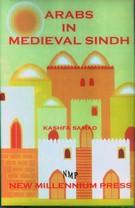
Arabs in Medieval Sindh
by RAFI SAMAD  Kashfa Samad 
Books by RAFI SAMAD
· Electric Power in Pakistan
· The Grandeur of Gandhara
· Ancient Indus Civilization    >> View all

See larger image

Amazon

Category:  Cultures
Publisher: New Millennium Press

ISBN-10:  9698842020

Type: Non-Fiction

Pages: 178

Copyright: 
December 2008

The book 300 years of Arab rule in Sindh and Southern Punjab, starting from Muhammad bin Qasim's invasion in 712 AD. Its effect on Sindhi society.

  • ARISTOCRATS & THEIR LIFESTYLES

Most of the Umayyad and Abbasid Caliphs were no saints and their personal lives very often not above reproach.

Almost all the Emirs of Sindh in the Umayyad and Abbasid periods came from aristocratic families and were closely related to the Caliphs, the Governors and other senior officials. Other Arab administrators who served in various regions of Greater Sindh also came from similar backgrounds. Therefore one would expect their lifestyles to be somewhat similar to that of their fellow aristocrats in the Arab homeland.

There were therefore two facets of the lifestyle of these aristocrats. The public image, for the people at large, was that of the representatives of the religious heads of the Muslim community, the Caliphs, and that of the defenders of the faith. The semi-public and private aspect of the lives of the Arab aristocrats presented a somewhat different picture – a life of luxury and sensuous pleasure.

One of the common cultural events in the semi-public life of the Arab aristocrats was a gathering of poets, in which the poetry recitals mainly took the form of Qasidahs or poetry in which the exclusive subject was showering of praises on the honoured guest. This tradition seems to have been well-ingrained in Arab aristocratic circles. We find that among the many poets who excelled in this form of art in the aristocratic circles of Baghdad and Damascus, there were a number of poets of Sindhi origin.

  • REJUVENATION & ENRICHMENT OF SINDHI LANGUAGE

This process of homogenization within Sindh and promotion of interactivity of Sindh with other regions of the vast Umayyad and Abbasid Empires was further aided by the rejuvenation and enrichment of the spoken Sindhi language during the period of Arab rule. During the period of Arab rule spoken Sindhi blossomed as a most vivid medium of oral expression with substantial additions to its vocabulary. Most Arab settlers learnt to speak Sindhi fluently and this process itself contributed to the enrichment of the Sindhi language through incorporation of a large number of Arabic words.

As the Sindhi language continued to acquire greater depth through expansion of its vocabulary, and the number of Sindhi scholars who could read and write Arabic fluently continued to increase, a point of convergence was being approached between spoken Sindhi and written Arabic. The base for the evolution of rejuvenated spoken Sindhi into a full fledged written literary language was thus being firmly established.

  • CULTURAL HERITAGE

All through the period of Arab rule, the Sufi environment in Sindh continued to receive nourishment through increased interaction among Sufis belonging to different regions of the Umayyad and Abbasid Empires. This environment was subsequently nurtured and sustained in the centuries following Arab rule through intense interactions between the Sufis of Sindh and Southern Punjab with those in lands where Arab and Perso-Arab Sufi cultures. It was in this environment that Sindh produced its greatest poets and musicians.

  • HABBARI EMIRS OF MANSURA

 Apart from Umar bin Abdul Aziz the founder of the dynasty, Abdullah bin Umar was probably the most prominent Emir of Mansura. Abdullah is said to have ruled Mansura for almost three decades, during which period the Emirate of Mansura made a lot of progress. Abdullah is also known for his luxurious style of living. The brass door knockers of the gates of his Palace, which have his name inscribed on them, are perhaps the most impressive pieces of artefacts found from this site.

The Arab scholars make special mention of the opulent style of the Emirs of Mansura. They wore a regal dress and turbans studded with precious stones, in a style very similar to the dress worn by contemporary Maharajahs in other parts of South Asia. They moved about in chariots driven by profusely decorated elephants. One of the Emirs owned as many as eighty war elephants, and had the elephants’ bodies fully protected with heavy armour. Elephants were also used as beasts of burden.   

  • QURAISHITE EMIRS OF MULTAN

As in the case of Habbari Emirs of Mansura, the wealth, sound administrative institutions, and stable socio-economic conditions inherited by the Emirs of independent Multan enabled them to live in luxury and assume a regal lifestyle. Some distance away from the hustle and bustle of the old fortified city of Multan, on the banks of the Ravi River, there was the satellite town of Jandrud. During the Umayyad and Abbasid periods it served as an important cantonment where the Deputy Governors of Multan also resided. Under the Quraishite Emirs of Independent Emirate of Multan, Jandrud continued to serve as a Military Cantonment but the relatively modest residences of Deputy Governors were now replaced by luxurious fortified palaces of the Emirs and the nobility.


Excerpt

• ARISTOCRATS & THEIR LIFESTYLES
Most of the Umayyad and Abbasid Caliphs were no saints and their personal lives very often not above reproach.
Almost all the Emirs of Sindh in the Umayyad and Abbasid periods came from aristocratic families and were closely related to the Caliphs, the Governors and other senior officials. Other Arab administrators who served in various regions of Greater Sindh also came from similar backgrounds. Therefore one would expect their lifestyles to be somewhat similar to that of their fellow aristocrats in the Arab homeland.
There were therefore two facets of the lifestyle of these aristocrats. The public image, for the people at large, was that of the representatives of the religious heads of the Muslim community, the Caliphs, and that of the defenders of the faith. The semi-public and private aspect of the lives of the Arab aristocrats presented a somewhat different picture – a life of luxury and sensuous pleasure.
One of the common cultural events in the semi-public life of the Arab aristocrats was a gathering of poets, in which the poetry recitals mainly took the form of Qasidahs or poetry in which the exclusive subject was showering of praises on the honoured guest. This tradition seems to have been well-ingrained in Arab aristocratic circles. We find that among the many poets who excelled in this form of art in the aristocratic circles of Baghdad and Damascus, there were a number of poets of Sindhi origin.


Professional Reviews

Bridging the Gulf
Bridging the Gulf

BOOK TITLE: Arabs in Medieval Sindh
AUTHOR: Kashfa Samad
ISBN: 969-8842-02-0

Reviewed by Mina Kazi
--------------------------------------------------------------------------------------------------------------------
Sindh, Baluchistan and Southern Punjab have a long history of close cultural and commercial relations with countries along and across the Persian Gulf, which go back to the times of the great Indus and Sumerian Civilizations. These relations reached their peak between the 8th and 10th centuries, when this region became a part of the Great Arab Empire, which had its base in the region around Damascus and Baghdad.
In her book ‘Arabs in Medieval Sindh’, Kashfa Samad provides an interesting account of the conquest of Sindh and of the political, cultural and economic conditions prevailing in Sindh and Southern Punjab under the Umayyad, Abbasid, Habbari and Quraishite Emirs.
The book provides an insight into the extraordinary courage, leadership qualities, and administrative skills of Muhammad bin Qasim, the youthful Arab commander. It also reveals streaks in his character when he was wont to commit massacres on a massive scale after he faced stiff opposition from the enemy, and justifies this action by saying that it was a necessary tactic for creating terror in the minds of the enemy, so that his task was made easier in subsequent military encounters.
The book gives credit to Muhammad bin Qasim for creating the political and administrative infrastructure, which enabled the Arabs to rule Sindh for more than three centuries. It highlights Arabs policy of allowing the locals to play an active role in the administration of the country, and allowing people of different religions to pursue their religious beliefs without interference from the ruling regime.
According to the book the liberal policies adopted by the Arabs were conducive towards the evolution of a hybrid culture, which serves as the foundation of the modern Sindhi society. The social code evolved through interactions of the locals with the Arabs is still visible today in the attitudes of the common man, in the social customs and in the family relationships; Islam continues to be practiced with zeal and fervour by overwhelming majority of the population of Sindh and the Arabic script provides a handy vehicle for the transmission of thoughts of great Sindhi scholars, in a language enriched by words, phrases and similes derived from the Arab language.


Want to review or comment on this book?


Need a FREE Reader Membership?

Popular Cultures Books
  1. Yankee Doodle Daddy
  2. Marooned on Moloka'i: Coconuts, Dreams
  3. New and Different Friends
  4. Developing and Establishing Effective
  5. Amazing Ancestors
  6. Black History Treasury
  7. Lynchings Without Ropes
  8. Tales of the Wicklow Hills
  9. A Cargo of Guilt
  10. LIBERTY'S LEGACY
  11. Ebony & Ivory--- An indepth look at cu
  12. Parade of Shades
  13. The Legends and Lands of Ireland
  14. Spanish and Basque Legends
  15. Free at Last: Prescriptions for Black

Free Book Review Program
Select a book to read and review today!

Marooned on Moloka'i: Coconuts, Dreams & Death by Kalikiano Kalei

A 30 day log (2005) of life on Moloka'i (HI), the last of the 'befoh time' Hawaiian holdouts, for a haole malihini.  
Member BookAds

Yankee Doodle Daddy by Leanne Bright Cloudman

Yankee Doodle Daddy is a historical Appalachian Family Saga. The story follows a mother's reckoning as she struggles to survive and keep her four daughters alive.  
Member BookAds

Greeting Flannery O’Connor at the Back Door of My Mind by Aberjhani

Exploring the impact of literary icon Flannery O'Connor's noted legacy on the cultural realities of modern-day America, the world, and a certain author.  
Member BookAds