|
Category:
Arts/Entertainment
ISBN-10: 1450755011
Type: Non-Fiction
Pages: 532
Copyright: December 7, 2010
ISBN-13: 9781450755016
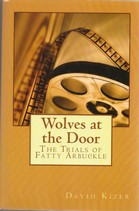
Wolves at the Door is the narrative day by day account of the trials of Roscoe 'Fatty' Arbuckle from the perspective of the attorneys, the judges and the witnesses.
Although there are various misperceptions of the Roscoe 'Fatty' Arbuckle 'scandal,' the truth of what happened led to one of the most incredible public spectacles of the 20th Century. Roscoe was a gentle soul caught in the middle of a political and media hurricane led by Matthew Brady, the district attorney who would stop at nothing to convict him with or without any real evidence.
The attorneys on both sides introduced techniques now routinely employed every day in the profession. The witnesses were a mixture of Agatha Christie characters and the courtroom confrontations were, at times, hostile and humourous. In the background, beating the drums of morality for a prohibition era public, was William Randolph Hearst, who never printed a paper he didn't intend to sell
Interwoven with the story are the remarkable movements and achievements occurring simultaneously in the world of exploration, sports and religion as America raced into the 'Roaring Twenties.' The verdict is unforgettable and the aftermath for everyone involved changed their lives - in ways none of them could have ever imagined.
(Excerpt below)
Excerpt
Wolves at the Door
The Trials of Fatty Arbuckle
By
David Allen Kizer
PART ONE
“It is better to risk saving a guilty man than to condemn an innocent one.” - Voltaire
Most of the following is probably true…
We can’t seem to help ourselves.
We have this morbid interest in celebrities and unexplained death – especially if the death involves a young person. In the thirties, it was Bruno Hauptman and the Lindberg baby. In the sixties, it was Charles Manson and Sharon Tate. At the end of the millennium, it was O.J. and Nicole – each event resulting in the ‘trial of the century.’
But there was another trial, now long forgotten, that surpassed them all. It involved a beloved, overweight, silent movie actor, who as fate, or some higher power divined, ended up in the wrong place, at the worst possible time.
The lambent waves of chance that swept over him nearly one hundred years ago would reflect everything that we like, and dislike about ourselves as Americans - our conflicting love for fairness and sensationalism; for truth and for lurid gossip; for getting the bad guy and fighting for vindication. As with all morality plays, there was lots of money involved, and, of course, booze and pretty women.
On many levels, his trial brought us further into the twentieth century than maybe the country was prepared to go. People just could not get enough of the sordid details in a post war era of prohibition and religious indignation toward sin.
The defendant was represented by a “million dollar defense team” and the concepts of forensic evidence were first introduced to a curious national audience. Testimony was suppressed and witnesses lied.
A celebrity would ask forgiveness from an outraged public after falling so far and so fast into disgrace. It was our country’s first “he said – she said,” courtroom drama - beauty and the beast with a tragic third act.
There were pirates in the story and maybe even a little hoo doo.
Freddy Kreuger was there too.
O.J. Simpson was not the defendant in America's ‘trial of the century.’
It was Roscoe “Fatty” Arbuckle.
CHAPTER ONE
Roscoe
It was a much different place – a much bigger place - America in 1921. No one really knew how big. There was, of course, no television. There was the radio, but no way to visually unify the country at a given moment, as a flag being planted on the moon, or the horror of smoke plumes pouring upward into the New York skyline.
The country was dotted with large cities, great distances apart, but America was mostly rural. People were born, grew up, had families, worked and eventually died in the same towns without seeing much, if any of the rest of the world.
There was no interstate highway system, so travel by distance was largely done by train. Roads outside of the cities were mostly two lanes of flat dirt and few people owned cars anyway. Airplanes were still a wonderful novelty, and their recent use as weapons of destruction gave everyone a glimpse into the future of war. Homes were heated by fireplaces, or by a steam radiator. Electricity for some, was not always a given.
Warren G. Harding was in the White House and the brutal, bloody World War had been over for two years. The President, whose corrupt administration would later be destroyed in the Teapot Dome scandal, continued to blame the resulting economic depression and high unemployment on Woodrow Wilson - his ‘predecessor’s war.’
Europe was still rebuilding from the war and the influenza pandemic from 1918-1919 and Germany, its factories and economy devastated, still lay in ruins, with the first seeds of hatred forming among the defeated, later to resurface as the Nazi party. Poverty gripped most of the world. Russia, with close to two million dead from the war, was also suffering widespread famine due to a catastrophic drought, which the United States itself would recognize a decade later as “the Dust Bowl.”
Baseball, with Babe Ruth hitting mammoth home runs in the biggest city in the world, was the unquestioned national pastime. Football was strictly a college sport played by student athletes as The National Football League had yet to be formed. A young fighter named Jack Dempsey had been heavyweight champion for two years and was knocking out every challenger the promoters put into the ring with him.
Ironically, as the ‘Roaring Twenties’ began to unfold with its new music, changing fashion and a growing infatuation with the stock market, a huge segment of the country had retreated to religion and the self-discipline of living a ‘moral life’ and their voices were speaking loud and clear at the local and national level.
The Volstead Act, passed by Congress in 1919, and commonly known along with the Eighteenth Amendment, as “prohibition,” began the era of the ‘speak easy’ and ‘wet parties,’ by outlawing the sale and consumption of liquor (except in churches and as prescribed by a physician).
Church groups and women’s clubs were increasingly involved in the day to day life in small towns and large cities, but their biggest impact was reserved for politicians, who wanted their money and needed their votes. The new law had turned drug trafficking and alcohol smuggling into a growth industry from coast to coast. Someone had to protect their way of life and every politician (who were all men) in the country nominated themselves for the job.
Huge numbers of the population were illiterate, especially in the segregated south, where children worked for pennies and had little, if any time, for books. For the great unwashed masses who did read, newspapers were their primary window to the world. The big gray daily papers, often containing ten to twenty stories on the front page, told everyone anything they needed to know, and everything the publishers wanted them to.
New York, Chicago, San Francisco and St. Louis all had numerous papers competing for each and every nickel (a dime on Sundays) and perhaps no one was more ruthless about those nickels than the publisher of The San Francisco Examiner, William Randolph Hearst. At the top of the front page of his paper inside the name was his circled motto “America First,” and he was the epitome of capitalism. Hearst loved nothing more than to sell papers, and he was always looking for the next big story that would help him do it. A World War gave him that, but it was over and the troops were home. Politics bored most people. He needed something to happen – and, like America, it had to be big.
To most of the country, Hollywood was an imaginary place with palm trees and glamorous movie stars, made larger than life by magazines such as Screenland or Picture-Play. There was no Las Vegas or Disneyland because people did not “go” on vacation. What they did have were their local movie theaters, or “picture shows,” (or just “pictures” for short), where they would happily sit in the dark and watch flickering black and white images behind organ music, imagining themselves as a sheik, or a cowboy, or a kidnapped princess. They also laughed at the misadventures and slapstick routines of some of the greatest comedic actors ever to appear on screen.
For Roscoe Conkling “Fatty” Arbuckle, 1921 was already a great year. Adolph Zucker and his company Famous Players-Lasky had just made him rich, cutting a three million dollar deal for him to star in feature length films distributed by Paramount Studios. He was thirty four years old and at the top of the Hollywood food chain. The jowly faced comedian stood about 5’8” and weighed 266 pounds, but still had an amazing lightness of foot, and a natural gift for expressions and mannerisms.
In a word, he was just funny.
After a steady stream of slapstick and “custard pie” comedy shorts, Roscoe was determined to take his career in a new direction. He always felt there could be more to his life than just being “Fatty,” because, although it was his signature, he did not really like the name, and his friends were always required to call him Roscoe.
He was born in a sod house at Smith Center March 24, 1887 and he came into the world big – sixteen pounds at birth. He had one brother, Clyde, and the family was literally dirt poor. Soon after Roscoe was born, the family moved to San Jose, California where, at the age of seven, schoolmates gave the hefty young boy the nickname by which he would be forever known. Industrious, and eager to please his mother Mary, he happily delivered the clothes she washed for other families in his own little red wagon.
Roscoe enjoyed pretending and performing. When he was eight, he wore black face in a stock company for fifty cents a night. It was his introduction to the stage, and it left an indelible impression on the young boy. When the family later moved to Santa Clara, his father William opened a hotel and butcher shop, and "Fatty” carried luggage and delivered meat. Roscoe was a mischievous, but friendly child, who always seemed ready with a good natured prank.
After the death of his mother Mary in 1900, his father remarried a widow named Mollie Gordon. Mollie already had two sons and a daughter, Nora, and she eventually gave birth to another son, Arthur, after the marriage.
According to Mollie, Roscoe suffered many beatings at the hands of his father, who drank heavily. Roscoe, who was close to his mother, was devastated by her death.
Perhaps because of this sense of loss, or maybe as the result of a simple personality clash, Roscoe did not like Mollie, and eventually left home. Life would go on for the Arbuckle family, but for young Roscoe, it would not be in Santa Clara. The resentment against his stepmother would bitterly resurface years later when he told a reporter, “I’ve never eaten a meal in the home of Mollie Arbuckle.”
On his own at fourteen, Roscoe looked for work in theaters wherever he could find it. In San Jose, he performed on stage in a nickelodeon, singing songs and performing a clown act. When he turned eighteen, Sid Grauman, later to own the famous “Chinese Theatre” in Hollywood, hired him to sing popular songs (later referred to by radio disc jockeys as “The Top Forty”) in a vaudeville show.
Still gaining stage experience and developing his craft, Roscoe moved to the Northwest, where he managed to find some singing work in a Portland burlesque theater.
In 1908, after deciding that California offered him far more opportunities to refine his skills, he moved to Long Beach, where he found work as a dancer in an amusement park venue called ‘The Bide a Wee Theatre.’
It was there as a performer in a vaudeville theater, where Roscoe honed his talents as a singer, and performer of comedy stunts. Walter Newman, the manager, had a dramatic piece, where, he, as the hero, was supposed to be dying. While the other characters tiptoed to his bedside, Roscoe tripped clumsily in the doorway, turned it into a somersault and then landed so hard he broke the stage. Newman said it brought down the house.
A young girl named Minta Durfee, happened to be part of the show’s chorus. Minta, with her dark eyes and thick tufts of brown hair was stunning. She often told friends that her ideal man would be tall and handsome. Roscoe, a kind, gentle soul, was nothing of the sort, but somehow an attraction developed.
“He carried my suitcase and did so many little nice things to me that I began to like him,” she said.
Being with each other every day and struggling to make a living can end relationships or form a stronger bond. The two performers became close friends.
“Naturally we were thrown together almost constantly with a small company and I noticed that I was changing my views,” she said.
They continued to work together and Roscoe, always accommodating, took suggestions from Minta on some of his routines. Newman noticed the chemistry developing between them, and later arranged for a wedding October 5, 1908.
“Three months later, I was in love – and with a fat man,” she said. “We were married on the stage in Long Beach.”
Minta was seventeen. Roscoe was twenty one, and although it may not have been true love, they were genuinely affectionate with each other. They later worked the state vaudeville circuit in cities like Oakland, where a public relations man by the name of Charles Brennan was in charge of publicity for the shows. Roscoe liked Brennan and would remember his hard work and his friendship.
Ever industrious, Roscoe began putting together his own comedy group.
In 1909, he made his debut in a few shorts in the new medium of films, although he was a stage performer first and vaudeville was thriving. Roscoe and Minta continued to perform up and down California, but when Minta began having respiratory problems, Roscoe quickly moved the entire company to the dry air of Arizona.
Minta, who had far more formal education than Roscoe, had known immediately that her husband had a gift, and later convinced a production company to sponsor a comic opera they had developed, which took them to China and the Philippines.
Before the war, Mack Sennett and his “Keystone Cops” were the undisputed kings of comedy.
In 1913, Sennett brought in several actors including Roscoe and later, Charlie Chaplin, who began with parts in stories of manic chases and near misses.
Sennett was obsessed with the chase scene in all of his movies. His films often ended around a spectacular comical chase scene with his Keystones in hot pursuit of a bad guy that thrilled audiences. He was so enamored with these scenes that he staged them earlier in the movie since he knew that is what the people came to see. The phrase “cut to the chase” was eventually adopted as Hollywood’s admission of its short attention span.
Roscoe had started at $3 a day as an extra under the brilliant director, and managed to be in the way of more than a few flying objects or perfectly timed conks on the head, but he was persistent and quickly began landing more featured roles with Minta sometimes appearing as his leading lady. Sennett’s instincts told him that Roscoe was comic gold and he was right as usual.
Roscoe’s bulk and natural comedic ability eventually brought him a wider audience – entire families were coming to see him in his two reel comedies.
In a stroke of brilliance, Sennett paired Roscoe with actress Mabel Normand and the comedy team appeared in numerous shorts that were so popular the studio put their names in almost every title –Mabel and Fatty’s Wash Day, Mabel, Fatty and the Law, Mabel’s New Hero and Fatty’s Flirtation. Minta also appeared in a few of the films in a supporting role.
“Fatty” was soon almost everyone’s favorite, and as his roles got bigger, so did his paycheck and his fame, spreading across America and eventually to Europe, which the now developing studios saw as another profit center.
For reasons known only to them, Roscoe and Minta never became pregnant. As Minta would later say with some trace of regret, “Fortunately, or perhaps unfortunately, as you please – there were no children.”
In 1916, Roscoe and Minta separated by agreement. The parting was amiable. Roscoe, who by then was the wealthiest star in the industry, agreed to pay Minta generous support. She moved to the bright lights of New York while Roscoe set up permanently in California.
“We were not bitter against each other,” she said. “We simply decided that we would remain good friends.”
It was reported that Roscoe was sending his “good friend” five hundred dollars a week in support – an astounding sum of money at that time.
Roscoe was well liked by the Hollywood community and, along with his good friend Chaplin, was beloved by children, as he was, in a sense, still one of them. He had already appeared on screen with the developing genius Chaplin, proving every bit his equal in physical comedy – a staple in silent films. On cue, he could turn the simple act of walking into an improvised dance routine, or a pratfall, with equal ease. He was also adept at sleight of hand tricks, and still had a pleasant singing voice, although the silent movies were unable to take advantage of this fact.
Through the same dedicated work ethic that he learned as a child, Roscoe had earned his success. Both Chaplin and Roscoe learned from Sennett, that if you can bring the audience into the scene, you can achieve something special, and they both worked tirelessly to achieve perfection for a growing working class, whose roots both men understood only too well. By the end of the decade, the two actors would become national treasures.
Roscoe and Chaplin eventually outgrew Sennett as they both realized the enormous potential of the film industry. In 1917, as the 'Little Tramp,' Chaplin starred in two of his greatest films, "The Immigrant," and "Easy Street." Roscoe signed a contract to star in a series of comedy shorts for producer Joseph Schenck at the Famous Players-Lasky Production Company based in New York. He also negotiated the right to direct and to hire his own company of actors. His first film for Schenck (acting and directing) was Butcher Boy with his protégé Buster Keaton. It was an immediate hit.
For the next three years, Roscoe continued cranking out comedy shorts for Famous Players-Lasky, and in 1919 made two of his best with Keaton – The Hayseed and Out West, which Roscoe also directed. Although many of the plots could be described as excuses for pratfalls, or chase scenes with little character development, the timing between these two extraordinary talents as they perform at breakneck pace is both funny and breathtaking.
Despite his enormous popularity, Roscoe remained a genial man, who was thoughtful enough to help family and friends who had known his mother back in Smith Center. In Santa Clara however, Mollie, now a widow, never heard from her famous step son.
By 1920, along with Chaplin, Roscoe had become the biggest (which was certainly true) star of the silent movies. He was an extraordinary talent, and earned the amenities of being a top star. Although working almost non stop, he enjoyed time with friends joking, talking and drinking and paid for parties at clubs or hotels, or just about anywhere they could get together. He bought a lavish estate on West Adams Street in Los Angeles, valued at more than $100,000, to have as many parties as he could when he was not filming. He once invited everyone over for a dog wedding.
“The party’s the thing,” he often said, twisting Hamlet's soliloquy a bit.
But Roscoe had a serious, reflective nature as well. Although his love of parties may have stemmed from the fact that he had never had them as a child; his relationship with his father and having to support himself at such a young age gave him a balanced perspective on his life. He had scaled to the top from the very bottom, and it had imbued him with a common touch that, maybe more than his innate talent, brought out the warmth that made it easy for friends and fans to respond to.
That year, Paramount Studios signed him to the deal with Famous Players-Lasky serving as his producers. Roscoe was now richer than he could ever have imagined and he was pushing for more control of his films because, like Chaplin, he quickly understood that, in Hollywood, control was everything. He enjoyed directing because it allowed him to present the story the way he saw it. And when it came to comedy, he instinctively knew what audiences liked.
In October, Paramount, eager to capitalize on its new star, released his first full length film (five reels as opposed to two) The Round Up. It was an odd choice in that Roscoe played Sheriff ‘Slim’ Hoover in an action cowboy romp with more emphasis on drama and fancy gunplay than comedy. Although his role was more of a supporting part, Roscoe, as usual, received warm reviews.
The end of the film was somewhat curious in that it featured Roscoe alone lamenting to his audience that “nobody loves the fat man.” The line, based on the unrequited love from a girl he has a crush on, does not really fit with the film’s happy ending for the main characters, and it is odd that the man who made everyone laugh was being shown as the man who nobody could love. Although he was a comic, Roscoe had his thoughtful, serious side, and it could be that Roscoe had pushed for the dramatic coda to let audiences know that.
In December 1920, The Life of the Party, from a short story in The Saturday Evening Post, opened nationally. A full length comedy drama, the studio was taking no chances as they did with The Round Up, and featured Roscoe as the solid lead. It was also a nice stretch for him as an actor. Roscoe played a lawyer competing with a dishonest judge amidst local corruption. During the struggle to make things right, ‘Fatty’ is smitten by the affections of a young girl. The judge and his cohorts attempt to frame his character by setting him up with a female con woman, but he naturally outsmarts them, saves the day and wins the girl.
With The Life of the Party, Roscoe felt that his custard pie days were over. The Round Up had proven that he could handle drama, and The Life of the Party gave him the opportunity to mix some drama and light comedy into a star performance. The Life of the Party gave him exactly what he wanted – the hero battling the bad guys and winning the girl, while still containing a scene of ‘Fatty’ wearing a child’s clothes being held up at gunpoint. The film showed Roscoe could be far more than just a comic buffoon – he was an actor. He had even taken to putting ‘Fatty’ in parenthesis in advertisements for his films.
He was finally becoming Roscoe again.
He spent the next several months in 1921 filming more comedies, Dollar a Year Man, Gasoline Gus, Crazy to Marry, and Brewster’s Millions. By Labor Day, he had made seven movies in a row, three which had yet to be released, and needed a break. He had recently purchased a beautiful, cream colored, Pierce Arrow – an enormous car, somewhat resembling a convertible mini-van, which he loved to drive.
The vehicle, which was practically built to fit his bulk, had wide running boards and sloped fenders with implanted headlights, and was fully equipped with a cellaret (wine cabinet) and altitude measurement device. The car reportedly cost twenty five thousand dollars when the country was suffering through its post war depression and tens of thousands of veterans still could not find work.
As a major Hollywood star, Roscoe had easy access to alcohol during prohibition. As with a lot of wealthy stars and businessmen, it was well known among close friends that his cellar on West Adams was filled with wines and liquor. Although consistent with the times, it was never mentioned publicly. Roscoe’s housekeeper Catherine Fitzgerald, later said that Roscoe kept only key one to his cellar, which she always understood was “generously” stocked with liquors. Her innocent observation would turn out to be a costly in ways Roscoe could have never imagined.
With the long holiday weekend approaching, Roscoe wanted to relax. San Francisco, with its cable cars and night life, was the perfect venue for the Hollywood crowd to escape and it would be a good chance to test out the Pierce Arrow.
Fifteen years after the earthquake and fire had nearly destroyed it, San Francisco had recovered quite nicely, developing into a bustling city of opulent hotels, upscale shops, and fine restaurants. There was no Golden Gate or Bay Bridge yet, but the pace was slower, the views from the city on the hill were magnificent, and sailboats dotted the picturesque Bay.
Roscoe and his good friends, director Fred Fischbach (commonly known as Fred Fishback) who, like Roscoe, was trying to put together his own production company; and an actor buddy, Lowell Sherman, a short, dark-eyed man, who had commonly appeared as a movie villain, most notably in D.W. Griffith’s hit Way Down East, would be making the trip. Sherman had also completed three films that year including, The Gilded Lily co-starring Jason Robards Sr. for Famous Players-Lasky, where he took a turn in the lead role.
Fishback and Sherman both knew people in the city and Sherman had some work to do, so they all looked forward to having fun for a few days.
Fishback, a handsome, personable man would later confirm they packed forty quarts of whiskey (about twenty bottles) from Roscoe’s cellar into the car to assist them in these efforts. Fishback was planning on entertaining lots of guests that weekend.
In his films, Fatty Arbuckle was typically the big goofy, dowdy fellow, with baggy pants (a pair of which he gave to Chaplin to wear as the ‘Little Tramp’) and well worn shoes. Roscoe Arbuckle was the complete opposite (“There's nothing in the world so repulsive as a fat man who isn't well dressed,” he once told a friend).
On Saturday, September 3rd, Roscoe, wearing a handsome suit and his customary bow tie, picked up his two friends in his enormous car and they began their drive north. After a drive of about seventeen hours, the three men arrived in San Francisco, and Roscoe booked three adjoining suites on the twelfth floor at the St. Francis Hotel – 1219, 1220 and 1221. Adjoining rooms made the perfect party setting.
The main room 1220, or ‘the reception room,’ was nearly twice as large as the other rooms and had tables, chairs, and a divan near the window. The rooms adjoining 1220 on opposite sides were Roscoe’s bedroom in 1219 with two beds (one double and one single) and a dresser, and a smaller bedroom in 1221, where Sherman and Fishback would sleep. There were two ways to go from one bedroom to the other - either by walking through the reception room into the other bedroom, or, by walking out of the one bedroom into the corridor and then down to the outside door of the other bedroom.
On Sunday morning, Fishback set up a serving table, broke out the booze and the party got started. He made a few calls to friends and put the word out that “Fatty” Arbuckle was in town. Within an hour or two, various women (police estimated dozens over the two days) and a few men, mostly actors and actresses, began knocking on the door of Room 1220. Roscoe wore his suit that day but removed his jacket as it was a pleasant day.
Most of the guests had drinks and casually talked, as people continued to arrive throughout the afternoon and into the evening. Some showed up with their own agendas, others simply wanting to see a real movie star in person.
As with most “wet” parties during prohibition, the liquor was enjoyed discreetly, and quietly overlooked by hotel management given the status of the guests. It was, after all, prohibition, and no one wanted to cause trouble if it involved alcohol. The waiter who served the rooms that night, told federal investigators later that three tables had been set up to serve food between five thirty and eight p.m. He said he thought he served between thirty and forty people in the three hours before he went off shift.
Roscoe had a connection in San Francisco (a “tall thin man”) who supplied liquor when he was in town. Sometime during the evening, a case of Gordon’s gin and some scotch seemed to magically appear in the room ready for drinks.
Reporters, who had contacts almost everywhere in the city, including the hotels, also knew that Roscoe was in town.
One enterprising Examiner photographer managed a shot of a woman that afternoon, later identified as Mae Taube, standing next to Roscoe and leaning out the reception room window, as they watched a marine sergeant ride a bicycle on a wire suspended between two flag poles at Union Square.
Roscoe and Taube, the daughter-in law of former baseball player-turned evangelist Billy Sunday, were old friends. It was not known how long Taube stayed, but the two agreed that she would return the following day and Roscoe would take her out in the Pierce Arrow for a spin.
The next morning, Monday – Labor Day – Roscoe got up late. He said he had suffered a recent burn on his leg (or thigh) and it had begun to bother him, so he decided to wear his robe and loose fitting pajamas. It is curious that the burn had apparently not bothered him Sunday when he had worn his suit all day.
Around noon, while Roscoe and others were still having breakfast, several new people showed up, including a young actress named Virginia Rappe and another woman in her forties, named “Bambina” Maud Delmont.
Lovely Virginia Rappe (Ra-PAY) was probably born in 1895. Her mother, Mabel Rapp, as one story went, had been engaged to the son of a prominent Chicago family, when she suddenly ran off with a man who would later abandon her.
Mabel, whose life could be described as murky at best, may have been pregnant at the time, and moved to New York, where she gave birth to Virginia. They lived in the city until Virginia was about 13 when Mabel’s health began to fail.
They moved to Chicago where Mabel’s friend, a young woman named Catherine Fox, became Virginia’s big sister/surrogate mother.
Although the cause was unknown, Mabel’s health deteriorated rather quickly, and in her deathbed wish, she asked that Virginia be sent to live with her aunt and uncle, Joseph and Josephine ‘Kitty’ Hardeback in Los Angeles. Fox failed to honor the request.
Virginia was a pretty girl who, perhaps due to her mother’s poor health, found an escape in the theater. While still in Chicago, she first appeared on stage in 1910 with a show company under the name of Zola Rapee. Hardeback, who fiercely protected Virginia’s image, always denied that fourteen year old Virginia and Zola were the same person. Nonetheless, Virginia, excited by the pull of the theater, landed a spot in the chorus of a touring musical comedy company for a while before returning to Chicago.
Fox’s upbringing apparently left much to be desired because Virginia became sexually active at a very young age. After one brief liaison around 1910 (there were probably countless) she gave birth to a child who was quietly placed in a foster home.
During this same period of time, Virginia also used the services of a midwife. At that time, a woman went to a midwife for one of two reasons – either to have a baby, or not to have a baby. During the years that she lived in Chicago, Virginia had more than one visit, suggesting she had more than one abortion.
Given the unsanitary state of how abortions were performed by unlicensed “nurses,” she developed cystitis, an inflammation of the bladder usually caused by a bacterial infection, and commonly referred to as a urinary tract infection which plagued her for the rest of her life.
Urinary tract infections, as anybody who has had the burning sensation knows, can be extremely painful, especially when combined with alcohol. Another cause of urinary tract infections is Chlamydia, a venereal disease.
As an attractive young woman, Virginia later used her looks to get work as a traveling art model. After establishing her credentials in Chicago, she was in such demand she began to tour with other models mostly around the Midwest. She even found a sponsor to pay for a trip to London.
Potential modeling opportunities in Los Angeles led her to move to southern California to live with Hardeback, who became her companion and housekeeper.
With her career doing well, she decided to move to San Francisco in 1915, where she began designing and modeling her own gowns.
In 1916, she returned to Los Angeles where some of her photos soon appeared on the front of some sheet music of the day, the most famous being the song “Let Me Call You Sweetheart.”
The attractive young model eventually caught the attention of producer/director Henry Lehrman, who had directed Roscoe in a few of his first comedy shorts years earlier (even becoming his manager for a short period of time).
Lehrman, who was not a likeable man, was never close with the easy going Roscoe, but in Hollywood, the work and the money are what matter – not friendships. Lehrman was instantly attracted to Virginia and cast her in some of his comedies along side lesser male stars.
Like Roscoe, who had also lost his mother when he was a child and received a hand up from Sennett, Virginia had, with her looks and Lehrman’s help, managed to put together a career for herself in films. Hardeback, who was usually referred to as Virginia’s “chaperone,” reportedly accompanied her to the studios whenever she was cast in a part, and Lehrman always made sure she got a little work.
Although stories would later appear in the press that Virginia was independently wealthy, she was not. In 1921, she was 25 years old, living with Lehrman privately while using Hardeback as a front, and after four years, still waiting for Lehrman’s marriage proposal that would never come. She was quite pretty, with dark thick hair and dark eyes, always dressed extravagantly in public, and had managed to appear in about a dozen films, none of which attracted the critics or the public all that much.
She was everything that the movie industry’s disturbing underbelly was all about. A young, attractive person, biding her time with minor roles, until the looks fade and someone newer, younger, and prettier takes her place in line. Virginia Rappe was on her way to the list of forgotten actresses in the unforgiving roll call of Hollywood.
That is, until she started feeling sick one afternoon in September.
Thank you for reading this excerpt.
The print version is available at Createspace.com/3571048
|