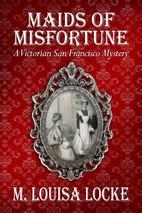
Category: Mystery/Suspense Publisher: M. Louisa Locke
ISBN-10: 1449925030
Type: Fiction
Pages: 336
Copyright: Jan 15, 2010
ISBN-13: 9781449925031
A light romantic historical mystery set in 1879 San Francisco, featuring a young widow, Annie Fuller, a local lawyer, Nate Dawson, and the mysterious death of a local merchant.
It’s the summer of 1879, and Annie Fuller, a young San Francisco widow, is in trouble. Annie’s husband squandered her fortune before committing suicide five years earlier, and one of his creditors is now threatening to take the boardinghouse she owns to pay off a debt.
Annie Fuller also has a secret. She supplements her income by giving domestic and business advice as Madam Sibyl, one of San Francisco’s most exclusive clairvoyants, and one of Madam Sibyl’s clients, Matthew Voss, has died. The police believe it is suicide brought upon by bankruptcy, but Annie believes Voss has been murdered and that his assets have been stolen.
Nate Dawson has a problem. As the Voss family lawyer, he would love to believe that Matthew Voss didn't leave his grieving family destitute. But that would mean working with Annie Fuller, a woman who alternatively attracts and infuriates him as she shatters every notion he ever had of proper ladylike behavior.
Sparks fly as Anne and Nate pursue the truth about the murder of Matthew Voss in this light-hearted historical mystery set in the foggy gas-lit world of Victorian San Francisco.
Excerpt
Maids of Misfortune:
A Victorian San Francisco Mystery
By M. Louisa Locke
This book is a work of fiction. Names, characters, places, and incidents are either the product of the author's imagination or are used fictitiously, and any resemblance to actual persons, living or dead, business establishments, events, or locales is entirely coincidental.
The bastard!
Annie Fuller gasped, shocked at even allowing such an unladylike expression to enter her mind. She had been enjoying her tea and toast while sorting through her mail in splendid solitude. This was one of the privileges of being the owner of a boarding house, and absolute heaven after the dreadful years she had spent living off the charity of her in-laws, not a room or a moment to call her own.
However, this morning, the mail contained a slim envelope had blasted her peace to shreds. With trembling hands she reread the letter, which followed the standard business formula, direct, very much to the point, and devastating in its implications.
Mr. Hiram P. Driscoll
New York City, New York
July 25, 1879
Mrs. John Fuller
407 O’Farrell Street
San Francisco, California
Dear Madam:
I hope that this letter finds you in good health. It pains me to have to introduce such a difficult subject, but it is my duty to remind you of your obligation to repay the loan I made to your late husband, John Fuller, by September 30, 1879.
To reacquaint you with the particulars: the original loan was for $300, to be paid back within six years. Under the terms of the loan, interest was to be paid monthly at a rate of 5% until the loan was repaid. In respect for your departed husband, for whom I had great affection, and in recognition of your financial difficulties at the time of his death five years ago, I did not insist that this part of the agreement be met. However, since none of the interest has been paid, you are now responsible for the original loan, plus accrued interest, a total sum of $1,380.00.
I confess that I have been quite concerned about your ability to meet your obligations, and I was greatly relieved when I heard from your esteemed father-in-law about your good fortune in inheriting property in such an up-and-coming city as San Francisco. I must be in your fair city the last week of August on business. I would like to take the opportunity to stop by and visit with you at that time. I am quite sure that we will be able to come to some agreement of mutual benefit.
Your obedient servant,
Hiram P. Driscoll
Annie's skin crawled as she thought of Mr. Driscoll, one of New York City's most successful entrepreneurs. "Your obedient servant." The hypocrite! She realized some women found his unctuous manner attractive, but after each encounter with him she always felt soiled. At parties he had leaned close, his husky voice whispering inanities as if they were endearments, his hot breath blanketing her cheek and his hands roving unceasingly over her person, patting a shoulder, stroking a hand, squeezing an elbow.
Annie shivered. Standing up abruptly, she crossed the room to close the window, shutting out the chill early morning fog. She had suspected that Driscoll had played some role in her late husband’s dramatic slide into financial ruin, but she hadn’t realized the man played the part of loan shark. Not that she was surprised at the debt. Creditors swarmed from the wainscoting in the months following John's death, picking over what was left of his estate. Few of them got a tenth of what was owed, since her father-in-law, as John’s executor, hired an expensive but skilled bankruptcy lawyer to ensure that at least his own assets would not be touched. But Annie had been left destitute and dependent on John’s family.
Dependent, that was, until she inherited this house from her Aunt Agatha last year. She had returned to San Francisco where she had lived as a small child and turned the old mansion, located just four blocks from Market Street, into a respectable boarding house. Annie’s features softened as she walked to the fireplace and turned to look at the room that had grown golden with the sunrise. The furnishings were sparse. There was an old mahogany bedstead and mismatched wardrobe and chest of drawers, a simple round table on which the morning tea tray sat, and a comfortable armchair, next to the fireplace. A worn Persian carpet covered a dark oak floor, and the only decoration was the two simple blue jugs holding dried flowers sitting on either side of the mantel clock. These jugs and the clock were all that was left of her inheritance from her mother, who had died over thirteen years ago. She didn’t care if her surroundings were unfashionable because she loved everything about the room and the house and the freedom they represented.
Oh, how unfair to have Driscoll and his loan surface at this time, when she finally felt safe. He was clever to have waited, accumulating the interest. If he had tried to collect on the original loan five years ago, he would have gotten very little, perhaps nothing, back. Everything she had brought into her marriage, including the house her father gave her, had gone to settle her husband’s debts. But now she had Aunt Agatha’s house, and Driscoll wanted take it from her. The last part of the letter implied as much.
Annie began to pace. The house was small, built in the early 1850s, and she had only six rooms to let out. After all the expenses of running a boarding house, she barely broke even. There was simply no way that she could, on her own, pay off Driscoll's loan, without selling the house itself. Fighting Driscoll in a New York court would be equally expensive, as he would be well aware. He probably counted on being able to frighten her into turning over the house. The lawyer who was executor of her Aunt Agatha’s estate had suggested that she might get nine hundred, or even a thousand dollars for the property, located as it was near the expanding commercial sector of the city. Clearly Driscoll had figured this out.
“The God-damned bastard!” This time Annie said the words out loud.
She may have been only twenty-six, a widow without any immediate family to protect her, but she refused to let Driscoll, or any other man for that matter, rip her home and independence away from her a second time.
When Annie finally left her bedroom, it was a quarter to seven. Descending the narrow uncarpeted backstairs, she caught the tantalizing odor of the morning bread baking and heard the faint clatter of breakfast dishes interspersed with bursts of conversation emanating from the kitchen below. She yearned to go down one more flight and join in whatever joke had caused the sudden laughter, but she couldn't, she had work to do. She turned off the stairs on to the first floor and entered a small room at the back of the house.
At one time this room had been a gloomy back parlor where her Uncle Timothy had retired with his port after Sunday dinner to smoke his cigar and subsequently snore away the long afternoons. Annie had remodeled it by having a small entrance cut from this room into the larger parlor in front, installing a washstand and mirror in one corner and replacing the horsehair sofa with a small desk and book shelves.
Annie stood in front of that washstand and began a curious morning ritual. First, she liberally dusted her face with a flat white powder that rested in a box on the top of the washstand, effectively erasing all signs of the freckles sprinkled across her nose. Then she dipped the little finger of her right hand into a small tin containing a sticky black substance, which she applied liberally to her eyelashes, normally the same reddish-gold as her hair. Using her middle finger, she transferred a minute quantity of rouge from another tin to her lips, turning their usual soft pink into a strident scarlet. After washing the black and red stains from her hands with the rough soap she kept beside the washstand, she bent and opened the cabinet door under the stand and removed a disembodied head.
She placed this apparition, a be-wigged hairdresser's wooden form, on the stand. After tethering her own braided hair securely with a net, she carefully lifted the mass of intricately entwined jet black curls off the form and pulled it snugly onto her own head. The transformation was startling. Her eyes seemed to grow instantly larger, turning from the color of heavily-creamed chocolate to the deep rich hues of coffee, taken black. Her features, normally pleasing but unremarkably Anglo-Saxon, emerged as flamboyant and Mediterranean. Annie smiled mockingly at her image in the mirror. Then, after putting the mute, scalped hairdresser's form away, she draped a silken shawl of scarlet and gold over her severe black dress and opened the door to the front parlor, where she would spend the rest of her day at work, not as Annie Fuller, the respectable, widowed boardinghouse keeper, but as Sibyl, one of San Francisco's most exclusive clairvoyants.
Professional Reviews
Story Circle Book Reviews
Annie Fuller, M. Louisa Locke's main character in Maids of Misfortune, is a spunky young San Francisco widow, who secretly supplements her income as a clairvoyant. As Madam Sybil, Annie, is one of San Francisco's most exclusive clairvoyants. When a client dies and Annie believes he's been murdered, keeping her role as Madam Sybil a secret becomes increasingly complicated, especially because Matthew Voss's family will be destitute and Annie will lose her home if she doesn't solve the murder. She can't just walk away.
At twenty-six, Annie is a widow without family to protect her. Since her husband squandered his money and her inheritance before he committed suicide five years earlier, the San Francisco home she inherited from her aunt and converted to a boarding house is the only thing that saved her from being forever dependent on her dead husband's family, who blamed her for his suicide.
Annie inherited the house after she settled her late husband's debts. However, one of her husband's creditors believes he can intimidate her and rob her of a successful business, as well as her independence.
If all of this isn't strange enough, Annie does the unthinkable for a woman in 1879. She decides to go undercover, as a maid named Lizzie, and find out what happened. In the process, she finds herself falling in love with her dead client's attorney, Nate Dawson. As Annie and Nate chase criminals, Nate finds himself strongly attracted to Annie and thoroughly confused by her intelligence, independence, and sometimes-unladylike behavior. He soon learns that Annie is also versed in finance and the stock market, thanks to her father, and that she knows a great deal about her client's financial affairs.
Nate grows increasingly worried as it becomes obvious that Annie is right about the murder. His concern heightens when two fishermen discover the previous maid's body, and Lizzie refuses to leave her undercover job as the dead maid's replacement. Unfortunately, while Nate's tracking down the final piece of the puzzle, the real killer grabs Annie, in her Lizzie persona, and holds her hostage at knifepoint. The only people near enough to help Lizzie are her employer, who is the widow of Madam Sybil's client, Matthew Voss, and Matthew's elderly sister. Can three upper-class Victorian ladies outwit an armed assailant? They don't even do their own hair!
Annie is a character with depth and personality. She's also a woman faced with huge challenges and limited solutions for a "proper lady" in 1879. In real life, the Annies of the world are the survivors. Locke shows great finesse in character development and provides supporting characters that are diverse and entertaining.
From beautiful Victorian houses to horses, carriages, manners, dress, lifestyles, fog, and gas-lamps, the setting is rich with authenticity. The author's research is thorough, and her descriptions contain details that are interesting and satisfying to readers who love this era. Locke's mysteries should develop a loyal audience quickly. This novel incubated for almost thirty years during the author's teaching career. Let's hope that it won't be thirty years before the next one.
Reviewed by Penny Leisch
Mysteries and My Musings
It's the summer of 1879, and Annie Fuller, a young San Francisco widow, is in trouble. Annie's husband squandered her fortune before committing suicide five years earlier, and one of his creditors is now threatening to take the boardinghouse she owns to pay off a debt.
Annie secretly supplements her income by giving domestic and business advice as Madam Sibyl, one of San Francisco's most exclusive clairvoyants. I loved this part of the story. Annie was raised by a single father who was a highly regarded financial wizard and taught her well. But as a woman nobody would be asking her advice on investing, but as Madam Sibyl she can advise them in a manner they willingly accept.
At one time this room had been a gloomy back parlor where her Uncle Timothy had retired with his port after Sunday dinner to smoke his cigar and subsequently snore away the long afternoons. Annie had remodeled it by having a small entrance cut from this room into the larger parlor in front, installing a washstand and mirror in on corner and replacing the horsehair sofa with a small desk and book shelves.
Annie stood in front of the washstand and began a curious morning ritual. First, she liberally dusted her face with a flat white powder that rested in a box on the top of the washstand, effectively erasing all signs of the freckles sprinkled across her nose. Then she dipped the little finger of her right hand into a small tin containing a sticky black substance, which she applied liberally to her eyelashes, normally the same reddish-gold as her hair. Using her middle finger, she transferred a minute quantity of rouge from another tin to her lips, turning their usual soft pink into a strident scarlet. After washing the black and red stains from her hands with the rough soap she kept by the washstand, she bent and opened the cabinet door under the stand and removed a disembodied head.
She placed this apparition, a be-wigged hairdresser's wooden form, on the stand. After tethering her own braided hair securely with a net, she carefully lifted the mass of intricately intwined jet black curls off the form and pulled it snugly onto her own head. The transformation was startling. Her eyes seemed to grow instanly larger, turning from the color of heavily-creamed chocolate to the deep rich hues of coffee, taken black...
Then, after putting the mute, scalped hairdresser's form away, she draped a silken shawl of scarlet and gold over her severe black dress and opened the parlor door to the front parlor, where she would spend the rest of her day at work, not as Annie Fuller, the respectable, widowed boardinghouse keeper, but as Sibyl, one of San Francisco's most exclusive clairvoyants.
But one of Madam Sibyl's clients, Matthew Voss, has died. The police believe his death was suicide brought upon by bankruptcy, but Annie, as his financial adviser knows he was doing very well and that his investment documents have coincidentally disappeared when he died. She is convinced it was foul play.
Nate Dawson, the Voss family lawyer, meets Annie upon investigating why Mathew Voss left Sibyl money. He reluctantly begins investigating alongside Annie, a woman who alternatively attracts and infuriates him as she shatters every notion he ever had of proper ladylike behavior while being attracted to her. This historical mystery set in the foggy gas-lit world of Victorian San Francisco is a complete package of a modified locked room puzzle, more than one murder, daring undercover snooping, romantic tension and a few twists and turns for a powerhouse of a debut novel.
When I finished this book I immediately missed Annie and the other characters, showing just how well they had been brought to life and, dare I say…memorable. The mystery was well plotted so I went down the wrong path along with the police at first. The setting of Victorian San Francisco and period details are rich and layered, easily woven in the overall story from the attitudes towards Chinese and class divisions to the strict propriety rules restricting women. The journey back in time seemed so complete I felt jarred if pulled back into the modern world when my reading was interrupted.
The climax and revealing of the murderer was tense and an edge-of-your-seat ordeal where Annie is in very real danger. The ending was satisfying and I put the book down smiling at the wrap-up. I had just stumbled upon this delightful book as I cruised Amazon’s suggestions and I am so glad I found it. I heartily recommend this book for historical mystery or cozy fans. I think you will find it captivating.
reviewed by Ariel Heart
Myshelf.com
There seem to be a lot of Victorian historical mysteries with female protagonists out there these days, but Maids of Misfortune is not just copycat more of the same. The setting is 1879 San Francisco—a city just a few decades removed from the tents and shacks of the Gold Rush—rather than the more usual New York or London, giving things a different flavor. Annie Fuller, the protagonist, is also a step or two outside the norm. A widow of five years’ standing, she’s forced to turn the house she inherited into a boardinghouse to make ends meet, because her husband squandered away her fortune before killing himself. She also supplements her income as the exclusive "clairvoyant" Madam Sibyl, specializing in business and domestic advice. She comes by the business advice legitimately—her father was a financier who trained her from childhood and while she tried to make a legitimate career out of that training, the simple fact is that "people, men in particular, would rather trust their lives to the stars than to the advice of a woman."
In the space of a few days her life gets turned upside down when she receives a letter from one of her late husband’s creditors threatening to take away her boardinghouse to pay off the debt, and Madam Sibyl’s favorite client, Matthew Voss—a man who had also become a friend—is found dead. The police think he committed suicide in the face of impending bankruptcy, but Annie knows better—thanks to her advice he was in an excellent financial position, and so she believes he was murdered and his assets stolen.
Annie is given a legitimate reason to investigate when Voss’s lawyer tells her that Voss left Madam Sibyl some stock. If she can recover his assets, it should just about cover the debt threatening her boardinghouse. And so she does the unthinkable for a respectable widow, going undercover as a maid in Voss’s household where the answers must lie, becoming one of the maids of misfortune referred to in the title.
Maids of Misfortune is smoothly written, with appealing characters and a strong female lead in a story filled with real detection, a lot of period detail (is there a better way to get into the details of everyday life than through the eyes of a servant?), and a bit of banter-filled romance to help stir the pot. I’ll admit that I saw most of the solution coming, but I enjoyed reading on regardless to see how it was done. Fun reading for historical mystery fans, especially those with a taste for Victorian settings on the look for something a bit different.
During the Christmas Season, servants Jane Meyers and Alfie Dawkins search for missing persons from opposite sides of the social spectrum: a homeless man and the Duke's son.