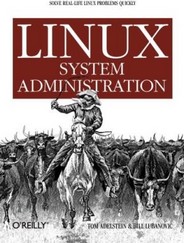
The book summarizes the steps you need to build everything from standalone Soho hubs, web servers, and Lan servers to load-balanced clusters and servers consolidated through virtualization. Along the way, you'll learn about all of the tools you need to set up and maintain these working environments.
Linux is now a standard corporate platform with users numbering in the hundreds of millions, and th
If you're an experienced system administrator looking to acquire Linux skills, or a seasoned Linux user facing a new challenge, Linux System Administration offers practical knowledge for managing a complete range of Linux systems and servers. The book summarizes the steps you need to build everything from standalone Soho hubs, web servers, and Lan servers to load-balanced clusters and servers consolidated through virtualization. Along the way, you'll learn about all of the tools you need to set up and maintain these working environments.
Linux is now a standard corporate platform with users numbering in the hundreds of millions, and there is a definite shortage of talented administrators. Linux System Administration is ideal as an introduction to Linux for Unix veterans, Mcses, and mainframe administrators, and as an advanced (and refresher) guide for existing Linux administrators who will want to jump into the middle of the book.
Excerpt
Generally most Linux classes and books cover topics such as user administration, setting up mail and web servers, printers, new hard disk / file system etc. But very few books or classes deals with scalability and availability issues. The book teaches you how to setup a reverse proxy in front of Apache, setting up a load balancing server, hot backups and running Linux based server 24×7.
Professional Reviews
Linux System Administration Good for MCSE and a seasoned Linux or UNIX administrator
Linux System Administration is a book for a seasoned Linux or UNIX administrator. The book attempts to describe day-to-day administration, maintenance and advanced issues commonly faced by Linux system administrator. Book covers wild verity of topics.
Both Tom Adelstein and Bill Lubanovic has done an extraordinary work to put together Linux System Administration. Tom is not just a system administrator but a good technical writer.
So what's unique about this book?
Generally most Linux classes and books cover topics such as user administration, setting up mail and web servers, printers, new hard disk / file system etc. But very few books or classes deals with scalability and availability issues. The book teaches you how to setup a reverse proxy in front of Apache, setting up a load balancing server, hot backups and running Linux based server 24×7.
The entire book is divided into 11 chapters that cover from practical advice on building everything from SOHO hubs, web servers, and LAN servers to load-balanced clusters and servers consolidated through virtualization.
Sure you will find most of the information mentioned in this book throughout mailing lists, forums, blogs, and discussion groups but not in one handy guide. Overall, a great book that touches all Linux administrative aspects not covered in many books and classes. This book is highly recommended to all Linux administrators or admins with Windows Sever background.
a) Level of experience needed: Intermediate Linux / UNIX sys admin / MCSE etc
b) Who will find useful: Linux/UNIX sys admin / IDC Tech support staff / Linux fan boys ;)
Useful survey of interesting software & technology
I've just finished reading O'Reilly's latest GNU/Linux title, Linux
System Administration (full disclosure: I was sent a reviewer's copy).
Bottom line up front: it's a handy introduction for the beginner
GNU/Linux sysadmin, and a useful addition to an experienced sysadmin's
bookshelf.
The book is essentially a survey of various Linux system-administration
tasks: installing Debian; setting up LAMP; configuring a load-balancing,
high-availability environment; working with virtualisation. None of the
chapters are in-depth examinations of their subjects; rather, they're
enough to get you started and familiar with the concepts involved, and
headed in the right direction. I like this approach, as it increases
the likelihood that any particular admin will be able to use the
material presented. I've been working with Apache for almost a decade
now, but I've not done any virtualisation; some other fellow may have
played with Linux for supercomputing, but never done any web serving
with it; we both can use the chapters which cover subjects new to us.
I really like some of the choices the authors made. A lot of GNU/Linux
'administration' books focus on GUI tools--I've seen some which don't
even bother addressing the command line! I've long said that if one
isn't intimately familiar with the shell--if one cannot get one's job
done with it--then one isn't really a sysadmin. Linux System
Administration approaches nearly everything from the CLI, right from the
get-go. Kudos!
Good reference
I had basic Linux understanding and wanted to expand my horizons. This book got me there. All sorts of good info. Now I can better understand what is happening on my server and how to manage its care and feeding. This book goes on the shelf next to the server.
Complete Troubleshooting & Repairing guide to hot air furnaces * Complete operation, maintenance, and repair * Covers gas, oil, and electric forced air systems * Includes flowcharts and highlighted tips and solutions to common furnace problems
Complete Troubleshooting & Repairing guide to hot air furnaces * Complete operation, maintenance, and repair * Covers gas, oil, and electric forced air systems * Includes flowcharts and highlighted tips and solutions to common furnace problems