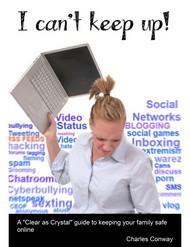
An easy to follow guide to keeping your children safe online by Internet Safety Trainer Charles Conway
The Internet is fantastic!
It can also be a dangerous place for our kids.
Internet safety trainer Charles Conway offers helpful tips and advice on topics such as:
how to monitor your child's Facebook account without violating their privacy,
how and where online predators find their victims,
the signs and effects of Cyberbullying,
the websites that could be giving your kids all the wrong advice about sex, drugs and alcohol,
using parental control software on mobile phones, computers and other portable devices, and
understanding the 'netspeak' that looks like a foreign language.
This guide won't make you an online expert overnight, but it WILL help you to level the playing field!
Excerpt
Introduction
Tweeting, Inboxing, Sexting, Tagging, Mashing, Hacking, Trolling, Flaming, Blogging, Vlogging, Social Networking, Skyping, BBM, Uploading, Downloading, Proxies, P2P and Warez.
If some (or all) of those words sound like gobbledegook to you, then you’re certainly not alone.
According to the 2011 OFCOM media literacy survey, 61% of parents know “less about the Internet” than their children.
It’s not surprising. The Internet is developing at a startling rate and what was “cutting edge” a month ago is “old hat” today.
It’s hard enough for those of us who work with the ‘net every single day to keep up, let alone for busy parents who might use it only to buy the odd Christmas present on ebay or to check their bank balance.
Kids are supposed to be the experts at this stuff and the skills they’re learning when they use the Internet will stand them in good stead throughout their adult lives, contributing to their independence and employment prospects, and that has to be a positive thing.
But how do we keep them safe while they learn?
Technology may have moved on, but the basics of keeping children safe haven’t really changed.
If we look back at our own childhood, we can clearly see the parallels.
Our parents taught us about “stranger danger” from a young age and knew that just because somebody seemed friendly, offering sweeties or a lift home, it was no guarantee that they didn’t have sinister intentions.
We came into contact with school bullies and learned about keeping ourselves safe by staying out of their way, finding safety in numbers and telling a trusted adult that we were having a hard time.
Some of us (boys especially) got our hands on pictures of naked ladies, either from other boys at school, or by finding Dad’s stash of magazines on top of the wardrobe or in the shed.
We experienced peer pressure and heard highly questionable anecdotes about sex, drugs and alcohol from that kid in class who “knew about stuff”, even if we didn’t entirely believe all of his stories; some of us experimented with smoking and cheap booze to appear “cool” amongst our peers.
The lessons we learned all those years ago still apply today in “real life” and they’re valuable lessons to pass on to our kids.
What’s important to realise though is that as well as keeping themselves safe at school, in the park and when they’re out with their friends, our kids have a new challenge to face, and that challenge is to keep themselves just as safe on the Internet.
As well as looking out for dodgy characters at the school gates, they need to be on the lookout for people on the ‘net who might not be who they say they are.
Bullying still happens in schools and in other social situations, but it’s just as likely to happen on the Internet, where the perpetrators can hide behind anonymous “screen names” and fake profiles.
Instead of looking at relatively tame “glamour shots” in magazines, our kids could be exposed to seriously hard-core pornography, and misleading information about drugs, sex and alcohol can be presented in such a professional way that it’s hard to tell the difference between the websites that are there to help and the ones that are designed to influence kids into making all the wrong choices.
This book will help you to understand the technology kids are using online, to be aware of the risks they might face and to find and use the tools that are available to educate yourself and your kids about staying safe and to connect with their ‘digital lives’.
It won’t make you into an online expert, but it might help you level the playing field…
Charles Conway
Internet Safety Consultant
Clear as Crystal Training
Extract from a review by English language teacher (and mum of 3 kids) Angela Boothroyd:
I like to think I’m relatively aware and ‘tech-savvy’ when it comes to online safety and privacy, but I still found much new and useful information in I can’t keep up! and I recommend it to all parents and those with responsibility for keeping children safe online.
Full review here: http://www.birdsontheblog.co.uk/book-review-i-cant-keep-up/
When Kathy finds a small stray kitten some amazing things happen. Story's from a Mom's view of the love, caring and patience needed when a child wants to own a pet. Recipient of the prestigious Mom's Choice Award. Delightful illustrations!
When Kathy finds a small stray kitten some amazing things happen. Story's from a Mom's view of the love, caring and patience needed when a child wants to own a pet. Recipient of the prestigious Mom's Choice Award. Delightful illustrations!
You May Be Single, But You’re Not Alone.
Being a great dad is challenging enough when you’re part of a two-person team. But now you’re raising your kids single-handedly. How can you provide the emotional, physical, and spiritual support your