Kindle Edition
Amazon
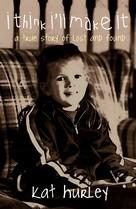
I Think I'll Make It
Category:
Memoir
Publisher: manor park press
ISBN-10: 9780989793902
Pages: 315
Copyright: sept 1 2013
Price: $4.99 (eBook)
A true story of lost and found, a rags to riches of the soul.
Pushing thirty, broke and broken, Kat Hurley fled to Hawaii to escape a trifecta of failure: her deteriorating relationship, her stale career, her moot five-year plan. Instead, she found herself drowning in the deluge of thoughts and memories that loneliness let in, dredging up haunts from her childhood, including the testimony that sentenced her father for her mother’s murder.
Determined to start fresh, Kat finds solace in Hawaii's stunning surf and devours stacks of spiritual books while careening down a path of deep healing and exploration. A rags to riches of the soul, Kat openly shares her demons and false starts, begrudgingly taking up a practice in meditation, which turns into a Battle of the Minds between her and her newly acquainted ego. Bravely honest, funny, and terribly inspirational, I think I’ll make It reveals a woman wavering on the edge of sanity (and ten-foot breaks) and tumbling over the precipice to the only place she might be able to discover real forgiveness, peace, and hope.
Excerpt
Preface:
It was hardly a secret growing up that psychologists predicted I would never lead a truly happy and normal life. Whether those words were intended for my ears or not seemed of little concern, given the lack of disclaimer to follow. There was no telling what exceedingly honest bits of information would slip through the cracks of our family’s filtration system of poor Roman Catholic communication. I mean, we spoke all the time but rarely talked. On the issues at least, silence seemed to suit us best, yet surprising morsels of un-sugarcoated facts would either fly straight out of the horse’s mouth or trickle their way down through the boys until they hit me, the baby.
I was five when I went to therapy. Twice. On the second visit, the dumb lady asked me to draw what I felt on a piece of plain construction paper. I stared at the few crayons next to the page when I told her politely that I’d rather not. We made small talk instead, until the end of the hour when she finally stood up, walked to the door and invited my grandma in. They whispered some before she smiled at me and waved. I smiled back, even if she was still dumb. I’m sure it had been suggested that I go see her anyway, because truth be known, psychologists were a “bunch of quacks,” according to my grandma. When I said I didn’t want to go back, nobody so much as batted an eye.
And that was the end of that.
∞
When I draw up some of my earliest most vivid memories, what I see reminds me of an old slide projector, screening crooked, fuzzy images at random. In the earliest scenes, I am lopsidedly pigtailed, grass stained, clothes painfully clashing. In one frame I am ready for my first day of preschool in my bright red, pill-bottomed bathing suit, standing at the bottom of the stairs where my mom has met me to explain, through her contained laughter, that a carpool isn’t anything near as fun as it sounds. In another, I am in the living room, turning down the volume on my mom’s Richard Simmons tape so I can show her that, all on my own yet only with a side-puckered face, I’d learned how to snap. In one scene, I’m crouched down in the closet playing hide-and-seek, recycling my own hot Cheerio breath, patiently waiting to be found, picking my toes. Soon Mom would come home and togeth-er we’d realize that the boys weren’t seeking (babysitting) me at all, they’d simply gone down the street to play with friends.
I replay footage of the boys (Ben and Jack), pushing me in the driveway, albeit unintentionally, toward the busy road on my first day with no training wheels, and (don’t worry, I tattled) intention-ally using me as the crash-test dummy when they sent me flying down the stairs in a laundry basket. I have the scene of us playing ice hockey in the driveway after a big ice storm hit, me proudly dropping the puck while my brothers—Stanley Cup serious—faced off.
I call up the image of me cross-legged on my parents’ bed, and my mom’s horrified face when she found me—scissors in hand—thrilled with what she referred to as my new “hacked” do. That same bed, in another scene, gets hauled into my room when it was no longer my parents’, and my mom, I presume, couldn’t stand to look at it any longer. I can still see the worry on her face in those days and the disgust on his. I see the aftermaths of the few fights they couldn’t help but have us witness.
Most of the scenes are of our house at the top of the hill on McClintock Drive, but a few are of Dad’s townhouse in Rockville, near the roller rink. I remember his girlfriend, Amy, and how stupid I thought she was. I remember our Atari set and all our cool new stuff over there. And, of course, I remember Dad’s really annoying crack-of-dawn routine of “Rise and Shine!”
I was my daddy’s darling, and my mommy’s little angel—
Then—without warning—I wasn’t.
Had I known I should have been squirreling away memories as precious keepsakes, I would have scavenged for more smiles, clung to each note of contagious laughter and lingered steadfast in every embrace. Memory is funny like that: futile facts and infini-tesimal details are fixed in time, yet things you miss, things you wish you paid fuller attention to, you may never see again.
I was just a regular kid before I was ever really asked to “re-member.” Up until then, I’d been safe in my own little world: every boo-boo kissed, every bogeyman chased away. And for a small voice that had never been cool enough, clever enough, or captivat-ing enough, it was finally my turn. There was no other choice; I was the only witness.
“Tell us everything you know, Katie. It is very important that you try to remember everything you saw.”
∞
August 11, 1983
I am five. I’ll be in kindergarten this year, Ben is going to third grade, Jack will be in seventh. I’m not sure where the boys are today; all I know is that I’m glad it’s just me and Mom. We’re in the car, driving in our Ford wagon, me bouncing unbuckled in the way back. We sing over the radio like we always do. We’re on our way to my dad’s office, for the five-hundredth time. Not sure why, again, except that “they have to talk.” They always have to talk. Ever since Dad left and got his new townhouse with his new girl-friend, all they do is talk.
Mom pulls into a space in front of the office. The parking lot for some reason is practically empty. His cleaning business is all the way in the back of this long, lonely stretch of warehouse offic-es, all boring beige and ugly brown, with big garage doors and small window fronts.
“You can stay here, sweetie pie—I won’t be long.”
I have some of my favorite coloring books and a giant box of crayons; I’ll be fine.
Time passes in terms of works of art. Goofy, Mickey, and Don-ald are all colored to perfection before I even think to look up. I am very fond of my artistic abilities; my paint by numbers are exquisite, and my papier-mâché, as far as I’m concerned, has real promise for five. All of my works are fridge-worthy; even my mom thinks so. My special notes and handmade cards litter her nightstand, dresser, and bathroom counter.
I hear a scream. Like one I’d never heard before, except on TV. Was that her? I sit still for a second, wait for another clue. That wasn’t her. But something tells me to check anyway—just in case.
I scramble out from the way back, over the seat, and try to open the door, but I’m locked in—why would she lock me in? I tug at the lock and let myself out. With the car door still open, I scurry to the front window of my dad’s shop, and on my tiptoes, ten fingers to the ledge, I can see inside. The cage with the snakes is there, the desk and chairs are there, the cabinets and files are there, everything looks normal like the last time I was inside. Where are they?
Then through the window, I see my mom. At the end of the hall, I can see her through the doorway. But just her feet. Well, her feet and part of her legs. They are there, on the floor—her sandals still on. I can make out the tip of his shoe too, at her thigh, like he’s sitting on top of her. She is still. I don’t get it. Why are they on the floor? I try to open the door, but it’s locked. I don’t recall knocking; maybe I did. I do know that I didn’t yell to be let in, call for help, or demand that I know what was going on—
It wasn’t her. It sounded like it came from down the street, I tell myself. Maybe it wasn’t a scream scream, anyway. Someone was probably just playing, I convince myself. I get back in the car. I close the door behind me and color some more.
Only two pages are colored in this time. Not Mickey and friends, Snow White now. Fairy tales. My dad knocks on the win-dow, startling me, smiling. “Hey, princess. Your mom is on the phone with Aunt Jeannie, so you’ll just see her Monday. You’re coming with me, kiddo. We have to go get your brother.”
Everything I’ve seen is forgotten. My dad’s convincing smile, tender voice, and earnest eyes make all my fright disappear. He told me she was on the phone, and I believed him. How was I sup-posed to know that dads could lie?
∞
Two days later, my brothers and I were at the beach on a job with Dad when our grandparents surprised us with the news. “Your mother is missing.” And it was only then, when I sensed the fear they tried so intently to wash from their faces, that the realization struck me as stark panic, that I was brought back to the scene for the first time and heard the scream I understood was really her.
My testimony would later become the turning point in the case—reason enough to convict my father, who in his cowardice had covered all his traces. Even after his conviction, it would be three more years until he fully confessed to the crime. I was eight when I stood, uncomfortable, in a stiff dress at her grave for the second time—more flowers, same priest, same prayers.
To say I grew up quickly, though, as people have always sus-pected, would be a stretch. Certainly, I was more aware, but the shades of darkness were graced with laughter and lullabies and being a kid and building forts, and later, learning about my period from my crazy grandma.
I honestly don’t remember being treated any differently, from Grandma Kate at least. If I got any special attention, I didn’t know it. Life went on. Time was supposed to heal all wounds. My few memories of mom, despite my every attempt, faded with each passing holiday.
I was in Mrs. Dunne’s third grade class when my dad finally confessed. We faced a whole ’nother wave of reporters, news crews, and commotion. They replayed the footage on every channel: me, five years old again, clad in overalls, with my Care Bear, walking into the courtroom. And just like before, my grandpa taped all the news reels. “So we never forget,” he said.
For our final TV interview, my grandparents, the boys, and I sat in our church clothes in the front room to answer the reporter’s questions. I shifted around on Grandma Kate’s lap in my neatly pressed striped Easter dress. Everybody had a turn to talk. I was last. “Katie, now that the case is closed, do you think you will be able to move on?”
I’m not sure how I knew it then, especially when so many years of uncertainty were still to come, but I was confident: “Yeah.” I grinned. “I think I’ll make it.”
|