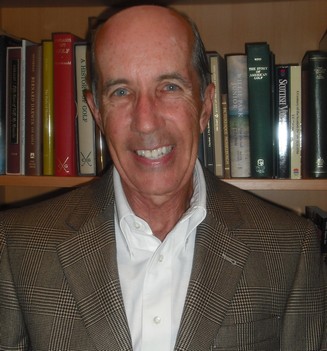
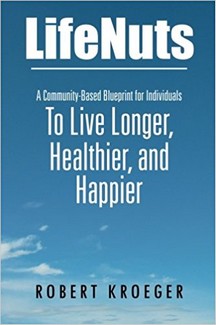
A friend of mine inspired this program a few years ago. When I retired from dentistry in 2010, I decided to take it to my local community - as a way of giving back to them. Our website, www.lifenuts.org, details the program and the book, LifeNuts, describes it in more detail.
This friend, Mike, is an ideal LifeNut, passionate about life and proves his passion by volunteering to help others. His YouTube video is featured on our site. If you do nothing else today, watch his video. He will set a new American age record for the marathon (26.2 miles) on November 11, 2012, in Huntington, WV, where we will launch the LifeNuts program.
I am also a LifeNut, which saved my life. In early 2005 I was borderline obese with trousers becoming uncomfortably tight. In a journey that took a few years I began changing my eating habits and exercising more intensely, which helped me to lose 50 pounds, which I have kept off since then. I am not OCD on either diet or exercise. Most importantly, however, the LIfeNuts lifestyle (which incorporates a strong dose of stress management) helped me get through the death of my wife of 33 years in 2007. That was a blow to my five children and me. I walk the walk.
Diets don't work. Exercise alone is not enough. But a lifestyle, incorporating many aspects of health, does work and can reverse our number one health problem: obesity. Bill Gross, the financial guru of PIMCO bond funds, called this age "the new normal" - referring to a lower expected financial return from investing in stocks and bonds. I would like to borrow his phrase in claiming that America's "new normal" is being overweight or obese. Nearly 70% of Americans fall into this category. Being thin and fat is not normal; it's the rare exception. Less than five percent of Americans over 21 can run five miles. Some would die if they tried. And we as a nation pay the price.
We spend, as a nation, $147 billion in direct medical costs as a result of obesity. Nearly 70% of Americans are overweight or obese. America spends more, per capita, on health care than any other nation. Yet, we rank 36th in longevity. Go figure. For the first time in 100 years, the youngest Americans are forecast to have shorter lifespans than those of the oldest generations. Sadly, in our own Hamilton County (the Cincinnati metro area), 22% of third graders are obese. Why?
Children look up to adults. If mommy and daddy are fat, being fat must be OK. If junior sees fat people on TV or teaching his or her class or walking down the street, he begins to think that being fat is normal. And, let’s face it, the average adult Americans is fat. We have high BMIs and our waistlines expand every year. Good for clothing manufacturers, I guess. Do you know what your BMI is? Simply put your weight and height into this calculator:
http://www.nhlbisupport.com/bmi/My BMI is 20.2, which is at the low end of normal range. If you’re near the high 20s or over 30, you are at risk for heart disease, cancer, and diabetes.
What’s your waistline? If a female’s waistline is over 34 and if a male’s is over 40, there’s a risk of cancer. My guess is that those are generous measurements. Cancer is no fun. Check this out:
Yes, it’s a battle: the overweight American consumer versus a food industry that spends, get this, nearly $30 billion a year in advertising. That does not count the lobbying budget of the meat and dairy industry that influences our governmental departments in Washington. Don’t believe me? Visit our United States Capitol Building – on East Capitol Street in Washington, D.C. – and look at the nametags of the lobbyists. It’s open to visitors Monday through Saturday.
Tried losing weight but put it back on? See what heavyweight Ben did in his popular video (skip the ad):
LifeNuts measures BMI and waistlines of individuals in the community each year. The key to success here is recurring annual measurements. We need to be held accountable. Professional athletes (basketball, baseball, football, tennis, golf) are measured each year according to their performances. They know where they’re at and they’re rewarded accordingly. If you don’t know, you’re like a ship adrift in the ocean of life. And, as a nation, we are drifting. In 2011, we Americans lost .3 years of life expectancy. At the same time the Japanese gained in this department and now live nearly 4.5 years longer than Americans. And they suffered the big tsunami last year. Remember? Do you know what your life expectancy is? You might be surprised. Try Yale’s survey. It’s free.
No time to exercise? Indeed, we are busy bees … but we manage to have time to watch TV, monitor our Facebook, and check our emails. We even have time to Twitter. The average American spends an incredible number of hours each week sitting in front of the tube, or glued to some type of an electronic device. So much that I’m embarrassed to mention how much time. But LifeNuts teaches time management as well as financial management (how to become independently wealthy and be able to retire before you’re 100). LifeNuts also emphasizes other aspects of stress management, which are highly relevant in achieving a pleasant and healthful longevity: relationships, spiritual concepts, understanding the PNI effect, nutrition, and transitioning. So, yes, you can squeeze in six hours of intense aerobics each week. Sorry, gentle walking around the block won’t do it … but for some it may be a good start.
Granted, it’s extremely difficult for most adults to change their lifestyle and become a LifeNut. But, given that we’re losing life expectancy each year, seeing our national health care budget balloon, and knowing that we have the risk of cancer, diabetes, and heart disease to deal with well before our time, perhaps LifeNuts can make a difference … at least in those communities that choose to become a LifeNut communities.
Yes, surveys have shown that the poorest Americans are the most unhealthy. Can that change? Maybe … with education and involvement and peer pressure. LifeNuts is aimed at reversing national obesity in both children and adults. That involves a cultural lifestyle change. Cultures can be hard to change.
For small business owners (especially those in the service areas that are looking to attract new clients/customers), spearheading a drive to convince your local city manager or city council to transform your city into a LifeNuts community makes sense – not merely from an economic standpoint but from one of community service. Altruism is alive in America! So go ahead and become a LifeNut … and volunteer to run the program in your city … or find retired Boomers to run it. Let’s be good role models for our younger generations. Let’s fight childhood obesity before it gets out of hand. And it’s getting there fast!
I also post a weekly blog, which features up-to-date info on all aspects of LifeNuts. However, during the summer golf season, my blogs slow down - in direct correlation with the number of golf rounds I play.