
Kindle Edition
sionliscannor.com
Category:
Gay/Lesbian/Bi
Price: $4.95 (eBook)
‘I have to go back soon,’ says Adam one afternoon. Yes, I know he has to go back soon. He has to go back to London and to his job and his apprenticeship. He has taken the maximum number of days leave – he has taken his entire Summer holiday in the Spring. It is hard, where we are now, to keep a track of time. But I have marked one day in the calendar: the end of April is Adam’s birthday. He will be seventeen.
‘You are a Taurus,’ I read aloud. ‘Your planetary sign is Venus, your star-stone is Emerald, and your Significant Colour is pink.’
‘And what does that make me?’
‘Your planetary sign is Venus – which means you are extremely lustful and sexy. Your Colour is pink, which means you are queer.’
‘We know all that. Tell me about my star-stone.’
‘Your star-stone is Emerald – which means you belong here, with me, in Ireland, which is the “Emerald Isle”. Which means you should forget about going home. In fact, you couldn’t leave even if you wanted to, because these woods are enchanted – no-one who enters the woods of Liscannor ever comes out again.’
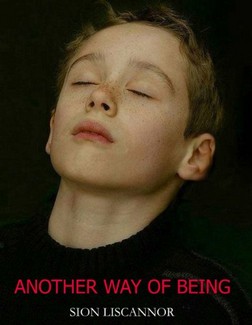
Sion Alone continues from the point where the first volume of Another Way of Being ended and follows Sion’s life and relationships over the following two years; so he is about eighteen at the start of the book and close to 20 at the end.
The novel begins with Sion and Adam in Liscannor, where Sion is researching into the past of his late Grandfather. Sion subsequently returns to his Cambridge College to make a new start with his undergraduate studies. He gets involved with the Gay Liberation movement in Cambridge, and he has affairs with two boys, Maurice and Trigg, both of whom are somewhat younger than he.
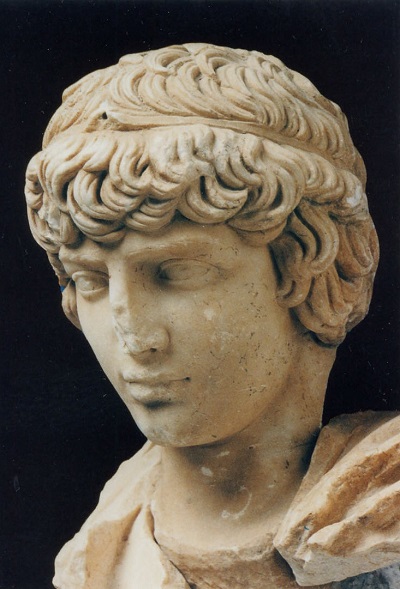
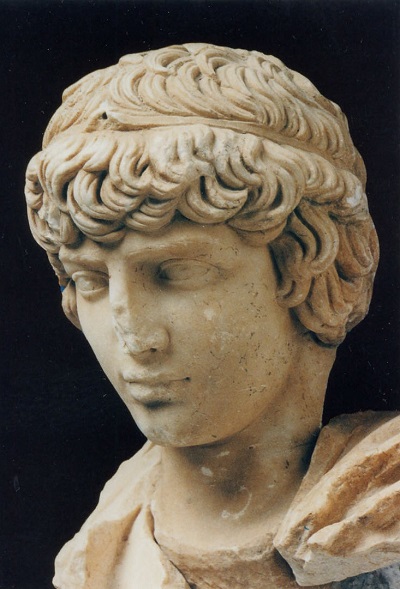
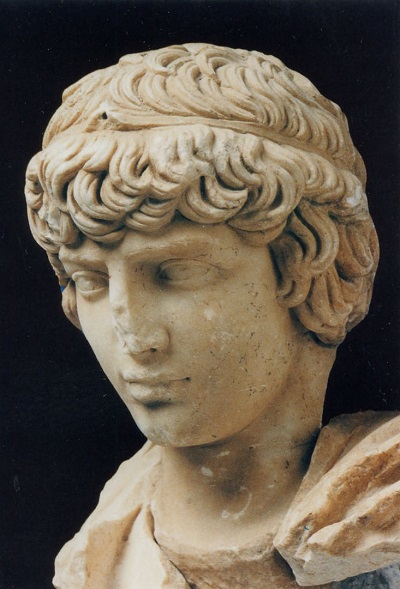
In the Spring vacation Sion travels through Greece with Trigg, visiting some of the locations in his Grandfather's account of the journeys of Hadrian and Antinous. in Athens he meets Stavros, a sculptor, and is tempted to learn to be a craftsman rather than returning to university.
In Greece he also meets Cassandra, a Eurythmy student, with whom he begins a friendship.
Sion Alone is written as a story, but it is also a meditation on the relationship of sexual attraction and love, and on the importance of our perception of physical beauty. The novel offers some reflections on what it means to think of oneself as gay, and on the nature of intergenerational relationships. Sion has an uneasy relationship with the gay community, which he sees as evolving a new orthodoxy, as rigid and constraining as the sexual morality against which it originally rebelled.
Excerpt
2 Floating
I am thinking of the times I swam here with my Grandfather. We often went swimming at the beach in Lahinch too when I was older. But this stream behind the house was where my Grandfather taught me to swim. I remember thinking how funny his old-fashioned swimming costume was, that covered the whole length of his legs and most of his arms. He wasn’t at all old-fashioned regarding other things, but his swimming costume looked like something from a Victorian postcard. I realised later, of course, that he wore it to conceal the skin of his calf.
It is almost too cold to swim, even though it is April and the weather is mild. But we splash about in the stream and we haul ourselves up the bank and roll around in the grass. Then Adam stages a play fight and insists on dragging me back in the water and forcing my head under. We wrestle for a while and then we lie on the bank and roll over each other. There is nobody to see us. The house is deserted, and the borders of the stream have been invaded by rhododendrons as dense as triffids.
Afterwards we follow the stream down through the wood. We are naked and barefoot, but we know there is nobody to see us. We could wander all day in this wood without meeting a soul. Indeed, yesterday we saw nobody at all. Adam was up at dawn – ‘observing the rising moon’, he said. He is fascinated by the white light of the dawn. He has never seen dew before. He has never woken to birdsong. He keeps on making new discoveries. For Adam everything is a miracle.
I didn’t want to sleep in the house, so we put down our bed-rolls in the old tack-room beside the mill. There is a sink and a tap, which is all we need to prepare our food. We aren’t very demanding. We get bread and cheese and fruit and milk from the shop at the crossroads, and we live on sandwiches. We wash in the stream. At night we curl up together on the floor of the tack-room and we talk. We talk for hours. Sometimes we lie awake and listen to the owls. I have a single book with me: Thoreau’s Walden. But I don’t get a chance to read it. Adam is reading it. Sometimes he reads excerpts to me. It is the first ‘proper’ book he has ever read.
This afternoon we wade through the stream as far as the old ‘plunge’ pool, which is the widest point and the best place for swimming. It’s not deep enough for diving, but it’s safe enough to jump from the bank. We swim for a while, but it quickly gets too cold for me. It’s not long before Adam joins me on the bank. He is dripping and shivering. We are both feeling the need for a towel. Instead, Adam hugs me. He rubs himself against me, as if the contact of our bodies will dry them. Then he goes back to the water. He stands in the shallows, gazing at the play of light and shadow on the stream. I watch him. I wish I could draw him right now. I wish I could capture the wondrous details of his wetness – the lank braids of his hair, the shining beads of silver on gooseflesh, the puckered foreskin that drips water. There is something in his pose that reminds me of an actual drawing or a painting – I have a distinct memory, but I cannot name it. It is vaguely Pre-Raphaelite, but colourless – a study in pencil or chalk – a study of a boy angel.
Adam is talking. He is excited because he can see fish in the water. Is it possible, he wonders, to catch them by hand?
I tell him that he should try to catch one. And he does try. He tries several times, but he doesn’t succeed. Meanwhile, he has waded out into the mid-stream. Only the upper half of his body is visible above the water. He could be a merman. The absurd thought flashes through my mind and I laugh aloud at it. Adam hears my laughter and he wants to know why I am laughing. He is beaming straight at me across the water. His face is astonishingly bright, his eyes are astonishingly wide open. He is so trusting, I think. And he is happy. I have never seen him so happy before. It seems such a miraculous thing, this happiness. This mood that unaccountably comes.
I am so lost in my own thoughts that I don’t see where he goes. But he must have waded upstream and climbed on to the bank some distance away. For he is now walking towards me out of the forest. I am lying with my back against a tree trunk and I watch him as he comes towards me. From this angle he looks tall and thin and spectral, like an elf. The sun is behind him, behind the canopy of trees above his head. The sun seems to leap from gap to gap between the leaves, following him. It is like a kaleidoscope. For a moment I have the extraordinary impression that the canopy of leaves are wings – the wings of a huge butterfly or the weightless wings of an angel. They follow him like a swaying shadow of light, a fragment of sky. Then, as he reaches me and throws himself down on me he suddenly becomes body again. He is all wet limbs. He presses himself against me, he presses his lips on mine, and I hold his head in my hands.
‘What were you laughing at?’
‘I was laughing at you, of course.’
‘Why?’
‘Because you were catching fish with your hands.’
When he gets up again he runs his fingers through his hair, combing his wet hair back and gathering it together. I watch him as he stands with his arms raised and his head thrown back, and the sun leaping from branch to branch behind him.
At that moment the recollection strikes me like a blow. The drawing that Adam reminds me of hung in my Grandfather’s study at Liscannor. He told me something about it. It had a special significance for him. It was a framed drawing by a Pre-Raphaelite artist. It was a boy angel. But the drawing was not there the time I cleared the house with Krisna. I had expected to find it, but it had not been there. I was sure it was not amongst the drawings and paintings we had packed. Where had it gone?
I make a mental note to ask Owen Duane if it could be in the godoun.
.....
In the tack-room that night I finally get a chance to look at my copy of Walden. I read by the light of an oil lamp. Adam is leafing through my sketchbook. He is looking at a drawing that I did that afternoon. It is a drawing of him, standing on the bank of the stream. He is naked and his arms are raised. He is combing his hair back with his fingers. What interests Adam about the picture is the wings: I have drawn him with wings. They are large but insubstantial wings, no more than a suggestion of a vague outline of wings in white chalk.
‘Is that me?’ he asks.
‘Yes,’ I say. And before he can say more I add: ‘It’s how I saw you.’
‘With wings?’
‘For a moment, yes.’
I try to go back to Walden, but I am not paying attention any more. I am reading with my eyes but my mind is elsewhere. I read two pages before noticing that I have not understood a word. I have actually been thinking about something my Grandfather said a long time ago.
He said something about the way we see things. He said, simply, that we often see more than we know.
I asked him what he meant. He said it was something that he couldn’t explain. It wasn’t something that could be explained. It was something you have to experience. But if you learned to look, you could see. It was just a matter of letting yourself see.
I always remembered his words. I couldn’t make sense of them, of course. But in a strange way I knew what he meant. It is often like that when you are a child: you can recognise the meaning of something, even if intellectually you don’t grasp it.
I put Walden down and I crawl over to where Adam is. I look over his shoulder at my sketchbook. My drawing of him isn’t particularly good. It was an effort to capture something. It was an attempt to capture a moment of understanding. The wings were not physical wings, but I had glimpsed them nevertheless. Adam was not an angel, and boys do not have wings. But that did not make the wings any less real. We sometimes see more than we know.
We neither of us want to sleep very much, so we lie awake, side-by-side, talking. Adam asks me again to tell him about my Grandfather’s life.
‘OK,’ I say. ‘I don’t know a lot. But I will tell you everything I know.’
…..
I am in a strange state. For months I have been floating. I am not unhappy about it, but it is a strange way of being. The events of the last six months seem remote and unreal, and the future is so distant that I cannot put my mind to it. There is only the floating present, here and now in the woods and streams at Liscannor and with Adam.
My ‘floating’ state began with my final day at school last summer. I think we all felt it – all of us from the same year and the same class. When the last day of term finally came it was as if a carpet was pulled from under our feet. It was a day I had longed for. I couldn’t wait for school to finish. But when it finally came it took me by surprize and it left me floating.
Afterwards I went travelling with Chris. I was flying for a while and then I was falling. And when I came back to England I was half outside of myself, like a man watching himself from outside. Then there was my short time in Cambridge and my illness, and then there was the long stay in Rainer’s apartment – all I remembered from the time were the long conversations with Rainer, evening after evening: sitting together in gathering twilight, talking together through the night. I suppose I owe my life to Rainer.
And then Adam arrived one day at Rainer’s flat and life began again. It was like being plugged back into existence. A magical switch was thrown and I could breathe again. I felt like a swimmer under water who suddenly reaches the surface and finds a world or air and light that he had forgotten.
‘I have to go back soon,’ says Adam one afternoon. Yes, I know he has to go back soon. He has to go back to London and to his job and his apprenticeship. He has taken the maximum number of days leave – he has taken his entire Summer holiday in the Spring. It is hard, where we are now, to keep a track of time. But I have marked one day in the calendar: the end of April is Adam’s birthday. He will be seventeen.
‘You are a Taurus,’ I read aloud. ‘Your planetary sign is Venus, your star-stone is Emerald, and your Significant Colour is pink.’
‘And what does that make me?’
‘Your planetary sign is Venus – which means you are extremely lustful and sexy. Your Colour is pink, which means you are queer.’
‘We know all that. Tell me about my star-stone.’
‘Your star-stone is Emerald – which means you belong here, with me, in Ireland, which is the “Emerald Isle”. Which means you should forget about going home. In fact, you couldn’t leave even if you wanted to, because these woods are enchanted – no-one who enters the woods of Liscannor ever comes out again.’
Adam rolls over on his back. He is looking up into the trees – into the filigree of branches and leaves and bright diamonds of sky. ‘I never noticed this green before,’ he says after a while. ‘I never noticed a green like this.’
I know what he means. It is the green of the Irish Spring and it is all around us. It is quite unlike the solid green of Summer. It is a shimmering green that hovers on the boundary between this world and another world. You never see this green in cities, and you rarely see it even in paintings – for it is the hardest colour to catch.
The shadows of leaf and branch brush lightly to and fro across Adam’s body. It is a study of soft creams and pinks, and of greens and browns where shadows are.
‘What are you thinking?’
‘I am thinking of the colours I would need to mix if I painted you.’
Adam wrinkles his brow.
‘Which colours would you need?’
I place my hand on his chest and I run my fingers down the cliff of his ribs and across his flat tummy. ‘Creams and browns and umber, mostly. And highlights of Chinese White, and touches of Malachite Green.’
‘No pink?’
‘Pink for the nipples maybe, and a mix of pink and umber for this interesting area around them.’ – I circle a nipple with my finger tip. Then I run my hand under his side. ‘And here it is all umber and ochre and weed green and patches of black.’
‘And anywhere else?’
I stroke his tummy and gather the hair of the pubis and stretch it between my fingers. I scoop his balls in the palm of my hand and let them tumble back slowly. ‘Henna’, I think, ‘for hair, and flecks of gold. And the occasional touch of blue for a vein.’
‘Blue?’
‘Yes, blue – here, and here – shadowy rivers of blue under your skin where the skin is thin and see-through.’
Adam props himself up on his elbows and examines himself.
‘You’re right,’ he says after a while. ‘I never noticed.’
.....
I took one journal from the godoun the day that I visited Owen Duane together with Adam. It was one of my Grandfather’s early journals. It consisted mostly of sketches and drawings, and the margins were crowded with detailed notes, all of them written in his distinctive handwriting, and meticulously dated. He seems to have placed great importance on making notes of the date and location of everything he observed.
My Grandfather often told me he was not artistically inclined, but I saw that he had formidable skills as a draftsman. What impressed me most strongly were his anatomical drawings, which reminded me of the notebooks of Leonardo. He drew the human body with unflinching attention to detail. There was one series of drawings that I particularly loved: they were studies of a naked boy of about fourteen years. It was clearly the same boy that he drew over and over. There were often several drawings to a page. Most often there was a full figure drawing as centrepiece, with details of head or hands or limbs crowded into the corners. There were also occasional lines of poetry. I didn’t recognise them, so I supposed they were original. They surprised me, because my Grandfather never mentioned that he wrote poetry. In my mind he was a scientist, and his drawings were attempts to record precisely what he saw. But that was perhaps why they had such a powerful effect on me: they made the world objective. They swept away all the social and cultural clutter that stands between us and the world. Yet for all their objectivity his drawings – especially the studies of the boy I have mentioned – showed extraordinary care. To be able to observe the world so closely is only possible if you care for it in the deepest sense. It is a care that has nothing to do with sentimental feelings about nature. It is a care that comes from a total involvement with what you observe.
Adam borrows the journal. He becomes totally absorbed in it. He spends the whole evening flicking back and forth between the pages by the light of the oil-lamp.
‘Who was the boy?’ he asks.
I don’t know. No name is mentioned in the journal, though it is unquestionably the same boy that he drew again and again. It must be significant that there is no name. He must have had a reason to keep it hidden.
|