
Kindle Edition
Amazon
sionliscannor.com
Category:
Gay/Lesbian/Bi
Publisher: Amazon
ISBN-10: B008EDP5LE
Type: Non-Fiction
Pages: 700
Copyright: July 29, 2009
Price: $4.95 (eBook)
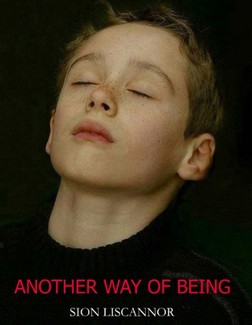
A (shockingly) truthful autobiography with elements of fantasy, philosophy, and historical fiction.
This is a story about a boy called Sion and you probably won’t like him very much.
Sion had a head-start in life. His Mother was beautiful and gifted and musical. And he had a magical Grandfather, who lived in a lonely house in Ireland and who hadn’t grown any older for the last fifty years. His Grandfather did wonderful things with Sion and he told him wonderful tales. He always knew what Sion was thinking and feeling, and he always found the right thing to say to him and the right way to help him. And he went on writing letters to Sion long after he had died.
But back home in London not everything was perfect. There was a strange man in the house who people said was Sion’s father, but it never felt like that. But that was all right, because he later found out that he had another father, a real father. In fact, he had a Catholic priest for a father, though he didn’t see him very often. In fact, he didn’t see his father at all, no not once in all his life, because this father preferred to stay shut up inside his church and he didn’t want to meet Sion. But by that time his father had become a Bishop, so perhaps it was understandable.
Sion was an unusually clever boy and he tended to let people know it. This was fine with his teachers, but some people said he was intellectually arrogant, opinionated, and vain, which was a pity because it was true. But some people liked him in spite of his cleverness.
He was also very pretty. And this, of course, made him even more vain. But at least it meant that he had friends.
A peculiar thing about Sion was that his friends were mostly quite a bit older than him or quite a bit younger. Except for one boy, who was only a year younger, and he was the one Sion really loved and it didn’t work out, and that really was a pity. In fact, some people say he never got over it.
And his friendships weren’t always popular with his teachers. In fact, they threw him out of school twice because they said he was a bad influence and besides he told the truth too much.
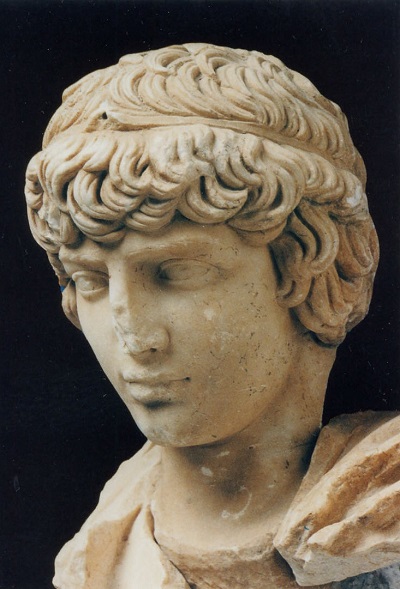
The text also embodies the earliest honest account of the pederastic relationship between Hadrian and Antinous (reconstructed from a manuscript of Sion's grandfather, Liam Liscannor) and a scholarly study of Mithraism as the origin of Catholic Christianity.
Volume 1 consists of two books - Corax and Nymphus - which correspond to the first two grades of Mithraic initiation. Further volumes are in preparation.
Excerpt
Another Way of Being
Book 1 CORAX
1 My Grandfather’s Leg
It’s a strange thing that I never saw my Grandfather’s leg till the night he died. I suppose he was always careful to keep it covered. Everyone in our family knew about it, but they always talked about it in whispers. I could never find out what the secret was. But I knew that lots of people were interested. Doctors especially. They wanted my Grandfather to leave his leg to them for medical research. But he refused. He took elaborate precautions about his funeral pyre, which was performed in Hindu fashion in the open air. He made sure that the secret of his leg vanished from the face of the Earth along with the rest of his body.
I was almost fourteen when my grandfather died. And he was over ninety. But I never thought of him as an old man. To my child’s eyes he looked much younger than my Father, who was his son. The photos that survive from the last year of my Grandfather’s life show a man in full vigour – a man who might be forty five or fifty years old, but not more. There were a few grey hairs at his temples, but there were no other signs of his age.
I loved my Grandfather. I loved him for his patience and his kindness. But most of all I loved him for his energy, his enthusiasm. With my Grandfather everything was allowed, everything was possible.
When I look back on that time now, after all these years, I see that there was one other thing I loved him for. It was because he gave me so much, but he never made me feel that he was the one who was giving. He made me feel that I was the one who was doing him the favour by spending time with him.
From the time that I was six I spent all my longer holidays at my Grandfather’s house in Ireland. He had a rambling old house that overlooked Liscannor Bay on the wild south west coast of Ireland. It was ten miles from the Cliffs of Moher, and the land between Moher and Liscannor was one of the most desolate spots on the Earth. All the storms of the Atlantic seemed to break on that headland, and there was no shelter from the elements. But the weather never stopped us from doing whatever we wanted to do.
My grandfather kept horses and he rode every day. When I was small he used to take me with him on his own horse. But for my tenth birthday he gave me a horse of my own, and from that time we rode out together for a couple of hours every morning. Sometimes we rode over the links. Sometimes we rode to the cliff tops, or down to the beach at Lahinch.
In the summer months we went sailing in my Grandfather’s ketch. We fished for salmon, and bream, and mackerel. We usually brought a big basket of fish back to the house at the end of the day. My Grandfather gave most of the fish away to neighbours, but he kept the best salmon and hung it up in the chimney to smoke it.
The chimney was my favourite place in the house. It was an enormous chimney above an open log fire, and there was room for ten people to sit around the fire. There was a huge black iron pot that hung on a chain over the fire – like a witch’s cauldron – and there was a bellows that was powered by a wheel with a handle. When you got the wheel to turn really fast the jets of air that came from under the hearth made the logs blaze like a furnace.
I loved the chimney because it was the place for stories.
Neighbours would drop by for a chat in the evening. They would drift into the circle of the fireplace and light their pipes or roll their cigarettes and talk about whose cow had died and whose sows were expecting to deliver a farrow. If a story was in progress they would sit in silence till it was finished. My Grandfather never interrupted a story.
My Grandfather had many ghost stories and many stories about ships and sailing. But the stories I liked most were about India. My grandfather had served as a doctor in the British army in India. It was while he was on service in a small town in South India that he was involved in an incident that almost killed him.
A group of villagers arrived in the middle of the night urgently asking for a doctor. A boy in a neighbouring village had been bitten by a cobra.
The King Cobra holds a special place in India. It is the most feared of all the poisonous snakes – but it is also revered, and there are temples in which it is worshipped. In the Tamil language its name is nellapambu – which literally means ‘snake of virtue’. A bite from a nellapambu in full venom will kill you. Western medicine does not worship the cobra, but it has an uncanny fascination with its poison. Captive cobras are milked for their venom – not only to make an antidote for the victims of snake bites, but because the venom is reputed to have extraordinary medicinal properties.
When they brought the wounded boy into his tent my Grandfather’s worst fears were realised. The boy – who was about twelve years old – had been bitten on the calf of his left leg. The tissue around the wound was enormously swollen and was horribly discoloured. The wound itself was seeping blood. The boy was barely conscious. His breathing was erratic, and he had begun to suffer convulsions. The villagers had not attempted any medical treatment. They had put their faith in the boy’s mother – who was known in the village as a ‘woman of power’. But the mother was away. When it was clear the mother was unlikely to return in time they had set off to the army camp for a doctor.
The British army manual gives straightforward instructions for dealing with a cobra bite. First you tie a tourniquet to stop the flow of blood through the stricken limb. Then you cut two deep incisions cross-wise in the flesh. You put your mouth to the wound and suck – you suck as hard as you can, to draw out as much of the venom as possible before it spreads. When you suck at the wound you draw the poison and the victim’s blood into your mouth and you spit it out. But always some of it will remain in your body. Some of the snake’s venom and some of the boy’s blood entered my Grandfather’s body, and it was enough to kill him.
I remember the shock and puzzlement I felt the first time that I heard the story of the snake bite. Was it true that my Grandfather had nearly died? The world seemed to unravel at the thought like a skein of threadbare silk. If my Grandfather had died, my own Father would never have been born, and I myself could never have existed. But the hardest part was to imagine that my Grandfather didn’t exist: this man, whom I loved with all my soul, and who was as firm and unshakeable as the ground under my feet.
‘Is it really true that you nearly died?’ I asked again
‘O, I was a gonner all right. If it hadn’t been for the boy’s Mother.’
My Grandfather spoke with the crispest Upper Class English accent when he needed to. But whenever he had something really serious to say his voice took on the softness of Irish brogue.
‘I was a gonner that time,’ he repeated.
My Grandfather sat beside the boy during the night. The child’s fever slowly abated and his breathing was returning to normal. In the early hours of the morning my Grandfather left the tent for some fresh air and was suddenly overcome by dizziness. The hospital orderlies found him lying on the ground and carried him back inside the tent. A fever quickly developed, and his neck became horribly swollen. His breathing was painful and difficult, and he began to choke and to bleed from the mouth.
At dawn the boy’s Mother arrived. She quickly checked the state of her son, and she seemed satisfied. Then she began to nurse my Grandfather. By this time he had grown delirious, and his body was racked by convulsions. Snake venom often exercises more power on an adult body – and it is the strongest and fittest that it attacks most violently. The woman slit open two of her patient’s veins and drew blood from them. The medical staff watched in horror, but the strange woman had an authority that reduced them to silence. She sat with my Grandfather during the whole of the next day and night. In the early hours of the second morning his breathing stopped. His heart slowed and eventually ceased to beat. The woman showed no alarm. Deliberately, forcefully, she massaged his chest and his legs. After a while the signs of life gradually began to return.
That day the woman disappeared, taking her child with her.
…..
We often went swimming at Lahinch beach, where even in the summer the icy temperature of the water was a shock. My Grandfather always wore an ankle-length swimming costume, like old fashioned Long-Johns. I thought at the time it was because of the cold. But he never complained of the cold. He seemed to be indifferent to the weather and the elements. He was also indifferent to the time of day. We sometimes hiked from early morning through to sunset. When my legs were sagging he simply lifted me on his shoulders and carried me the rest of the way home.
I never asked my Grandfather when the incident with the snake bite happened, but I think it must have been some time between 1900 and 1903. That would mean that he was in his early thirties. He first went to India as a young man, shortly after qualifying from medical school. The story in the family was that he had ‘run away’ to India after an unhappy love affair. He had been in love with a distant cousin. At first the girl seemed to encourage his attachment, but subsequently she betrayed his love – and she did so in a way that brought shame on her family. There was scandal and gossip. My Grandfather, according to one opinion, was broken hearted. Though he eventually married some twenty years later, he never really recovered from his first great love.
When I came to write down this story I sifted through the family archives – especially the photographs from my Grandfather’s earlier years. There were surprisingly many photographs. I was familiar with most of them, but in my mind I had never put them in sequence. Recently, I realised why I had never placed the photos in sequence – it is because my grandfather looks so similar in all of them, even though some of the most accurately dated photos are 25 years apart.
There is, for example, a very striking group photo which can be dated 1919, when he was part of a post-war Allied medical commission in Germany. My Grandfather was a tall man – though not unusually tall. Nevertheless, he stands out amongst the other officers in the photo. He has a presence, a kind of intensity that overshadows the men around him.
There is a similar group photo from shortly after the Second World War. My Grandfather had retired from the army by that time, but he had been recruited as an adviser to another Allied post-war commission to Germany. He stands – in civilian dress – in a group of uniformed officers. If you did not know his history you would suppose he was the same generation as the officers he is with, who are mostly in their thirties or early forties. But he must by that time have been over seventy years old.
I generally thought of my Grandfather as a solitary man, because his wife (my Grandmother) had died before I was born. He shared the house at Liscannor with a young Indian, the son of one of the army servants my Grandfather had known during his years in India. Krisna must have been around fourteen or so when he first came to Liscannor. Krisna cooked and cleaned and looked after the horses and tended the garden. He was a friendly, quiet fellow, who was absolutely devoted to my Grandfather. But you hardly noticed him. He seemed to merge into the shadows when you didn’t need him, and to quietly appear again when there was something that had to be done.
In the summer my Father or Mother visited Liscannor briefly to drop me off or pick me up, but for most of the summer months it was just the two of us - my Grandfather and I – and Krisna, like a shadow in the background.
My Grandfather was popular with the locals. The farmers and the village tradesmen and the parish priest would drop by regularly in the evenings. Michael Tennant, a local doctor, was a frequent visitor, as well as Owen Duane, his solicitor. They both seemed to enjoy my Grandfather’s story-telling as much as I did. The other most frequent visitor was the local priest, Father Benedict, who would sometimes call my Grandfather ‘a dreadful old Hindoo’, which my Grandfather seemed to take as a compliment. It was only when I sorted through his papers many years after his death that I realised that despite his solitary life my Grandfather maintained a huge correspondence. He was a great observer of wildlife and weather, and was a regular contributor to Nature and The National Geographic. He published eleven scientific papers during his years of retirement at Liscannor, and was well known in scientific circles. That perhaps explains, in part, the astonishingly large number of people who came to Ireland for his funeral.
…..
In the last summer I spent at Liscannor I talked to my Grandfather about death. I wanted to know if there was life after death.
He looked at me steadily. ‘It’s not a question I ever ask myself,’ he said. ‘You know, life is a beautiful thing. And death is a beautiful thing too. There’s a time for living, and there’s a time to die.’
After a while he added: ‘A man should know when the time comes for him to die.’
I look back on those summer months now and I ask myself if I had seen a change in him. Did he look older? Was he less energetic? Once, when we had gone camping he did not shave for three days, and I was amazed to see that the stubble of his beard was grey, though his hair was still a dark auburn - just a couple of shades darker than mine. Sometimes I persuade myself that he had grown older. Sometimes I think I have only made it up, to explain what happened later.
I did not see my Grandfather again till November. He had sent a letter to every member of the family, and to his closest friends. The letter announced, in the quietest way, that he expected to die on the twelfth of November, and that he would appreciate it very much to have the chance to say farewell to the people who had been important in his life.
In those days we mostly travelled to Ireland by the ferry from Fishguard to Cork. In the summer it was a pleasant journey, but my memories of that final November journey are bleak. The train from Paddington slowed to a crawl as soon as we entered Wales. We crept past lines of coal wagons - all empty and all identical - that seemed to stretch for a hundred miles. We passed stations that were utterly deserted, and factories with broken windows and crumbling brickwork, as if a war had ravaged the land.
At Fishguard a gale was blowing as the ferry struggled out of the harbour and into the night. Onboard the ship I remember queues of drunks outside the toilets and pools of vomit on the wooden decks. I am never sea-sick – years of sailing in my Grandfather’s ketch had cured me of it – but on that night I felt sick to the pit of my stomach.
We docked at Cork in the early hours of the morning and there followed an interminable taxi drive through Cork and County Clare till we came to Liscannor Bay at mid-day. My first surprise was the number of cars parked outside the house.
I had expected a house of mourning, but the atmosphere was quite normal – almost cheerful. My Grandfather was lying on the sofa in the ‘parlour’. He was sitting upright, with a blanket covering his legs, and was chatting to a couple of guests. He beamed when he saw me and threw open his arms. I hugged him. His body felt hard and cold. Stupidly, I burst into tears. He held me close and ruffled my hair. ‘There’s no need of that,’ he whispered. ‘Always remember that when one light is extinguished another is lit!’
I searched his eyes for the man that I knew and loved. It was the same man. He was closer to me than ever before – but he was also distant, like a withdrawing tide. He returned my gaze, but I felt that his eyes looked through me as if they were focused on a remote place.
‘Come,’ he said, with a shake. ‘Go and get something to eat. You must be hungry – and you need to keep body and soul together.’
There were crowds of visitors throughout the afternoon, and I didn’t have him all to myself again till it was time for bed. I huddled up to him on the sofa, and he spoke close to my ear in whispers. It reminded me of the times when I was very young and he would come to my bed to tell me a goodnight story – a never-ending story that I never wanted to hear the end of. But I always finished by falling asleep.
This night too, I began to drop off. I suddenly felt exhausted. I felt as if I was falling into a bottomless well of darkness and sleep.
My Mother saw me to bed. I don’t remember if I fell asleep quickly. But after what seemed a very short time I remember being shaken by the shoulder and told to wake up. My Grandfather, someone said, had asked to see me.
I struggled downstairs in a thick haze of sleep. There was less light than usual in the parlour – only the low reading lamp on the table beside the sofa. My Grandfather was on the sofa as before. He was leaning back against the bolsters. He patted the cushion as a sign that I should sit beside him.
‘I know that you always wanted to see it,’ he said. ‘And I promised you once that I would show you before I died.’
With those words he slowly drew back the blanket that covered his legs. I gazed at the calf of his left leg, not comprehending at first what it was that I was looking at. But it was clear enough to see. The whole inside of the calf was covered in a pattern of green and black – it was lustrous, shimmering, leathery. It was the skin of a snake. I gazed at it. It wasn’t just snake skin that I was looking at – it was a landscape of another world, with ridges and valleys and hills. It was altogether a different way of being.
…..
My Grandfather ceased to breathe at about three o’clock in the morning. I sat in the parlour beside him till dawn, when I noticed that Krisna and a local lad were busy in the garden. I joined them. They were carrying wood from the shed at the side of the house and were building a pyre on the rear lawn just beyond the tennis court. Numbly, like someone in a dream, I helped them.
My Mother called me back to the house for breakfast. Two old friends of my Grandfather – a local doctor, Michael Tennant, and his solicitor, Owen Duane – sat left and right of the empty chair at the head of the table. They beckoned me to join them. Owen Duane explained in his kindly manner that there was a small matter of my Grandfather’s will that he would like to discuss with me after breakfast.
Owen Duane had probably hoped to find a moment to speak to me in private, but we were overtaken by events. A steady stream of visitors began to arrive to pay their respects. I think the whole village must have passed through the house, but there were also dozens of people who had made the trip from England and from further afield. As a member of the family I had to join with the others to play host.
By mid-day the funeral pyre had been made ready and my Grandfather’s remains had been removed. Family and friends gathered on the lawn. There was a brief address by Father Benedict. Afterwards Krisna stepped to the head of the pyre. He was carrying a large clay pot from which he poured a yellow-ish liquid along the length of the pyre. I realised that it must be ghee. Then he scattered powders and incense. He withdrew for a moment, and when he reappeared he was carrying a flaming torch.
Krisna handed the torch to Owen Duane, and Owen Duane beckoned me to approach.
‘I am sorry I didn’t have a chance to speak to you,’ he whispered. ‘It was your Grandfather’s wish that you light the pyre.’
The Earth trembled under my feet. I was in a dream that I vaguely recognised from another time. My eyes met Krisna’s eyes. Somehow, though I hadn’t thought it through, I had expected that Krisna would be the one to light the fire. Krisna seemed to read my mind. He took the flaming torch from Owen Duane and passed it to me. ‘It is for him,’ he said. ‘He wanted you to do it.’
I seemed for a moment to be sitting again with my Grandfather in the great fireplace of his house, gazing into the log fire as I listened to his story. Without thinking about it I thrust the torch into the pyre. There was a feeble crackle and a flicker of flames. And then the flames shot up with a shower of sparks as if driven by a bellows. There was a rush of fire that stung my eyes and forced me to step back. It was the smoke that brought tears to my eyes. It was only the smoke. For the smoke was billowing upwards like a vast white cloud. I watched for shapes in it just as, when I was a child, I had watched for shapes in the flames and smoke of the fire in the great chimney. I looked for a Phoenix, for the ever-reborn bird of fire. I looked for the hood of the rising Cobra, serpent of time.
Demon or bird! (said the boy's soul)
now in a moment I know what I am for, I awake.
|