|
Amazon
Growth Central
*Growth Central
Whole Child & Adolescent Center
Category:
Self-Help
Publisher: Growth Publishing
ISBN-10: 1893505200
Type: Non-Fiction
Pages: 114
Copyright: March 1, 2003
ISBN-13: 9781893505209
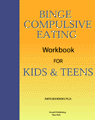
Our culture has a problem with eating. Not so much the act of eating itself, but the kinds of foods and the amount of such foods. Foods are everywhere, all the time. But oddly enough, at the very same time, we are obsessed with physical beauty. Or more precisely, a particular, often unobtainable version of beauty. We, as a culture, no longer encourage our children to be accepting for who they are physically. Nor do we seem able to accept ourselves for who we are. Temptation is everywhere, and we have lost the ability to say “no”. And at the same time, when we give our children the message that they should strive for an unattainable physical ideal, what can we expect other than great difficulties with the process of eating? This clinically developed and proven workbook employs the major eating interventions by using model presentations, rehearsal, positive feedback and promoting. Author Anita Bohensky, PhD is a highly experienced Child and Adolescent Psychologist and the Director of the Whole Child & Adolescent Center, New York, NY.
Skills and Concepts
Three Types of Eating Problems
Feeling Bad About Yourself - Shame
Assessment
Dieting Doesn't Work
The Binge State
Survival Skills & Strategies:
Breaking the Binge State
Feelings Inventory
Setting Goals
Food/Feelings Log
Hurtful things Kids & Teens Do to Themselves
Finding the "You're No Good" Messages
Compulsive/Addictive Behaviors
Challenging the Old Messages
A New Beginning
--------------------------------------------------------------------------------
goals
To reduce levels of guilt, shame, and isolation underlying the eating problem
To learn effective coping behaviors in order to halt problem eating
--------------------------------------------------------------------------------
format
The Binge/Compulsive Eating Workbook for Kids & Teens uses a skill building format and each new skill relies, to some extent, on what has previously been learned, therefore participants are strongly encouraged to do all twelve (12) sessions.
|