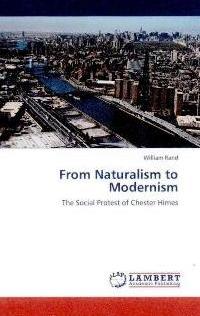
Historically, marginalization referred to a group whose work was ignored, left out of the canon. Now it seems to mean limiting study of the writing to the biographical or to a qualitative analysis of the value of the work. From Naturalism to Modernism: the Social Protest of Chester Himes presents a new approach toward the analysis of ethnic literature by examining the works of Himes from the mainstream perspective of literary modes. Instead of setting out to prove that Chester Himes is a good African-American writer, this study assumes his literary worth and considers the how and why of his use of Naturalism, Existentialism, Primitivism, Modernism and the Absurd in his short stories and novels. Chester Himes, a relatively neglected protest and detective writer, is compared favorably to Edith Wharton and Theodore Dreiser in his use of naturalism and to Ernest Hemingway in his use of modernism. In addition, this book shows how Himes proves himself unique not only in his successful use of different literary modes throughout his career, but also in his original application of those modes within a context of the absurd. This study brings Chester Himes scholarship the needed step closer to mainstream analysis and should be especially beneficial to anyone interested in the use of literary modes in American literature, African American literature or specifically the works of Chester Himes.