
Web-e-Books
Category:
War
Publisher: Web-e-Books
Type: Fiction
Pages: 300
Copyright: Aug 25, 2018
Price: $5.95 (eBook)
A story of World War 1
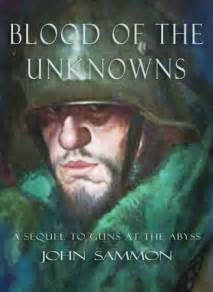
Blood of the Unknowns, a sequel to Guns of the Abyss, is the second of two novels of political intrigue and warfare that follow a woman’s attempt to prevent the spreading cataclysm of events that ignite World War I. In Blood of the Unknowns, we visit the outcome of her vain political activism, and the misfortunes of her husband, a former assistant to the German Chancellor, now consigned to the machine of war as a low-ranking army private fighting at the behest of militarist aristocrats supportive of the imperialist government’s expansionary view of a European continent.
Under the moonlight, he and a fellow German soldier, a dark-skinned Gypsy recruit, share the same crowded stand in a muddy, hand-shoveled trench on the deadly Western Front. As oddly paired as two men of different backgrounds and experience might be, Privates Frieslaven and Maruska hunker in protective friendship, a vital, cooperative defense against enemy sniper fire, bombs and bayonets, and the failures of German leadership that result in the sacrifice of tens of thousands of men pushed beyond human capacity.
The human toll of death and gruesome injury soars on a daily basis as constant waves of courageous soldiers snip through braced lines of rolling barbwire, crawl across pock-marked fields, and watch in war-weary horror as compatriots ordered to charge are felled by machine gun fire so thick that retreat is inevitable for those few left standing. Unilateral surrender is not a choice, however bloodied the troops.
Excerpt
The shelling stopped. On their feet, running, stumbling, a man to Ernst’s right lost his footing, tumbled end-over-end, and fell, face forward, onto a rock. He couldn’t be helped. They had to press on toward the shots, shouts, and screams, to jump down into the trench to hack and stab at shadowy enemy figures, to run along the slatted bottom, tripping, falling, getting up, firing, and trampling the dead in pursuit of their comrades. Commanded by Ackermann, they removed grenades, Ackermann the first to pull the chord and toss a M24 inside a dugout. An explosion, muffled groans and screams. The men bayonetted, shot, and clubbed their way to the next dugout.
Ernst used the butt of his rifle to strike a man who’d thrust a blade at his gut. He pounded another man who was grappling with a German soldier. And while he had vowed not to, he tossed grenades as if commanded by an unseen force, reflexively, instinctively, the fighting surreal until two glancing blows to his shoulder knocked him to the dirt, the enemy combatant’s face close enough to his to hear his grunting, heaving, gasps for air, Ernst struggling for breath too, from the choking pressure of a rifle stock against his neck, his perceptions of the desperate fight blurred, in slow motion, dreamlike, as if he had jumped outside of himself to witness his death. Crazed with panic and a sudden self-preserving wave of hate, with the strength of four men inspired by fear, he jabbed a thumb in the British officer’s eye then beat him with his hands, pried apart his jaw, and cracked his neck, the sound of it abruptly breaking Ernst’s solemn vow to never kill.
When silence finally came, Private Frieslaven couldn’t remember whether he’d lost or thrown his three stick grenades, and his rifle was missing. Those not killed of the British troops and their Nepalese subalterns had fled the trench insufficiently reinforced against counterattack. Stunned too much to move, feeling like creatures of another world, the German men flopped down, exhausted. This was the time the soldiers would learn to call the “malaise,” when in the quiet following an action the overwhelming fatigue rendered a man emotionless, barely able to lift a finger or express the slightest remark, oblivious to his surrounds, seated for hours in the bottom of a trench.
The Germans had regained possession of a trench and approximately a mile and a half of territory at a cost of nearly three hundred lives. Ernst would remember little of it beyond the haunting photo dropped in the mud and quickly trampled underfoot of the dead Tommy’s beautiful young wife and daughter.
|