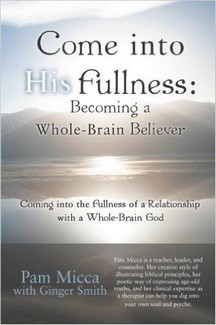
This book is a road map that takes the reader from self-discovery to spiritual mastery via understandable yet thorough explanations that open the door to healing and growth.
This book is meant to encourage, stimulate, and awaken the reader to the endless possibilities that exist in his or her relationship with God. It is a thorough but very basic description of the journey that is necessary in order to walk into the fullness of an intimate love relationship with Him.
It is meant to be a navigational tool. To navigate means to direct the course of something.
It is meant to be a map. A map is a representation that charts, plots, or diagrams the main features of something.
It is meant to be path. A path is a passageway that leads you in a certain direction and provides the proper sequence for executing a desired goal.
This book, as a navigational tool, map and/or path, has only one compass. A compass is an instrument for determining direction. I would like to introduce you to the possibilities that exist when Jesus becomes the compass for our life choices.
A primary intention of this book is to cause a paradigm shift in the way your brain processes information. In science, a paradigm is an example that serves as a pattern or model of something, especially one that forms the basis of a methodology or theory. It is a conceptual framework within which data is interpreted and processed. For our purposes an individual’s personal paradigm is the set of beliefs, perceptions, and patterns that influence thoughts, feelings, and behaviors.
Excerpt
Chapter 1: God’s Motivation When He Created Man and Woman
A very short and simple story illustrates what God’s intention is in His relationship with each one of us in a very profound way. I don’t know the author of this story, but its central theme is a metaphor for Malachi 3:3: “He will sit as a refiner and purifier of silver.” A woman called a silversmith and made an appointment to watch him at work. She was curious about the process of refining silver after reading the above Scripture. As she watched the silversmith, he held a piece of silver over the fire and let it heat up. He explained that in refining silver, one needed to hold the silver in the middle of the fire where the flames were hottest to burn away all of the impurities. She asked the silversmith if it was true that he had to sit there in front of the fire the whole time the silver was being refined. The man answered that yes, he not only had to sit there holding the silver, but he also had to keep his eyes on the silver the entire time it was in the fire. If the silver was left a moment too long in the flames it would be destroyed. The woman was silent for a moment. Then she asked the silversmith, “How do you know when the silver is fully refined?” He smiled at her and answered, “Oh, that’s easy—when I see my image in it.”
This book is meant to encourage, stimulate, and awaken the reader to the endless possibilities that exist in his or her relationship with God. It is a thorough but very basic description of the journey that is necessary in order to walk into the fullness of an intimate love relationship with Him.
It is meant to be a navigational tool. To navigate means to direct the course of something.
It is meant to be a map. A map is a representation that charts, plots, or diagrams the main features of something.
It is meant to be path. A path is a passageway that leads you in a certain direction and provides the proper sequence for executing a desired goal.
This book, as a navigational tool, map and/or path, has only one compass. A compass is an instrument for determining direction. I would like to introduce you to the possibilities that exist when Jesus becomes the compass for our life choices.
A primary intention of this book is to cause a paradigm shift in the way your brain processes information. In science, a paradigm is an example that serves as a pattern or model of something, especially one that forms the basis of a methodology or theory. It is a conceptual framework within which data is interpreted and processed. For our purposes an individual’s personal paradigm is the set of beliefs, perceptions, and patterns that influence thoughts, feelings, and behaviors. In order to understand more completely what I mean by this, I ask you to read the following story, taking the time to stop and ask yourself what you think and feel about the main character at various points in the story.
A woman was driving down a busy street on the way to the grocery store. Traffic was bumper-to-bumper for several miles in three lanes of traffic. A man in a pickup truck came up right behind her and began to blow his horn and ride her bumper. She could see him in her rearview mirror yelling at her. He appeared to be very agitated. She looked around, trying to find a way to pull out of his way, but did not see a safe opening to move. He did not attempt to move into the passing lane to get around her, but continued to pound on his horn, yell, and ride her bumper.
Please stop right now and ask yourself the following questions: What am I thinking right now about the man in the truck? How am I feeling about him? How do I feel about how he was treating the woman?
Now, let’s continue the story.
After several minutes, the woman was finally able to pull over into another lane of traffic, and the man drove by her. He continued to yell at her, although she could not understand what he was saying. As he drove by he lifted his arm for the first time and she saw that his hand was wrapped in a white towel that was covered with blood. She knew in that moment that he was driving himself to a nearby hospital.
What are you thinking about the man right now? How are you feeling about him? Has your view of his behavior changed? If so, you have just experienced a paradigm shift.
Like it or not, conscious of it or not, we are all ruled by what we feel and think. We are ruled by the beliefs that we have and the behavior patterns we have formed. This does not change automatically just because we choose to believe in God or accept Jesus Christ, or even when we consciously choose to surrender our day-to-day lives to the leading and direction of the Holy Spirit.
What we yearn for or long for motivates us and drives us, whether we’re conscious of it or not. Unmet needs and lifelong wounds fuel our yearnings and longings. We are not aware of this as it happens. We do not recognize this as it occurs. Most of us live our lives in “this is just the way things are” mode. Our internal messages, sometimes spoken but usually not, are powerful influences as they resonate in our lives—again, whether we are consciously aware of them or not.
“I’ve always been this way.” “There’s nothing I can do about it.” “This is the way it’s always been.” “I’m never going to change.” “I can’t change.” Negative messages like these can keep us stuck. They are lies that trick us into believing that much of what makes us who we are is unchangeable or beyond our control. These messages end up frustrating our ability to fully experience the wonder and awe that God originally intended for us when He invited us to actively engage in a lifelong journey with Him. He has made promises in His Word that provide evidence that the above negative messages are lies that keep us from experiencing the hope that results from knowing that change is truly possible—for healing, renewal, and restoration.
In Jeremiah 29:13–14, God says “And you will seek Me and find Me, when you search for Me with all your heart. I will be found by you, says the Lord, and I will bring you back from your captivity.” His truth will guide you into freedom from the captivity of those messages that have kept you stuck and trapped. He will light the way that will enable you to walk out your life according to the plan He created for you (Psalms 25:4–5; 40:11–6; 43:3–4; John 16:12–13). He promises you victory over those things that have kept you from finding release from your old ways of thinking, feeling, and behaving (1 Corinthians 15:57–58; Galatians 5:1–2).
This book is going to ask you to try out a new way of thinking. I am asking you to choose to give consideration to a different way to look at yourself, your relationship with God, and the world you live in. I would like to ask you to give thoughtful consideration to what your life might be like if you were to know, comprehend, experience, and “see” God, yourself, and the world you live in with your whole brain, with your entire sensory system, and with all of who you are in body, soul, and spirit.
God is a whole-brain God. He intends for each of us to be whole-brain believers. Whole means entire, total, undivided, and unbroken. It means all parts or aspects with nothing left out, not divided, or not regarded as consisting of separate elements.
His desire is for each one of us to surrender ourselves completely to the leading of the Holy Spirit. However, we tend to withhold parts of our lives or selves from God. We hide things, even from ourselves, and make excuses, believing that somehow in the end it won’t matter.
Most of us have powerful beliefs that, if left unaddressed and ignored, will prevent us from ever attaining the goal of becoming a whole-brain believer. Beliefs are ideas that we hold with certainty and conviction. We are loyal to and devoted to these ideas to such an extent that we don’t even consciously register that we have them. We just live them.
I once saw a movie about a little girl, about six years old, who lost both of her parents in a car accident. She was cared for by an elderly aunt. One day she was late for dinner because she got caught up in playing with her imaginary family of stuffed animals. She had several dozen of them that lived on her queen-size four-poster canopied bed. Her aunt, angry at this lapse of manners, came upstairs with a large garbage bag. As she placed each stuffed animal in the bag she said, “Until you are able to obey the rules of this house, you will not be able to play with them.” The little girl began sobbing and screamed, “You’re killing them! You’re killing them! Stop! They can’t breathe!”
Later that night, when her aunt was asleep, she took one of her socks, stuffed it with other socks and tied it with one of her hair ribbons. She drew a face on the sock with one of her crayons. This sock became her only playmate, which she kept hidden under her pillow for years.
As a grown woman she had a great deal of difficulty fully allowing herself to get close to anyone, in spite of the fact that from the age of six on she never again suffered a significant loss in her life and in fact had many loving individuals enter her life and attempt to connect with her.
Please take a moment to consider your own beliefs about yourself, others, and the world you live in and the power these beliefs have had to influence the choices you make. To help you begin to specifically identify what your personal beliefs are, I would like to share two very common beliefs about how obedience fits into a relationship with God and what our personal responsibility is in this relationship.
Many of us have come to believe, incorrectly, that obedience is God’s most important expectation of each one of us. While obedience is an essential part of a believer’s walk, it is not God’s primary expectation. This is a lie perpetuated by both Satan and man that has been a highly successful one. If man’s attention is on doing, he will be forever distracted from being in the relationship. And being in the relationship is the primary reason we as humans were created by God. Our obedience to God is supposed to flow out of our intimate love relationship with Him.
The gospel of Luke tells the story of Jesus’ visit to the home of two sisters named Martha and Mary.
Now it happened as they went that He entered a certain village; and a certain woman named Martha welcomed Him into her house. And she had a sister called Mary, who also sat at Jesus’ feet and heard His word. But Martha was distracted with much serving, and she approached Him and said, “Lord, do You not care that my sister has left me to serve alone? Therefore tell her to help me.” And Jesus answered and said to her, “Martha, Martha, you are worried and troubled about many things. But one thing is needed, and Mary has chosen that good part, which will not be taken away from her.” (10:38–42)
This story demonstrates that God’s primary expectation of us is not obedience, but love and relationship. He is relational to the core. Relationship is the very essence of who He is. When He created man and woman He fell “in love” with them.
When He created you He fell in love with you, even as He designed you before conception. He is passionate about His love for you. His passion for you is glorious, awe-inspiring and full of fervor. His love for each of us individually is more intense than we are capable of imagining as humans. Because of the depth of His love, He is deeply grieved to see us separated from Him. His express purpose for creating man and woman was to shower His love on them and be in an intimate relationship with them. He desires that we choose to love Him back. He desires that we choose to engage in a relationship with Him.
Our misunderstandings about obedience lead to misunderstandings about what it actually means to be actively involved in a relationship with God. For those who have begun to understand how to be in a relationship more fully with God, we may think that being is all that is required of us. For many of us, we have overlooked or avoided the becoming part. Becoming means developing into, growing to be, and/or being converted into.
This means that while it is of primary importance to God to be in an intimate relationship with you and it is the desire of His heart that you learn to cooperate with Him in obedience to the plan He has designed for you, all of this entails a process. Process means a series of actions directed toward a particular aim and a series of occurrences that produces change or development. The process of becoming is one of changing, growing, and developing at a character level. This is an active, ongoing process that, if you were engaged in it, would cause you to look different today then you did one year ago and vastly different than you did ten years ago—again, on a character level.
What follows are several illustrations that may help you understand the impact that overlooking or avoiding full participation in the process of becoming the whole-brain believer that God created you to be may have on your life.
Imagine that you are standing in the middle of Main Street in a small town in the Midwest. As you look up and down the street you see a bank, a hardware store, a movie theater, a hair salon, a coffee shop, and a bookstore. It is springtime and there are fresh flowers in window boxes in front of the shops. Shade trees are just beginning to bud. As you take a stroll you notice that there are several cars parked along the street, and about a half a dozen people window-shopping. There are people sitting at a table in the coffee shop. You also notice someone sitting in the ticket window of the theater.
How are you feeling about this small-town experience? What are you thinking about?
You decide to check out the bookstore. There is a book that you’ve been meaning to buy. You walk through the front door. But there is no bookstore. You are looking at two-by-fours and girders. You are looking at the lumber structure that provides the support system for the false fronts on a movie set.
What are you feeling now? What are you thinking?
Now imagine that you are standing on the front lawn of an antebellum mansion outside of New Orleans. You have been told that it was restored after being destroyed in Hurricane Katrina. It is hard to imagine that it once was in ruins, because it is now beautiful. The lawn is manicured; the landscaping is perfect. Large oak trees grace the front lawn. Flowers in full bloom fill the air with a delicious fragrance. The fresh paint on the siding sparkles in the sunlight. As you walk up on the veranda you notice a wicker table and two chairs. A pitcher of lemonade is on the table. You decide to sit for a few minutes before entering the house to have a refreshing drink. Again, how do you feel, and what is it like to think about being in this tranquil, beautiful setting?
You finish your lemonade and decide to take a tour of the inside of the home. As you walk through the front door, you stagger back at the stench that hits you full in the face. Your eyes have trouble absorbing the horror that lies before you. Mold covers the walls. There is a black, gooey sheen covering every flat surface. Piles of rubble are in every direction you look. As your eyes follow the line of the grand staircase upward, you realize that it goes nowhere. There is an enormous hole where the roof has crashed down into the center of the house.
Please stop reading for a moment. Take a deep breath and ask yourself: Do I have any false fronts in my life? Do I have any ugly, dark places in myself that I would prefer to ignore? At this point in time you may not want to continue reading this book. You may be experiencing your own negative internal messages about the content of what you have read. No matter what your thoughts and feelings are about this material, I would ask you to please make a choice to continue this journey.
A truly intimate relationship with God requires that you make a conscious and active commitment to become who God created you to be. Not just in your behaviors. Not just through increasing your intellectual understanding. Not even though your spiritual maturation or growth. It must include all of who you are. All means every part of you. It means every single piece of you, each and every aspect of your body, soul, and spirit.
But what does this mean? What does it look like?
If you are not able to “see” yourself changing over time, strengthening and using positive traits and natural gifts more fully, and continuously diminishing the harmful impact of your flaws, weaknesses, and negative traits on yourself and the world around you, then you are not becoming the individual God designed you to be.
If you are not learning and knowing yourself as you are learning and knowing God, and if you are not actively engaging in the healing and transformation process, which includes identifying the influential beliefs and internal messages that have ruled your perceptions and choices, you are not becoming the individual God designed you to be.
If you are not actively working to change those beliefs and messages no matter how long it takes and no matter how frustrated you feel or how many roadblocks you encounter, until they more closely line up with God’s truths, you are not becoming the individual God designed you to be.
Many Christians think that it’s not possible to change at a character level, that “only God can do it.” They believe that we are too broken or fallen or damaged to do anything about it ourselves. But it is not only God. This relationship is a partnership. Partnership means cooperation between people working together for some common purpose. You must participate. This is hard, hard work, and you will have to choose to be open to it. This hard work will continue throughout your life. But it does get easier. And there are rewards.
Please give some thoughtful consideration to the following metaphors: a silver tea service that is blackened with tarnish, a boat that is covered with moss and barnacles, a car that is covered with dirt and mud two inches thick, a house that is littered with newspapers, food containers, and dirty clothing, and a toilet bowl or shower that has not been cleaned in years. All of these things are useable, even serviceable. But they are not beautiful, even though they started out that way. It would take hours of hard physical labor to polish the silver, scrape the boat, wash and wax the car, clean up the house, and scrub the bathroom. But most of us would make the effort to do it because we want both: service and beauty.
Imagine that you are sitting in a beautiful garden. Experience the colors, the fragrances, the textures, and the vast array of style and shape, form and substance. Feel the sun warming your skin and the breeze caressing your cheek. Now imagine it’s just a photograph. You’ve never actually seen real flowers or been in a real garden. It’s just a picture.
Now imagine you are in a relationship. This individual is very important to you. You love him and consider him a priority in your life. Experience the warm feelings that rise up as you think about this person. Then imagine one more thing. You rarely spend time together. You almost never have meaningful conversations with each other. Your rarely laugh together. This means you rarely make eye contact or touch. The relationship is really a concept, an idea. It is not a living, breathing organism. It is not a live-action experience.
As humans we often live our lives saying something is important to us or thinking about how much we appreciate or enjoy this or that, but spend almost no time walking out or living it. We also can spend a great deal of time learning about something or studying various topics that interest us, but once we have learned these things or understood them, we do not take the time necessary to deliberately and consciously apply them to our lives.
I believe we do this unwittingly with the idea or concept of God. We say we believe in God, we talk about Him, we learn Scripture, we study it, we attempt to “do” what we have learned and then we move on. We find ourselves caught up in the business of life. Our attention gets consumed by the pursuit of fulfilling our everyday responsibilities: to work, to family, to church, to school, etc.
But this is what God wants you to pay attention to right now.
When He created the universe He did so with His spoken word. Except for when He created man. When it was time to create man, God formed him with His own hands and then breathed His own breath into him. God was personally involved in your creation. Nothing else of creation can boast of this. You are singularly unique, different, and distinctive, because when God created you He threw out the mold. Everything else He made was intended to be a backdrop to create a stage to place man on. In Psalm 139 David speaks about his awareness of the fact that God had personally fashioned him. The same is true for each of us. Every human is personally fashioned by God. And He has a specific and separate plan, purpose, and destiny for each one of us.
God’s dreams for you are greater than the dreams you have for yourself. You are not a chance. You are not a mistake. You are an irreplaceable, one-of-a-kind creation. You are a unique creation of the immortal, eternal God. You were not mass-produced. You were handwoven. You have character and substance that distinguishes you from every other human being throughout history. Your individual DNA is an example of the outstanding masterpiece that you are.
God will never in all creation make anyone like you again. You are not one of a mass of humanity. You are one of a kind. In Jeremiah 1:5 the Lord said, “Before I formed you, I knew you.” You are not an accident. And God didn’t create you by chance or accident, either. There is a specific reason that you were called into being. And only you can fulfill the plan that God designed especially for you. You and your purpose are so unique to God that if every other human that God created was standing in His presence and you were missing, He would notice. He would then stop what He was doing and take the time to send someone to find you and bring you back to Him. And that is exactly what He did.
As I have already said, the goal of this book is to help you know, comprehend, experience, and “see” God, yourself, others, and the world you live in with your whole brain, with your entire sensory system, and with all of who you are in body, soul, and spirit. My intention is to offer you tools that will, if you choose to consciously and deliberately use them, enable you, as it relates to pursing a relationship with God, to live it out, walk it out, and in that process become the man or woman God originally created you to be—from the inside out.
As you continue to read, there may be times when the emotions you are experiencing and the thoughts you are having are disagreeable or uncomfortable. I have attempted to anticipate when a reader might respond this way, and at those points in the book I will ask you to engage in a “faith walk.” I will not accurately anticipate every possible issue or idea within these pages that you might have difficulty with. Nonetheless, if you can make the conscious decision now to keep reading and keep jotting down your questions, comments, and personal responses to what you are reading in the margins, then you will be engaging in a faith walk.
I encourage you to join me in a journey of exploration and investigation. I encourage you to read this book through the lens of discovery. Finally, I encourage you to consciously choose to have a questioning attitude. And then choose to begin the journey of exploring, investigating, discovering, and learning about what God has planned for you and how to participate with Him in entering more fully into that plan.
This book consists of a 150 pages of Christian poetry about the end of time and the Second coming of Jesus Christ not as a servant but as a King, the King of kings. To bring righteousness and peace to the earth and restore the government of God! Peac
Note: Since my husband's cancer surgery 4/25/05, this book content has been integrated into the public speaking content for audiences interested in a sassy approach to personal and/or community awareness events. Another chapbook on intimate love poet