
Kindle Edition
Amazon
Amazon
Category:
Mainstream
Publisher: Create Space
ISBN-10: 1523874643
Type: Fiction
Pages: 112
ISBN-13: 9871523874644
Price: $3.00 (eBook)
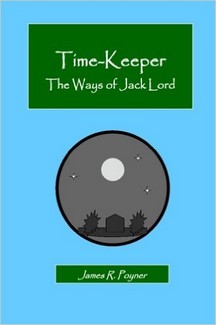
Set in Evanston, Illinois, in 1968, this is the tale of a most interesting young man, Jack Lord.
Three different narrators tell this tale of general fiction. That technique is meant to make the reader stop and think—a theme of the story—before reflecting inward, the lodging place of your own perspective.
Excerpt
Author's Note
The following story employs three narrators: Doug Prince, Bob Earl, and Jack Lord. The merit behind that is for you to decide, but I do believe it is a good one, if only because it gives you three perspectives of the same story. Read on, and see what I mean; and as you do, keep in mind that I grew up in Evanston, and that I worked at Field's in Evanston—on the very elevator that is key to much of this story.
James R. Poyner
<><><>
One
THE FIRST THING that anyone noticed about Jack Lord was what appeared to be a black glove on the left hand of the wiry, dark-haired youth. Yet, in the next instant, you realized that it was not made of leather, cotton, or even canvas. It actually had the dull gleam of hard plastic, and indeed, that was the material involved, while it was shaped with the thumb and four fingers all curled upward. Then, because he was still in his late teens—eighteen—you kind of wondered if something had happened, much like I did as I was about to start interviewing him the Friday after July 4th in 1968, which was the next day that year.
He was quick to notice my wonder, and so, not long after he had shaken my hand and sat in the chair before me, he promptly, almost dutifully noted, "I lost my left hand several years ago, Mr. Prince. Mom and I were camping with my uncle Harry and his family in Yellowstone. It was after dinner as we sat about roasting marshmallows, when we all heard a deep growl, and looked to see that a grizzly had come up to the other side of the fire."
Although I reacted with a fair amount of concern, Jack then continued, "Well, when my uncle jumped up to shield his wife and kids, that left my mom exposed. She backed away, but the bear growled and kept moving toward her. So noticing that the hot pan holder was still wrapped about the coffee pot, I grabbed the cloth, pulled a burning log out of the fire with it, and waved the log at the bear. It growled and then ran off. Unfortunately, the cloth caught fire and burned my hand so bad that it had to be amputated, just above the wrist," he concluded, which made me grimace. "But I'd do it again, Mr. Prince. Wouldn't you?"
"I certainly would, Jack," I promptly replied and smiled, while it was not hard to see that that same pluck still resided in the lad; the courage that had gotten him to ably defend his mother against a marauding bear had now brought him before me. That suggested that he had the courage to take on one of our more daunting jobs, the one that needed to be filled as promptly as possible; and so, after then taking a moment to scan both his resume and a letter of recommendation from someone named Rick Asbury, both of which added pluses to my thoughts on Jack, I then added, "I also like your resourcefulness and your gumption, to say nothing of your recognizing when something needs to be done—no matter what. That's just the kind of young man I could use, while it also helps that I like your good attitude."
"Well, thank you, Mr. Prince," he answered, favoring me with good manners that were authentic and not merely an easily cast-aside costume; they were another plus, especially in that store, where decorum was the preferred attitude for employees.
Then, as the dark-haired lad offered me a hopeful grin, I asked, "Tell me, does your prosthetic hand limit you when it comes to lifting things?"
"Not at all," Jack answered without hesitation. "Although I can lift some things with my left hand, especially if I hook them into the fingers, I like to reserve heavier things for my right. Toward that end, I've learned to lift with my right hand, and if I need to balance, or add more strength, to what I'm lifting, then that's when I also use my left hand. That hand doesn't move—it's just there—although I can turn it up or down by turning my forearm. I can use it to carry shopping bags and the like."
Then, after deftly holding up the ebony appendage, and then demonstrating all of that, he added, "At the same time, as you can see, the thumb and fingers on that are curled upward, which lets me do some things, to include holding a piece of typing paper upright, while I use my right hand to work the paper into my typewriter."
"Really," I mused with a fair amount of interest.
Although Jack seemed somewhat embarrassed by that revelation, as if he disliked drawing attention to himself, he seemed to recall that he was merely stating the merits that would get him hired, and so, he added, "All together, I've learned to work both hands and arms with a five-pound dumbbell, while that's helped several times the last three autumns when we needed to promptly get injured players off the football field."
"Well, given all of that, Jack, it seems to me that you could ably manage the job I have in mind," I responded, finding still more to like about Jack, while hoping that I would hear more about his efforts around a football field. Being somewhat pressed for time, and even having a sense that Jack would ask a telling question as we finished, I then asked, "Am I also right that you wouldn't mind working outside, no matter how hot or cold it gets?"
"I wouldn't at all, Mr. Prince," the lad answered, his intrigue growing, while I particularly liked the genuineness in his fascination. "You see, I was equipment manager for the high school football team the last three years, which meant that I had to be on the sidelines, no matter what the weather, even while it snowed. Then, as well as being available to help with injuries, there was the occasional repair to equipment, usually replacing a torn chin strap or the like, in a matter of minutes."
That addendum also intrigued me, while it also answered my hope, before I happily pronounced, "Well, Jack, the job is yours. Will you accept it?" I then asked.
Although he was clearly elated, there was a streak of decorum that then got him to ask: "Well, Mr. Prince, can you first tell me what I will be doing?"
"You'll be working on our freight elevator—unloading and loading trailers, gathering packages that are to be sent out, and that sort of thing," I explained, before I gave him a brief outline of his wages and such. When he then reaffirmed his interest, by accepting the position, I added, "In fact, we're somewhat short-handed, and not only is it a Friday, but it's also the day after a holiday, which means we can expect one or more extra loads. That's reason enough for me to head over to the elevator from here, so I can help Bob Earl, our Operations Manager." Although Jack mouthed Bob's last name with interest, I concluded, "It's only fair for me to warn you that Fridays are pretty hectic, and to ask if, based on that, you still want the job."
"I not only want it, but I also promise you that I will do nothing to make you regret hiring me. Thanks, Mr. Prince," the lad added with a wonderful enthusiasm, before offering me his right hand.
"You're welcome," I replied, as we shook, while I also saw that shake as acceptance of his voiced promise, and that Jack had a wonderful sense of how things should be done. "Now, do you have a few moments—want to go with me and see the elevator?"
"I'm free the rest of the day, especially since I had planned to apply at various other stores here in downtown Evanston. I started here because my mom works at the Old Orchard store, as an interior decorator." Then, with a smile, he added, "Now, I don't have to apply anywhere else, of course!"
"True enough!" I replied and smiled. Then, after placing a call to Bob I then told the new-hire, "Well, come along, Jack."
Jack then responded in a most interesting and telling way, by asking a most pertinent question; the very question I had hoped to hear.
***
MY NAME IS Bob Earl, and that day after July 4, 1968, found me reflecting that I was getting old. At least, I was starting to feel my age coming on. Of course, maybe it was just the wear and tear from my current job as Operations Manager, added to my twenty years as a mail carrier, added to my modest stint as a airborne ranger for the U.S. Army; or maybe it had something to do with us being short-handed, thanks to Sam Davis quitting. I was starting to push fifty; and it figures that that is when you should start slowing down—should!
After all, at my age, you are kind of like an old car—progressively moving along, but while emitting a steady parade of creaks and unexpected bounces. You would almost be better off parking in the scrap yard than having a new round of repairs made to your guts. Yet, it had been my idea to bail out of the Army once the war was over, especially when the Army started to prefer guys, who were more gung ho about being lifers, and who were happy to just be there minding things in central Europe, especially since the need to keep your head down had passed. We had taken care of that!
So I heeded the advice of one of my NCOs, and when I got back to Chicago, I took the civil service exam. Not long after that, I became a mail carrier in Evanston, and not long after that, I had a nice A-frame on Monroe, just east of Ridge Avenue, while I had found a pleasant, dark-haired gal named Annie who took my last name. We both liked the house, while neither of us minded either the over-all clad, junk man plying the alley on his horse-driven, four-tire cart, or the carriage stoop that ornamented our portion of the parkway. Unfortunately, that was back when you could only work twenty years for the Post Office. That earned you a pension that would kick in as you hit 65; so what was I to do until then, especially when I had almost another twenty years to go?
Fortunately, just as my carrier days were winding down, my new neighbor became blond-haired Doug Prince, who had just become the store manager for Field's in Evanston, even though he was only 38. He was outgoing and not at all bothered by having to spend his Saturdays tending the grounds for his two-story federal-style hose, while he clearly liked working on the house with his hands. We quickly became acquainted, and then, we furthered that by hashing over ideas aimed at improving our homes, while helping each other. Then he asked if he was right to think that something was kind of bothering me.
Some people might look at that as prying, but for me, it had never hurt to hear someone else's take on things. So, as we continued talking over the chain link fence that separated our backyards, and after I had told him my concerns, he told me that he needed a reliable, older guy to run Operations, a catchall phrase that grouped together shipping and receiving, packaging, supplies, and the like at his store. That was on a Saturday. The following Monday, I filled out an application, more formally interviewed with him, and took the job. The pay was adequate, and there was something intriguing about the position—it was not the kind of thing to become tedious.
It took a few weeks for me to get familiar with how things were done, and in the meantime, I was able to retain some of the old staff, which always helps. Dave Baron gladly stayed on to continue working the supply room, and to oversee things like window displays, store maintenance, and so forth. Also staying on were Sally Duchess, her three fulltime wrappers, plus her four part-timers, enough to keep four of the six wrapping desks going Monday through Saturday. Seasonal employees were hired to work the other desks for the Holidays.
Unfortunately, as noted, the kid who had been helping me on the elevator, Sam Davis, had found a better job. Dave and Doug helped as best they could, but I needed someone else, especially since red-haired Dave took care of delivering supplies and doing price tickets—things that needed to get done—and especially since interviewing and other duties kept Doug tied to his desk more often than not.
Then that Friday, the day after the Fourth, not long after I had returned from my lunch and sent ever-agitated Dave on his lunch, the phone rang, and I answered, "Freight!"
"Hey, Bob Earl, this is your lucky day!" Doug cried. "I'll buzz you when I get to your door on Five, and then, you'll see what I mean."
"What's that," I wondered.
"You'll see," he answered, and then, Doug simply hung up.
I never minded stuff like that, mainly because I had long ago learned to tolerate surprises; and because the one the Germans pulled on us in December 1944 made all others pale in comparison—you know about the Battle of the Bulge, right?
***
I HAD BEEN in Field's at Church and Sherman before that day when I first met Doug Prince and Bob Earl, and was hired by the former. Mom worked out of Field's Old Orchard store as an interior decorator, and so, she could use her employee discount at any of the Field's stores. As needed, we had shopped at the Evanston store for a variety of things, most often clothes for me. Yet, working there meant I would become even more familiar with the place, and maybe even get a better understanding of what was available. While good advice offered years before had kept me from being ruled by my artificial hand, I still had to allow for it; both in what I wore and in how I did things—plan ahead on both.
For example, to cut meat, my black hand became the fork, holding the meat in place, while the knife passed between the first and second fingers. Then, if at that point, I cut all of the meat into sizeable pieces, I could wipe off my black hand with my napkin and proceed to eat. My hosts and hostesses always appreciated my doing that, as did my fellow diners. None of them knew that I was merely honoring one of the first lessons of my mentor.
Otherwise, that Friday, July 5, 1968, I was fairly happy as I walked toward my first ride on the freight elevator. Having graduated from Evanston Township High School less than a month before, and having no real prospects lined up that would further my education, I wanted to find a full-time job that would be challenging, if not the start of a career. I also owed it to my mom—as well as to myself—to find something that would let me give her still more in my room and board, while also making me less dependent on her.
As it happened, I had worked the three previous summers with Rick Asbury, a house painter, and the only person, prior to Doug, to look beyond my black hand and to see my merit. Rick and I got along fairly well. He liked my determination, while I liked his willingness to teach me in a way that was never demeaning. As a result, I learned how to help in all kinds of ways, which of course, furthered our relationship.
Among other things, I became fairly adept with applying paint with a brush or a roller, while I knew how to roll out a drop cloth and otherwise set things up—how to be a helper. The one shortcoming was that I could not readily apply masking tape, which made it difficult for me to do trim painting. That was the one thing routinely cited by the painters I applied with after I graduated from Evanston. Rick having retired at the beginning of the year had meant my having to try finding work with someone else, although he had even given me a letter of recommendation.
Doug had given that letter a good look and had even nodded at me as he set it down. My experiences with Rick showed determination, and also hinted at my good ability to adapt as best I could. So, while I was not really ruled by my hand, it seemed that others were.
Properly, Mom had encouraged me to keep trying to find a job, and then, she suggested that I try the Evanston store. Getting to downtown Evanston, could be done either by walking from our place, at Main and Sheridan, or by walking up Main to Chicago Avenue, where the north-bound Number 1 bus took me to Church and Sherman, kiddy-corner from the store. I rode the bus that day because I had worn my nice things—navy sport coat, white turtleneck, gray slacks, and brown loafers. Ties and laced-shoes were too much for me, but no one seemed to mind, even when I worshipped, with Mom, every Sunday morning for the early service, at First Presbyterian Church, Chicago and Lake Street.
Later that day that I was hired, likely while she drove us to my uncle Harry's dinner party, I meant to take a few moments to work things out with Mom. I had already figured out how much my net income would be, and then from that, I had arrived at what I thought would be a fair amount for my room and board. Even though my mom was doing fairly well at her job, I still felt obligated, and had actually given her $15 for each week that I had worked for Mr. Asbury, while Mom had felt then that that was too much. Yet, because this was a permanent, fulltime job, I meant to suggest $30 per week, especially since I figured that that would leave me with over $20 per week. In 1968, with a loaf of bread, a gallon of gas, and a pack of cigarettes, each going for thirty cents, more than twenty dollars was a pretty good set-aside, although I figured that at least a quarter of that would wind up in my savings account.
At the same time, you have to be fair with people, and if you cannot start with your loved ones, then maybe you need to rethink things.
<><><>
|