Jerry Gray is an average working man moved by circumstances to take a foolish risk. But that risk turns into inspiration for the whole country.
"Sometimes you must listen to your heart, not just your head." Jerry Gray is an average working man, a straight-arrow, a faithful husband, good father, and solid provider. But now some very non-average problems are threatening to overwhelm him. His marriage is failing, his daughter may well be losing her fight with a rare blood disease, and he is financially strapped from that illness and paying his late father's nursing home and funeral expenses. He is also frustrated because he cannot follow a long-held dream. Then, at the worst possible time, he is laid off from his job. That is the final blow that pushes Jerry to step outside his straight-arrow existence--the one instilled in him by his late father--and take a risk he would never have contemplated before: bet everything he has left on one spin of the roulette wheel in Las Vegas. But news of his quest finds its way into the media and before he knows it, Gray's spin captures the imagination of millions. Many of them decide they want to take their own spin with him in an effort to break out of their dismal existence. Or just to take a chance on something better. Hundreds show up at Jerry's house in Southern California, hundreds more join him as he makes his way to Vegas and The Spin. As the resulting media circus makes The Spin far more than it was when it began, Jerry Gray realizes that it is a powerful symbol for him and for others who have resisted stepping beyond the usual and mundane in order to reach for the exceptional. Along the way, we meet a fascinating cast of characters, each of whom achieve a new life after participating in Gray's spin. There is Chauncey, Jerry's and his late father's friend and co-worker, who holds a deep, dark secret Jerry could have never guessed. A beautiful would-be singer whose self-imposed limitations have prevented her remarkable music from being heard. A throwback from the "Summer of Love" whose odd advice and incantations urge them all along to a new way of looking at life. A frustrated novelist whose fear of failure stymies his stories before they are ever committed to the page. The owners of a struggling off-the-strip casino and the publisher of a gritty, girly magazine who realize their own dreams when The Spin lands in their laps. A pro-basketball player whose addiction has him on death's edge until he literally drops into the middle of the odd caravan as it winds its way through the desert, headed for The Spin. Once you experience the shocking, unexpected, but powerfully inspiring outcome of Jerry's fascinating story and after you get to know these fascinating individuals, the message becomes clear. It is not about red or black on the Las Vegas casino roulette wheel. This remarkable story will inspire everyone to listen to his or her heart, take reasonable chances, and reach for a dream.
Excerpt
I got caught up in the whole thing totally by accident, you know. Like most of the others did, I guess. But you know what? It was absolutely the best thing that ever happened to me. I very well may owe Jerry Gray and Loni Flowers my life.
The voice on the other end of the telephone is almost washed away by hum and static. At first I think Greg Whetstone must be calling from some Central American country above which no communications satellites hover. But he tells me he now lives in Idaho, in a small town near the Canadian border. So small, apparently, that the better telephone cables haven’t quite found their way there yet, either.
I’ve had a devil of a time tracking Whetstone down. Everybody else I’m trying to reach, too. It has been over a month since I’ve talked with anyone associated with The Spin and I’m strongly considering dropping the mission entirely. Whetstone’s sudden and unexpected response to the messages I left for him at his former employer rekindles my interest. He is the first of those who were involved to report to me how Jerry Gray and what he did so dramatically affected his own situation.
Only the first.
Whetstone abruptly left The Los Angeles Times immediately after filing his final story, the one that told about the outcome of Jerry Gray’s big spin and the odd twist that came immediately afterward. He did not even come back to the paper to clean out his desk and his editor confided to me that his last paycheck was still thumb-tacked to the city room bulletin board. Just in case.
No one at the paper admitted to knowing where he had gone. He got word somehow, though, that I was looking for him and called me, out of the blue, on a typical hot, smoggy L.A. Saturday afternoon.
Surprisingly, despite the time that had passed and his previous lack of response, he was willing to talk to me with no prompting. I had assumed someone who had made himself so mysteriously scarce would be reticent. When I offered to call him back so we might be able to get a better connection, he refused. Greg Whetstone had apparently been waiting for the opportunity to tell his story to someone and he did not want to delay it a minute longer. And he clearly didn’t want to give me his telephone number. I had already checked the caller-ID on my phone and the number was blocked.
I worked for The Times for twelve years. I interned there when I was at U.C.L.A. and went directly to the city room out of school. Started like most guys do, pulling police reports at the end of the graveyard shift every day, writing up three-sentence wrap-ups of the muggings and rapes and the poor, practically anonymous, unimportant people who fooled around and got themselves murdered.
But it was only my day job, a way to buy groceries while I wrote the next great American novel. I desperately wanted to be God’s gift to literature. I’d go home to my little apartment every night, put on some Leo Kottke or something from Windham Hill, sit down in front of the computer I had picked up on sale at Best Buy, and crank out some of the sloppiest, dullest, most uninspired prose ever committed to hard disk.
I followed that little routine for the better part of ten years, certain that the next sentence I typed would finally be inspired and the muses would finally begin yakking away, filling my ear with National Book Award exposition.
One day I looked in my desk drawer and I had fifty diskettes, all bound together with rubber bands, each one with ten- or twelve-thousand words worth of book on it. Never more than that. Some with less. See, I had this awful habit of getting an idea for a novel I wanted to write, getting turned on by the story and the people I was going to put into it, and then diving in and writing like mad for a few weeks.
Then, about the time I would get fifty pages or so into the story, I would hit a brick wall. Whap! Stopped cold. I would suddenly lose track of where the story was headed or who the characters were. And what’s worse, I didn’t care any more about either one, not the plot or my made-up people. My “paper dolls,” I called them. Not one bit. I would completely lose interest. Even get to the point where I hated all those people I had dreamed up in my own head. I would get totally disgusted with the pack of lies I had typed up. By then, I couldn’t even bring myself to load up the computer file and look at it any more.
So I would set that book aside, delete it completely from the computer but put the backup diskette in the pile with all the others in the desk drawer, and wait for inspiration to knock.
Eventually I’d have another wonderful self-induced literary orgasm and I’d get all tingly again and start staying up all night, stroking the keyboard. But it would always be something totally different that had me so turned on. New story, different characters. If I accidentally brought in someone similar to a character in one of the previous attempts, accidentally or on purpose, I would toss the whole thing as if it was now tainted and foul. I didn’t even save diskettes of those. They were evil and cursed.
There was no danger of running out of ideas. God knows, in my profession there was never a shortage of stories or of interesting people to populate them with. The news every day would hand them to me on a silver platter. I just simply couldn’t seem to get them past that first five or six chapters.
Jerry Gray was the one who told me what my problem was.
Well, actually, to be totally honest, Loretta Spaghetti may have. Or at least she got close when she told me my star was being eclipsed by Orion, and that that caused “unwarranted trepidation and discordance.” She gave me a little crystal to carry in each trouser pocket and a third one to wear around my neck on a strip of rawhide she had. She said something about the “powers of triangulation.” I don’t know if the crystals worked or not, but I still have them, just in case I ever lose the touch again. One in each pocket, one on the end of that oily old piece of rawhide around my neck right this very minute.
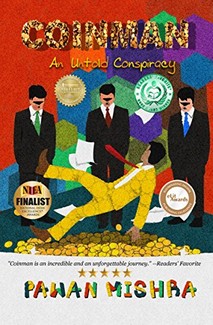
In this eccentric tale set in a small town in northern India, Pawan Mishra masterfully weaves ingenuity and sarcasm in a manner that’s simultaneously hilarious and tragic.
My second book is about a boy who has Asperger's Syndrome and is bullied to the point to where he shoots up his school. I have divided the excerpts from it into three parts: Before, during and after the shooting.
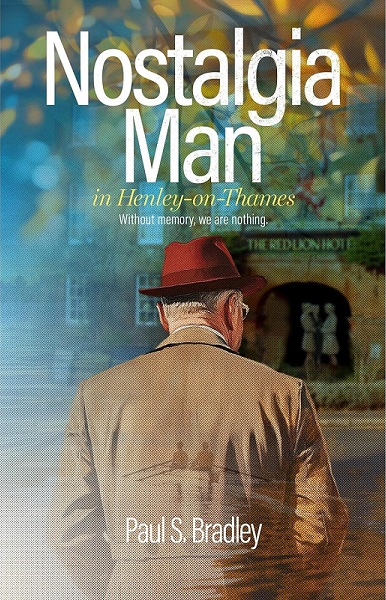
Determined to confront the hazy memories of his troubled youth, Oliver Matthews, a retired detective and confirmed bachelor, returns to the picturesque town of Henley-on-Thames for the first time in years.