
Kindle Edition
Download to your Nook (eBook)
Amazon
Barnes & Noble.com
Booklocker Online Order Form
Amazon.com
Category:
Inspirational
Publisher: Minh Han
ISBN-10: 0989536300
Type: Non-Fiction
Pages: 438
Copyright: 2013
ISBN-13: 9780989536301
Price: $9.99 (eBook)
Over twenty years practicing medicine, Dr. Minh Han has collected over a hundred stories of people and situations that have intersected his life.
These stories range from short and funny vignettes to more extensive recountings of patients’ life challenges and struggles.
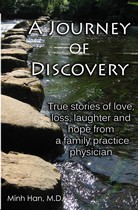
A Journey of Disovery: True stories of love, loss, laughter, and hope from a family practice physician
Through the course of almost twenty years of medical experience, Dr. Minh Han has collected in this book over a hundred stories of people and situations that have intersected and affected his life.
These stories range from short and funny vignettes to more extensive recountings of a patient's life. From the Tibetan plateau to the towns in Connecticut, the stories give a snapshot of people across cultures and generations, all doing their best to find their path through this journey of life.
But the path of life is oftentimes a rocky one, filled with both joy and challenges. Beginning with a story recounting a night as a medical student in the emergency room, Dr. Han details how watching people respond to tragedy has helped to shape his understanding of medicine and how to provide compassionate care.
One story recounts a man's experience in the Vietnam War. Another relates a woman's recurrent nightmares stemming from childhood abuse. Some struggle with inner conflicts of body image or sexual orientation. Others deal with external circumstances beyond their control: illness, misfortune, or loss.
The stories in this book are all about average people encountering mundane as well as extraordinary events that have the potential to radically alter their course in life. While many patients overcome their struggles, some do not. In all cases, however, they, along with everyone else in this world, have stories that are worth telling and sharing.
This book is an attempt to honor those people as well as to help others who might be going through similar situations know that they are not alone in their struggles.
Excerpt
A Night in Ben Taub
When I was attending medical school at Baylor College of Medicine in Houston, the curriculum consisted of eighteen months of intensive class work and lectures followed by clinical rotations starting the second half of the second year. The advantage of this system was that it afforded an extra six months of clinical rotations. Students could spend that time exploring various specialties before deciding on one that for all intents and purposes would lock them into that specialty for the rest of their lives.
There were, however, several disadvantages to this arrangement. During the eighteen months of Basic Sciences, students had essentially no contact with actual live patients. Because there were no names, faces, or stories to attach the information to, all the class work was overwhelming and frequently became rote memorization of huge lists. Also, students were thrown into the proverbial lion’s den at the beginning of clinicals, without even the first clue of basic hospital procedure.
In an effort to break the humdrum of an endless series of classes and get some clinical experience, some students decided to spend several hours during a midnight shift at the Ben Taub General Hospital emergency room. Ben Taub was a community hospital serving almost exclusively an indigent population. Spanish was the predominant language spoken, but so many other nationalities were represented that it was more like a United Nations of sick people. Houston also had a very active “knife and gun club,” with almost daily stabbings and shootings. As a Level One Comprehensive Trauma Facility, many of these patients were brought to Ben Taub for evaluation and stabilization. Car accidents and other major traumas rounded out the list of issues presenting to the ER. Thus, in any given night, one could have a patient with a hang nail or a multiple-car pileup. The Ben Taub ER was many things, but it was never boring.
The administration knew that first- and second-year medical students were “moonlighting” in the ER. The practice was neither encouraged nor sanctioned. Maybe the school’s insurance policy did not cover students unless they were doing a specific clinical rotation. Maybe they wanted us focusing on the studying first and worry about the clinical aspect later. Or maybe the chief residents complained of having a clueless medical student wandering around the ER looking for exciting things to do and see. Whatever the case, it was an open secret, and until the school specifically barred the practice, students would continue doing it.
I decided to take a Saturday night to experience Ben Taub’s ER first hand. For some reason, the medical students called it “going commando.” I guess it was the predominance of traumas that were seen in the ER. My plan was to get to the ER at 11 PM and stay until about 3 AM. That way, I would miss all the people who came during the day and used the ER as a clinic for frivolous matters. Bars were also winding down at 2 AM, so maybe I would be lucky and get to treat a car accident victim or a stabbing. Basically, I was hoping to profit from someone else’s misfortune. My notion of the ER was based on the stylized scenes from Hollywood and my own preconceptions. My imagination was far from reality.
When I walked into the ER from the tunnel that connected the school to the hospital, the place was unusually quiet. A bunch of fires were just put out, and there was nothing going on at that moment. I found the surgical chief resident in charge of the trauma side of the ER. I introduced myself to Chuck and told him what I was doing. He chuckled and nodded his head. I’m sure he had seen plenty of first year medical students going commando before. Chuck was an atypical surgical resident: he was personable and pleasant. He took me around the surgical side with the nurses’ station, the five trauma bays, and the small exam rooms along the back hallway for minor surgical procedures such as suturing lacerations.
Chuck then pointed with his whole arm through an open door. I could see an expansive open room filled with patient stalls, each separated by a thin curtain for the barest semblance of privacy. “That’s the medical side of the ER,” Chuck said. I had this image of Yoda pointing to the cavern and saying to Luke Skywalker, “That place is strong with the dark side of the Force.”
Shortly after the tour, the intercom blared, “MVA five minutes out.”
“The EMS calls the ER to let us know when they’re bringing in a person from a car accident,” Chuck explained. “That way, we can get the team together before they arrive.” There was only one injury, and word was that it wasn’t too serious. Sure enough, the nurses and medical technicians sauntered to the trauma bay, relaxed but ready to take action. When the ambulance arrived with the patient on the gurney, the trauma team came together with practiced efficiency. The patient was transferred to the trauma table, his clothes were sliced off with bandage shearers, and his vitals were recorded. His neck was immobilized by a cervical collar, and Chuck examined his neck to determine if it was broken. After Chuck was confident that there were no cervical injuries, the C-collar came off. He was then sent for X-rays and other tests. The entire encounter took a surprisingly short time.
That man was only the first car accident victim. There were several more, some in much more serious condition. But it was not only car accidents that ended up in the trauma unit. While Chuck and his team were working on one patient, another was being tended to in the adjacent bay. A fifteen-year-old boy was just brought in with a self-inflicted shotgun injury to his head. He missed the lower part of his brain, so the heart and lungs were still pumping. But his pupils were blown, and he was completely unresponsive. The X-ray of the boy’s head was on the viewer. The metal shot lit up white against the dark field of his brain. It was like looking at a nightmare sky with deadly stars. There was no hope for the boy’s survival. The Spanish translator was called in to explain to the parents what the prognosis was and to ask them permission for organ donation. People could hear the mother’s agonized wails throughout the ER.
Over the course of four hours, dozens of patients were seen in the surgical side of the ER. Most of them were minor lacerations or fractures, but a few were major traumas. Fortunately, other than the young teenager, no one lost his life for the rest of the shift. At the end of my stint, I thanked Chuck for his time and teaching, and I prepared to leave.
On my way out of the ER, I decided to poke my head into the medical side. The room was packed! All the curtained bays were full, and patients lined the walls, sitting on plastic folding chairs. I made a quick sweep and decided to walk through the room because it was more convenient. Near the exit, I could hear Vietnamese being spoken from behind a curtain to my left. Everyone else was speaking Spanish, so the Vietnamese sliced right through the din. A woman was talking to a man, who I assumed was her husband. She was lamenting the fact that he was so sick, and she could not understand what the doctors were saying.
I found my steps slowing down, and I decided to speak to her. I got her attention and said, “I am a medical student, and I speak Vietnamese. What is going on?”
The woman’s eyes lit up and she pointed to her husband lying on a stretcher. His skin and eyes were yellow, and his stomach was distended. Frankly, he looked terrible. “My husband has liver problems, and he’s been sick for a long time. Now, he can’t eat or drink. I took him here, but we don’t understand English. I think he’s dying.”
“I’ll see what I can do,” I assured her. I asked for the nurse in charge of the patient, and I met an attractive middle-aged woman. She was both thankful and relieved to run into someone who could translate for her.
“The patient has liver cancer from Hepatitis B,” she told me. “He’s in critical condition. He’s not a candidate for further treatment because he’s under hospice care. We don’t think he’s going to make it.”
I relayed this information to the wife, and she was not surprised, but more resigned. “I thought so,” she said.
I asked her if there was anything she needed or that I could do for her. She said, “There is one thing. It’s so noisy and crowded here. Is there somewhere we could go for some privacy? If my husband is going to die soon, I don’t want it to be here.”
When I relayed the wife’s request to the nurse, she was chagrined that she had not thought of that herself. “Of course, I’ll get right on it.” Fifteen minutes later, she came back and led us to a private room that even had a couch. How the nurse managed to find a room like that when the entire hospital was filled to the rafters was beyond me.
The wife was very pleased with the room, and she said “Thank you, thank you,” to the nurse over and over in her thick accent.
“There’s not much more to do,” the nurse told me. She took stock of the bag I had in my hand and correctly deduced that I was heading out. “Why don’t you go home?” She suggested.
“No, I can stay for a while,” I said. “If the couple needs something, I can help translate.”
I helped the nurse fill out a few forms and dealt with minor requests, and I tried to make myself both available yet unobtrusive. I sat waiting quietly on the comfy couch. It was close to six AM, and I had been up all day and night. The adrenaline from the hectic night was wearing off. At some point, my head leaned back and I nodded off.
I woke up to a gentle nudge by the nurse. She was the only other person in the room. “I’m sorry to wake you,” she apologized. “You must be beat. I wanted to let you know that Mr. Tran passed away a short while ago. We saw you were sleeping, and we didn’t want to wake you up. I really appreciate everything you did for that couple. It could have been much more difficult if you hadn’t been around. You should really go home and get some good rest. You deserve it.”
I somehow made it back home without an accident. My whole body was aching from sleep deprivation. I ended up sleeping until early afternoon.
When I started the evening at Ben Taub, I was referring to patients by their ailments. “The gunshot wound in Five.” “The head-on collision in Two.”
But behind each of these ailments was a person. Each had hopes and dreams, I daresay much like mine: stability, happiness, health. These people were much more than the ailments that caused them to seek medical attention. That night, I came face to face with the humanity and the tragedy of illness. I wish I could say I never again referred to patients by their illnesses, but I did. Through medical school and residency, it was easy to slip into that depersonalizing medical shorthand. But I would correct myself quickly and tried to respect the patients who trusted their lives to my care.
|