Amazon
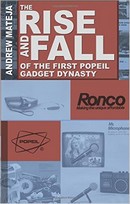
The Rise and Fall of the First Popeil Gadget Dynasty
Category:
Memoir
Publisher: Tate Publishing & Enterprises
ISBN-10: 162510362X
Pages: 255
Copyright: Aug 13, 2013
ISBN-13: 9781625103628
Price: $7.99 (eBook)
“The Rise and Fall of the First Popeil Gadget Dynasty” is the story of the two greatest gadget telemarketers of the 1970’s and early 1980’s – Popeil Brothers and Ronco. I explain in detail through first-hand recollections how there were not one, but TWO distinct and separate companies who were fierce competitors vying for the same retail shelf space every year.
With a constant barrage of consumer products being promoted around the clock on T.V. and cable networks, do you ever wonder where it all began? Do you remember products from a bygone era such as the Pocket Fisherman, Veg-O-Matic and Mr. Microphone and wonder what ever happened to them?
In The Rise and Fall of the First Popeil Gadget Dynasty, author Andrew Mateja delves into the world of the promotional product marketing with the original pioneers of telemarketing and reveals how they turned creative ideas into money-making holiday gifts sold by well-known retail chains across the country. Mateja discloses the internal differences between the two premier telemarketing leaders through his unique experience of working for BOTH companies during their heyday of dominating the TV airwaves with holiday "gadget" commercials. Nostalgia is plentiful in The Rise and Fall of the Popeil Gadget Dynasty with many familiar products not seen in decades and the origin of well-known familiar phrases such as "It Slices and Dices", "Isn't It Amazing," and "But Wait There's More."
Excerpt
* Scramble an egg within the shell!
* Slice and dice vegetables quickly and easily like never before!
* Carry your fishing apparatus in your pocket!
Making the impossible not only possible, but quick and simple…that was the impetus behind a wealth of innovative products, a.k.a “gadgets” that emerged from these two unique and innovative companies, Popeil Brothers Inc. and Ronco Teleproducts, both of which gained tremendous national familiarity, starting in the 1960s, through the medium of television.
Yes, Popeil and Ronco revolutionized television marketing. Their pioneering spirit left an indelible mark on the world of commercial advertising that would forever change the way uniquely original household products are marketed.
By taking live product demonstrations to the still new and expanding medium of television, Popeil and Ronco captured the hearts, the minds and the pocketbooks of millions of consumers around the world. Through their creative use of limited product placement, they skillfully directed customer traffic to specific retailers who participated in their sales program.
This remarkable marketing concept has endured for over 40 years with no sign of dissipating any time soon. Today, dozens of new products are introduced to the public 24/7 using Popeil and Ronco’s tried and true marketing principle of identifying a need and providing a simple solution.
Infomercials that currently dominate late night TV are a direct result and natural progression of the specialized media advertising perfected by these two companies.
Popeil and Ronco products were always highly demonstrable and value-priced to appeal to the consumer’s “impulse” psyche. They also refined the standard selling price by using psychological price points. A typical $10.00 retail item was advertised at $9.95. An $8.00 item was offered at $7.77. A $6.00 item sold for $5.88. Shaving a few pennies off the retail price appealed to the buyers perception of “a special deal”.
The impact of recurring advertising resonated with consumers long after the final commercial was aired. In fact, museums across the country proudly display memorabilia to provide a constant reminder of a bygone era.
The saga of these two rival “gadget” companies is part of Americana and an integral part of our cultural development. Products marketed more than 30 years ago are still familiar to many Americans in the pop culture lexicon as enduring symbols of creative ingenuity.
Today, many people still know the name Ron Popeil. He continues to sell innovative products to this day. Yet, decades of misinformation about the origin and marketing of his company, Ronco, have left out a much more detailed story that goes back well before Ron Popeil’s legacy, to that of his father and his uncle, whose company Popeil Brothers brought pitchmen selling gadgets and kitchen timesavers from the Boardwalks of Atlantic City to the major retail stores of Chicago and onto television.
Popeil Brothers were Ronco Teleproducts were two separate and distinct corporate entities. Each had their own specialized line of proprietary products. Over the years, the long history of these two companies has been lost in many historic accounts with Ron Popeil receiving credit for that which was really the story of his dad, a master inventor and salesman in his day, S.J. Popeil.
In Part One: The Popeil Years, I explain my association and provide background information on Popeil Brothers Inc.: the original promotional product marketing company founded by Samuel and Raymond Popeil, two brothers from Asbury Park N.J., who had been manufacturing and marketing kitchen gadgets for decades. As the company shifted direction from selling product via live in-store product demonstrations to a national advertising forum utilizing discernible television commercials, Popeil Brothers grew into the gadget kings of their era. The opening chapters look at the key players in the Popeil empire, their rise to the top, the quirky world of S.J. Popeil, and the products that made him famous. This section concludes, with the structural changes and internal mistakes that led to the demise of this great company.
Corporate personalities are discussed in relation to their involvement in the operational and decision making process. Successes and failure is also defined.
In Part Two – The Ronco Years, the transition from one “Popeil” company to another is covered, including how my own involvement came to be in not just one of the two gadget giants, but in both of them. Ronco Teleproducts, formed in the mid 1960s, promoted a diverse product line with annual sales volume greater than that of their predecessor. While overall program similarities existed, management, operational and marketing differences are examined along with their overall impact on the business direction of the company. Triumphs and embarrassments are also revealed in a story that traces the rise of Ron Popeil, his strained relationship with his father and his need to do things “his own way.”
The reasons for the collapse of Ronco are somewhat different than those experienced by Popeil Brothers. The specifics are conveyed in detail and how the “end” was actually the nucleus for a short term opportunity and a long range transformation.
In Part Three – The Final Analysis recaps the strengths and weaknesses of each company. Also the corporate distinctions of both are explored and analyzed to provide a true perspective as to why each has to be measured on their own merit, not by the commonality of their family name.
A “what if” scenario is proposed through the introduction of a composite company comprised of the positive elements of both Popeil Brothers and Ronco Inc. The intent is to demonstrate that each could have survived in their own right if they had utilized the successful attributes of the other.
Ron’s continued successes are also covered with their correlation to the events contained in this story. The pivotal point to his later infomercial success may indeed have been the avertable demise of his initial foray into the world of promotional marketing.
Throughout the book, if you’re old enough, you’ll recall the time-saving, hassle free inventions that defined a generation. For those who are too young to remember the late night Popeil or Ronco commercials, this is a look back at previous generation of practical, and some impractical, inventions that made for great gifts, handy household helpers and marvelous conversation starters. No, these products cannot compete technologically with the I-pods, I-phones and I-need a new gadget culture of today’s youth, but let’s see an I-pod scramble an egg within a shell.
|