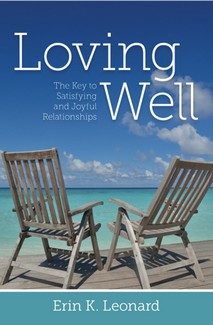
The health of our relationships is the most important aspect of our lives, particularly with our romantic partners and children. Feeling loved instills feelings of joy, comfort, peace, and contentment. When there is distance and conflict with our spouses and/or children, depression and anxiety intensify. This book describes how to maintain and sustain the closeness in these important relationships.
Currently, the divorce rate is over 50% and climbing. Too many people suffer from anxiety and depression, and not many people in committed relationships are physically intimate. Why? Because emotional closeness has been lost. Emotional closeness alleviates depression and anxiety. It leads to satisfying physical intimacy, and sustains joy, trust, and satisfaction in a person’s life. When there is emotional closeness in a marriage, there is a better chance the children in the family will be less anxious and depressed. A large portion of the population is emotionally unevolved, which means, they are less capable of sustaining emotional closeness in their relationships. If you lack emotional closeness in your current relationship, or with your child, this book will help you restore the love and closeness. If you are dating and thinking about making a commitment, this book will ensure you are selecting an emotionally available partner, as well as explain what emotional closeness is, and how to sustain it. If you are a parent feeling estranged from your child, this book will help you restore the bond.
Excerpt
The first step in establishing and maintaining emotional closeness is
respecting the other person’s feelings—even if you don’t agree with them.
The following is an additional example using the parent-child dyad. A
mom is busy working on her presentation, and her daughter, Molly,
suddenly appears in the doorway crying and yelling: “I hate school! I
hate first grade! I’m not going to first grade!” Molly’s mom is annoyed
at the interruption and the ugliness of the outburst, and she would like
nothing more than to send Molly to her room to calm down—especially
since first grade doesn’t start for three weeks and her presentation is due
the following day, but she gives it more thought and decides she must
put Molly’s feelings first. So, she sets aside her computer and attempts
to be empathic. In a soft and gentle voice, she says, “You are really upset
about going into the first grade.” Molly, says “Yes! I don’t want to go! I’m
not going!” Molly’s mom again honors Molly’s feelings and says, “You
are really upset. Tell me what the most upsetting thing about the first
grade is?” Molly softens a bit and says, “I don’t know who my teacher
is, and she might be mean. It might be too hard, and the day might be
too long, and I might miss you too much!” Molly’s mom hugs her and,
again, honors Molly’s feelings. She says, “Those are big worries. Very
big worries. I get it. I understand. I wouldn’t want to go either if I had
those worries. Those things are scary,” and she takes a few moments
to hug Molly and stroke her hair. She then says, “If any of those wor-
ries happen honey, I will help you. You will not be alone. I will help
you.” After a few more moments, she moves from empathy to problem
solving. She asks Molly if finding out who her teacher is and meeting
her at orientation would help. She also asks if finding out which of her
friends were in her class would help. She also reminded Molly that the first grade day was exactly the same length of the kindergarten day, and
she mastered that.
The difficulty is that empathy requires emotional sacrifice on the
part of the person who is being empathic. Empathy requires a person set
aside their own feelings so they can try and understand how someone
else feels, which means they must be emotionally evolved. It is much
easier and less sacrificial to tell a person they shouldn’t feel the way they
do or to tell them how to solve their problem. In the Molly example, the
logical argument would be to tell Molly that there are no mean teachers
at her school and that she aced kindergarten, so it’s ridiculous to for her
to think first grade would be too hard. Also, the kindergarten day is
the same length as the first grade day, and she handles that successfully
so she should have no problem with the length of the day. All of these
statements are logical, but if they are stated right away, they dismiss and
contradict Molly’s feelings and communicate to Molly that her feelings
are wrong, which leads to three serious long term problems.
The first problem with telling your child they are wrong to feel the
way they do immediately detracts from their self-esteem. When a child
continually hears that their feelings are wrong, they begin not to trust
their feelings. They also begin to be ashamed of their own emotions,
because they are told they are wrong. This has grave mental health reper-
cussions for the child.
The second problem is that this is a barrier to emotional closeness
between the child and the parent. If a child is constantly told that their
feelings are wrong, they will stop coming to the parent with them. They
will stop talking to their parent about their feelings, problems, fears,
worries, etc. because their parent makes it worse. “She never talks to me.
She won’t tell me anything,” are phrases I continually hear from parents.
It’s because they have not honored their child’s feelings.
Want to review or comment on this book?
Need a FREE Reader Membership?
Reviews for "Loving Well, The Key To Satisfying and Joyful Relationships"
Reviewed by Brittany Dalton
4/28/2018
I learned a lot while reading this book. The book is va all valuable road to a healthy relating and such easy read I will recomened this book to all my friends.
Erin Leonard’s book Loving Well: The Key to Satisfying and Joyful Relationships is a profound
read. Her writing has clarity, succinctness, and wisdom. I can’t tell you how much I learned from reading this slim book just filled with explanations and answers about the perils of love when attached to a person who can’t really attach!
Author Leonard writes, “Love is blind, and the price is high. The sensitive and compassionate get stuck with the detached and selfish. The emotionally evolved marry the emotionally unevolved, and the mismatch in emotional compatibility causes distance and pain in the relationship.”
The book explains that often a person who is unable to attach in a healthy way presents as powerful, confident, and capable. Yet, this is a facade that, unfortunately, often attracts quite sensitive people who can think about others as well as themselves. The emotionally unavailable one will almost gaslight the sensitive one through shaming, blaming, and dismantling identity into thinking the problems in relating are not theirs but the other. The author points out that the “unevolved person will minimize their taking responsibility for what they bring to the relationship, having a tendency to not just excuse their actions, but, as well, claiming their partner is oversensitive and that what transpired was blown out of proportion.” In a nutshell, unevolved people will not take responsibility for their actions and they project their issues onto others.
The message of the book reminds: “The words “I love you” mean nothing unless you can back it up.” Indeed, two people in a relationship absolutely deserve to know they are loved, respected, valued, and cherished with these dynamic, alive energies flowing to and fro which will allow each person to love deeply, selflessly, maturely, and sincerely. Indeed, Leonard asserts, “Cherish and love empathically and you will be loved deeply in return.”
The book reminds the reader that “narcissism, vanity, and arrogance are destructive tendencies that promote egocentrism and pathology.” How normalizing to read that “It’s ok to be self-critical, self-evaluative, and humble." Yet, Author Leonard believes too often too many people condemn these tendencies. “You think too much,” or “You over analyze,” are criticism frequently assigned to being self-reflective. Yet it is the self-reflective people in the world who are insightful and make efforts to be a better person. Looking in the mirror is a courageous and tough thing to do, and for some reason,” as the author reminds, it is under-valued.
The book is a valuable road map to healthy relating and such an easy yet profound read. I whole-heartedly endorse this book!
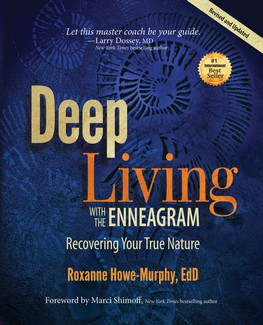
#1 International Best Seller,multiple award-winner, Deep Living with the Enneagram: Recovering Your True Nature, is like getting 3-books-in-one with a focus on what it means to live deeply.
In this book you’ll find:
*A radically compassionat
Lined and Unlined
Fun Tidbits and Trivia about each state.
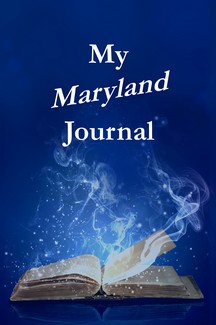
Journaling can help improve mental health and happiness, provide a creative outlet, and give a perfect place to record life's precious events. Grab your journal today.