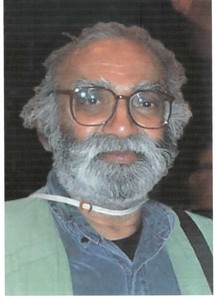
"Aside from being a story about love and friendships (and Life’s other perhaps rather “fickle” occurrences and banalities) this book affords the reader with much knowledge and various other “insights/opinions” regarding historical and political events, as well as interesting perspectives on philosophy, religion and more.
This book is long — perhaps too long for me, and for the delightfully simple style of writing — but it is a good read. But then there are many persons who prefer books that are lengthy and unhurried. I would recommend that they, as well as history buffs, and especially fans of Wignesan’s other books read this book. Well done, T. Wignesan!
— Adam Donaldson Powell, Norway, 2017., T., , Wignesan, book, books, author, authorsden, authors den">
A long novel about student life in Europe/West Germany during the immediate postwar years - mainly during the fifties - and the ravages wreaked on their adult lives and progeny. Review excerpt:
"Aside from being a story about love and friendships (and Life’s other perhaps rather “fickle” occurrences and banalities) this book affords the reader with much knowledge and various other “insights/opinions” regarding historical and political events, as well as interesting perspectives on philosophy, religion and more.
This book is long — perhaps too long for me, and for the delightfully simple style of writing — but it is a good read. But then there are many persons who prefer books that are lengthy and unhurried. I would recommend that they, as well as history buffs, and especially fans of Wignesan’s other books read this book. Well done, T. Wignesan!
— Adam Donaldson Powell, Norway, 2017.
"Ice in My Eyes Smoke in Yours" (A novel about erring student life in postwar Europe during the fifties and sixties) by T. Wignesan
Dedicated to "Ananga" ( a word in Sanskrit meaning "bodiless") who should never have been born had it not been for the deceptive waywardness of life in Heidelberg and West Berlin in which an inexperienced "ingenu" Hindu student gets inveigled into a tripartite relationship with a younger German fellow student and an American veteran serviceman painter.
Note on the "toile de fond" and the blurb by the Author:
The narration of events in this novel, set against the backdrop of moral and economic devastation during the early post-war years in Western Europe (sustained by the Marshall Plan and military overseership), should best highlight the enigma of the “clash of cultures” revealed in the behavioural patterns of the multi-ethnic characters thrown in together in a few of its principal cultural and artistic centres: Heidelberg, Berlin, London and Paris. And into this maelstrom of acutely conflictual and eddying emotions wanders an “ingenu”, an Asian, a Hindu by upbringing, an ex-colonial, hardly prepared for the blows and joys and humiliations and snares the anonymity of an “exiled” community of students and teachers proffer. These characters interact nonchalantly in academe only to find that “innocence” – the only precious possession the protagonist finds worth dying for – deserts the unwary and leads them to undo themselves for life. Call this “life”, call this “fate”, call it whatever you will, these students do not particularly differ one from the other even if they hail from the antipodes: sooner or later they destroy the lives they are responsible for or beget. Is this part of the growing-up process? Read and find out for yourself.
(c) T. Wignesan, Paris, 2004-2006.
"Ice in My Eyes Smoke in Yours". Allahabad: Cyberwit.net, 2016, 672p. (Published in a hurry without proper proof-reading soon after a life-threatening car accident in Créteil-Paris.)
BOOK BLURB [and the Note on the "Toile de fond" (who says it's not so?)] by the Author (don't tell me the Vanity Printer of the book knows English or anything much about Literature):
This story set mainly in the fifties of a beaten-down and divided Germany best depicts the state of a nation's changing mores and psychological plight in the aftermath of the country's meteoric rise to military might over Europe in the twenties and thirties. This is the Germany of the Wirtschafts-wünder boldly slipping out from under Allied military control while their cousins under Russian supervision strove in silence. We see nearly all the players evolve in the microcosm of academic life: the fresh German school-leavers suddenly jostling with non-Aryans Blacks from the States, the Caribbean, the Dark Continent, and Asians of all shades. In this clash of cultures, the older generation - wise enough not to show their disapproval - watched in dismay how freely previous sexual taboos in the wake of American largesse were whittled down. German elasticity in learning (in the arts, one could be enrolled for a doctorate right from the start) even brought droves of Jews back. Blacks on G.I. bills openly declared they were definitely not returning home with their families, the issue of open miscegenation. Many the indigenous girls - the off-spring of soldiers who never returned from the Russian, African or Western European fronts - thought otherwise, but their dreams of crossing the Atlantic often never came true. In this frenzied climate, Theson, the unidentifiable protagonist who stands probably for all such "transgressors" pays the ultimate price for this un-nameable sin. A casual encounter in one town leads to total disaster in another. All doors get slammed in his face. He becomes the victim of a world that might have existed had it not been for the War. Yet his fate is moulded by accidental circumstances. And it is precisely this particular destiny which displaces to advantage the other brighter world going on all around him. His story therefore is a-typical. Only the hard truth of meaningless behaviour gets to be recounted. Would you have preferred to read of a typical but inane tale of roses and rimes? Then, don't buy this book.
Excerpt Part of the stream-of-consciousness soliloquies of the protagonist Theson...
May 29, 1957: …have to think about getting a thesis director/supervisor…know no professor yet in the department…someone suggested i get hold of Derek Fogg for an intro to the big guns in the philosophisches Seminar…can’t bother him too much…i like the way he lectures…lively, informative, obviously in tune with his subject, emitting an air of being on top form nearly always and always ready with an answer…someone said he too is looking for a prof to direct or rather accept his dissert on Bernard Shaw…he’s been working on the man for years…he’s easily the most knowledgeable on Shaw, the fin de siècle and Edwardian period…guess he knows his Shakespeare too from the constant references he makes to the master and to Marlowe, Sheridan, Oscar Wilde, and Galsworthy … must admit i like the man…affable, courteous, always considerate and above all open, honest, and forthright…i think he likes me too…he liked my poems…his girl though German is curiously very English…she’s a demure, pretty brunette, not as tall as he is but cut in the same shape: not too lean, not too skinny, just right i’d say…she smiles naturally, looks innocent, at least without guile, no hang-ups or pretences…quiet, in any case, doesn’t say much whenever i’m around and doesn’t object to my presenting myself in their after all tiny Collegium Academicum room…she seems very content with her catch…wasn’t she a student of his, someone said…don’t know many students at the hostel… the place was meant mainly for scholarship holders and lecturers…Biswas Bose doing a doctorate in physics, Hoover, an American Black on a GI-bill, a fourth-year medical student, Klaus Figge reading politics…he edits the student mag and very well too (hey, not because he wants to put my stuff in it) and is willing to use the kind of stuff put out by the Beats but I wouldn’t…couldn’t realise the stuff he wanted was better, more contemporary, more experimental, but I prefer to let him have only the more staid and structured poems…as usual my judgment letting me down…again and again…how could anybody be so erratic…never seem to know how to take advice…never seem to actually act on advice that I might sometimes recognise as good…why is this…what self-inflicting alter ego presides over my destiny…what crime am I punishing myself for…what have I done that is so abhorrent in my childhood or teenage days that I can’t for the life of me excuse myself as the wayward behaviour of a less than conscious - for want of proper instruction – child or lad?...why do i continue to accept punishment without remonstrance…what masochistic streak infests my soul and makes me watch myself losing almost all the battles i wage whether for myself or for others?...why should i blame myself for simple unintended mishaps…innocent mistakes…what standards so high should a child try to achieve in life? to ape, to follow, to set himself? everybody makes mistakes…everybody lets himself or herself down at moments when there’s little time to reflect, little time to look ahead…should one keep hating oneself just because in one’s own eyes one has not been worthy of one’s own praise? why should only praiseworthy behaviour…exemplary behaviour be a constant ideal to achieve and maintain? can’t one stumble once in a while? when the impulses…sexual impulses…impulsive behaviour…anger…sharpness of tongue…the occasional pretence…the occasional unmeant need to hide the truth…take over the commanding spirit in one…how many many times the chance to avoid a mistake presents itself through someone else’s mouth…all that that would have been necessary is to have listened…you don’t have to thank anyone…the person who wants to help out with the information or the offer of a job or scholarship is not always doing it out of a need to obtain a favour in return…some people even if they don’t know you just wish to be of some use some help…just wish to see you through your difficulties or just wish for you to avoid a gaping trap opening up right in front of you…and you can’t even see this act as a non-partisan act…some people mean well…it’s not only you who means well…lots of others are like you too…and they are not reprehensible just because they want to see you safe…how proud can you be? how you look down upon others when you refuse their help! how mean can you be to your own self? to those yet unborn in your own image? if only you knew how to step back a little in these moments of choice…in these situations of taking the wrong road…and looking at yourself making an ass of yourself all in the name of headstrongness, pride, even hubris, of independence of mind, of freedom of spirit ( a whole lot of balderdash, a whole lot of bleeding sweet potatoes)…you might have saved yourself so much hell, so much torture, so much pain that others who depend on you wouldn’t have had to bear or others for whom you have become the cause and all….if only you knew how to tell yourself: everybody makes mistakes everybody suffers shame, yes, humiliation everybody hides his own failings everybody wants to be perfect…life is to be lived, not tested, nor stripped of its ups and downs, no, not everybody has to be made out to be a paragon in the image of some mythic mighty creator whether living lived or dead or non-existent…without descending into utter personal malfeasance you can live your life and not be ashamed of it just because you didn’t know how to make the most of it and above all without regrets…not everybody is a success in his own life in his own eyes…besides if everybody were to be perfect, faultless, totally intègre, irreproachable then everyman becomes a beacon unto himself and the world…only a few make it alright in their own and others’ eyes…the rest wallow in the dust dirt damnation and the dark all their lives and it does not matter at all if they too are part of the human race or just part of an unknown universal existence…does it matter anymore if the greatest displacement of humans in the western world took place after the triumvirate which toppled Hitler partitioned the German race and destroyed the lives of some third of the population, a population which had had to sacrifice itself to the Drittes Reich to feed the maws of a clique of power-hungry maniacs who used the same population at unbelievable cost to their own national status to decimate not only Jews, Gypsies, and their own dissidents but everybody else who stood by their own country’s borders… in their way and especially the likes of Poles, Czechs, Serbs, Hungarians, Rumanians, Bulgarians, Ukranians and most of all the Russians…nor is it any importance surely if the land that produced the greatest poet-playwright of all time can also produce a racist bulldog who cleverly saw to it that while the Masonic Indian leaders were being paid lipservice by HM’s government the sluices of slaughter were being turned loose by the creation of a new state: “The Land of the Pure”…and what about the senseless reduction of Dresden’s treasures and babies and helpless women to rubble? …nor is it of any moment that the imperial Japanese armies let loose on the eastern face of the Asian continent wrought their exemplary toll on masses of the unresisting sisters and brothers of the Greater East Asia pact…even if a Hernan Cortés by his dastardly act of subverting Montezuma and his empire put paid to the savage acts of diurnal murder in the name of sacrifice to the Gods, bloodthirsty gods…and the greatest crime ever committed in the name of a simple mythic game of domino ravaged an Asian country and people beyond human recognition, in the name of nothing more than multinational profit…all actually in the name of “i don’t like the way you look” or “i don’t like the god you choose to live by” …or as in the case of the Torquemedas: “ you the white man abused us for centuries till we turned colour even in our cells, now see what we can do to better you and inflict hell on someone else in all bestiality”…and so a over fifty year fight for independence with intifada stones against armoured cars rages…all in the name of conquer or be conquered…poor Gandhiji, how futile his words and actions sound in a world that swears only by its Gods…gods breed hatred for others’ gods, others’ ways and customs, others’ cultures and traditions, others’ skin and hair, others’ caste and class, others’ education and manners…despite all the hypocritical talk of ONE GOD, one human race, one faith and destiny and the so-called truth of the gospels whispered in the ears of some who couldn’t or wouldn’t write it all down for future explicateurs and so making the splitting of hairs a common practical excuse for those who wish to lead others themselves and thereby increase the number of gods and the danger of more conflicts, more pain, more dissension, more murders, more discontent, more vengeance, more of everything that the holier-than-thou poutings in the first place tried to ostensibly forbid and discourage…
…and so has Nature’s purpose been achieved: ETERNEL CONFLICT but in cyclic periods, the yearly seasonal changes to the Brahma Day…the YIN half of the year buckling under to the YANG half…to the Brahma Night…the BIG BANG to the BIG CRUNCH…no, no I’m afraid to the gobbling up of all matter…yes, even dark matter in the universe…and even universes through the blackest of BLACK HOLES…
…what we see is what we don’t if we do not have eyes…light travels in photons always on and on without impulsion without cause until the point of mirage until the point of no return until what we see is circumscribed by reflection of what we can see up to a point… up to a point which is only verifiable with eyes…NO ONE HAS EVER COME BACK…we can never know while still alive if all this and that exists when we are not here…in any case if we see at all when we are gone, it may not necessarily be what we see while still here…all the rest is conjecture…what we see exists what we don’t may still exist if we tried to see…Orion exists maybe when i see…does it exist when i’m not looking…does it matter that it exists for my life to be realised…astrologers would say yes…pork-sellers might think it a waste of time even to think of such a thing…all we know is that everything exists for us because we exist…otherwise there’s no reason why anything else should be existing…everything else that is we can see…there are things that exist even if we can’t see them…like dark matter…that is things exist also if we can deduce their existence…in other words we can see them because we have still eyes….but what happens when we are dead…do we continue to see…the answer to this question is simply we don’t really know…it’s no use if ONE Christ resurrects…can he return to say he actually resurrected…why can’t he…what’s the reason…don’t tell me it’s not the right time yet…that he had sent his emissaries to Lourdes…all that sort of “reasoning” is conjecture or sophistry…why should there be doubt…why can’t life be more certain more definitive…is it because it isn’t…that it’s just a mirage, an illusion MAYA…you know only what you see what you don’t see you don’t know is the only possible truth…all other forms of reasoning have given us the gods the faithful the priests the vendors of commodities without proof of the possession of goods…has created classes clergy castes medicine men voodoo women witches prelates churches synagogues mosques temples lodges cathedrals houses of prayer…in short power houses…in turn to keep the faithful orderly not anarchistic obedient herded together disciplined capable of communal life capable of promoting truth…their own truth…their own brand of life…their own insignia of race in the end for faith is race race is faith in the centre of masses leaving the periphery open to conversion even if races have sprung from the bushmen of the east African divide and all the languages from their click-clacking tongue-cluckers...
…are the rubai’yats attributed to Omar Khayyam right then…live all you can…And that inverted bowl we call the sky/ whereunder crawling coopt we live and die/lift not thy hands unto it for help/for it rolls impotently on as thou or I//
IS OUR GOD IMPOTENT?
…is the order of our universe the truth of our physical laws both discovered and yet to be discovered the constitution of the universe the chart along which it progresses who’s the author of this order…chance or choice…it’s just too rational to be either…except that the eternity of time without borders can produce anything any situation that can make things hang together and be orderly…alright it’s all an accident our universe our life systems…then what’s the answer to the origin of matter… is matter produced in such unending quantities…so we are back to square one: is what we see what is there really…all one can say is we will live for a certain time and then disappear for good and whether the rest of the universe continues or not to exist is not our concern not our balls after all…
…only we have to resolve the question of whether we should duplicate ourselves give vent to our urges our reproductive urges and create our semblables …an easier way out is to blow ourselves up…or perhaps the dirty work shall be done by some meteor of deliverance but that happened seventy million years ago and to no avail…or else we can wait it out till the temperature in the sun rises and scorches our earth and melts the artic cap and antartica underwear or better still wait four or five billion years more for the sun to expand and swallow us all up in the solar system…what about the rest of the galaxy and the other two hundred billion odd galaxies…does it matter since you or i won’t be around to witness the cataclysm…so goodbye universe and welcome back to earth…what’s in the larder for dinner…and when will i finish this book get it published and live the life of an author i’ve been looking forward to instead of whining under the weight of all sorts of Torquemadas piled up on my head…SO LONG AS THERE’S LIFE…ONLY SO LONG, mind you…
Professional Reviews
4Star out of 5: Review of Adam Donaldson Powell
4.0 out of 5 stars should best highlight the enigma of the ‘clash of cultures’ revealed ...
Reviewed in the United States on September 3, 2017
LITERARY REVIEW OF “ICE IN MY EYES — SMOKE IN YOURS”, a novel by T. Wignesan, cyberwit.net, India, 2016.
This is T. Wignesan's most ambitious published novel to date. The length of the book -- 672 pages -- immediately establishes for this literary critic his main question: do the story, the style and the execution of the writing justify such a long read?
In the author’s own “Note on the novel’s toile de fond”, he writes: “The narration of events in this novel, set against the backdrop of moral and economic devastation during the early post-war years in Western Europe (sustained by the Marshall Plan and military overseership), should best highlight the enigma of the ‘clash of cultures’ revealed in the behavioural patterns of the multi-ethnic characters thrown in together in a few of its principal cultural and artistic centres: Heidelberg, Berlin, London and Paris. And into this maelstrom of acutely conflictual and eddying emotions wanders an ingenue, an Asian, a Hindu by upbringing, an ex-colonial, hardly prepared for the blows and joys and humiliations and snares the anonymity of an “exiled” community of students and teachers proffer. These characters interact nonchalantly in academe only to find that ‘innocence’ — the only precious possession the protagonist finds worth dying for — deserts the unwary and leads them to undo themselves for life.”
The story itself is rather undramatically presented, in spite of the obvious underlying tensions and challenges to be expected from the given historical/political settings and intercultural relationships. The author could easily have made much more out of the various interpersonal relationships and events in this story, but he has elected instead to hold an even keel -- perhaps “dignified", in a stereotypical Asian face-saving way -- as is the personality of Theson, the protagonist. Although this book is written as a story being told by the author, rather than by the protagonist as first person, most of the narrations and descriptions of events and developments are designed to align the reader's sympathies with those of the affable, responsible and kind Theson. Wignesan does this quite effectively. Actually so much so that the book can easily be presumed to have been written partly from actual life (of that of the author himself, and/or that of persons or events known to the author).
In the first seventy or so pages this Reader sensed a bit of experimentation with stream of consciousness-style writing, which did not (in my opinion) work as well as I would have hoped. It was — to me — at times tedious, and textually so tightly wound that it was somewhat difficult to follow. And then in chapter three the T. Wignesan that I know from his earlier novels returned — not only in full force, but with a glory that even surpasses the level of writing that I have enjoyed in his work previously. From that point on, and until the very last page of this long novel, the author held my attention quite easily — in spite of the blanketing “laid back” undertone. Here it is obvious that the author’s adeptness both as a storyteller and as a journalist have been used satisfactorily (both as regards the more subjective reading experience, and to great technical advantage).
Aside from being a story about love and friendships (and Life’s other perhaps rather “fickle” occurrences and banalities) this book affords the reader with much knowledge and various other “insights/opinions” regarding historical and political events, as well as interesting perspectives on philosophy, religion and more.
This book is long — perhaps too long for me, and for the delightfully simple style of writing — but it is a good read. But then there are many persons who prefer books that are lengthy and unhurried. I would recommend that they, as well as history buffs, and especially fans of Wignesan’s other books read this book. Well done, T. Wignesan!
— Adam Donaldson Powell, Norway, 2017.
Want to review or comment on this book?
Need a FREE Reader Membership?
Reviews for "Ice in My Eyes Smoke in Yours(A novel about postwar student life in Europe"
Bonjour, Ron ! You are everywhere, all the time ! Can't get past you even if one dons the Halloween burqa. Just a word about Adam Donaldson Powell since you bring him up in more ways than one. Like you he's an extremely gifted and highly intelligent writer-critic, with the one difference: he's more polyvalent than you are, for the simple reason he's not handicapped, except to say he was a Vietnam War "conscience objector", so he holes out in Norway. The environment also breeds two different kinds of intellectually gifted writers: the mono-lingual and the multi-lingual. The exiled or voluntary expatriate writer might pick up another language or two: Hemingway might be conversant in Italian as an ambulance-driver (Farewell to Arms) or maybe fluent in Cuban Spanish (The Old Man and the Ocean), but the majority of writers, I assume, are mono-lingual (How many African languages does Toni Morrison know and is at home with?), barring those who studied at school or by choice at college level (like T. S. Eliot, Sanskrit at Harvard). It frees them from expending energy in diverse ways, so they are more productive. There is yet another category of very rare writer-poet: the polyvalent type like A.D.Powell. They excel in a number of specialties. Powell is a painter and an accomplished performing musician as well, and of course a very capable and necessarily slightly hampered critic. He doesn't belong in the New Criticism school given to backing up his pronouncements with detail, as you might glean. For instance, with this book under the scalpel, he doesn't see that there are two major shifts in the "points of view" that I employ all along: one, that of the author himself, and the other, that of the protagonist Theson.
Incidentally, for your information, I only very seriously studied "hispanic studies" in Madrid for about two years - not English or American literature. In Germany, I starved most of the time and only attended a few lectures. The rest of the time, I read (no TV distractions) and taught myself.
I do think Powell did the same.
OhWhile I wasn't thrown into a South Asian (23 Indians and Pakistanis in our industrial engineering department at the University of Wisconsin in 1966) melieu until graduate school, I was in the midst of the civil rights effort emanating from Madison, along with a huge contingent of New Yorkers following the beat movement, quickly turning into the hippie, and later yippie and yuppie movements.
But nothing like what you experienced in Germany. I'm sure it seemed like nothing short of cultural shock. And, studying English literature, you had a huge treasure chest of knowledge to try to read through in a very short time. Especially what came out of the war… The rise of Christian and atheist existentialism. What I became comfortable with after reading Sartre.
So I can see that your novel is rich in character and certainly rich in your own experience with indigenous Germans and their guilt, black GIs under the Marshall plan money, and Germans who taught "English" literature and therefore were quite English in their thought patterns.
And thinking. I put down Capt. Ahab's ravings after the first chapter of that nonsense. I tried to read James Joyce but it gave me a headache. I have found that I am not comfortable trying to discern the stream of consciousness of another human being and make any sense of it all. I certainly wouldn't want someone to try to make sense of mine, interspersed with all that sexual longing that male psyche is heir to, but the female psyche finds repugnant.
Adam Donaldson Powell has certainly sized up your work quite well. But only gives you four stars for this novel based on its exceptional length. Just stumbling through this excerpt tells me that reading the whole novel would take far too much of my time.
Available Now! Rated 5 ***** by readers and listeners.
Sweet Revenge is a romantic tale of a spirited woman and a lusty bloke. However, can they both fight against their bitterness for each other to free up their passions?
Fifth Book of the Southern Swallow Series. Nan Ya and his crew take a final adventure into a mythical Chinese universe and become entangled in court intrigue.