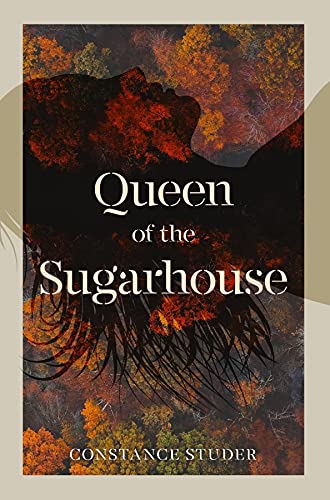
Queen of the Sugarhouse is a collection of nine stories about people dealing with challenging circumstances.
A registered nurse in ICU struggles to do the right thing after she makes a mistake. A homeless Desert Storm veteran grieves his loss of health and his father. Two women test their lifelong friendship when one of them undergoes a facelift. A marriage is tested by working with Rocky Mountain Rescue. An ER doctor's life is forever changed during one twenty-four-hour shift. A writer, committed to a psychiatric hospital after an accident, uses her writing to heal. A novice nurse learns her job while taking care of an elderly man. A waitress struggles with caring for her younger brother, who has muscular dystrophy. A daughter reluctantly returns home to care for her difficult m other on the Ohio farm where making maple sugar was their livelihood.
"Every person has a story," Carl Jung observed. "Derangement happens when the story is denied. To heal, the patient needs to rediscover his story." Constance Studer's people find healing in making pottery, taking photographs of objects not usually thought of as beautiful, in climbing mountains, in writing a novel. Healing is a process, a journey toward balance, connectedness, meaning and wholeness, rather than an outcome.
Professional Reviews
KIRKUS REVIEWS STAR RATING
Queen of the Sugarhouse
Studer, the author of Body Language: First Of All Do No Harm (2009), explores life in medical institutions from varied perspectives in nine stories.
The collection opens with "Mercy," about an intensive care nurse who administers the wrong drug to a patient; the narrative digs beneath the everyday turmoil of life on the ward to examine the vulnerability of medical staff and how they deal with the trauma of their work in their personal lives. The following story, "Shelter," introduces Benjamin Tyler, a destitute Desert Storm veteran who's being treated for a debilitating illness following his tour of duty, and "The Isolation Room" is about a writer who's committed to a mental institution after cutting her wrist. "Special Needs" follows Maria, a waitress whose brother, who has muscular dystrophy, is institutionalized; when she becomes pregnant, she wonders if she carries the gene that caused her sibling's disease. The title story closes the collection with a poignant tale of a daughter nursing her mother through chemotherapy following a mastectomy. In these stories, Studer, a retired nurse, offers a dazzling and nuanced portrait of the medical world. She's unafraid to depict the horrific but also acutely sensitive to the complexity of the psychology at play in this challenging environment. Her affecting prose allows readers to experience hospital life through the perspectives of patients as well as medical staff. On occasion, the characters' observations can be wistfully poetic, as in "Mercy": "I've seen the signs of imminent death: a blurring of the body's boundaries, a gentle and sometimes not-so-gentle fusion with surrounding elements, a sigh into oblivion." In other instances, the author offers up brutally vivid tableaux, as in "Shift": "The boy's heart floats in a pool of blood like a drowned kitten. The doctor's hands continue to work inside the chest." Studer successfully captures a spectrum of emotion in these tales, including her characters' matter-of-fact approach to death:"It's raining outside. The toddler is very dead."
A brilliant, if harrowing, set of tales featuring sharp prose.
I Made My Boy Out of Poetry is a powerful literary vision of rare scope, beauty and emotional intensity composed of stories and poems that flow in and out of each other like the most lucid and articulate of dreams. These are portraits and studies of
My second book is about a boy who has Asperger's Syndrome and is bullied to the point to where he shoots up his school. I have divided the excerpts from it into three parts: Before, during and after the shooting.
As deafness, illness, and demonic forces close in around him, Ludwig van Beethoven must summon his faith and genius to complete the Missa Solemnis—a sacred masterpiece he believes could bring divine light into a darkening world.