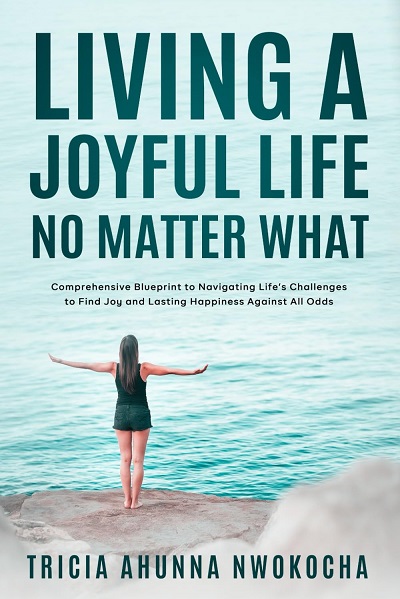
Kindle Edition
Amazon
www.amazon.com
Category:
Psychology
Publisher: Independently published
Type: Non-Fiction
Pages: 120
Copyright: Sept 24,2023
ISBN-13: 9798862341072
Price: $9.99 (eBook)
The book is a "Comprehensive Blueprint to Navigating Life's Challenges to Find Joy and Lasting Happiness Against All Odds."
Are you feeling dissatisfied with your life and wish to transform it for the better?
Do you feel many negative things are going on in your life, and would you wish to change your approach, become much more positive, and live happily?
If you can relate to the above or similar questions, you have come to the right place, so keep reading.
This book will teach you how to navigate life’s challenges to
find joy and lasting happiness against all odds!
We all wish to live a life of fulfillment, yet often, external circumstances and our internal struggles seem to stand in the way. However, I want you to know that there is still hope that you can live a joyous life no matter what life throws at you, and this
book is here to teach you that.
Probably you are wondering… What does it take to live a joyous life despite challenges? Am I the problem? How do I change my mindset concerning how I face challenges? How can I rise and overcome challenges? If you have these and other related questions, you are in luck because this book will comprehensively explore the principles and practices of living a joyous life.
From it, you will learn:
The power of a positive mindset to change your view of the world
How personal growth and fulfillment lead to a joyful life and how to
achieve them
Ways in which appreciation and gratitude can help you develop a positive outlook on life and appreciation for everything
How to build meaningful relationships for a more fulfilling life
How to embrace resilience and adapt to change
How to let go of comparison
How to set and achieve personal goals and overcome obstacles
How to live a balanced and healthy lifestyle
How to let go of societal expectations that hold you back
And so much more!
Even if you can’t remember the last time you were happy and your life was on the
right path, that of growth and fulfillment, trust this book to teach how to navigate different times and seasons in life, living your best life!
Scroll up and click Buy Now With 1-Click or Buy Now to get started!
Excerpt
Living a Joyful Life No Matter What
Comprehensive Blueprint to Navigating Life’s Challenges to Find Joy and Lasting Happiness Against All Odds
Introduction
Are you feeling dissatisfied with your life and wish to transform it for the better?
Do you feel many negative things are going on in your life, and would you wish to change your approach, become much more positive, and live happily?
If you can relate to the above or similar questions, you have come to the right place, so keep reading.
We all wish to live a life of fulfillment, yet often, external circumstances and our internal struggles seem to stand in the way. However, I want you to know that there is still hope that you can live a joyous life no matter what life throws at you, and this book is here to teach you that.
Probably you are wondering…
What does it take to live a joyous life despite challenges?
How do I change my mindset concerning how I face challenges?
How do personal goals and personal growth help in living a joyous life?
How can I rise and overcome challenges?
How do healthy relationships with others help me live a joyous life and improve my relationships?
If you have these questions in your mind and more, then keep reading because this book will comprehensively explore principles and practices of living a joyous life, including:
Understanding the power of a positive mindset to change your view of the world
Ways in which appreciation and gratitude can help you develop a positive outlook on life and appreciation for everything
How to build meaningful relationships for a more fulfilling life
How to set and achieve personal goals and overcome obstacles
How to live a balanced and healthy lifestyle
And so much more!
Let us begin this journey to self-discovery and find out how you can live your life to the best of your abilities and find that radiance of joy within you to live a great, happy life.
About the Author
Tricia Ahunna Nwokocha is a dedicated and dynamic author who enjoys writing and making a profound positive impact on the lives of people who cross her path in life.
She attended the University of Phoenix, where she earned a Master of Science in Nursing/ Nursing Informatics Degree and obtained her Doctor of Nursing Practice/ Educational Leadership Degree at American Sentinel University.
She is a Registered Nurse, Researcher, and Nursing Professional Development Practitioner residing in California, United States of America.
In her literary pursuit, Tricia’s happiness and inspiration are drawn from experiences providing exceptional nursing services to those who deserve them in the form of implementation of evidence-based research, quality improvements, education, clinical practice, assessment of learning needs, closure of clinical practice knowledge gaps using best practices, engagements of clinician expertise, patients and family preferences while contributing to improving knowledge, skills, and abilities of healthcare staff in the reduction of adverse events for quality care and clinical outcomes.
Her compassion and dedication to working in healthcare have made a difference in the lives of those she served, including nursing students, and the professional development of healthcare providers.
Dedications
I am dedicating this book to my lovely children, Chibuzor Oluo and Emmanuella Ijeoma Anucha, who always encourage me to be myself, pursue my dreams and believe in myself. Chibuzor and Emmanuella are kind, fun to be around, and brilliant. You both are the best gift in my life.
In addition, I dedicate this book to my mother – Nwangwa Agnes Nwaeke; uncle – Mark Nwosu; elder sister Joy Nweke; and elder brothers – Nnamdi Nwokocha and Kenneth Nwokocha, for their ongoing prayers over me.
Acknowledgments
I would like to acknowledge and thank the following friends, relatives, acquaintances, and relations for their positive affirmations, inspirations, and encouragement towards me in various forms:
Dr. Richi Nwankwo, Kashiim Marion, Bridget Ozomaro, Lawrenta Elogie-Agbayekhai, Osita Nlemchukwu, Bobby Oduali, Nelli Oduali, Abdullah Sundiata, Dr. Survival Eyong, Dr. Chukwuka Okekenta, Ayibapriye Rhoda Owi, Christian Uzoma Nwachukwu, Fortune Omas and Neka Legbara.
Table of Contents
Introduction
About the Author
Dedications
Acknowledgments
Chapter 1: The Power of a Positive Mindset
The Importance of Living a Joyful Lifestyle
Role of Mindset in Shaping Experiences
Identifying Limiting Beliefs and Thought Patterns
Cultivating a Positive and Resilient Mindset
Chapter 2: Pursuing Personal Growth and Fulfillment
Self-Discovery and How it Relates to Growth
How Personal Growth Leads to a Joyful Life
Setting Meaningful Goals and Aspirations
Embracing Lifelong Learning and Self-Improvement
Chapter 3: Building Meaningful Relationships
Nurturing Authentic Connections with Others
Cultivating Empathy and Compassion
Handling Conflicts and Fostering Forgiveness
Chapter 4: Embracing Resilience and Adapting to Change
Power of Daily Rituals
Building Resilience: How to Live a Joyful Life No Matter What Might Be Against You
Transforming Adversities into Growth Opportunities
Chapter 5: Showing Gratitude and Appreciation
The Transformative Power of Gratitude
Practicing Gratitude Exercises and Techniques
Chapter 6: Letting Go of Comparisons and Focusing on Yourself
How Constant Comparison Deprives Us of Joy
Breaking Free from the Trap of Comparison
Practicing Self-Compassion and Self-Love
Chapter 7: Cultivating a Healthy and Balanced Lifestyle
Learn to Do Everything in Moderation
Learn to Relax And Manage Stress
Know When to Quit
Let Go of Worries and Regrets
Be Proactive
Savor the Journey of a Joyful Life
Juggling Work, Family, and Personal Time
Chapter 8: Letting Go of Societal Expectations That Hold You Back
Societal Expectations
How to Let Go of Societal Expectations
Finding Your Community
Conclusion
References
Chapter 1: The Power of a Positive Mindset
One of my favorite quotes has always been:
“A positive attitude gives you power over your circumstances instead of your circumstances having power over you.”
This short quote perfectly captures the power of having a positive mindset and how it helps shape how you view the world.
But what does having a positive mindset entail?
A positive mindset means you are optimistic about the world and expect good things to happen.
On the other hand, a negative mindset means believing that bad things are bound to happen to you and that the world is inherently bad.
Life has always had and will always have challenges and negative experiences. We often have moments when we feel out of our depths when facing obstacles and challenges. We may encounter things that make us question our whole existence, and thus, if you are easily moved and affected by your circumstances, you will have a challenging time living a happy, joyful, and content life. Therefore, learning to change your perspective is the most significant aspect of living a joyous life because having such a mindset helps you find joy in living despite challenges.
Many people believe living a joyous life means living free of challenges and obstacles or having many possessions and friends. However, that is not true. The core of happiness and joy is within you and begins in your mindset.
But before looking at how to change your mindset to live a joyful life, let us look at why living a joyful life is essential.
The Importance of Living a Joyful Lifestyle
So, you might be sitting there wondering why I want to live a joyful life. Perhaps you might feel as though living a joyful lifestyle is overrated and that you are perfectly fine as you are.
But there are countless benefits to a joyful life; below are some.
Physical Well-Being
One benefit of a joyful life is that you are in a better place physically. I believe that physical well-being and a joyful life are intricately linked and can lead to the other and the other way around.
When we feel contented with our lives, we care better for our physical body because we see the benefits of a joyful existence. Happiness also helps combat stresses in our bodies and boosts our immune system, thus making us less likely to be sick.
When you are happy, you are also in a great frame of mind and are receptive to healthy eating and working out, which also lead to good health. Therefore, if you wish to live a very long, healthy life, then happiness is crucial.
Better Emotional Health
Another reason why living a joyful lifestyle is important is because our happiness is also linked to our emotional health. You will feel much better about yourself when you feel satisfied and contented. You will have better emotional regulation, connections with people you love, and mental health.
Better emotional health helps us create better relationships with others around us. Interpersonal relationships are a significant factor in our happiness since we are social beings. Thus, when you are happy, you have better social support, more friends, and strong bonds with loved ones.
You Have Healthy Self-Esteem
When you are happy, you will feel confident and have a healthy belief in your identity. You will feel as though you can do anything that you want to do. You feel you can achieve all your goals; you are confident that you are of value to the people around you. With this high self-esteem, you can face challenges in your life boldly and pursue anything you set your mind to.
You Prime Yourself For Success
Many people often think that being successful is what they need to live a joyful life, but that thinking is twisted backward. Success doesn’t make you happy. Instead, being happy is what primes you for success. As mentioned, you feel more positive about yourself when you are happy. Therefore, you have a higher chance of acing job interviews, higher productivity, and performance, and show greater commitment to whatever you set your sights on.
Thus, as we can see, many positive things we wish to achieve in life are easier to do once we are happy, and the journey to happiness begins with a change in mindset.
With that said, let us see how your mindset can affect your life and make you live a happy life or a miserable one:
Role of Mindset in Shaping Experiences
You might be questioning how exactly changing your mindset helps improve your experiences. Research shows that your mindset plays a significant role in determining your life’s outcome. Our mindset could be what either helps us take advantage of opportunities to live a better life or let opportunities pass us by. If you take advantage of opportunities that come your way, for example, you will be happier as you get closer to achieving your goals. On the other hand, letting opportunities pass you by can leave you feeling bitter and regretful, all taking away your happiness.
Let us look at other ways that your mindset determines whether you live a joyful life or not:
Mindset Determines Our Actions
The first significant role mindset plays in our lives is determining our actions. For example, there are two people stuck on an island. One believes that they are doomed for all eternity, and thus, nothing they do matters. So, they become a sitting duck, waiting for help but not doing anything. The other understands that the situation is not ideal but strongly believes that if they try to stay alive for as long as possible, they increase their chances of getting help. The second person would more likely be rescued because, due to their positive mindset, they will likely take action to ensure their survival. They will look for food, create shelter, and even begin to write down messages of help around them, hoping they will be spotted and rescued.
This story shows us the power of mindset. When you believe something can be overcome, you will act to ensure it becomes a reality. If you believe you are doomed, you will also act, or not act, accordingly.
Our actions determine happiness because they determine whether we will pursue that career we want, follow through with that goal we deeply desire or build relationships with the people we want. Taking action towards things that make you happy starts in the mind.
Mindset Relates to Resilience
Another reason why a change in mindset is essential is because it relates directly to resilience. When you believe you can do something, you will easily bounce back whenever you experience setbacks and, thus, can achieve greater things in the long run.
Resilience makes us more likely to overcome challenges, which builds our confidence in our abilities, enabling us to achieve much more. You will likely be much happier when you are confident in your abilities and work towards achieving your goals.
As you have learned, the mind is a powerful tool from which all we achieve in life starts. Thus, it would be best to shift away from learned helplessness and pessimism to thrive and live joyfully. But how do you do that? Well, you need to identify your limiting beliefs.
Identifying Limiting Beliefs and Thought Patterns
To be on the path to changing your mindset, you need to identify the thought patterns and beliefs that create a negative mindset within you.
Here is how to do it:
Look Back to Your Upbringing
The first step to identifying your beliefs and thought patterns is to reflect on your upbringing. How did your parents raise you? Did they make you believe that you can do something, or were they often the people who discouraged you from doing anything? Did they make you feel confident and loved?
Our upbringing shapes our thought patterns in ways we may not even know. If your parents made you doubt yourself, for example, then that self-doubt will follow you into adulthood and remain there until you address it. Thus, dig into your past to determine the root cause of your limiting beliefs or thought patterns.
Assess Your Behavior
Your limiting thought patterns and beliefs show themselves in your actions.
Are you constantly saying negative things about yourself and others?
Do you constantly avoid taking action because you are afraid to fail?
Do you struggle to express yourself to others and instead resort to passive-aggression?
Do you constantly self-sabotage a good thing?
If any of the above are true, you have a limiting and negative mindset that stops you from living a happy life.
You’ve Never Done Anything out of Your Comfort Zone
When you look back on your life, have you ever done anything that made you feel challenged? Sometimes, a sign of limited self-belief is the unwillingness to challenge yourself beyond what you are comfortable with. Thus, in your life, if you have constantly played it safe, whether it is your career, your love life, or never done anything you wanted to do simply because it needed you to get out of your comfort zone, then that could be as a result of the fact that you do not believe in yourself enough to take risks.
How, then, do you overcome these beliefs and limiting thoughts?
Cultivating a Positive and Resilient Mindset
Knowing how to change how you view yourself and the world is crucial to overcoming negative thought patterns and limiting beliefs. This is the first step towards living a joyous life despite the challenges that you may face. With a positive and resilient mindset, you will easily begin to think and act in ways that lead you towards your goals.
So, here is how to build a positive and resilient mindset.
Deepen Your Self-Awareness
Self-awareness is the first step towards knowing how to build a resilient mind. Take time to tune with your body, emotions, mental well-being, and thoughts. When you understand yourself better, you will begin to understand your weaknesses and strengths.
Spending some time meditating can be a good place to start:
So, at the end of each day, find a quiet place and sit by yourself.
Sit upright with a straight back, relax, and clear your head of major thoughts.
Close your eyes and focus your mind on your breathing. Try to breathe in and out of your belly. Deep breathing helps you calm down and focus on your emotions as you inhale and exhale. As you exhale, let go of negative thoughts and emotions. Allow yourself to feel the negative emotions, but then, as you exhale, let them go. Learning how to feel negative emotions but not react to them helps you to be in control of them. Negative emotions create negative thought patterns, taking away any joyful thoughts you may have. So, learn to feel and then let go of negative emotions.
Do this for about 5-10 minutes each day in the beginning, and then increase the time the more you do this.
Identify and Leverage Your Strengths
Another way to cultivate a positive mindset is to focus more on your strengths and use them to build yourself up for better things. Your strengths are some of the best tools that you can use to create the life that you want and be happy.
Take a piece of paper and begin to write down things you are good at. You could separate the strengths into Skills and Character strengths. Under Skills, write down your skills and talents, and don’t limit yourself. Whatever you believe you are good at and have been told you are good at, could you write it down? Whether the skill is as major as being able to work out complex mathematical equations or being able to cook.
Then, on Character strengths, write down parts of your character that you like. The character strengths could be that you are very determined, focused, kind, loving, difficult to anger, etc.
When you have a negative mindset, you tend to focus so much on your weaknesses and everything you are not good at, which makes you miserable. But, once you start writing down what you are good at, you realize that it is not all gloom, which builds your confidence and makes you feel good about yourself and life.
Learn to Perceive Obstacles as Opportunities
When you train your mind to view problems and challenges with curiosity rather than defeat, you create a path for living a joyful life. How, you ask? Because when you view problems as hindrances, you will often easily feel defeated and weak, and you will then focus more on your weaknesses and things you did wrong to encounter such problems. This way of thinking creates a cycle of negative thought patterns, which suck any joy in your life since you constantly think negatively.
However, when you view problems and challenges as opportunities, you become more confident in overcoming them. You take pleasure in trying to come up with solutions to problems and learn how to be passionate and perseverant, two qualities that give your life meaning. And as we know, we tend to be happier when we have meaning and purpose.
Shift Your Focus to Progress, Not Just the End Goal
Another way to cultivate a positive mindset is to stop the obsession with just the end goal and instead turn your attention towards the progress you are making towards whatever goal you have.
Having goals is very important if you want to live a joyous life, but simply focusing on the goal can suck the joy out of living because you will let so much of your life pass you by. Besides, when you focus solely on the goal, does that mean you have wasted time if you don’t achieve it? When you choose to focus more on the journey and the progress you are making each day toward your goal, you will find that there is a lot of joy to be found in the journey. You will find fulfillment in the lessons you learn toward your goal, the relationships you create, the skills you learn, and the character you build.
A positive mindset sets you on the path to living a happy life because it helps you shift your perspective on things around you. This doesn’t mean not feeling negative emotions or having negative thoughts but viewing them as opportunities to build yourself. A lot of happiness can be found if we change our perspective. Once you have a change in perspective, you then create the path towards personal growth and fulfillment.
Chapter 2: Pursuing Personal Growth and Fulfillment
We cannot talk about living a joyful life without discussing personal growth, goals, and ways in which they help you develop a proper identity.
Self-Discovery and How it Relates to Growth
You must understand yourself and what matters most when seeking a joyful life. A journey of self-discovery will help you know more about who you are, what matters most to you, and how to live this way.
According to psychologists, Self-discovery involves three major points in life:
Finding out personal potential
Finding out our purposes for living
Finding opportunities to act on the potential and purpose
Self-discovery is critical in living a happy life because it helps us understand our purpose and desires in life, thus enabling us to live meaningful lives.
Through self-discovery, you learn:
How to take better care of yourself
How to find fulfilling goals and targets for yourself.
How to choose a career that gives your life meaning
How to create and maintain good relationships with people you meet
More clarity on what you would wish your future to look like
What are your strengths and weaknesses? You know what works for you and what areas you need to improve.
It helps other people, too, as you will make your discovery to becoming a better friend, co-worker, or member of the community.
As you can see, through self-discovery, you will be able to know more about yourself and make choices that lead you to live that happy life you desire.
Here are guidelines for self-discovery that will be of help in your self-discovery journey
Personal Reflections – You need to always look back at your past actions, thoughts, and previous goals to understand who you truly are. Even when you no longer align with what you did, reflecting will help you know what is important to you now. Start journaling your thoughts and reflecting on them. You can learn more about who you are and who or what matters most to you by writing down your thoughts and then reading and reflecting on them later.
Discover your passions, strengths, and weaknesses – Find out what gives you energy and makes you look forward to waking up each morning. On the other hand, also become aware of what drains your energy so you can let those go. As you discover your passions, please learn more about your strengths and use them to improve your life. Also, understand your weaknesses and strive to improve on them. To identify your strengths, find out about things that align with what you are good at doing and what you enjoy doing the most. You can easily write down your strengths when you figure out what you are good at and enjoy doing. For example, if you are good at artwork, your strengths lie in creativity. On the other hand, you might enjoy socializing, which means your strength lies in communicating well with others. Most times, there will be an overlap between what you enjoy doing and what you are good at, and that’s okay. When it comes to weaknesses, find out things that people do not like about you, and you also don’t like about yourself. When you discover parts of yourself that you and other people around you do not like, you can find ways to minimize or eliminate them.
Learn to visualize – You must have a vivid image of who you are and want to be to pursue your goals properly. Visualizing what you want becomes easier when you know who you are and what you desire from life.
Silencing your inner critic – You cannot go on a self-discovery journey if you are disabled with doubt. You need to be able to silence that voice of criticism so that you find the confidence in yourself to take risks.
Be purposeful – You need to be purposeful in your actions, thoughts, and who you associate with. Your purposeful actions are what lead you towards things that matter to you. Be more proactive, take risks, and try to do new things, new things that challenge and excite you at the same time. Don’t be afraid to make mistakes; always seek to learn from them. Another element of being purposeful is having habits and routines that lead you toward your desired life. Develop habits and create routines that support your personal growth and help align you more with your goals.
Once you have gone through the journey to self-discovery, you are in a better place to pursue personal growth.
How Personal Growth Leads to a Joyful Life
Pursuing personal growth helps you live a fulfilled, accomplished life because it adds several things to your life.
It Gives Your Life Meaning and Purpose
A desire for personal growth adds a lot of meaning to your life. Knowing each morning when you wake up what you want to do, how you want to do it, and when you want to have accomplished it gives you a sense of direction in your life. This sense of direction is what makes you happy. Living aimlessly without direction can lead to misery because you will not know what you are doing or where you are going. This lack of direction makes anything you do seem meaningless, or anything goes.
Helps Move You Towards a Life You Desire
Personal growth enables you to live a fulfilled and accomplished life by moving you toward your desired lifestyle. Your personal goals will often be tied to improving your life. When you have a goal to study up to college, you increase your chances of earning more, thus affording the lifestyle you desire. When you have a goal to start a business and work towards building it to be the best that it can be, you are increasing the chances of earning more money and, thus, being able to afford everything you want. When you are always looking for career opportunities, you are increasing your chances of living the joyful lifestyle you desire because you are working in areas of your interest.
You Discover Your Passions
Discovering your passions is another way of finding much joy in your life. Passions give our lives a greater sense of purpose and meaning, thus making us all happy.
In pursuing a happy life, then, do not limit yourself. Try different things, be bold, and put yourself out there. Be willing to leave your comfort zone and do things that scare you. You find what gives your life meaning only through trying out different things.
Through self-discovery, you discover what things set your soul on fire and focus on pursuing them for that sense of fulfillment and purpose.
Once you understand the importance of personal growth in happiness, you will find it easier to set and achieve meaningful goals.
Setting Meaningful Goals and Aspirations
Goals and aspirations are essential to living an accomplished and fulfilled life. But they should not just be any goals or aspirations. Your goals need to align with your desire for a happy life. They need to be meaningful and directly impact improving your life, thus making you happier. So, how do you go about setting these meaningful goals and aspirations?
Set Goals That Motivate You
The first rule to setting meaningful goals is setting goals that motivate you. This means that the goal or aspiration needs to be important to you and add value to your life. The goal must align with what you think will improve your life and make you happier. For example, if you have less interest in material possessions, setting goals that only relate to gaining material possessions might not motivate you enough. Thus, ensure the goal aligns with your values and deepest desires. It would be best if you had a great desire for the outcome of the goal. It would be best if you wanted to see the bigger picture from your goals so that you set them. Ensure that your goals align with what is important in your life. You desire to be happy, so what goals motivate you towards a happy lifestyle in the future? When you set goals concerning your biggest priorities, you narrow them down to specific goals. Additionally, when you set goals and align them with your biggest priorities, you increase your commitment to them, thus increasing the likelihood of success.
Set Goals that Excite You
As you set goals that motivate you, also ensure that you get a sense of excitement and joy in pursuing your goal. The goal should not only motivate you, but it should always give you excitement when pursuing it. For example, let’s say you have a financial goal to save $70,000 by the end of the year. Now, on its own, this is a very motivating goal. Who wouldn’t want an extra $70,000 in their account around Christmas? So, you will feel motivated to save the money, but what is it about the saving process that gets you excited?
To ensure you are excited about saving money, having a target of what you want to do with the money can add that layer of excitement. You could, for example, save to buy that car you’ve always wanted or surprise a loved one with a gift they always wanted. By adding a simple, exciting end to the goal, you change the goal into an exciting journey.
So, each time you set a goal to improve your life, ensure there is an exciting edge so that you always stay on course.
Know Your Intrinsic and Extrinsic Goals
There are two types of life goals, each of which relates differently to our well-being.
Intrinsic goals relate more to goals aligned with our sense of being, values, and emotional wellness. These goals could be goals to build more social connections or goals for personal improvements and helping others.
Extrinsic goals, on the other hand, are much more external and culturally defined. These goals could include finding a great job, earning more money, acquiring wealth, and having a great physical appearance.
Both goals are very important if you want to live a happy life. The two goals are interlinked. Still, you need to separate the two types of goals so that you know what you want from your life. Intrinsic goals align with greater satisfaction and happiness since they come from within us and align with our values and beliefs. So, you can set them first. However, remember that you cannot be completely happy within yourself if you are not great on the outside, hence why extrinsic goals also matter.
Thus, when setting goals for a happy life, begin by setting intrinsic goals, then set extrinsic goals that align with your intrinsic goals.
Know How to Achieve Your Goals
Without an action plan, your goals are meaningless and are mere fantasies. You can come up with all intrinsic and extrinsic goals and set all kinds of goals that motivate and excite you, but if you do not plan how to achieve them, you will never truly be happy.
Once you have set your goal, write down individual steps that move you toward that goal. For example, let’s return to that desire to save $70,000 for something important. To achieve that goal, you need to outline how you intend to achieve it.
So, once the goal is set, then you could write down the steps as follows:
Step 1: Open a separate account for this specific goal.
Step 2: Cut back on needless spending to save more money.
Step 3: Look for ways to increase my income to have more disposable income.
Step 4: Begin making small, incremental deposits to the bank account.
And so on. You can then cross out each process step once you have completed it. This way, not only are you working towards the goal you set, but you are also watching the progress towards the goal. With each progress towards the goal, you will be happier.
Always Visualize the Outcome
As you pursue your goals, remember to visualize them so that you can easily overcome obstacles in your journey toward your goal. Visualization is imagining what you want to achieve in the future as if it were to happen today. Visualization is more than mere fantasy because you do not daydream about how things would be in an ideal world. Instead, you engage your whole self in imagining the goal and priming your mind and body for the imagined outcome. In visualization, you do not just think of the outcome but also imagine the possible paths to reach your desired outcome.
But how do you visualize properly?
Decide what your goal is. Pick one goal or dream that you have and focus on it. The focus should be so vivid that you can see and feel it. It would be best if you felt yourself overcoming whatever odds you encounter.
Create steps that lead you toward your goal. Once you visualize the goal, begin to visualize the steps you will need to take to achieve it. For example, suppose you are set to overcome the fear of social situations. In that case, the first steps to overcoming that will be starting to meet new people as frequently as possible, then beginning to meet people in crowds, then learning how to speak in front of family and friends, and so on. It would be best to map each step toward your goal in your visualization.
Make visualization a habit. To ensure that you remain focused on your goal, visualize daily. Consistency in visualizing your goals strengthens your visions and increases your desire to achieve that goals.
Write it down. Remember always to write down your visualization process to reinforce the desire to reach your goals.
Embracing Lifelong Learning and Self-Improvement
Living a joyful life means achieving meaningful goals and constant self-improvement. When you decide to live with a sense of curiosity, you are in for a wonderful, joyful existence.
Embracing a lifelong learning process and self-improvement makes you more likely to live a joyful life because of several things:
By continually learning, you are making yourself much more adaptable and, thus, more likely to fit into the world around you easily and comfortably, two things that make you happy.
New knowledge can sometimes help us find ways to live our lives more fully.
A sense of curiosity means that you will often take more calculated risks, pursue your goals, and do anything to improve your life.
New information can shift your perception of the world, whether positive or negative. New positive information can give you insights into what you can do to live a happier life, while negative information can guide you on what NOT to do to live happily.
So, how, then, do you build that sense of wonder to last a lifetime?
Accept Your Shortcomings
The first step towards lifelong learning and self-improvement is to accept where you fall short. Accepting the areas you fall short in creates the perfect mentality to become curious and learn more.
The awareness to accept and work on things you are not good at means that you will create a lifetime of learning opportunities. Whenever you come across something you do not understand or fail at, rather than look around for someone or something to blame, you will try to learn about it instead.
Expand Your Worldview
Our views, beliefs, values, and attitudes are all shaped by the world we grew up in, the world that we see. The world we know shapes our thinking, perception, feeling, and actions. As we grow, we become restricted by the boundaries of the world we grew up in and that we experience. This restriction is what, then, limits how much of the world we get to learn and experience.
Thus, to create a lifelong sense of wonder, expand your worldview. And one of the best ways to expand your worldview is through reading. Read more, read about places, other cultures, and other people. Read even on cosmology and astrology; learn of worlds beyond the solar system.
Then, integrate with people with different backgrounds and cultures from you; socialize with all kinds of people, regardless of their background. Be curious about why they view the world the way they do.
This fascination with worlds beyond your own helps you develop a sense of wonder and curiosity. You understand that the world is much faster than we experience, which helps you develop a lifelong fascination with discovering new facets of the universe. This curiosity gives you boundless feelings of joy because you are constantly discovering new things, adding new knowledge, and thus, feeling a new sense of accomplishment. That sense of accomplishment is what gives you joy.
Question Your Beliefs
As you continue to learn more about the world, there is no doubt that some things you will learn will shift your perspective. You will learn things that will make you question your beliefs, values, and understanding of the universe. When your core belief is shaken, it can feel disorientated, making you feel a sense of unease, which might make you unhappy.
However, if you embrace a desire for self-improvement throughout your life, questioning your beliefs will allow you to embrace the new information and use it to challenge yourself for the better. Be open to learning, unlearning, and relearning things. Continually evaluating and challenging yourself to improve is the key to a joyful life because it helps you remain up-to-date and adapt to the ever-changing world.
However, know that unlearning what you already know is a long process, and thus, be patient with yourself as you work towards erasing bad beliefs you may have had.
Be Open to Feedback
Learning involves getting feedback on what we know or understand. Therefore, open yourself to getting feedback on what you know. As you learn more about the world, surround yourself with mentors, advisors, and other people who will be willing to give you feedback on what you know. Having a community, whether it be peers or mentors and advisors, is essential in improving not just your ability to solve day-to-day problems but also in how to identify new and better opportunities and how to improve yourself.
Be Open To Changing Your Mind
It is hard to accept what we know is wrong, but to live a long and happy life, always know it is okay to change your mind. Whatever we know and understand about the world is always changing, whether for the better or worse. Sometimes, we might be fed inaccurate, watered-down, or false information. Thus, it would be best if you learned how to have an open mind to be open to learning more about the world as best as possible.
Seek out opinions directly opposite to yours, acknowledge alternative viewpoints even if you do not agree with them, and constantly ask yourself, ‘What if I am wrong?’. This way, you never stop seeking knowledge and learning and constantly challenge yourself to improve.
Having goals, embracing personal growth, and developing a constant desire for self-improvement are all necessary to live a joyful life because they all teach us one thing – always strive to be the best we can be. You constantly improve your life through the journey when you have goals to work towards. Even if you do not achieve said goal, whatever you learn, pursuing it will improve your life. Meanwhile, developing an unending desire to learn means that you will constantly find new ways to improve your life, and these constant improvements will make you feel contented and fulfilled in your life.
As you embrace goals and aspirations, remember to build meaningful relationships to help you in your pursuit.
Chapter 3: Building Meaningful Relationships
As Chapter One mentions, meaningful relationships with the people around us are crucial to a joyful lifestyle. While I mentioned that being happy helps you have meaningful relationships with people, you also tend to become happier when you develop better relationships with others, especially loved ones.
Thus, happiness and meaningful relationships all feed into each other. To have meaningful relationships, you must be happy with who you are, your life, and the people around you. To be happy with everyone around you, you must have better and more meaningful relationships with them.
So, how do you go about developing meaningful relationships with others?
Nurturing Authentic Connections with Others
Developing close relationships with people means understanding how to build authentic connections with them. All healthy and meaningful relationships, even with family, begin with genuine connection. You will not automatically get along with your parents or siblings. There has to be a genuine desire to connect deeply with each other for the relationship to be meaningful, and here is how to establish that connection:
Show Your Authentic Self
The first step towards connecting authentically with others is to show your true self. You will never have genuine connections with the people around you when you constantly wear a mask. Therefore, sit within yourself and put forward your most authentic self. Many people can tell when you are trying too much to be someone you are not.
Be honest about your intentions and wants. Be honest about what you wish to get from the relationships you want to establish. This way, you allow people to know the real you as soon as possible so that they can decide whether they want to connect with you.
Now, when I say show your true self, note that I do not condone being an asshole to people simply because you believe that’s just who you are. If you have major personality flaws, work on them rather than letting them be simply because ‘that is your authentic self.’ You will never create meaningful relationships if you let your flaws drive people away. Begin to work on them, and when you meet people you want to connect with, let them know of this personality flaw.
However, also let them know that you are working to be better at managing it or getting rid of it altogether. That is how you show your authentic self despite personal flaws. Hiding the flaw and pretending not to have it is what is inauthentic.
Show Genuine Interest in Others
Genuine connections with others are founded on reciprocity and mutual interest. When you meet someone new, show a genuine interest in what they are saying. Ask questions and actively listen to what they are saying. Maintain eye contact and ensure that you listen to them more than you speak so that you can truly understand what they are trying to say.
When you show genuine interest in people, you make yourself trustworthy in their eyes, which helps lay the foundation for building a stronger social connection. Additionally, when you show genuine interest in someone, they feel valued and appreciated and, thus, become more likely to reciprocate.
Therefore, when you meet someone new, take the initiative and show interest in them first. Be curious about them and invite them to share their thoughts with you. Do not wait for someone to show interest in you first. Take the initiative, and if they do not show appreciation for your interest with reciprocity, then move on. Life is too short to spend in one-sided relationships.
Be Vulnerable
Being vulnerable and open is very difficult, but you must be vulnerable to build deep and meaningful relationships with others. Being vulnerable means sharing your thoughts and feelings with people, even if they disagree. It means letting people in on some of the things you hold dear to you and letting them know what it’s like to be you.
Vulnerability allows for connection at a deeper level because it deepens feelings of trust between you and others, thus leading to authentic and genuine connections.
Be Present
When you establish a connection with someone, the least you can do is be present each time you interact. Many connections fail because people begin to drift off when they are with someone with whom they want to connect. Instead, participate in conversations fully and be in the moment with someone else. Put your phone down and focus fully on the other person.
Nurturing authentic interest is the first critical part of building meaningful relationships that will make you happier. The next step is knowing how to cultivate compassion and empathy.
Cultivating Empathy and Compassion
Empathy and compassion are two critical parts of any meaningful human relationship. Empathy refers to the ability to understand what other people are feeling emotionally, see things from their point of view, and imagine yourself in their position. Compassion, meanwhile, refers to showing genuine concern for someone and helping them. These two feelings are closely linked and are among the most important components of any meaningful human relationship.
So, how do you cultivate them to develop close bonds with others and become happier?
Learn to Recognize Micro Expressions
Compassion and empathy both often require you to be able to recognize what someone else is feeling. Thus, to develop empathy and compassion, try to recognize what someone else is feeling. Could you pay close attention to the eyes? Are they bright and sparkly, or are they dull and lifeless? What about the rest of their face? How are they holding their lips? Do they have a grimace? Are their lips tightly together?
While many of us can tell how someone feels from their facial expressions, it becomes harder when someone masks or conceals their emotions. Thus, to truly empathize with someone, you must pay close attention to their micro-expressions. This close attention to detail is the first step towards acting compassionately towards them since you cannot help someone if you do not know they are okay.
Meet More People and Listen to Their Experiences
Another way to build empathy and compassion is by meeting more people and simply trying to view the world through their eyes. Paying attention to other people, even if you have no relationship with them, allows you to be moved by their experiences. This is true even if you aren’t actively ‘trying’ to empathize with them. By paying attention to them, you develop a more concerned feeling for them and become more involved in their experiences.
When you do this often enough, you will find it much easier to connect with people who matter much more. The heightened feelings of empathy and compassion you develop become evident when you sit down with people you are more connected with.
Be Less Judgmental
I understand that sometimes it can be hard not to judge, but if you want to be more empathetic to people you care about or if you want to show them more compassion, then you need to learn to be less judgmental.
Rather than assess someone based on tiny bits of information or a single action, give them the benefit of the doubt. Try not to conclude about someone until you have listened to their side of the story. Through preserving judgment until you have listened to someone, you become much more empathetic to them because you see things from their POV. You understand the world through their eyes, which helps you develop much more compassion for them, allowing a relationship to flourish.
Additionally, ensure that you also ask them questions. Empathy and compassion are not built on mind reading. Sometimes, you might empathize with someone just because of their appearance but don’t hesitate to ask for more when that doesn't happen. So, if you have difficulty getting someone’s POV, it’s not because you don’t care. It could be, but if this is someone you want to connect with, then it could simply be that you need more context and more information for empathy and compassion to build. So, never be shy to ask questions and engage with people with curiosity to build feelings of empathy.
Be of Help to Others
Empathy and compassion are best represented through action. So, to develop your feelings of empathy and compassion towards someone even more, help them with whatever they are struggling through. When you help someone, you put yourself in their position, which helps you see things from their POV. So, to build your empathy and compassion, extend your help to people in need.
And the best way to help others is through acts of kindness and service. Many recent studies have found a link between acts of kindness, service, and happiness. Research shows that helping others helps reduce stress, improves our emotional well-being, and even helps us improve physically.
Thus, nurturing relationships with others shouldn’t just be something you do out of obligation. It is essential that you actually look out for the people in your community to improve your happiness level.
And how do you display these acts of kindness?
Below, we look at some positive psychological techniques of acts of kindness.
Paying it forward means doing a good deed to someone just because you can.
Volunteering – This is one of the most common acts of kindness and service, and for good reason. Volunteering involves actively serving others and helping solve a societal need.
Donations – Whether it is money or items you don’t need, making donations means giving others something they need without asking for anything in return.
Sending messages of gratitude – Hand-written notes of gratitude to people who have helped you or people whom you admire is yet another way to make their day. Sometimes, that note is all someone needs to feel appreciated.
Below are some ideas on random acts of kindness that you can do:
Offer to babysit for a friend even when they never ask for it.
Offer to pick up groceries for your sickly neighbor or an older person.
Offer to cook for a friend or a family member who might be too busy to do it themselves.
Send inspirational quotes to people that you love.
Lend a listening ear to someone who needs it.
Always be ready to smile and brighten up someone’s day.
Give up your seat to an elderly, sickly person, or pregnant woman.
Let an older person or disabled person jump the queue if they are unable to stand for long or wait around.
Help someone find their way back if they are lost in your neighborhood.
Randomly bring food to homeless people.
These small acts of kindness are incredibly effective because they help improve the quality of another person’s life. In turn, when this other person is happy, then it also makes you happy.
As you cultivate compassion and empathy, remember that you cannot build meaningful relationships without learning to resolve conflict with others.
Handling Conflicts and Fostering Forgiveness
The best and happiest relationships aren’t those that do not have conflict but rather those with which all parties involved have learned how to handle the conflicts and forgive.
So, how do you learn how to resolve conflict and foster forgiveness?
Learn How to Communicate Your Thoughts and Feelings
Many people often resort to being passive-aggressive instead of speaking directly about how they feel; this is how resentment builds in relationships and leads to a breakdown of the whole relationship. To have meaningful relationships that will make you happy, ensure that you also learn how to address grievances as soon as they arise.
You and the other people you are connected with must learn how to express your grievances openly and honestly but in a caring manner. So, when you feel something bothering you, do not shout or blame the other person or ignore it. Instead, try to communicate your feelings as best as possible and with great care and compassion. When you speak about an issue, tie it to how you feel. ‘I feel as though you are hiding something from me,’ not ‘I know you are hiding something from me. What is it?’ The second statement is much more accusatory and can lead to further conflict.
Focus On the Behavior, Not the Person
When you have issues with people close to you, remember that the issue needs to be addressed, not the other person. So, when resolving conflict, always address the specific behavior and not direct insults or rants at the other person. The relationships you develop will thrive when the people around you do not need to be defensive or angry when in conflict. They will be a lot more willing to change and address an issue or behavior if the issue or behavior is the one addressed and not who they are as a person.
Hold Off Conversations until Strong Emotions Subside
Strong emotions such as anger or frustration can make us say or do things that could damage our connection with the other person or people. Thus, for better conflict resolution, when the emotions are extremely high, and there is a risk of poor judgment, decide to hold off addressing the issue until all of you involved have your emotions under control. You can have productive conversations when you control your emotions more.
So, take a walk or try to find a place, relax, and take some deep breaths to gain control of your emotions. You could also write down your frustrations. Writing helps you relieve stress and can help you understand what you are thinking and gather your thoughts.
Learn to Let Things Go
Once an issue has been resolved, it should stay resolved, and learn to let things go. Do not hold onto an issue after saying you are okay with how it was resolved. When you learn to let things go, you also learn to forgive your partner and look for a way forward. Holding onto grudges will only lead to worse outcomes in the future because whatever you hold inside, you will always rear your head each time there is a disagreement.
And if you don’t feel any better after an issue is resolved, let the other person or people know so that all of you can continue addressing it until it is fully settled to your satisfaction.
Learn to Ask For Forgiveness
Learning to ask for forgiveness is crucial to building and nurturing meaningful relationships. Forgiveness is a critical part of all relationships that we have. You will get on the nerves of people you love, and they will get on your nerves, too. Thus, learning to ask for forgiveness is important to keep the relationship thriving.
To ask for forgiveness, first, let the other person or people understand that you did not intend to hurt them or make another mistake. Let them know you still love and cherish them and will work on the issue. Then, ask them to forgive you for what you have done. Asking for forgiveness lets the other person or others know you still value them and the relationship. It also lets them know that you are still trustworthy. Once they forgive you, stick to your word and avoid repeating the same mistake.
On the other hand, I also know how to forgive. When someone close to you makes a mistake or hurts you in any way, acknowledges the wrong they did, and asks for forgiveness, learn to let go of any grudge you had after they wronged you. Once they have asked for forgiveness, let any interaction that comes afterward begin on a clean slate.
Meaningful relationships have a direct impact on our happiness and fulfillment in life. Thus, learning how to create deep, meaningful, and empathetic relationships with people is important if you want to live a joyful life. Through these relationships, your life develops meaning and purpose, thus making you happier and more contented.
And as you create meaningful relationships, ensure that you also work on being resilient and adapting to change.
Chapter 4: Embracing Resilience and Adapting to Change
Life is never a constant. From when we are children to when we die of old age, we will have witnessed major changes in our lifetimes, some good and some bad. Therefore, to appreciate the beauty of life and be happy fully, you need to embrace these changes and adapt to them so that you do not feel frustrated with the changes. This is true even for the small changes occurring daily or every few weeks or months. Rather than simply sitting and complaining about change, you must build resilience and learn how to adapt.
But before beginning on resilience, let us look at how daily rituals help us improve our ability to build resilience.
Power of Daily Rituals
Before looking at resilience, we first need to understand how powerful small and consistent habits are in helping us feel more in control of our lives.
I noticed my life improved when I found a routine that worked for me, and I know this will also work for you.
Daily rituals or routines help give your life a sense of predictability and stability. These daily rituals then help us manage stress and reduce anxiety. Since you always know what you will do when you wake up each morning, you don’t lose sleep over what you will do once you wake up.
These habits help build resilience because they help us develop a sense of direction. Through that understanding, we can approach any challenges that come our way better because of a sense of anticipation, perhaps because this challenge has disrupted our ritual.
Daily rituals seem like small acts but are critical in shaping our evolution. From a morning routine to a sleep-time routine, these habits help give our lives a solid foundation. When we are properly anchored, we can face and overcome anything that comes our way.
Building Resilience: How to Live a Joyful Life No Matter What Might Be Against You
Resilience is one of the best characteristics you can ever build because it helps you overcome all odds in pursuing a joyful lifestyle. Resilience makes you overcome all challenges and odds, always have hope for the future no matter how bad the present is, makes adapting to changes easier, and reduces the stress of facing obstacles.
So, if you want to live a joyful life no matter what comes up against you, then resilience is what you need, and here is how to build it:
Practice Acceptance
The first strategy for building resilience is to stop denying and practice acceptance. Many people think that to be happy, you must try to avoid as much of the negative reality in your life as possible and only focus on the good. Unfortunately, this sets you up for a life of failure and disappointment. It sets you up for an unhappy life because if you fail to acknowledge the challenges in your life, how do you expect to overcome them? Does that not mean the challenges will always be present since you never address or overcome them?
So, to build resilience, begin by accepting the situation as it is. Only through acceptance will you be able to take the next important step.
Focus On Overcoming What You Can Control
Once you have accepted the challenges and obstacles, the next step is to focus on working on things you can control. When you encounter a problem that is beyond your control, then learning how to work on what is within your control is crucial. When you focus on overcoming obstacles or challenges you can control, you build your ability to overcome any odds to reach your goal of living a joyful life.
For example, you most likely lived through the height of the pandemic. For many of us, this was one of the biggest challenges of our lives, and it caused us a lot of stress and anguish. Depression and other mental health issues shot up during the lockdown period. Thus, with no choice but to adhere to lockdown and quarantine measures, we can say the challenges of lockdown were beyond our control. Since it was government-imposed, we had no choice but to adhere to it.
This period has led to social isolation and mental health crises—however, our resilient found ways to live through the period and even thrive. Many people started picking up old hobbies that they had neglected; others created strong bonds with their families that they failed to create previously. Some people took the lockdown period to learn new skills and get to know their neighbors. Others even found romantic love in lockdown. All the positive things people did during lockdown are a good example of how focusing on things within your control despite prevailing challenges can help you live through and overcome adversity. Living in lockdown with a virus spreading fast was not in any of our plans. However, those who quickly adapted to this change were more resilient and lived much happier than those who spent all their time complaining in lockdown.
This is just one example of focusing on things within your control to thrive during a major challenge. A simple action such as thinking positively and acting can help you live through some terrible times and emerge a better and even happier person on the other side. Thus, try as much as possible not to spend all your time complaining whenever you face a challenge and instead think of how you can adapt and then thrive through the challenges.
Reach Out to Others
When going through a tough time, connecting with friends and family can help you get through the situation better. Social connections during challenging times can ease stress, boost our mood, and help us feel grounded amidst all the change and disruption.
And the people you put forth don’t need answers to your problems. Finding someone to listen to you without judgment or hug or reassure you with a smile can make a huge difference in how you feel. This boost in mood could be what you need to believe that you can overcome whatever you are facing.
Therefore, while we have learned that withdrawing during tough times is normal, try maintaining as much human connection as possible. I know you never want to be a liability to associates and loved ones during such times. But you are not a liability to those who love and cherish you. If anything, they are more likely to feel privileged that you believe them more to open up to them.
In the same breath, avoid negative people. While human connection is important during tough times, you shouldn’t look for just any human connection. The connection has to be positive and full of empathy, compassion, and kindness. Therefore, stay away from people who seem to fuel negative emotions when stressed. People who magnify your problems, criticize and judge you will leave you feeling more stressed and anxious, and all these negative emotions will leave you feeling defeated in the face of the challenge.
Practice Self-Care
It is very easy to let go of yourself when going through a difficult time, and I empathize with you when you feel this way. However, if you are going to build your ability to stand up to any challenges and thrive, you need to learn how to take better care of yourself even when under stress.
Self-care means different things to different people, so do whatever makes you feel better about yourself, whatever makes you feel relaxed and sleep better. Better self-care helps reduce the risk of burnout and serious medical conditions such as immune and digestive issues and the risk of cardiovascular diseases like stroke or heart attack.
Examples of activities that you could turn to as self-care to build resilience include:
Mind and body relaxation techniques: Relaxing activities such as meditation, prayers, or yoga help you relax and relieve stress. By relieving your body of stress, you are making it very hard for whatever issues you face to get to you since you will always be combating them with a fresh mind.
Eat well: There are no specific foods that I can tell you that build resilience. Rather, it would be best to eat a balanced diet as recommended by experts to improve your mood and energy levels, all of which help you feel more energetic to face your problems.
Sleep well: Adversity wears you down; without proper rest, it will eat into your resilience quickly. So, ensure that you sleep well each night to rest well and clear your mind of whatever you are going through. The complete detachment from your problem that sleep brings helps you reset your mind and reenergize you to face your problems once again. In short, sleep recharges resilience.
Deal with Your Problem One Step at a Time
If your problem is too big to deal with it all at once, then to stay motivated and resilient, learn how to break it down into smaller, more manageable steps.
One of the ways that I deal with big problems is often in three simple steps:
Write down the problem and possible solutions.
Research more on the problem I am facing
Seek advice from a trusted friend or loved one
These three simple steps have never failed to help me overcome a problem that seems too big. Of course, you don’t need to follow through all the steps as I do and in that same order, but I think the first step, where you write down your problem, can help you understand what you are facing and, thus, helps take the edge off of the problem.
For example, let us say that you have just lost your job and are now looking for a new one. Looking for a new job is one of the biggest problems that we face in our lives. To work through the issue with resilience, write down what kind of job you ideally would like next and where you would like it. Once you know what job you want and where you want it, then this will help you know how to write your CV or cover letter to suit that given job. You will also research the position you are applying for to know more about what is required and, thus, understand what it takes to get hired.
You can also seek advice from friends or a trusted loved one on writing your CV or cover letter, and you will find the job-seeking process a lot more manageable.
When you break down your problems into small, manageable parts, it becomes easier to deal with them. This then means learning how to face and overcome the obstacles you encounter.
Always Be Hopeful
Maintaining a hopeful and positive outlook amid a crisis is difficult, but remember that we often blow the size of our problems out of proportion. By being hopeful, you will always have a positive attitude that will help you keep your mind on the good things you have going on in your life, giving you the confidence and courage to overcome any challenge.
As you build resilience, you must also understand how to view adversities as opportunities.
Transforming Adversities into Growth Opportunities
As you embrace resilience, learning how to turn your adversities into growth opportunities is essential. To live comfortably and joyfully, you must learn to view whatever you face as prospects rather than obstacles.
So how can you do this?
Practice Perspective Shifting
When faced with adversity, the negativity that comes with the challenges can bog us down and make us not see the bigger picture. However, with a simple shift in perspective, an insurmountable problem can become an opportunity for your biggest growth.
Therefore, whenever you encounter adversity, ask yourself, ‘What can I learn from this experience?’ or ‘How can I use this challenge to grow myself?’ These two questions are simple enough, but they go a long way in changing a negative situation into a situation for growth for you.
A shift in perspective also helps you develop a growth mindset. A growth mindset is the belief that there is a lot of growth to be experienced in life, even amidst challenges. It is the belief that things will always work out for the better and acting accordingly. Therefore, when you develop a growth mindset, you move and act with the belief that things will be okay in the end, and usually, they always end up being okay. And that is how you continually live joyfully.
Grow Where You Are
The misguided belief that somehow out there is a different life for us is why many people never fully get out of the rut that they are in. When you believe that someone will come and save you and take you to a life that you ‘deserve,’ then you are not inclined to act in any way to improve your situation. There is nothing quite as frustrating as seeing people resign to their fate.
Instead, to build on the obstacles you are facing, leverage your current situation so that you can pull yourself up. When stuck in a given situation, ensure you learn how to thrive. For example, when job seeking becomes a job, use your free time to learn new skills, pursue a hobby, or create meaningful social and professional connections. Learn about other areas besides the area in which you specialized.
When you learn how to grow where you are, rather than waiting for some miracles to take you where you feel you will grow, you will recognize so much opportunity and potential where you are.
Never Compare Your Situation with Other People’s
To see the opportunities for growth in your adversity, never compare your situation to someone else. Even if two people are going through a similar adversity, the opportunities for growth for each will be very different. When you consistently compare your situation to someone else, you could develop an imposter syndrome, making it very difficult to overcome your situation since you feel like you cannot do it.
Your approach to adversities and how you perceive them are unique to you, and thus, always look at your situation through your own eyes and not someone else’s. Of course, you can take inspiration from people who have faced similar adversities to you and overcome them, but drawing inspiration should not turn into outright copying them. Overcome your adversity in ways that work best for you.
Be Patient
As you try to turn adversity into opportunity, be patient when things don’t instantly work out. Learn to be comfortable with failed attempts and embarrassing situations. Learn to sit with your failures because things will almost always never work out as we anticipated on the first try.
Use each failure as a reason to learn even more about yourself and the obstacles you are facing. When you use failed attempts as lessons, your eyes and mind will open up even more to available opportunities.
Be Curious
And finally, always maintain a sense of curiosity throughout your adversity. A curious mind is a mind that will never be held captive, no matter what it encounters. So, take every opportunity to learn more about your situation and try to understand what you are encountering beyond what you see. Choose always to be inquisitive no matter the problem you are facing. When you cultivate a sense of curiosity around the problems you face, they cease to be problems and become areas of growth for you, whether the growth is learning more about the world around you or simply gaining more confidence in your ability to overcome the obstacles.
Resilience is one of the most important traits to live a happy life. Resilience helps you overcome all odds and enables you to thrive no matter what is against you. Resilience gives you the belief that a happy life for you and the people you love is around the corner, and thus, you should never stop trying.
And as you learn to be resilient, you should also learn to be grateful for all that is happening in your life.
Chapter 5: Showing Gratitude and Appreciation
One of the quotes about gratitude that resonates with me is by Canadian actor Will Arnett:
I am happy because I’m grateful. I choose to be grateful. That gratitude allows me to be happy.
I’ll be the first to admit that at the very beginning, I could not think of just how transformative gratitude is until I started practicing it consistently and intentionally. When I started showing more gratitude, a new world opened to me – a better, happier world. I understand that life, and especially life right now, has many things that worry us, but if you want to live a happy life, then learning to see the good in the life you are living now is crucial.
When I say gratitude and appreciation, I mean doing more than simply saying thank you. I am talking about shifting your mindset completely to seeing the good in your life right now, fully embracing and appreciating it.
You might be wondering how gratitude and appreciation help you live happier. Well, let us look at how.
The Transformative Power of Gratitude
Gratitude and happiness are two fields that have been researched a lot by scientists, and thus, aside from simply being a state of mind, they are science-based emotional states from which many theories about how they relate to one another have been formed.
For example, researchers in Positive Psychology found a strong correlation between gratitude and happiness. Common expressions of gratitude included being gracious about their past, for example, positive childhood memories, or being gracious for the present, which means taking time to be present and enjoy it and being grateful for the future, which showed optimism for what was coming.
Another study by two psychologists, Dr. Michael E. McCullough and Dr. Robert A. Emmons of the University of Miami and the University of California, respectively, separated people into two groups. One of the groups was asked to write down things they were grateful for each week of the study, while another group was asked to write down something they were irritated about during the study. A third control group was asked to write down what had affected them throughout the week, with no stress on negative or positive. Ten weeks later, Dr. Robert A. Emmons and Dr. Michael E. McCullough found that the people who penned what they were grateful for were hopeful and felt well about their lives. They even took better care of their bodies.
These two studies show a strong correlation between happiness and gratitude. This is not a direct cause and effect, but theories on why showing gratitude increases happiness suggest that the two are linked. One of the theories suggests that gratitude helps you focus more on the positives in your life. When you show gratitude and appreciation for even the tiniest things, your mind focuses more on the positive things in your life. This focus on the positive could be what increases your level of happiness. By focusing on the positives in your life, you then increase the level of positive emotions that you feel, making you happier. When you are happier, you take actions such as taking better care of yourself; you eat better, take better physical care of yourself, and foster better relationships, all of which compound your level of gratitude and increase your happiness.
Now that you know the transformative power of gratitude, how do you begin to practice gratitude?
Practicing Gratitude Exercises and Techniques
To practice genuine gratitude and appreciation, you must approach it intentionally. Thus, if you have never been one who has shown much appreciation for your life and things or people in your life previously, you will not simply wake up one day and say thank you and think that you will experience the transformative power of gratitude. It would be best if you cultivated intentionality. It would be best if you built the habit of showing gratitude. Once you create the habit, you change your mind to see more positive in the world around you, making you happier.
Below are some ways to build a habit of showing gratitude.
Write Down what You are Grateful For
One of the easiest and most popular exercises to help yourself become more grateful is through journaling. Write down what you are grateful for consistently and intentionally, and you will begin to appreciate your life a lot more.
Now, I would not suggest that you write in your gratitude journal each day because sitting there and trying to think about what you are grateful for each day can feel tedious. Of course, if you feel like you can write down each day, by all means, do it, but never try to force gratitude, as that will be counterproductive. Write down what you are grateful for because you want to do it, not because it is something you feel you should do. Sometimes, some days pass without much, and you can only write down how grateful you are to be alive so many times before it loses meaning. So, select a period that works best for you, say a week. Each week, write down what you are grateful for the previous week. This way, you begin to inject much more positivity into your life as you constantly remind yourself of the good in it, thus helping you become happier.
Show Gratitude Often
While you are grateful for what is happening in your life, never forget to show gratitude to others around you. The more you express gratitude to others, the more you feel better about having people in your life and the role they play in your life. It is through appreciating the people around you that you also experience happiness.
So, recognize and appreciate whenever a coworker, a spouse, a sibling, or a service worker does something that makes your life easier. Learn to say ‘thank you’ genuinely and regularly let your loved ones know you appreciate them. Give genuine compliments to people around you.
On the other end, also be receptive to gratitude. When someone says ‘thank you’ to you, don’t brush it off with something like ‘Oh, it’s no big deal’. Instead, take in the gratitude and appreciation. ‘You’re welcome’ or ‘It was my pleasure’ go a long way in letting the other person know that you acknowledge their gratitude. This will make them more confident and willing to show their gratitude often to you in the future, thus creating a gratitude loop that benefits everyone involved.
Show Some Self-Appreciation
As you build your gratitude habit, remember to show appreciation. Gratitude means appreciating something for just the way it is and not taking it for granted. It means appreciating even the smallest parts of it. Now, if you can do that to others, why shouldn’t you do that to yourself? It can be argued that you must start appreciating yourself much more to truly appreciate the world around you and build your gratitude habit.
Self-appreciation means appreciating our lives, experiences, personalities, and thoughts. It means acknowledging the good within you even when fully aware of your flaws and weaknesses. It means being aware of the little things that make you feel good about yourself and appreciating those.
To learn how to appreciate yourself, here are some prompts:
What do you like most about yourself?
What always excites you about yourself?
What is your strongest life value?
Have you ever encountered something hard and did it anyway?
Are you always there for your loved ones? Show gratitude to yourself for always being of help to people around you.
Express gratitude to your past, even for your mistakes that led you to a better part.
When you show yourself self-appreciation, you become happier because you feel a boost in your self-esteem.
Slow Down in Your Life
Getting caught up in the bustle of our daily lives can leave us blind to many good things happening in our lives such that we fail to appreciate that our lives are changing right before our eyes. I understand that in the modern, fast-paced world, taking time off to slow down can be hard, but be intentional so that you appreciate your life and not take anything for granted.
For example, each day, let’s say after work, take some time off to take a walk, what I would call a gratitude walk. Appreciate the nature around you. Soak in the scent of the trees and the flowers, and appreciate the sound of the birds and monkeys on the trees. Savor the joy of simply being in and around nature.
Take breaks from work to enjoy free time, and move from the big city to a quieter place where you can enjoy a quiet, relaxed existence for a while. This way, you avoid getting caught up in the daily bustle of your lives and instead remain aware of what is happening around you and appreciate it. When you slow down and appreciate the process of existing, you become happier.
Appreciate the Little Things
Do not wait for major things to happen before showing appreciation for them. To build a habit of gratitude that leads to happiness, you must learn how to appreciate life's simple and little things. Waiting until major events happen in your life or waiting until someone does something major for you to show gratitude will never lead you toward a joyous life. It could sink you into misery because you will miss out on the great little things happening in your life for the major event that might never come.
So, show an appreciation for life’s simple pleasures and moments. Enjoy every moment that you can. Savor the taste of your favorite food, enjoy each second engaging in your hobby, and enjoy each minute you spend with a loved one. Enjoy every small purchase you make, every small step you take towards a bigger goal, whatever little thing you do in your life.
When you learn how to enjoy and appreciate the little things in life, you will become very happy because there will be so much in your life to appreciate and derive joy from. And once you learn how to appreciate the little things, you won’t feel a sense of loss even if something major never happens to you since you already have a lot to enjoy in your life presently.
Speaking of enjoying your life presently, you will also need to learn how to not compare your life constantly with that of others.
Chapter 6: Letting Go of Comparisons and Focusing on Yourself
As you continue your journey towards living a joyful life, you must cultivate a strong sense of self and treat yourself with much self-love and compassion.
As we live our lives, we may be urged to compare ourselves with others. We may want to compare our social status, friendships and relationships, skills, and talents with others - perfectly normal. That comparison can sometimes be a source of motivation for you to put in the work to improve your life. But, most of the time, these comparisons will sometimes become unhealthy and end up hurting our chances of living a happy life.
However, before looking at how to let go of comparisons, let us look at how constant comparison can rob us of our joy.
How Constant Comparison Deprives Us of Joy
While a little comparison can be a great motivational factor as it gives you something to aim for, it becomes negative and toxic when it becomes a constant. Constant comparisons deprive us of joy because:
It sets unrealistic expectations – When you constantly compare yourself to others, you are setting yourself up to unrealistic expectations because you might be comparing the worst about yourself to the best we see about others. Since you are comparing two complete opposites, you then develop an unrealistic expectation of how your life should look like.
It makes us feel like failures – When making constant comparisons, we often do that in the belief that the metrics we use are fair and standard across the board. For example, if a former classmate buys a car, and you cannot afford one, you may feel like a failure because you believe your life and theirs should evolve just because you went to school together. Therefore, not buying a car means you are not doing enough with your life. This comparison ignores other factors that could have come into play and tilted the metrics. Perhaps your classmate came from a well-off family and, thus, got a head start. Perhaps they got a lucky break. My point is, by comparing, we ignore other metrics that could have come into play, making us feel like failures when we aren’t.
It robs us of time and energy – When you constantly compare yourself with others, you will spend much of your waking time trying to see how you measure up to others. This then eats into precious time you could have used to improve yourself. Additionally, comparison is draining; thus, you will constantly be emotionally and mentally tired from comparing yourself to others to do anything meaningful.
There is no end to possible comparisons - Once you develop a habit of constant comparison, you will find no end to it. Why stop comparing yourself to a classmate who bought a car when you can compare yourself to the one who bought a plane? Comparison is endless, and the more you do it. You will become less happy because you constantly elevate the comparisons, creating unrealistic expectations and spending more time and energy not improving your life.
It leads to jealousy and resentment – Ultimately, even if your comparisons started from the point of inspiration when it’s constant and unending, it inevitably leads to being resentful and jealous of the person you are comparing yourself to. These negative feelings mean that you will never truly appreciate the good happening in your life, and instead, you will constantly be seething with rage at the other person’s success.
Seeing how comparison robs us of our sense of joy, how do you break free from constantly comparing yourself to others?
Breaking Free from the Trap of Comparison
Your life and how it evolves is unique to you and only you. Even when you and someone else have a similar path in life, such as a spouse, you will find that your lives will still evolve differently. It’s just how life is – no two lives evolve similarly.
The root of comparison is our desire for social acceptance, which is good. However, when we dwell on comparing our entire lives to the fleeting glimpses of other people’s lives, it quickly turns toxic, turning what would have been a way to motivate yourself into a way of sucking joy and confidence out of your life.
Thus, learning how to break free from the constant comparison trap would be best.
And you will do this by:
Practice Contentment
Being content with your life is one of the best and surest ways of taking your mind out of comparison. Contentment refers to being happy with what you have and where you are without worrying about things you cannot control.
When you practice contentment, you appreciate the things that you already have in your life. You develop a sense of peace about your life and sincerely find enjoyment in your life today without basing all of your happiness on whether you achieve what someone else has. When you begin to practice contentment, you realize there is much to celebrate in your life.
Being contented does not mean having no goals or not working towards a better future. It also does not mean stagnating, choosing to sit around, and not doing anything new or exciting. Instead, it means stopping yourself from looking at other people’s lives and feeling like you aren’t doing enough. It is about sitting back and looking at your life and going, ‘I’m actually doing quite well for myself,’ and then focusing on finding joy, even as you work to improve.
Everything You See From Other People is a Highlight Reel
As you compare your life to others, remember that what you see from others is just a highlight reel of their lives. It is easy to be caught believing that everyone lives a very fulfilled life with no problems simply because you see the good going on in their lives. But remember that unless you live with that person or are close to them, you see a small glimpse of their life.
Once you learn what you see from others is a carefully curated public persona, you will find peace in your life and your journey. And I am not just talking about social media. Even people you meet and feel compelled to compare yourself to, remember that you do not fully know about their lives. When you compare yourself to people’s fleeting reels into their lives, you merely compare your ‘insides’ to their ‘outsides.’ This can be damaging to your self-esteem.
Once you stop paying attention to how everyone else lives, you will have a lot of emotional energy and time to put back into your life and improve it.
See Your Success
Learn to celebrate your success. Up to this point in your life, there are many things that you have done that make you proud of yourself. Focus on highlighting these achievements each time you feel inadequate and compare yourself to others.
Whatever you have achieved in life, focus on that: You passed your exams, got that job you wanted, and have people who love and cherish you. There is a lot to celebrate in your life; therefore, focus on the good happening in your life more than the good in other people’s lives.
Put Effort into Things You Enjoy
Hobbies, learning new skills, or simply socializing with people you love. Put a lot more effort into what gives you joy in life. When you choose to focus on doing things that you enjoy in your life, not only do you not have time to think about other people, but you also genuinely create perfect conditions for you to be happy in your life because of the sense of joy the things you do bring. Additionally, when learning new skills, you can use them to improve your life further, and you can be sure that that is something nobody will ever take away from you.
Learn to Compete with Yourself
If you want to make comparisons, then how about comparing yourself to yourself? Compare where you are now to where you were a few months or years ago. Focus on your growth and your goals. Where were you at this time last year? How about five years ago?
When you begin to compete with yourself, you gain much clarity and perspective of just how far you have come. You will realize there is much to celebrate in your life and more to come based on how far you have come. When you compete with yourself, learn to use your previous failings or achievements to do better.
As you work through getting over constant comparisons, you will need to be at peace with who you are, and that begins with self-compassion and self-love.
Practicing Self-Compassion and Self-Love
As you break free from constant comparisons, you must do it with self-compassion and self-love. You cannot try to live your life with satisfaction if you are not kind to yourself and are contented and pleased with who you are.
How, then, do you practice self-compassion to end comparisons?
Practice Self-Kindness
Whenever you do something wrong, what is your first instinct? If the first thing you do is to criticize or judge yourself endlessly, then that is a sign you aren’t extending yourself some self-compassion. To feel better about yourself and, thus, avoid comparison, you need to be able to look inward and be kind to yourself.
Try to silence your inner critic and, instead, try to be warm and patient with yourself. Understand that you are not failing because you aren’t capable but rather simply because to fall is human. Be your very own source of comfort whenever you fail at something, and even when you want to be hard on yourself, ensure that you do it with kindness and love. Think of how you will act when a loved one wrongs you. That firm but gentle way you let them know they wronged you is how you should critique yourself.
Focus On Your Strengths
As you try to love yourself a lot more, shift the focus to highlighting your strengths rather than constantly seeing your weaknesses. When all you see in your life is your failings, lack of talent in certain areas, and what you didn’t do, the toxic comparisons will inevitably come. You will feel as though you aren’t doing enough in your life, making you so envious of others that you forget yourself.
Thus, to shift your attention more toward yourself, to make yourself fall in love with who you are again, shift your perspective toward the positive things you have as a person.
Now, changing your perspective to your strengths and cultivating self-love is not easy and will require a lot of patience. So, begin by writing down three things that you love about yourself. Focus less on achievements and more on values and other intrinsic strengths.
You could write down your strengths like this for example:
I am very patient. I never get angry easily or get triggered by things beyond my control.
I am determined. Whenever I set my mind to something, I go for it, and nothing can stop me from achieving what I set my mind to.
I have a lot of love to give. I am very compassionate to other people, and I am always willing to help and make other people’s lives easier.
Such a write-up can bring a lot of perspective into what makes you who you are and can help you regain that sense of self-love that was gone. You will understand that you are important to the people around you, which helps you be a little kinder to yourself to continue extending that kindness and love to others.
Practice Self-Acceptance
As you focus on your strengths, remember to accept yourself fully for who you are. You are a complete being with both good and bad, strengths and weaknesses; therefore, you must accept yourself for who you are.
Practicing self-love and self-compassion is not about completely ignoring your shortcomings and acting as though you are only all good or all positive. Rather, it is about understanding that you are a complete human being but that you are not to be defined by your shortcomings. It is about understanding that you are complex, and that is okay. You will become less sensitive to your flaws or weaknesses when you practice self-acceptance. You will make peace with knowing that these are all part of who you are, but they are not the complete picture of who you are.
Be Kind to Others
Believe it or not, self-love and self-compassion also begin with you being compassionate about others. When you extend grace and love to others, you remind yourself that what others achieve does not detract from who you are. By being kind to others, you are also teaching yourself how to be kind to yourself.
Being kind to others creates a positive feedback loop in which you get kindness, making you feel good about yourself and, thus, love yourself more. However, extend kindness to others without any big expectations. Some people won’t appreciate your kindness; others might want to exploit it. Thus, ensure that the kindness comes from deep within you such that, even if someone doesn’t appreciate it, you still feel good that you were kind to someone else.
Be Patient with Yourself
Remember to be patient with yourself as you practice self-love and compassion. Transitioning from a life of constant comparisons to one where you are contented with who you are will not happen in the snap of a finger. You will also not begin to fully appreciate the good in your life just as soon as you intentionally create awareness around them. Thus, be patient with yourself. Understand that it will take a long time to appreciate the big picture of what is going on in your life, and thus, brace yourself for the journey.
Prepare for constant fights within yourself; prepare for self-doubt. When you understand that building self-compassion and self-love takes a long time, you will focus less on quickly turning around and more on being consistent, taking small steps, and keeping sight of the bigger picture.
We will always find ourselves making comparisons with others despite our best intentions. However, you should avoid falling into the trap of constant comparison, and by following the guide above, shift the focus back to your life and create room for joy and happiness. It is perfectly normal to want to be like someone else; it is okay to admire others and want what they have. However, understand that your main focus should be improving your life. Thus, when it gets to the point where someone’s good fortune is making you focus less on your life when someone else’s success fills you with anger, it is time to pause and stop with the comparisons. There is a lot to enjoy in your life – focus on that.
Chapter 7: Cultivating a Healthy and Balanced Lifestyle
Living a happy life means understanding that you must balance everything properly. As the saying goes, ‘too much of something is poisonous,’ which includes the good things too.
It seems counterintuitive because how can a good thing have negative consequences? But it would be best to remember that focusing too much on one thing takes away precious time you could have spent doing something else that can also improve your life. When I say balance, I don’t mean everything needs to be measured at 50/50. Rather, you should be multifaceted in everything you do to extract maximum joy from your life.
Learn to Do Everything in Moderation
Everything you have read in this book sure helps you live your life in the best way possible, but it can only lead to living a fulfilled life when done in moderation. Pursuing your goals with determination and grit is important, but you must understand when to take a break. Physical fitness is important, but you must know when to rest and let your body relax.
Living a joyful life means understanding that while you are getting joy from doing something, that is not a reason to keep doing it repeatedly until the joy is sucked. If anything, always leave yourself wanting more of something so that you can repeatedly find joy in it.
Learn to Relax And Manage Stress
Living joyfully also means letting your body rest and reset to remain healthy.
The most important way to rest your body is to get the recommended 7-8 hours of sleep. Sleep is the best way of resting your body because it involves completely letting go and letting your body fall into a state of hibernation for a few hours.
To get a good night's sleep;
Ensure that you develop a sleep routine. Have a set time that you go to bed and a set time that you wake up, and try to maintain this schedule as much as possible.
Ensure that your room and bed are suitable for sleeping. The bed must be comfortable, with clean bedsheets, duvet, and a nice, comfy pillow. The room should also be sufficiently dark so you do not have difficulty falling asleep due to artificial light. However, it should also be able to let in sufficient natural light when the sun rises in the morning so that you can wake up.
Avoid screens in bed. TVs, laptops, and phones should be kept away at least 30 minutes before bed.
On the other hand, finding proper ways to relax is essential when managing stress. Meditation, yoga, and self-massages can help your body manage the stress of what is going on in your life. While you enjoy working or the process of pursuing your goals without finding time to relax, these things that give you joy can be a source of great stress.
Even if you do not feel like you have enough time to relax, you need to take your mind off everything else that is going on in your life at a given time.
For a simple relaxation practice, you can try progressive muscle relaxation:
Find a quiet and comfortable place. Stand upright and close your eyes.
Then, breathe deeply and slowly begin to tense your feet muscles. Count three breaths. Once you get to three, let your feet muscles relax completely.
Repeat this pattern as you go up your body. Move from your feet to your thighs, glutes, chest, arms, shoulders, and face. Tense up your muscles, then breathe in and out thrice before completely relaxing the muscles.
This is a great way of relaxing your body fast.
Then, stretch your body fully to eliminate any tension in your muscles.
When you decide on meditation, apps such as Headspace or Insight Timer can guide you through the meditation process.
Know When to Quit
You might wonder whether I have lost my mind by suggesting that quitting can help you balance your life and be happy, but let me explain.
There is often nothing more rewarding than setting a goal and achieving it. That feeling of accomplishment is unrivaled. However, have you ever found yourself completely exhausted in pursuing something rather than feeling motivated or inspired? Has chasing something left you feeling drained but not in a satisfactory way? Well, then, you might need to quit when things get to that point.
You need to understand how to let go of things in your life that are much more trouble than they are worth. When something no longer serves you, there is no point in continuing to do it. If something seems to be leading you to a dead end, there is no need to keep doing it. If a relationship is a source of stress rather than joy, it is unnecessary to continue being in it.
This is not you giving up in the traditional sense. Rather, you free up time to pursue things that mean something to you. You decide not to waste any more mental space on things that waste your time and instead shift that energy into things that make you happy.
Let Go of Worries and Regrets
The future and the past all have an important role in our lives. When you look into the past, you reflect on your actions and the consequences they brought and use those to learn how to take better actions. On the other hand, when you set goals and have aspirations, you are looking into the future and hoping that through your goals and aspirations, you will shape it to be better than your present.
However, never let looking into the past turn into regret, and never let looking into the future turn into worry. Learn how to balance how far into the future you look and how far back into the past you look. When you constantly worry about the future, you might think too much. Things too far off into the future are out of our control. Even if you have a ten-year plan to improve your life, you only need a solid plan for the next three to five years. On the other hand, reflecting on the past should only matter as long as it helps you understand where you have come from so that you know where you are going. It is time to stop when you find yourself wishing you could have acted a different way.
There is a lot of joy in living your life right now, in the present, and that is where your main focus should be.
Be Proactive
Never get into a situation where you let go of all control and let life happen to you. To live a happy, balanced, healthy life, you need always to have some level of control over your life.
I understand that not everything is within your control, and there will always be things that happen to you that you have no control over. However, this should not be an excuse for you to become a sitting duck in your life journey. Being proactive is cultivating a sense of achievement and creating healthy habits. When you are proactive, you cease to constantly whine and complain, two unhealthy habits that suck joy out of life, and instead, take charge. You will seek to control whatever it is that you can, and simply by being proactive, you increase the level of happiness that you experience several times over.
Savor the Journey of a Joyful Life
Living a joyful life, rather than beginning an end goal that you are looking to achieve, should be considered more of a process. It is a journey that you will continuously need to partake in. Thus, you need to understand how to enjoy your life's journey once everything is in order.
A happy life is continuous. It is thriving despite challenges and not a life free of challenges.
Thus, to truly live a happy, balanced life, you need to savor the whole journey, and you can do that in the following ways:
Embrace Life’s Imperfections
We are not perfect, but neither is the life we live. Thus, live your life knowing that life is imperfect, but this should not stop you from being happy. When you truly want to see joy and happiness increase, embrace life’s imperfections and, if possible, try to find beauty in it.
Perhaps you may have failed medical school, but that failure could be a blessing in disguise for you to go on a journey of self-discovery and find your true passion. If your date stood you up, what does it matter? Someone who cares for you would not do that, so choose to see that as a sign that they are not the person meant for you. What does it matter if the business you started failed? Ultimately, you learned an important lesson about taking risks, pursuing your desires with purpose, and trying to become the best you will ever be.
When you choose to see beauty in life’s imperfections, nothing that happens in life will truly be meaningless. You will learn how to find something to smile about in many of the things happening to you, and when you do that, you will truly free your mind and spirit from worrying about the bad to enjoying the good that happens in your life.
Always Have a Higher Purpose
As you live your life, remember to align it with a greater sense of purpose. A great sense of purpose helps you develop better mental, emotional, and physical well-being.
When you have a greater sense of purpose, your actions should guide you towards that purpose. Thus, ensure you constantly find things deep within yourself to keep you going. A true sense of purpose makes it easy to live a happy life and savor the journey because you are in pursuit of something that you want to do rather than pursue it because you have to.
Juggling Work, Family, and Personal Time
Living a balanced life means also knowing how to juggle responsibilities.
Sometimes, you feel there isn’t enough time to do what needs to be done. You will find yourself focusing too much on work or leisure that you forget work.
I know many people who have lost families and had broken relationships with family members because they did not understand the act of balancing. Balancing responsibilities, work, and personal time is the secret to enjoying life. Focusing too much on one at the expense of another, is a recipe for anxiety and stress.
The same is true even for leisurely things. Focusing too much on leisure activities, enjoyable as they are, means that other parts of your life suffer, and this creates conflicts that suck joy from your life.
Below are some tips that I have used that helped me learn how to balance my responsibilities and thus help me stay happy.
Plan Ahead
I can’t tell you how many inconveniences you will avoid by planning ahead. Many people hear of planning and imagine a tedious process of sitting down with a pen and paper and endlessly scribbling down what needs to be done to the T.
But planning could be as simple as making a mental note to do one thing at a given time and then another at a different time. Create a list of priorities in the order you hope to achieve them. Activities and responsibilities that are urgent or need urgent attention should always be planned first.
For example, let’s say you are off work. You must pick up the children from school and rush to the gym for your evening session. In this instance, picking children first and then going to the gym is the best order.
Through planning ahead, you will find yourself achieving everything relatively quickly, reducing your life's stress level and increasing your happiness.
And you don’t need to plan everything to the detail. Just have a set time to complete one task before moving on to the next, and you will see your life significantly improve.
Work and Home Should Remain Separate
With many of us advocating for and embracing working from home, the divide between home and work might seem to be getting blurred, but you can still create boundaries.
I’ve met people working from home with a set office space where all their work tools are. Others have a dedicated home office where they work. These people seem to enjoy this setup a lot more and seem happier.
However, I’ve also met people who work from their couch, who always seem stressed out of their minds.
When you make your areas of comfort, such as your couch, bed, or workstation, you will blur the line between work and leisure. This means that you will very easily never know when to stop working.
So, ensure that you create a dedicated workspace and a work timetable to know when to end work and begin resting.
If you still commute to work, leave your work at the office, come home to rest, and enjoy your free time.
Delegate Duties
You can’t do everything yourself, so do not shy away from asking for help or delegating duties so that you have more free time.
For example, parents, if you have older children, can help take some tasks out of your hands, for example, house chores. When they take these over, you can come home and have a good rest and more free time to spend with them.
At work, you can delegate duties to others when you aren’t up to the task, but remember also to be there to help your co-workers if they need your help. Delegating duties to others and refusing to help in return might not ease any stress in your life, as your co-workers might refuse to watch out for you next time.
Living a happy life is more than just having a good time. It is more than barbecue and dinner parties. It is more than just a shiny new toy or a bigger house. All these are part of living a happy life, but they shouldn’t be the yardstick for living a happy life. Some people have all these and are still not happy. Instead, always look to enjoy all things in your life equally. Always create time for everything in your life that matters to you. Don’t simply focus on one aspect of living a joyful life and only go with that. Instead, understand that to live a joyful life truly, you need to balance different things because everything in life needs to be balanced to enjoy living truly.
Chapter 8: Letting Go of Societal Expectations That Hold You Back
We are all social beings; I know that. I also understand that living well with others is full of joy. But I also want you to understand that living a joyful life means living authentically, doing what matters to you, and making you happy, even if it upsets some social norms.
When you look around you, what do you see? Think of how you view things around your life. The truth is, sometimes, a limited view of the world is holding us back from living a joyful life, often shaped by societal expectations.
Societal Expectations
We all live in communities, and these communities have rules that govern how we act to be considered members of society. So, societal expectations are implicit, agreed-upon rules that govern our actions and beliefs in a way society accepts. Our location, class, age group, religion, and culture will often shape societal expectations. For example, a teenager's societal expectations differ from an adult's. The same is true for societal expectations for people of different backgrounds.
Now, societal expectations are useful in that they help us live harmoniously with others. We learn morality and responsibility through societal expectations, create relationships, and find a community. These expectations help us act in ways that benefit us and the community. For example, not stealing from people is an acceptable societal expectation as it teaches us to respect other people’s things. Apologizing when you are wrong is an acceptable societal expectation because it helps us mend relationships.
However, some expectations can suck the joy out of your life. When you live purely through societal expectations that do not serve you, you will not find joy. Some examples of societal expectations that can suck the joy out of your life include feeling pressure to do something you do not want to do simply because it is socially acceptable. The pressure can make you live an unhappy life. For example, you are pressured to marry when you do not want to or have children when you do not want children. Or you could be pressured to pursue a career just because it is acceptable for people like you to follow. For example, maybe you are an extremely intelligent person who wants to pursue arts but feels pressured to move to other fields you are not interested in just because you like sciences.
When societal expectations become like chains holding us back from living the life we want, you must learn how to let them go.
How to Let Go of Societal Expectations
Letting go of societal expectations that do not serve you is a very important step towards living your life authentically and, thus, being happy.
But how do you do this?
Define Happiness on Your Terms
From a young age, we are often bombarded with messages from the media and people around us about what we should do to be happy. We will hear talks of owning one thing or another as the key to happiness or being in a relationship is what you need to be happy and such things.
As you grow up and try to live your life as joyfully as possible, do not be afraid to question what happiness is to you beyond what is expected of you. To truly be happy, you need to define happiness on your terms.
If you feel that a good job, nice car, and house can make you happy, do not hesitate, even if you are accused of being materialistic. Only you know what makes you happy, so don’t hesitate because you are afraid of being judged. However, as we have seen throughout this book, ensure that you still align your life with a higher purpose. Material things should be a part of your happiness; they can even be a major part. However, try not to put your sense of joy into material things fully.
On the other hand, you might be someone who doesn’t view having more material possessions as necessary to living a happy life. Perhaps your sense of joy comes from being content with your life. Maybe you find joy in helping others, in the relationships you build, or in your hobbies. If these things are what you believe makes you happy, then also do not give in to societal expectations that you need a bigger house or bigger car to be happy. If you do not enjoy acquiring more, do not do it just because it is socially acceptable.
Live your life and find joy in what matters most to you, not what is socially acceptable.
Always Keep an Open Mind
To ensure you live your life happily, open yourself to continuing to experience the world wholly and not just through a rigid perspective. Having an open mind will enable you to question societal expectations, not helping you be happy and letting them go.
Learning to be flexible in how you view life and define your actions and thoughts is a great way of living a happy life because it enables us to challenge ourselves for the better. When we have a rigid way of thinking, we experience limitations in thinking and acting. We feel trapped in a certain way of doing things; thus, we cannot bring ourselves to experience our lives as wholly as we would like.
Thus, be open to changing your perspective, including what makes you happy. Happiness is a journey, not a fixed destination. What makes you happy today might not make you happy tomorrow; what matters to you today might be meaningless tomorrow. Therefore, even as you find joy today, always be aware that it all could change, which is okay. It is okay to find happiness in something now but not find happiness in it in the future. Living a joyful life means changing with the times. It means learning to be flexible to thrive and find the joy you find yourself in.
Live Through Your Intuitions
As you live your life and learn how to let go of societal expectations, you must learn to trust your gut instincts to know when you are being inauthentic about what makes you happy and what doesn’t.
Your intuition is that deep gut feeling within, which often lets you know when things aren’t feeling right or when they are feeling right. So, to live authentically and be happy, pay attention to how you feel about certain things, situations, and actions. When you hit that milestone of progress that is socially acceptable, how do you feel deep inside you? Do you feel accomplished, or is it something that you checked out of your list because it was expected from you? When you get into marriage, is it because you want to be with the other person, or are you simply hitting another socially acceptable milestone?
Trust your gut instincts so that you align your life with the things that matter the most to you and make you happy. And if you ever change your mind about whatever makes you happy, your gut instincts will also let you know, which is still okay.
Own Your Actions
Living authentically and in a way that fulfills you and makes you happy also means owning your actions and truths.
When you go against societal norms, sucking out the joy from your life, it will often feel like you are doing something wrong. However, when you decide to do something that works for you, own it. Take responsibility for your actions and take pride in choosing something that made you happy, even if it did not work out.
Part of living a happy life is taking full responsibility for your actions, even if the outcomes may not have been positive or as intended. By owning your actions, you make yourself more confident in your abilities. You are providing yourself with a platform to reflect on your actions and learn from any mistakes you may have made. A great sense of personal empowerment comes with boldly taking responsibility for your actions because you try not to run away from anything that you did, no matter how it turned out.
However, even as you let go of societal norms, remember that you must still be a thriving community member to be truly happy.
Finding Your Community
While it is important to let go of social norms that do not serve you, the next step isn’t to go into the wilderness and adopt a reclusive lifestyle. You could do that, but that might not make you as happy as you would like because that longing for human connection will always be there. You will never truly feel contented or happy when you don't get it.
Therefore, when you begin to let go of societal norms, you also learn to find your community, with whom you share the same world views, outlook in life, and, of course, the same dislike for some social norms.
So, spend time going out and meeting new people, whether in school, at work, at the gym, in a book, or at a sports club. Interact with as many people as possible and for as long as possible. With time, you will find people who look at the world through similar lenses that you do. You should be able to find people who also find joy in what you do, people who view happiness through similar eyes as you do. When you find your community, you will have found a home where you can be happy in the ways you want without anybody judging you.
However, keep your eyes open as you seek and find your community. You wouldn’t want to find yourself in something akin to a cult. A community that makes your life better and helps you live your life joyfully allows you to live freely without shame, not one where they still create new rules to curtail how you live. You should be able to have your own opinions, interests, and hobbies in the community.
Conclusion
We spend much of our lives trying to find something that makes us happy, which can often feel daunting because you will sometimes be unhappy even after finding something you have always wanted.
Therefore, in this book, we have reiterated that changing how you view happiness is critical. When you change your mindset around happiness, you open up the pathway to happiness. You will set goals that lead you toward the life you want, but more importantly, you will find joy in pursuing those goals. You will also create meaningful relationships that add value to your life, thus making you happy. You will learn to appreciate what is going on without constantly comparing yourself with others.
Happiness is a journey. Even if you have an end goal, remember always to enjoy reaching your goal no matter what. Find joy in overcoming obstacles, trying, and failing so that even if you don’t reach your goal, you still experience joy.
Therefore, I wish you all the best as you put into action all the lessons you have learned in this book, and remember to be truly happy and live authentically!
References
“The Power of Positive Thinking | Johns Hopkins Medicine.” Johns Hopkins Medicine, Based in Baltimore, Maryland, 1 Nov. 2021, https://www.hopkinsmedicine.org/health/wellness-and-prevention/the-power-of-positive-thinking#:~:text=Additional%20studies%20have%20found%20that,injury%2C%20stroke%20and%20brain%20tumors
Nicole. “How to Begin Your Self-Discovery Journey: 16 Best Questions.” PositivePsychology.Com, https://www.facebook.com/positivepsychologycourses, 13 Nov. 2021, https://positivepsychology.com/self-discovery/#:~:text=References-,What%20Is%20Self%2DDiscovery%20According%20to%20Psychology%3F,ultimate%20goal%2
Mineo, Liz. “Over Nearly 80 Years, Harvard Study Has Been Showing How to Live a Healthy and Happy Life – Harvard Gazette.” Harvard Gazette, Harvard Gazette, 11 Apr. 2017, https://news.harvard.edu/gazette/story/2017/04/over-nearly-80-years-harvard-study-has-been-showing-how-to-live-a-healthy-and-happy-life/
“Frontiers | Helping Others Helps Me: Prosocial Behavior and Satisfaction With Life During the COVID-19 Pandemic.” Frontiers, https://www.frontiersin.org/articles/10.3389/fpsyg.2022.762445/full. Accessed 31 Aug. 2023.
“The Power of Rituals | Psychology Today.” Psychology Today, https://www.google.com/amp/s/www.psychologytoday.com/intl/blog/dont-forget-the-basil/202104/the-power-of-rituals%3famp
Erika. “The Science and Research on Gratitude and Happiness.” PositivePsychology.Com, https://www.facebook.com/positivepsychologycourses, 4 Feb. 2019, https://positivepsychology.com/gratitude-happiness-research/#:~:text=There%20is%20a%20direct%20link,or%20room%20for%20negative%20thoughts.
“Giving Thanks Can Make You Happier - Harvard Health.” Harvard Health, 22 Nov. 2011, https://www.health.harvard.edu/healthbeat/giving-thanks-can-make-you-happier.
Malibu, Seasons. “Negative Social Comparison and Mental Health | Social Media.” Seasons In Malibu, https://www.facebook.com/SeasonsInMalibu/, 7 Aug. 2023, https://seasonsmalibu.com/blog/negative-social-comparison-affecting-mental-health/.
“What Is a Healthy Lifestyle? - BBC Bitesize.” BBC Bitesize, BBC, 29 Mar. 2021, https://www.bbc.co.uk/bitesize/topics/zhvbt39/articles/zmjkhbk.
“Society’s Expectations Can Fuel Anxiety and Depression | HealthyPlace.” Mental Health Support, Resources & Information | HealthyPlace, https://www.healthyplace.com/blogs/mentalhealthforthedigitalgeneration/2018/03/how-societys-expectations-can-fuel-anxiety-and-depression
|