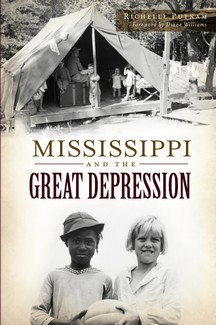
When the Great Depression erupted, Mississippi had not yet recovered from the boll weevil or the Flood of 1927. Its land suffered from depleted forests and soil. Plus, the state had yet to confront the racial caste systems imprisoning poor whites, African Americans and other minorities. Nevertheless, innovative Mississippians managed to keep their businesses and services open. Meanwhile, President Franklin D. Roosevelt's New Deal programs fostered economic stimulation within the state. Author Richelle Putnam also highlights the state's spiritual and cultural giants, who rose from the nation's poorest state to create a lasting footprint of determination, pride and hope during the Depression era.
Professional Reviews
Dr. Alan Brown
Richelle Putnam'sMississippi and the Great Depression sheds light on one of the pivotal periodsof American history, a time that is remembered today by only the most seniormembers of the population. Thisrigorously researched volume focuses on the effects of the Depression on themen and women of Mississippi, one of the poorest states in the nation. Putnam deftly demonstrates the way the GreatDepression permeated every aspect of society, from the hard-scrabble farms,schools, and jails to the airports, city Halls, and state parks. More than just a sociological examination ofone of the state's darkest times, Mississippi and the Great Depression alsotells the human story behind the nation's worst economic disaster. The broad scope of the book covers all theentire social strata of the state, everyone from the sharecroppers to thewriters, artists, and politicians who shaped the cultural fabric of thestate. The real stars of the book,though, are the common people, who exhibited amazing powers of resilience asthey coped with floods, droughts, financial run, and social upheaval. The inclusion of period photographs andinterviews with Mississippians who lived through the Great Depression adds apersonal touch to history. Mississippiand the Great Depression clearly takes its place alongside Clarence Casson's 90Degrees in the Shade as one of the most compelling histories of the DeepSouth's Depression years. It firmlyestablishes Richelle Putnam as a first-rate chronicler of Mississippi history.~ Dr. Alan Brown, Professor of English at the University of West Alabama andthe author of more than 25 books relating to hauntings and ghost stories in theSouth.
Charlie Spillers, Author of Confessions of an Undercover Agent
Mississippi andThe Great Depression is a monumental and brilliant achievement. Richelle Putnam delivers a treasure trove ofhistory, perspective and insights. Inthis comprehensive, thoroughly researched and elegantly written book, theauthor weaves a sweeping history - one certain to become a classic. Combining rich details, meaningful statisticsand personal narratives, she captures the soul and spirit of Mississippians whostruggled and persevered during the Great Depression. It is a reassuring reminder that the humanspirit, ingenuity and resourcefulness can triumph over terrible adversity. "Mississippi and The Great Depression" is anoutstanding, indispensable book - one that deserves to be read andre-read. It's magnificent and I'malready looking forward to Richelle Putnam's next books. ~ Charlie Spillers,author of Confessions of An Undercover Agent: Adventures, Close Calls and theToll of a Double Life, and instructor in continuing legal education courses andformer adjunct professor at the University of Mississippi.
Dr. Jeffrey Howell, author of Hazel Brannon Smith The Female Crusading Scalawag
Richelle Putnam'sMississippi and the Great Depression is a veritable cornucopia of informationconcerning how Mississippians (white, black, Chinese, Mexican, Italian, Jew,and Arab) coped with the worst economic calamity in US History. She does anexcellent job in detailing the efforts of the New Deal administration ofFranklin Delano Roosevelt to transform the landscape of Mississippi whilehelping thousands of its citizens stay afloat in the storm that was theDepression. Her work chronicles the trials and tribulations of poorMississippians, especially those of African Americans who suffered not onlyeconomically, but also socially and politically under the oppression of JimCrow. Throughout her book, she records the resilience and self-sufficiency ofthe average Mississippian, while also pointing out the resistance to change andthe intransigence of those who held the reins of power. Putnam's book documentsthat while the Depression devastated Mississippi, the state was still a placeof intense cultural output from blues and country music to the writings ofWilliam Faulkner and Richard Wright. For the reader who wants to get a frontrow view of what life was like for Mississippians between the late 1920s andWorld War II, this is a good place to start. Dr. Jeffery B. Howell, AssociateProfessor of History, East Georgia State College, Statesboro Ga, author ofHazel Brannon Smith The Female Crusading Scalawag
This is the story of the author’s great great grandparents, Edward Lewis and Sarah Crosby, who were convicts transported to Van Diemen’s Land in the 1840s. It is told from the perspective of a detective agency searching for what happened to Edward, w
The heroic story of how a small group of people, few of them TB experts, found the cure for the greatest killer in human history. But the battle needed to be extended to all sufferers. Why have we failed to take the miracle to the developing world?